Previous Issue
Issue 26
The five wines you should actually be investing in now
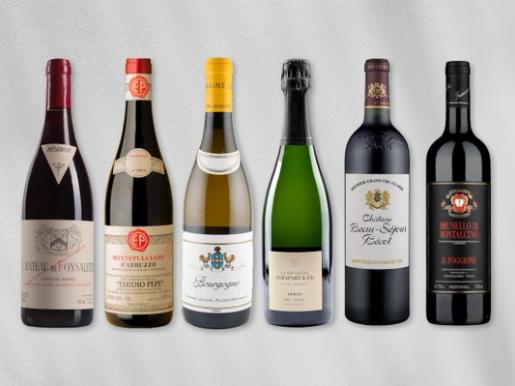
Fine wine’s safest bets are shifting. From Burgundy whites and grower Champagne to Brunello, these are the five wines outperforming the classics in 2026.

Last month, a report from the Society of Motor Manufacturers and Traders announced that sales of convertible cars in the UK have plummeted over 90% in the past twenty years. Cue Richard Hammond popping up on Times Radio to decry the decline and the replacement of the convertible with the “autonomous, Tupperware boxes that you order from your smartphone, and they take you where you want to go.” Equally to blame as sentient luncheon-ware, however, seems to be the tend for SUV style cars as the final status symbol, instead — the likes of the hulkish Lamborghini Urus becoming the apex appendage as opposed to the sleeker, chicer roadsters of the past century. This seems to me a shame. The wind in one’s hair is one of the true feelings of modern freedom, even if, as is often the case with convertible owners, one happens to have no hair at all. To celebrate this dying breed, then, here are the five greatest convertibles of all time.
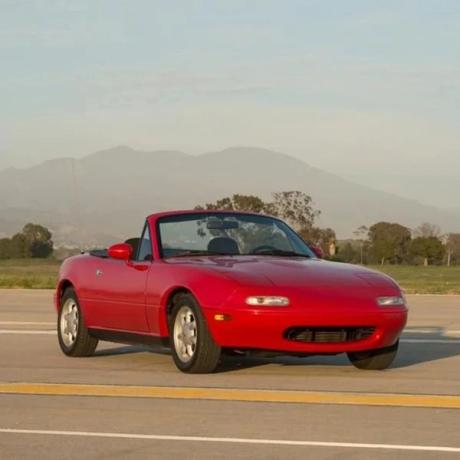
The MX-5 is the best-selling two-seater convertible of all time, with over a million units sold. The cars have become an international symbol of affordable, approachable escapism, with a tank-like reliability that defies their slim, slight, low-cut form. The model first came about after motoring journalist Bob Hall was asked by Mazda’s head of research in 1976 what sort of car the company should make next. “I babbled about how the simple, bugs-in-the-teeth, wind-in-the-hair, classically-British sports car doesn't exist any more,” he said, years later. “I told Mr. Yamamoto that somebody should build one inexpensive roadster.” And so they did. The final car, first released in 1989, was created under the Japanese design credo Jinba ittai, meaning "unity of horse and rider”, and MX-5s do indeed command a rightful loyalty, an almost telepathic connection, from their owners. In America, the car is known as the ‘Miata’, which derives from the Old German for ‘reward’. It is a pleasing quirk of globalism that the great prize of the late American century should be made in Japan.
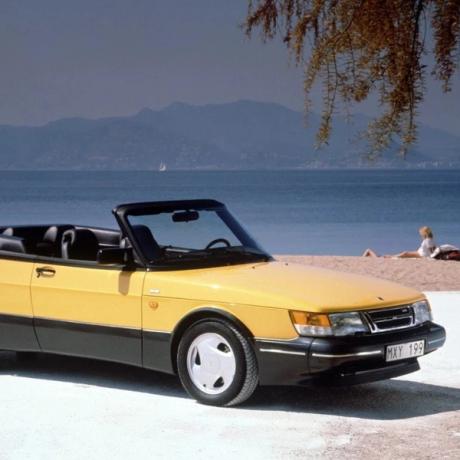
I am biased here, because I myself have a (creaking) Saab 900 cabriolet in black over tan. Its first owner was one Sir Christopher Foxley Norris, a former WW2 fighter ace, who bought it in 1989 near Henley-upon-Thames in his retirement. Saab, of course, began its life as a maker of jet planes, and the Saab 900 had the most curved windscreen of any production car at its time of launch in a nod to the aerodynamic cockpits of yesteryear. So it's pleasing to imagine Sir Christopher in his dotage returning to the sky-high thrills of his youth in this humble, lovely, beautiful car. For a time in the 1990s the 900 Cabriolet was known as the favoured purchase of architects after they’d got a big commission — objects of distinctive bold design and a certain Scandi chic that appealed to spectacled aesthetes. Our motoring editor Rory FH Smith wrote a great homage to the 900 Cabriolet in 2021, beginning: “for a nation engulfed in darkness for half the year and founded on strict Scandinavian sensibilities, a Swedish-made convertible sounds like the punchline of a bad joke.” But one does find oneself smiling often in the handsome cockpits of these singular cars.
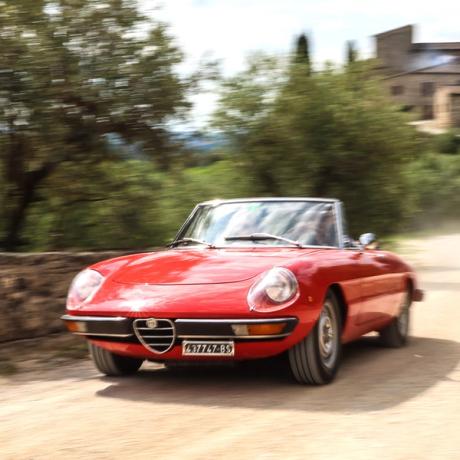
Philip Seymour Hoffman’s entrance as Freddie Miles in The Talented Mr Ripley is one of the great moments in modern cinema — the screech of tires beneath the Spanish Steps, the scatter of pigeons, the pale suit, the raucous jazz. And then he leaps up, stands on the door of his scarlet convertible, and descends on the cobbles and the luncheon with the most ridiculous, wonderful, singular swagger, kissing cheeks and ogling passers-by and downing a cold glass of franciacorta in one go. And the car he makes his arrival in is singularly attached to the beautiful obnoxiousness of that personality — the maddeningly unreliably, completely gorgeous, slightly insane, perfectly Italian Alfa Romeo Spider, and specifically the Giulietta model, in Freddie’s case. He could not have made that same entrance in a Rolls-Royce or a Mustang. “Ciao Bello!” the man hollers across the piazza. “Come stai?” Very well, Freddie. Very well.
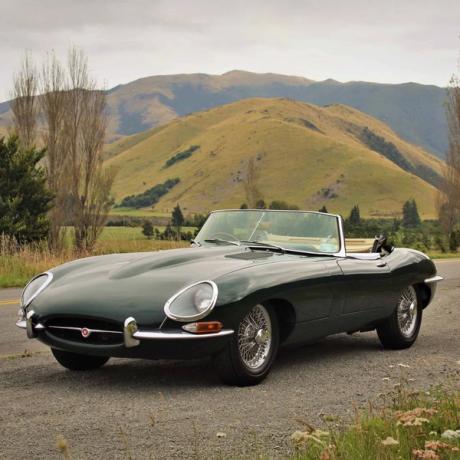
Enzo Ferrari called the E-Type “the most beautiful car ever made” when it was unveiled at the Geneva motorshow in 1961, and pretty much overnight the convertible ‘Roadster’ version became an almost sexual icon of the swinging sixties, of Cool Britannia, and of the new jet-set. Frank Sinatra demanded to buy one instantly, followed in short order by Brigitte Bardot, Peter Sellers, George Harrison, Princess Grace of Monaco, Elton John (in a ‘hot red’ colourway), and Steve McQueen, who used it for his personal transport in the US while filming Le Mans. Aesthetically, there is something both elegant and aggressive about the E-Type Roadster, like a gorgeous, sleek shark — that outrageously long hood, a low and louche stance, and the flowing, sensuous rear lines.
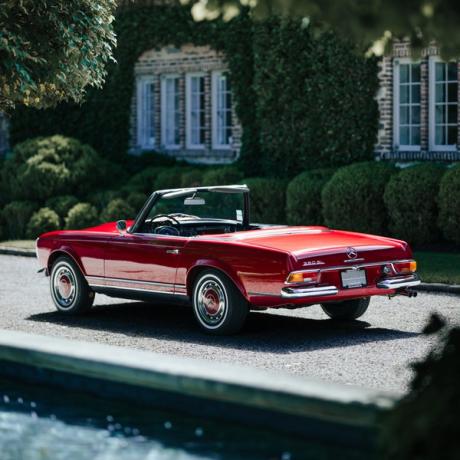
The curious ‘Pagoda’ nickname for the iconic 1960s rendering of the Mercedes SL line came from the gently concave roof of the car, designed by the legendary Paul Bracq, which was thought to be reminiscent of the slope of traditional Asian pagodas. But it was with the hard-top roof removed entirely that the car really came to life: a handsome meeting of softly curved lines, lovely oblong ‘fishbowl’ headlights, and that beautifully simple front grille with the oversized Mercedes star at its centre. It was a car designed specifically to “inspire desire”, according to importer Max Hoffman, who first suggested the model to the brand, and everyone loved it right from the off: John Lennon had one, as did Nico Rosberg, Stirling Moss, Julio Iglesias, Gene Kelly, Kate Moss, and Walt Disney. Now seen as an icon not just of automotive design but of wider 20th century aesthetics, it is a car that combines freedom and fun better than perhaps any other.
Previous Issue
Issue 26
Fine wine’s safest bets are shifting. From Burgundy whites and grower Champagne to Brunello, these are the five wines outperforming the classics in 2026.
Don't miss next week
Get The Friday Five and the week's best stories straight to your inbox.
Last month, a report from the Society of Motor Manufacturers and Traders announced that sales of convertible cars in the UK have plummeted over 90% in the past twenty years. Cue Richard Hammond popping up on Times Radio to decry the decline and the replacement of the convertible with the “autonomous, Tupperware boxes that you order from your smartphone, and they take you where you want to go.” Equally to blame as sentient luncheon-ware, however, seems to be the tend for SUV style cars as the final status symbol, instead — the likes of the hulkish Lamborghini Urus becoming the apex appendage as opposed to the sleeker, chicer roadsters of the past century. This seems to me a shame. The wind in one’s hair is one of the true feelings of modern freedom, even if, as is often the case with convertible owners, one happens to have no hair at all. To celebrate this dying breed, then, here are the five greatest convertibles of all time.
The MX-5 is the best-selling two-seater convertible of all time, with over a million units sold. The cars have become an international symbol of affordable, approachable escapism, with a tank-like reliability that defies their slim, slight, low-cut form. The model first came about after motoring journalist Bob Hall was asked by Mazda’s head of research in 1976 what sort of car the company should make next. “I babbled about how the simple, bugs-in-the-teeth, wind-in-the-hair, classically-British sports car doesn't exist any more,” he said, years later. “I told Mr. Yamamoto that somebody should build one inexpensive roadster.” And so they did. The final car, first released in 1989, was created under the Japanese design credo Jinba ittai, meaning "unity of horse and rider”, and MX-5s do indeed command a rightful loyalty, an almost telepathic connection, from their owners. In America, the car is known as the ‘Miata’, which derives from the Old German for ‘reward’. It is a pleasing quirk of globalism that the great prize of the late American century should be made in Japan.
I am biased here, because I myself have a (creaking) Saab 900 cabriolet in black over tan. Its first owner was one Sir Christopher Foxley Norris, a former WW2 fighter ace, who bought it in 1989 near Henley-upon-Thames in his retirement. Saab, of course, began its life as a maker of jet planes, and the Saab 900 had the most curved windscreen of any production car at its time of launch in a nod to the aerodynamic cockpits of yesteryear. So it's pleasing to imagine Sir Christopher in his dotage returning to the sky-high thrills of his youth in this humble, lovely, beautiful car. For a time in the 1990s the 900 Cabriolet was known as the favoured purchase of architects after they’d got a big commission — objects of distinctive bold design and a certain Scandi chic that appealed to spectacled aesthetes. Our motoring editor Rory FH Smith wrote a great homage to the 900 Cabriolet in 2021, beginning: “for a nation engulfed in darkness for half the year and founded on strict Scandinavian sensibilities, a Swedish-made convertible sounds like the punchline of a bad joke.” But one does find oneself smiling often in the handsome cockpits of these singular cars.
Philip Seymour Hoffman’s entrance as Freddie Miles in The Talented Mr Ripley is one of the great moments in modern cinema — the screech of tires beneath the Spanish Steps, the scatter of pigeons, the pale suit, the raucous jazz. And then he leaps up, stands on the door of his scarlet convertible, and descends on the cobbles and the luncheon with the most ridiculous, wonderful, singular swagger, kissing cheeks and ogling passers-by and downing a cold glass of franciacorta in one go. And the car he makes his arrival in is singularly attached to the beautiful obnoxiousness of that personality — the maddeningly unreliably, completely gorgeous, slightly insane, perfectly Italian Alfa Romeo Spider, and specifically the Giulietta model, in Freddie’s case. He could not have made that same entrance in a Rolls-Royce or a Mustang. “Ciao Bello!” the man hollers across the piazza. “Come stai?” Very well, Freddie. Very well.
Enzo Ferrari called the E-Type “the most beautiful car ever made” when it was unveiled at the Geneva motorshow in 1961, and pretty much overnight the convertible ‘Roadster’ version became an almost sexual icon of the swinging sixties, of Cool Britannia, and of the new jet-set. Frank Sinatra demanded to buy one instantly, followed in short order by Brigitte Bardot, Peter Sellers, George Harrison, Princess Grace of Monaco, Elton John (in a ‘hot red’ colourway), and Steve McQueen, who used it for his personal transport in the US while filming Le Mans. Aesthetically, there is something both elegant and aggressive about the E-Type Roadster, like a gorgeous, sleek shark — that outrageously long hood, a low and louche stance, and the flowing, sensuous rear lines.
The curious ‘Pagoda’ nickname for the iconic 1960s rendering of the Mercedes SL line came from the gently concave roof of the car, designed by the legendary Paul Bracq, which was thought to be reminiscent of the slope of traditional Asian pagodas. But it was with the hard-top roof removed entirely that the car really came to life: a handsome meeting of softly curved lines, lovely oblong ‘fishbowl’ headlights, and that beautifully simple front grille with the oversized Mercedes star at its centre. It was a car designed specifically to “inspire desire”, according to importer Max Hoffman, who first suggested the model to the brand, and everyone loved it right from the off: John Lennon had one, as did Nico Rosberg, Stirling Moss, Julio Iglesias, Gene Kelly, Kate Moss, and Walt Disney. Now seen as an icon not just of automotive design but of wider 20th century aesthetics, it is a car that combines freedom and fun better than perhaps any other.
Previous Issue
Issue 26
Fine wine’s safest bets are shifting. From Burgundy whites and grower Champagne to Brunello, these are the five wines outperforming the classics in 2026.
Don't miss next week
Get The Friday Five and the week's best stories straight to your inbox.