People -- 2 hours ago

Former Made in Chelsea star Jamie Laing wants us to share our feelings and be more honest. Here’s why that’s a good idea
Before I have a chance to ask Jamie Laing a question, he puts one to me. Our opening small talk had somehow drifted to the lockdown of 2021, and how incredibly dull and damp and deadening I found it. “Did you feel anxious?” Jamie says. “Were you depressed?”
Such questions are central to Jamie Laing’s new book, Boys Don’t Cry: an alphabetical work about mental health that hops between stories, victories and struggles in Jamie’s own life. At its centre is a chapter called ‘H is for Honesty’ — probably the defining mantra for the entire book.
Not that it came naturally. “As a kid, I was not honest,” says Jamie now, sitting in the handsome meeting room at the HQ of his empire, down a cobbled mews street in Marylebone. “I lied about everything. Not big lies, but a lot of white lies.” So he had to practice being honest for this book, and for his wider job. “But I’ve noticed,” he continues, “having done podcasts, that when you start with an anecdote about yourself, the other person will open up. So I thought: right, if I’m going to talk about the subject of mental health, I need to talk about myself first.”
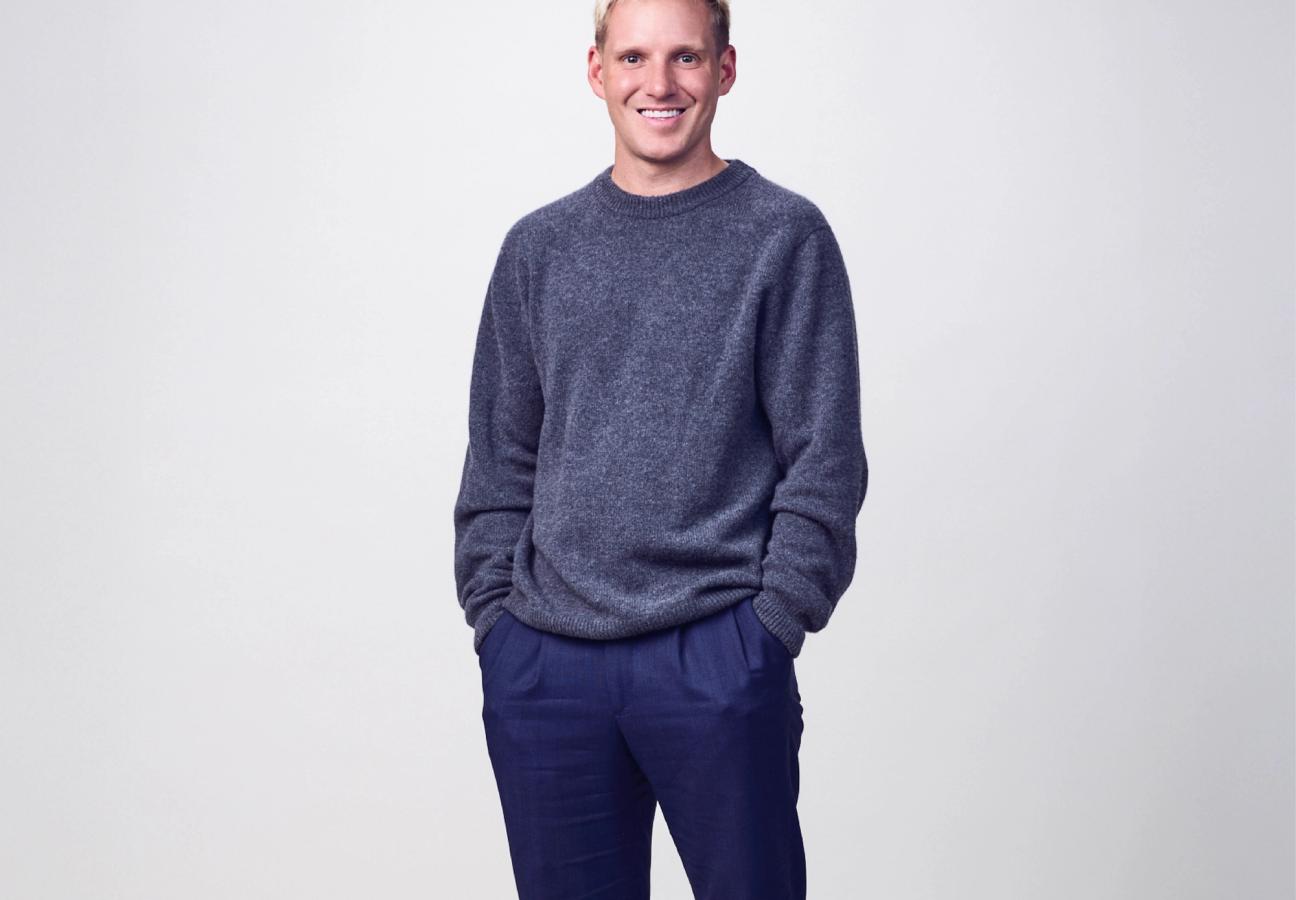
And so he does, though he acknowledges (in a moment of honesty-about-honesty) that there’s nonetheless a slight “fatigue” to being quite so open quite so often.
The book is all the better for this candour. Though certain chapters, he says, were very hard to write — like the ‘W’ chapter, which is all about weight and his past struggles with bulimia and body image. He writes about making himself sick after a big meal, and his wife, Sophie, finding him on the bathroom floor. “I’d never, ever spoken about that, and I’m still shameful about that,” he says now. “But once you discuss something, it becomes much easier to accept.”
Jamie is good at discussing things. He first came to prominence as a breakout star on Made in Chelsea — essentially one long glossy chit-chat of a show, where conversation and rumour were all (though honesty, perhaps, was not). He pivoted this initial success into what is now a thriving entrepreneurial empire — one that spans sweets (Candy Kittens) and entertainment, via his several podcasts. The success of the latter seems to me down to the unguardedness and natural curiosity with which Jamie approaches his subjects and conversations — whether they’re with Sophie as they prepare for the imminent birth of their first child (Nearly Parents), or with an eclectic mix of celebrities on Great Company. “It’s the only way I know how to connect,” he says. “I’m not a great thinker, right? I don’t think I’m smart enough to write stuff that people will read and want to study. But my strength, I think, is that I’m a good storyteller, and I’m good at connecting with people.”
“It’s taken me 10 years to get any sort of credibility in this field”
I loved the episode of Great Company where broadcaster Amol Rajan spoke about the death of his father, before turning the gaze gently onto Jamie, and asking about his own relationship with his dad. Jamie, clearly taken off guard by this, tries to answer, but falters.
“And then it hit me,” he writes in the chapter ‘D is for Dad’. “An uncontrollable wave of emotion that I hadn’t anticipated. I suddenly felt immense guilt. Guilt for never saying sorry, for never saying ‘I love you’ enough, for never telling him how great a dad he was. And tears, big, hot tears, started streaming down my face.”
“And then Amol said,” Jamie tells me, “‘I have this magical thing which I can give you — just time. You still have time to say all of that to him.’” Jamie called his dad straight away after the episode. “‘I’m sorry if I’m an asshole,’ I said. As a kid, I picked a side during my parents’ divorce. And my dad made a lot of mistakes, but he’s an incredible person. We’re all guessing. We’re all doing this for the first time.”
I ask Jamie how he feels about his own life and career decisions. Almost everyone he knew warned him against going on Made in Chelsea when he was finishing university at Leeds: they told he’d never get a proper job again — not realising, perhaps, that this was part of the appeal. “Made in Chelsea was great,” he says. “I did stupid things, I behaved badly sometimes, but I also did some great things and had some fun times.” And, he adds with a laugh, “I was unemployable anyway!” He saw it as a shortcut to what he really wanted to do: something in entertainment. “But when you take a shortcut somewhere, it’s a long road round eventually,” he says. “It’s taken me 10 years to get any sort of credibility in this field, and that’s from hard work and growth.”
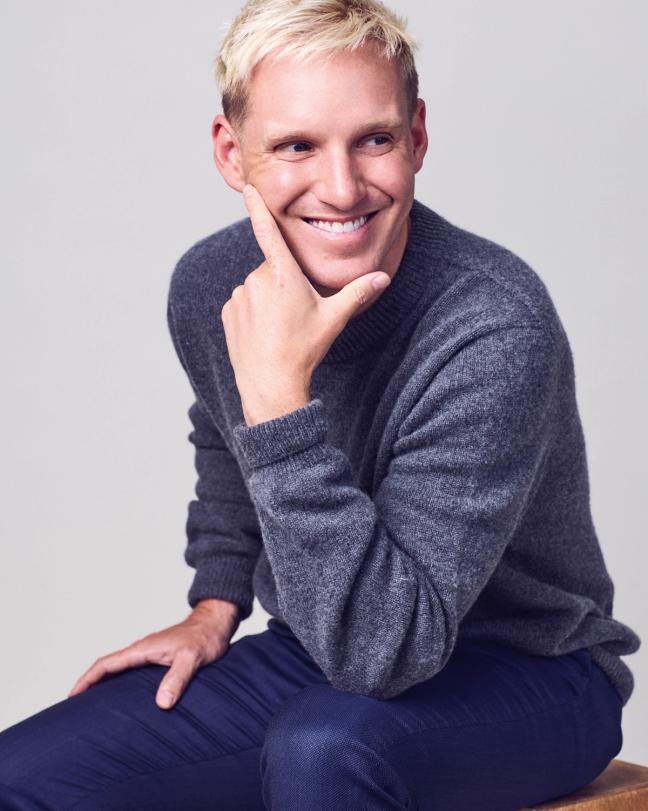
I read him a quote from the book. “For too long, I genuinely believed that if I became rich and famous, it would magically solve every insecurity and problem I had.” How does he feel about fame today, having been well-known for more than 15 years? “Fame is useful in lots of ways. It opens doors. It can provide you with money and security. So there are lots of advantages to being famous — but there’s a real problem with desiring fame. If your drive is just to become famous, you’re going to be left in a pretty horrendous place,” he says. “It’s a drug. Once you become famous, you’re basically constantly moving towards becoming irrelevant, and that’s bad, in your head. So then you’re going to start doing things to try to stay relevant. And that’s a tricky place to be.”
On the one hand, Jamie acknowledges the alienating aspects of social media: “We are so connected that we are disconnected,” he writes. “We are constantly connected to hundreds of people, scrolling through feeds and highlight reels, but it is driving us apart from each other.” Comparison is the thief of joy — and sometimes sanity, he says. “You lose sight of your worth because you’re constantly comparing yourself to an endless, curated stream of ‘success’.”
On the other, Jamie’s far-reaching and hard-earned success — and this beautiful building is a compelling monument to it all: a sort of whirring, infectious, bustling playground of projects and ideas and output — has been turbo-charged by social media. The reason so many of us warm to Jamie and feel we know him — and thus want, perhaps, to tune into his podcast conversations, in that modern parasocial way — is because he has always been so open and present on social media. Which must also be tiring, or exposing, in some way.
“It’s been an immensely useful tool,” he says. But the more you use it, the more risky it gets. “It’s important to post what you want to post. You have to post your true self, what you truly think, because otherwise you’re living an inauthentic life, and you’ll slightly be caught out.”
The ersatz, uncanny ‘connection’ of social media exposes another phenomenon of the moment, perhaps. “As guys, we have a bad problem with being lonely in our thirties,” Jamie says. “Our time is stretched between our relationship, our work, maybe — and so our social life is the one that normally gives up.” And so we spend less time with our friends in person, he says, and men traditionally only know how to connect in person: “Usually through nonsense talk, you know?” Which is fine in the more carefree, collegiate days of your twenties.“But you’re spending less time with your friends as you get older, and you’ll find it harder to have nonsense talk with strangers, because they’re not your friends,” he says. “So we start to drift apart.
“Men should become much better at gossiping,” he concludes. “Women are very good at gossiping and just catching up.” He notes that his wife has probably spoken to six of her friends on the phone that morning, while he hasn’t spoken to any. “So if we can speckle, within the nonsense, a few moments of truth, like: ‘How are you feeling at the moment? How is life?’ That’s a good thing.”
In that spirit: how is he doing? As we speak, he’s about to have a baby (son Ziggy eventually arrived on 4 December). Yet Jamie is still doing almost everything else, including press for this book. “I’m not balancing it all that well, if I’m honest,” he says. “But I’m trying. And I’m taking all of December off, when the baby arrives, which will be amazing. I’m so excited for this journey. I only get this chance once in my life to be with the baby. As much as I want to be working and doing things, I’m going to try my hardest not to be distracted. I’m going to make sure that I am present.”
For more insights into the minds of inspiring personalities, discover our conversation with Dom Hamdy.
To receive the latest in style, watches, cars and luxury news, plus receive great offers from the world’s greatest brands every Friday.