Style -- 12 days ago
In a market loud with novelty, the truly desirable stays composed and oddly difficult to mimic. Look closer and the real measure appears in what makes a watch collectable.
There comes a point, usually after you have convinced yourself that one watch is quite enough, when you find yourself leaning in close to a photograph of a dial and thinking seriously about the shape of a numeral. You will insist it is research. You will imply it is culture. You will, if pressed, describe it as an education in craftsmanship. All of which is true, in the way many things are true in public life. The deeper truth is simpler. You have crossed the line from owning a watch to collecting them.
Collectable is one of those words that sounds faintly grand and faintly suspect, rather like a departmental slogan printed on tasteful paper. It implies discernment. It implies rarity. It implies the sort of quiet authority that makes other people assume you know what you are doing. It also implies, if we are honest, a willingness to care about details that most sane adults would file under unnecessary. It can also imply, quietly and without anyone needing to say it out loud, that you have learned to sell a piece now and then to make room and money for the next one, a small side hustle conducted under the polite name of taste.
So what makes a watch collectable, rather than merely good, rather than merely desirable, rather than merely something you will one day sell with the vague melancholy of a man clearing a drawer?
A watch does not become collectable in private, even if you insist you are collecting for yourself. Collectability is a consensus, formed by enthusiasts, dealers, auction houses, brand historians, journalists, and the odd public figure who happens to wear the right thing at the right moment. It is not democratic, but it is social, and it is maintained by constant, earnest conversation.
This is why two watches that are mechanically comparable can live very different lives. One becomes a reference point. The other becomes a secret favourite. The first is discussed, photographed, traded, and mythologised. The second is simply enjoyed, which sounds more virtuous, until you realise the first category is where the interesting stories tend to accumulate.
Collectable, then, is not a simple label. It is an agreement to care, and to keep caring, even when a newer model arrives with more features and louder claims.
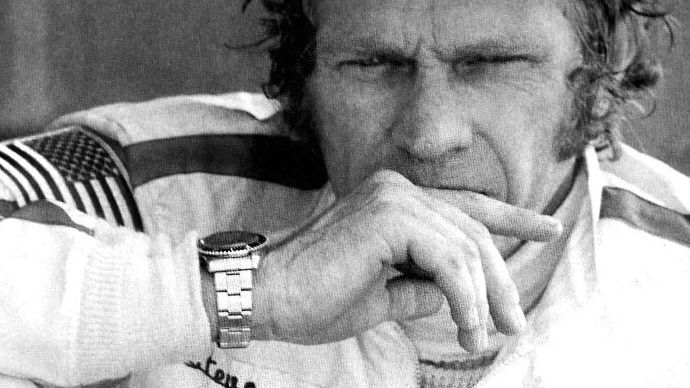
Most collectable watches carry a story that feels as though it belongs to them. Not a marketing tale you can hear creaking under the strain of its own heroism, but something that fits the object like a well-cut jacket. A mechanical watch tied to diving, aviation, exploration, motorsport, or military service has an obvious advantage. It arrives already drenched in narrative. Even the man who has never been deeper than a hotel pool can enjoy the implication that his watch might cope with the Mariana Trench.
Yet stories do not have to be dramatic to be powerful. Some watches are collectable because they represent a moment when design changed direction, or when a brand briefly achieved an almost perfect balance of function and elegance. Others become collectable because they were made during a turbulent period, when decisions were taken quickly, parts were used up, and unexpected variations slipped out into the world. Collectors adore these human moments. They prove that even the Swiss industry has days when it improvises.
There is, of course, a risk. A story can be embellished until it resembles theatre. Collectors are not immune to theatre, but the more experienced among them can usually tell when the script is doing the heavy lifting. A truly collectable watch can stand on its own. The story enhances it, rather than holding it upright.

Rarity is frequently misunderstood by people new to collecting. They imagine that if something is hard to find, it must be valuable. This is how you end up with a very obscure reference that is indeed scarce, but also faintly unloved, like a novel everyone respects, and nobody finishes.
The rarity that matters is scarcity paired with demand. Limited production helps, certainly, but it is not the whole picture. Survival matters just as much. A watch that was worn hard, serviced casually, polished enthusiastically, or modified without mercy will become genuinely scarce in correct form. Time does not merely age watches. It edits them.
This is why collectors speak in the slightly maddening language of variants. The same model can exist in multiple small forms, each with its own following. A particular dial layout, a bezel font, a hand shape, a case profile, a bracelet stamp. These details can sound trivial until you realise they are the difference between common and exceptional within a very narrow world. Collecting is full of narrow worlds. That is, in many ways, the attraction.
If you want to watch a room of calm adults become suddenly intense, mention replacement parts. Originality matters because it preserves coherence. The right dial with the right hands, the right lume with the right ageing, the right crown for the period, the right bracelet, the right case finishing. Each element is a piece of the watch’s identity.
Service work complicates this. Watches are machines, and machines need care. Many perfectly honest owners have had parts swapped during routine servicing because the watchmaker was trying to help, and because the owner wanted the watch to look tidy. Years later, collectors may look at that same watch with the quiet disappointment of a man discovering his favourite pub has been redecorated.
Originality is not about perfection. It is about truth. A watch with honest wear can be deeply attractive. A watch that has been restored to bland newness can feel oddly empty. Over-polishing is the classic sin. When the crisp edges and sharp lines of a case are softened away, the watch loses its architecture. It becomes smooth in the way a bar of soap is smooth, and just as distinct.
The best examples have a sense of integrity. They look like themselves.
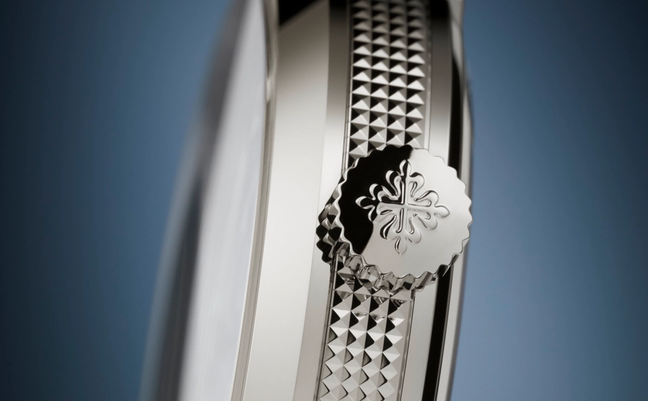
A collectable watch is almost always a strong piece of design. Strong design has a curious quality. It announces itself quietly, and it keeps making sense as fashions shift around it. It does not rely on novelty. It relies on proportion.
You can often identify an icon at a glance. The case shape, the bezel, the dial layout, and he way the bracelet meets the lugs. These elements become a kind of visual shorthand. This is helpful if you like to be noticed by those who know. It is less helpful if you dislike the idea of being clocked, quite literally, by strangers who have read too much on the internet.
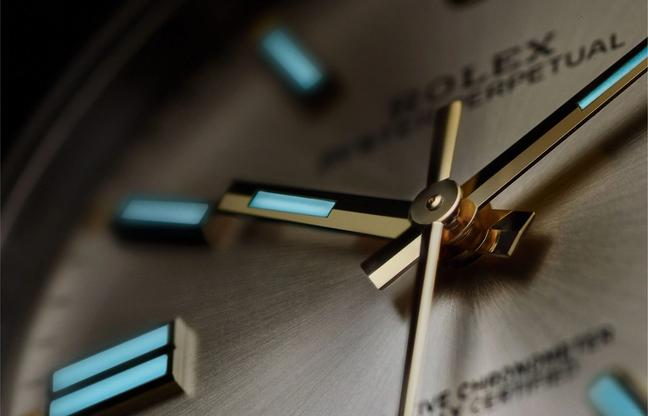
Great dials are balanced. Great hands are legible. Great bezels look purposeful, even when they have become decorative by tradition. The most collectable designs also tend to have at least one slightly odd detail, a quirk that would not survive a modern committee meeting. Collectors love such quirks because they feel human, and because they make a watch easy to talk about. A hobby is, after all, sustained by conversation.
Design can also become more appealing with time. Certain sizes, once dismissed as too small, now look wonderfully assured. Certain colours, once overlooked, can age into something exquisite. A watch that grows more handsome as it grows older is a useful thing to own.
Not every collectable watch is collectable because of its movement, but many are, and it is worth understanding why. Mechanical importance can come from innovation, from excellence, or from a kind of rugged competence that inspires confidence.
Some watches are milestones. Early automatic chronographs. Notable dive capability. Robust anti-magnetic engineering. Complications executed with restraint rather than fireworks. Others are collectable because the movement is simply superbly made, designed to be serviced, designed to last, and designed with an almost moral seriousness about precision.
The irony is that many collectors adore complications they rarely use. They will own a perpetual calendar while living in a way that suggests dates are optional. They will own a chronograph and time only coffee. They will own a GMT and never leave the Home Counties. This is not hypocrisy. It is appreciation. Knowing that the mechanism can do something remarkable is part of the pleasure, even if you personally have no intention of using it for anything more demanding than catching a train.
Mechanical merit also supports collectability in the long term. Fashions change, but engineering remains engineering, and a movement that is genuinely significant tends to stay interesting.
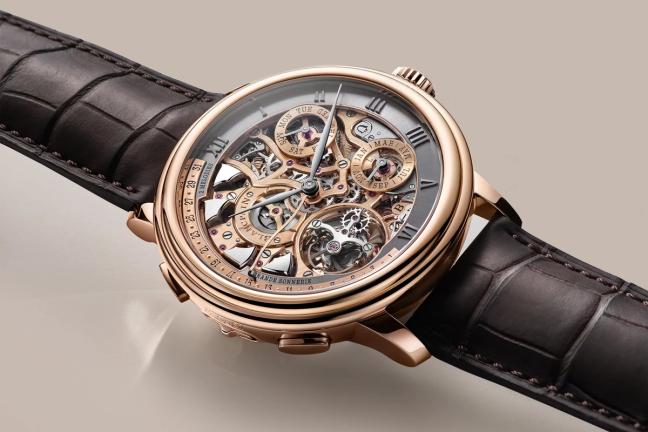
The condition is where the hobby becomes philosophical. Many people assume the best watch is the one that looks newest. Collectors tend to be more nuanced, and occasionally more perverse. A watch can be too clean, in the sense that it looks as though it has been stripped of its life.
A well-worn watch can be wonderful, provided the wear feels honest and consistent. Light marks that suggest years of use. A bezel that has faded gently. A dial that has aged evenly. A bracelet that drapes like fabric. These things can make a watch feel personal, like an object that has belonged to someone who lived in it.
What collectors dislike is damage that implies neglect or restoration that implies panic. Water intrusion, heavy corrosion, cracked lacquer, missing lume, smashed crystal. These are not romantic. They are expensive mistakes. At the other end of the spectrum, a dial that has been refinished, a case that has been aggressively polished, a handset that does not match the period. These can make a watch look better to a casual eye, and worse to the eye that matters in collecting.
There is also the matter of confidence. Condition is not merely about looks. It is about the probability that the watch is what it claims to be. A watch in excellent, correct condition feels trustworthy. Trust is a precious currency in a market where stories can be invented, and parts can be swapped.
Paperwork is the civil service of watch collecting. It is not glamorous, but it has power. A watch with its box, papers, receipts, service history, and any archive documentation carries an aura of legitimacy. It feels official. It feels complete. It feels, in the best sense, properly accounted for.
This matters for practical reasons. Documentation can confirm dates, configurations, and ownership, and it can reduce the anxiety that comes with buying something that might be wrong in subtle ways. It also matters for emotional reasons. Collectors like the idea that their watch has a file, a history that can be traced, a chain of custody that lends it gravitas.
There is a certain comedy in this. We are, in effect, emotionally moved by stationery. Yet it makes sense. A collectable watch is a story, and paperwork is the footnotes.

Modern collecting is not purely about history. It is also about culture, and culture has a habit of moving faster than anyone can sensibly track. A watch can become suddenly desirable because it appears on the right wrist in the right photograph at the right moment. It can be linked to a film, a sporting event, a public figure, or simply the general mood of the era.
This can feel fickle, and it sometimes is. Yet certain cultural moments stick. When a watch becomes associated with a particular type of character, it can acquire a permanent aura. The association does not need to be official. It merely needs to be convincing.
There is also the modern phenomenon of collaboration. Some are thoughtful, genuinely creative, and rooted in real shared values. Others feel like branding with an extra step. The difference is usually obvious once the initial noise fades. A collectable collaboration tends to have design integrity. It feels like a watch that had to exist, not a watch that happened to be convenient.
Collectability is not the same as hype, though hype will insist otherwise, loudly. Hype is urgency. Collectability is endurance. A watch that is genuinely collectable tends to remain interesting when the excitement has moved on.
This is why seasoned collectors often look slightly amused during the frenzy. They have seen cycles before. They know that the loudest object is not always the lasting one. They also know that today’s overlooked watch can become tomorrow’s obsession, especially if it has genuine design quality and an honest story.
Patience, in collecting, is not merely a virtue. It is a strategy. The watches that reward you most are often the ones you did not chase in a panic. They are the ones you found through learning, through taste, through a gradual sharpening of your eye.
If that sounds faintly smug, it is. Collecting encourages smugness. One must manage it carefully.
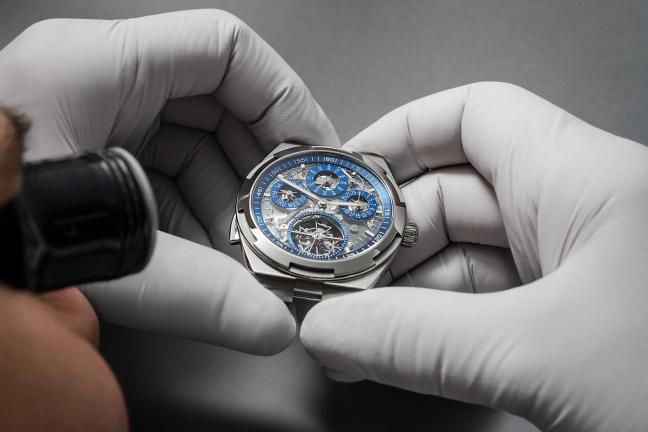
A sensible way to approach collectability is to treat it like due diligence, with better photography. Learn what correct looks like. Learn the key variations. Learn what a case should feel like, how sharp it should be, how the dial should sit, and how the lume should age. The more you look, the more you see.
Buy the best example you can find, not the first example you can afford to justify. Choose integrity over excitement. Ask questions in a way that suggests you know what you are asking, even if you are still learning. Most people are happy to help if you are polite, curious, and not trying to win.
Also accept that the perfect watch rarely exists. There is always a compromise, unless you are dealing at the very top end of the market, and even then, compromise simply becomes more expensive and more beautifully described. The goal is not flawlessness. The goal is a watch you can believe in, and a watch you will still want to wear when the internet has decided to care about something else.
Finally, remember that collectibility is not only about resale or future value, even if people cannot resist talking that way. The real test is simpler. Does the watch reward attention? Does it feel right on the wrist? Does it make you smile quietly when you glance at it in an unguarded moment?
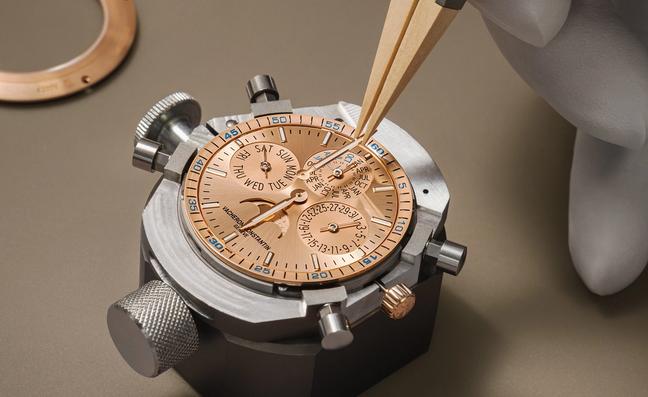
A collectable watch sits at the intersection of object and story. It has design that lasts, mechanics that matter, and originality that holds together under scrutiny. It carries scarcity that is real, not merely declared. It is supported by condition, by documentation, and by the slow accumulation of informed desire.
Most of all, it generates trouble, the good kind. It makes you read more. It makes you notice more. It makes you care about details you once ignored. It pulls you into conversations that begin casually and end with you explaining why a particular dial printing technique matters to someone who did not ask.
And that, in a strange way, is the point. A collectable watch is not merely a thing you own. It is a small, precise relationship with time, with history, and with taste. It is a private satisfaction worn in public, which is about as British as it gets.
To receive the latest in style, watches, cars and luxury news, plus receive great offers from the world’s greatest brands every Friday.