
Food & Drink -- 1 day ago

Modern life rarely offers silence on its own. The appeal of noise-cancelling headphones lies in their ability to give you control over what you hear and, just as importantly, what you do not.
At some point in the last decade, the world became loud. Not opera loud, not nightclub loud, just relentlessly, pointlessly loud. Air conditioning that hums like distant traffic, actual traffic that sounds like a permanent emergency, office chatter, espresso machines, the ever-present rustle of other people’s notifications. It is not one great roar so much as a thousand small noises nibbling at your attention.
The modern response has been simple. We put expensive objects on our heads and ask them to make it all go away. Noise-cancelling headphones are, in effect, private infrastructure for your nervous system. They cannot fix the trains, they cannot calm the open plan office, but they can draw a small, invisible curtain between you and the chaos.
If you have been quietly wondering whether noise-cancelling headphones are worth the investment, the answer, for many people, is yes. Not because they are fashionable, although they are, but because they solve an increasingly modern problem with suspicious efficiency.
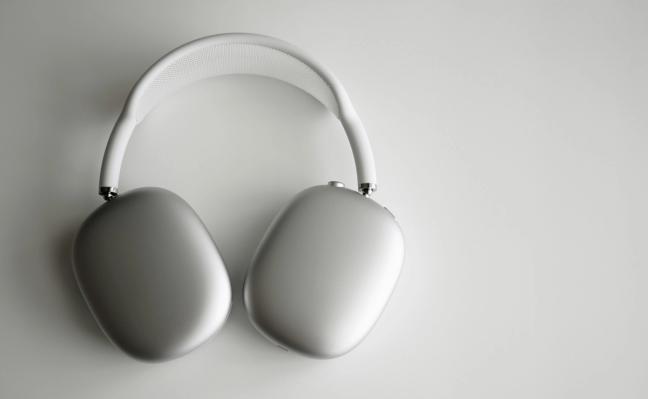
For most of human history, silence was not something you bought. It happened naturally, somewhere between nightfall and the next stampede of livestock. Now it exists mainly as a premium feature. Hotels advertise quiet floors. Airlines sell seats further from the engines. Property listings mention triple glazing with the same pride they once reserved for original fireplaces.
Your brain notices the contrast. Constant background noise, even when you are not consciously listening to it, is work. It keeps a part of your attention permanently alive, monitoring for threats that rarely arrive. By the end of the day, you have done nothing obviously strenuous, and yet you feel oddly depleted, as if someone has been leaning lightly on your shoulders all afternoon.
Noise-cancelling headphones remove a chunk of that load. They do not produce perfect monastic silence; they simply lower the overall volume of the world, particularly in that low-frequency region where engines and air conditioning live. The result is not an absence of sound but enough of a reduction that your nervous system finally stops hovering near the panic button.
In a noisy city, that alone is a compelling reason to own a pair. You are not buying a gadget. You are buying a small decrease in daily friction.
There is also the dull, important matter of your ears.
Most adults now spend their lives in a stitched-together tapestry of loud places. Trains, gyms, bars, busy streets, open-plan offices, aircraft cabins. None is deafening on its own, and all of them are slightly too loud for comfort. The usual response is to turn your music up. The train gets louder, so you get louder. The bar gets louder, so you get louder. It is a volume arms race you can only lose.
Noise-cancelling headphones give you a way out of this stalemate. By stripping away much of the background roar, they let you hear your music, podcast or call clearly at a lower volume. You do not need to drown out the engine because the engine is already half gone. You do not have to battle the office air conditioning because the air conditioning has been demoted to a murmur.
That difference matters. Hearing damage is not primarily the result of one catastrophic gig. It is the accumulated effect of years spent listening slightly too loud, slightly too often. Anything that reduces the need for that extra twist of the volume dial is a quiet form of insurance.
Used sensibly, noise-cancelling headphones are not a threat to your hearing. They are a way of protecting it while still living in the 21st century. You keep the soundtrack and lose some of the collateral damage.
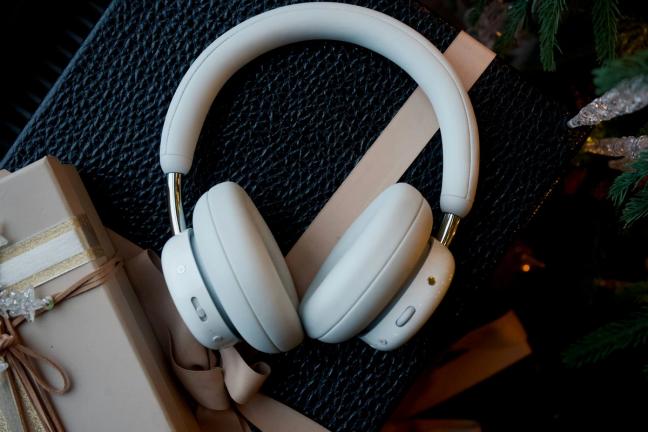
There is a reason students, lawyers, coders and writers all begin to look the same these days: one laptop, one drink going tepid, one expression of mild panic, and one set of over-ears clamped on like ceremonial headgear. Concentration, it turns out, is a scarce commodity, and everyone is busily building their own little fort around it.
Noise-cancelling headphones are one of the more elegant building materials. In a café, they soften the clatter of crockery and the chorus of conversations. In an office, they mute the enthusiastic colleague who types as if auditioning for a percussion section, and the informal morning stand-up happens directly behind your chair. At home, they diminish the neighbour’s television and the spin cycle of your washing machine to something your brain can finally ignore.
This is not about total sensory deprivation. You are not trying to become a monk. It is about reducing the number of times the outside world reaches into your head and taps you on the shoulder. Every time your attention is dragged from your work by a sudden noise, you pay a small cognitive tax to return to what you were doing. Over a day, those tiny taxes add up.
With good noise cancelling, you pay fewer of them. You still know you are in a café or on a train. You simply stop listening to every scrape of a chair as if it might be relevant. For the modern attention span, that is not indulgence. It is survival.
If there is one context in which noise-cancelling headphones are all but mandatory, it is the plane.
Cabin noise is not just present. It is relentless. Hours of low-frequency rumble, air rushing, fans whirring, trolleys rattling, your fellow passengers making the particular noises that fellow passengers always make. On a long-haul flight, this is not just annoying; it is exhausting. You step off feeling as if someone has been quietly drumming their fingers on your skull somewhere over Dubai.
The first time you put on a serious pair of noise-cancelling headphones on a flight, there is a small, private moment of astonishment. The engine noise, that constant wash that you had accepted as part of the experience, recedes. You can still hear it, but it is no longer shouting at you. Film dialogue becomes intelligible at civilised volumes. The hum inside your head finally drops by a few notches.
The same applies, to a slightly lesser degree, on trains and long-distance coaches. Twelve stops on a crowded commuter line feel different when the screech of brakes and the background chatter are turned into a sort of distant foam rather than a daily assault. Even the simple act of sitting in a departure lounge becomes less of a drain when the announcements and slot machines are kept at a respectful distance.
Frequent travellers talk a great deal about loyalty points and seat pitch. If they were being honest, many would admit that their single most important upgrade has been the ability to turn the world down while they are in transit.
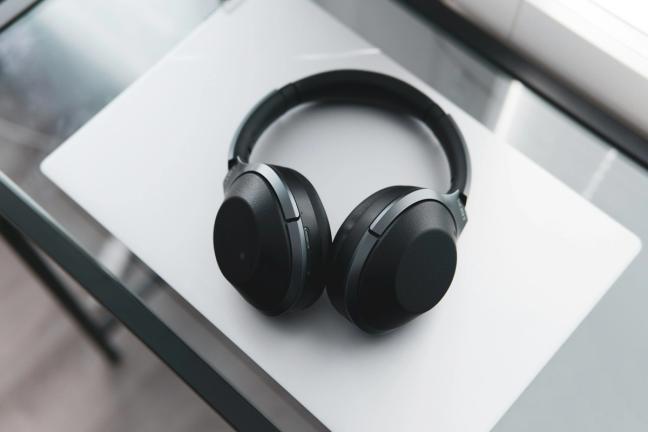
It is easy to forget that noise-cancelling headphones are, at heart, still headphones. Once they have neutralised the background, their other job is to make whatever you are actually listening to sound as good as it reasonably can.
In a quiet room, the difference between noise-cancelling and non-noise-cancelling models of similar quality is often modest. In the real world, surrounded by air conditioning, traffic and the remnants of someone’s playlist leaking from the next table, it becomes dramatic.
By suppressing the outside noise, ANC reveals details that would otherwise be drowned out. Bass lines stop battling with the rumble of the train and become taut and textured instead of bloated. Quiet passages in classical pieces no longer vanish under the coughs and shuffles of the audience around you. Podcasts sound as if they were recorded in a studio rather than in an alley behind a restaurant.
The result is that your existing music and films feel upgraded. You do not need to invest in new tracks or higher resolution streams; you merely remove the layer of grit that has been sitting on top of everything for years. It is the audio equivalent of cleaning your glasses and realising that the world was not, in fact, slightly foggy all day.
If you are someone who cares about sound, this is arguably the most tangible daily benefit. If you are not, it may be the point at which you become one of those people who do.
The world, unhelpfully, insists on continuing to speak to us while we are in motion. Work calls from departure gates, families from pavements, friends from somewhere in the vicinity of a coffee grinder. Trying to hold a conversation without proper tools in these places is an exercise in mutually assured frustration.
Noise-cancelling headphones tidy this up at both ends. On your side, ANC lets you hear the person you are speaking to without straining, even when the environment borders on chaotic. You can keep the volume moderate and still pick out every word.
On the other side of the call, the microphones and processing in modern ANC headphones do a decent impersonation of a studio engineer. They filter out much of the background noise and focus on your voice, so that the person listening does not have to fight through tannoy announcements and passing lorries just to hear you say that, yes, you have boarded.
The net result is that you sound less like an extra in an airport drama and more like someone who has taken the radical step of planning ahead. For anyone who works in a hybrid, perennially on-call style, this is not a luxury. It is basic presentability.
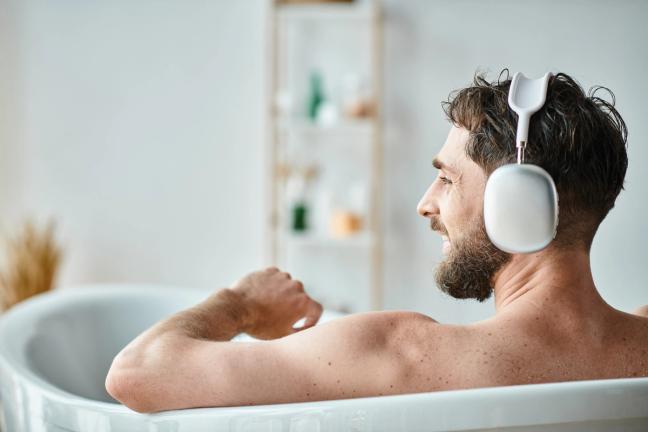
Not everyone experiences the world’s noise in the same way. For some people, a busy restaurant is just “lively”. For others, it is a sensory onslaught to be endured rather than enjoyed. Autistic individuals, people with ADHD, and anyone with a tendency toward sensory overwhelm can find modern soundscapes particularly punishing.
For them, noise-cancelling headphones are less about audiophile niceties and more about basic comfort. Being able to reduce the sheer volume of sensory input in a supermarket, on public transport or in a classroom can mean the difference between functioning and shutting down.
Even for those without a diagnosed condition, the ability to curate your own sound environment has psychological value. When you can choose how much of the world to let in, you are no longer entirely at its mercy. You are not obliged to marinate in everyone else’s noise at all times. You can reserve your social energy for things you have actually chosen to do, rather than spending half of it dealing with somebody else’s ringtone.
In a culture that prizes constant availability, there is something quietly subversive about being able to step away from the sound of everything without going anywhere at all.
Perhaps the most underappreciated reason to get noise-cancelling headphones is that they give you volume control for reality. You are no longer choosing between “everything” and “nothing”. You are, within limits, able to decide how loud the world should be.
Modern ANC models let you adjust the strength of the cancellation, switch to transparency modes that pipe outside sound back in, and create different profiles for different places. You can have a “commute” setting that calms the roar of the train while keeping announcements clear, an “office” mode that softens chatter without making you oblivious to someone speaking directly to you, and a “plane” preset that acts like a padded cell with better upholstery.
This flexibility matters. Traditional earplugs block the world entirely, which is occasionally useful and often impractical. Non-noise-cancelling headphones are beholden to the environment; they must always be loud enough to compete. ANC headphones sit in the middle, giving you just enough control to make your surroundings tolerable without severing all ties.
The more you use them, the more you realise that this is what you were really buying. Not just hardware, but agency.

None of this is to say that noise-cancelling headphones are flawless or universally adored. Some people find the sensation of active cancellation uncomfortable, particularly at higher settings. Others dislike the idea of putting anything over or in their ears for long periods. There are genuine medical reasons why certain people should be cautious.
But for the majority, the potential downsides are largely a matter of moderation. Use ANC to reduce noise, not to justify ever higher volume. Allow your ears sensible breaks. If full-strength cancellation gives you cabin pressure flashbacks, use a gentler setting or transparency mode in everyday life and save the heavy artillery for the plane.
Viewed that way, the reasons to get noise-cancelling headphones become hard to ignore. They protect your hearing by making safe listening easier. They improve your concentration without demanding monastic solitude. They turn travel from an endurance event into something closer to bearable. They make calls clearer, music richer and crowded spaces less hostile.
Most of all, they give you the ability to insist, politely but firmly, that not every sound in your vicinity is automatically entitled to your attention. In an age that treats your senses as public property, that small act of self-defence may be the most luxurious feature of all.
To receive the latest in style, watches, cars and luxury news, plus receive great offers from the world’s greatest brands every Friday.