Business -- 19 days ago

As AI reshapes the workplace and old career paths disappear, Estée Lauder chairman William P. Lauder shares why curiosity, presence and values remain the most powerful tools in modern leadership.
Cutting it as the next best thing in the corporate world is tough these days. If the move to remote working hasn’t already hindered your ability to capitalise on watercooler chat, then the chances are that AI has mopped up some of the more menial tasks that office juniors love to hate. But William P Lauder — chairman of the board of directors of the Estée Lauder cosmetics empire — has the answer. “Show up and be curious,” he says.
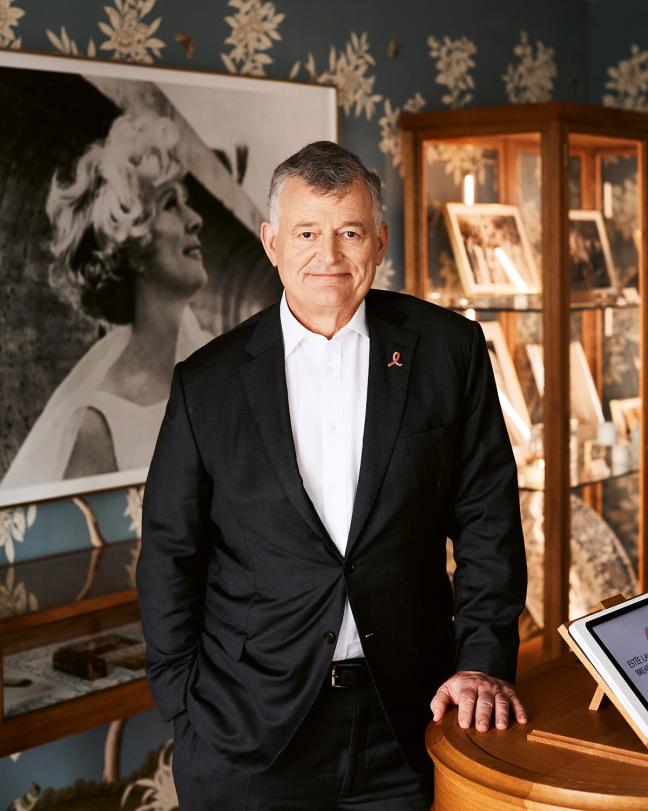
The 65-year-old is now in his 14th year of teaching at The Wharton School, at the University of Pennsylvania, where he’s mentored more than 700 MBA students through his course, Decision Making in the Leadership Chair, and the William P Lauder Leadership Fellows programme. Put simply, he’s guided and advised the next generation of business leaders how to get the edge in the cutthroat, dog-eat-dog amphitheatre that is the corporate workplace, but more on that later. For Lauder, it wasn’t always that way around. Growing up in the heights of New York City, Lauder “had the privilege of choosing [his] parents well”, he says with a smile in the office of London’s Future Dreams, a building linked to the Breast Cancer Research Foundation — a charity founded by his grandmother, of which Lauder is now co-chair of the board.
“I was given exposure early on, both to the beauty industry, because it was family business, but also to business conversation,” he says. “A lot of conversation over the dinner table was family business.”
As the grandson of Estée and Joseph Lauder, the founders of the eponymous cosmetics empire launched in 1946, the company grew into a corporate giant. Today, it’s made up of more than 20 brands that have served generations over nearly 80 years.
For Lauder, it’s hard to tell where business and family culture intermix, but that’s been the story of his life.
After college in New York, he initially avoided the clutches of the family business, choosing “curiosity” as his compass for navigating life while at Wharton. At 20 years old, he packed his case and headed for Grenoble in the French Alps as part of his studies. “It was close to skiing, which I enjoyed,” he remembers, “and I wanted to have a different experience, knowing that I would be going back to Paris for the rest of my life.”
Upon graduating, he went to work for Donald Regan, then the Secretary of the Treasury for President Ronald Reagan. “I was blown away at how much responsibility I had at a very young age, in my early 20s,” Lauder admits. Despite working on everything from policy issues to improving the IRS cheque-processing system and even writing the Treasury position paper on the Soviet Union’s pipeline agreement with Germany, politics weren’t for Lauder. It was time to enter the family business. Almost.
“I decided to try to see what life would be like as a retailer,” he says, referring to his three-year role at US department store Macy’s, where he helped open its first store in Dallas, Texas. Gaining valuable experience on the shop floor, while immersing himself in another culture, Lauder learnt the ropes in leadership, problem-solving and adapting to new challenges — skills that would help him in the role he’d been waiting for.
Finally joining the family cosmetics conglomerate in 1986, Lauder started off with Clinique in the USA before creating the innovative Origins brand in 1990, which focused on using natural ingredients. In 2004, he took the top spot as CEO, where he led the company until 2009. “It was a sentence of five years,” he says, explaining how his time at the top was dominated by dealing with the Sarbanes Oxley laws that were ushered in after corporate accounting scandals had engulfed companies like Enron and WorldCom. “The simplest way I could characterise it was you, as a CEO or a CFO, were presumed guilty until proven innocent.”
After 2009, Lauder transitioned to a chairman position, while becoming increasingly interested in the role of corporate values. “I believe very strongly in the expression ‘values eat strategy for breakfast’.In a global company, there are thousands of decisions being made every single day, 24 hours a day. And those are going to be done by doing the right thing to do, not by if it’s in the strategy or not.”
But Lauder’s interest in values, built on the foundations of a longstanding corporate career, wasn’t just a short-term obsession. This “mission”, as he refers to it, steered him head-first into a career in education and philanthropy.
“I find people like me with grey hair learn much from people in their mid to late 20s, because they’ve grown up with a different mindset,” he reveals about his time mentoring hundreds of students at Wharton.
Once a corporate captain of the highest order, today Lauder is focused more on philanthropic efforts rather than profit, both for the family business and the Breast Cancer Research Foundation. “I feel it’s important that we find a way, both as an organisation and as a member of society, to make a difference in people’s lives,” he explains.
“If people feel good about the role that they have and then the impact they make, it becomes this virtuous cycle of being a better citizen. That’s what I spend a lot of my time working towards these days.”
To receive the latest in style, watches, cars and luxury news, plus receive great offers from the world’s greatest brands every Friday.