“I wish I’d left the party a little sooner…” The bright, dark nights of Jay McInerney
The author of the excellent new ‘See You on the Other Side’ on literary celebrity, almost dying, and New York in the 1980s
- Words by: Joseph Bullmore
Jay McInerney is fond of the word ‘bright’. It pops up in the title of three of his nine novels, including that of his wunderkind debut, Bright Lights, Big City, which he published in 1984 at the age of 29, and which forged him, fittingly, as a latter-day bright young thing — albeit one more taken to hanging out in dark old places. The cover of that book was bright, too — glowing with the red neon sign of The Odeon restaurant in Tribeca, part of the 1980s downtown melee that McInerney helped stoke; a hotspot, he wrote, that always made you “feel reasonable at any hour, often against bad odds”. McInerney even has the word ‘bright’ in his email address. Why that word in particular?
“I’ve always associated the word as much with people as with a quality of light — with luminous, ambitious people, of which New York seems to attract a great share,” he says. “I don’t know. I’m a little fixated on it.”
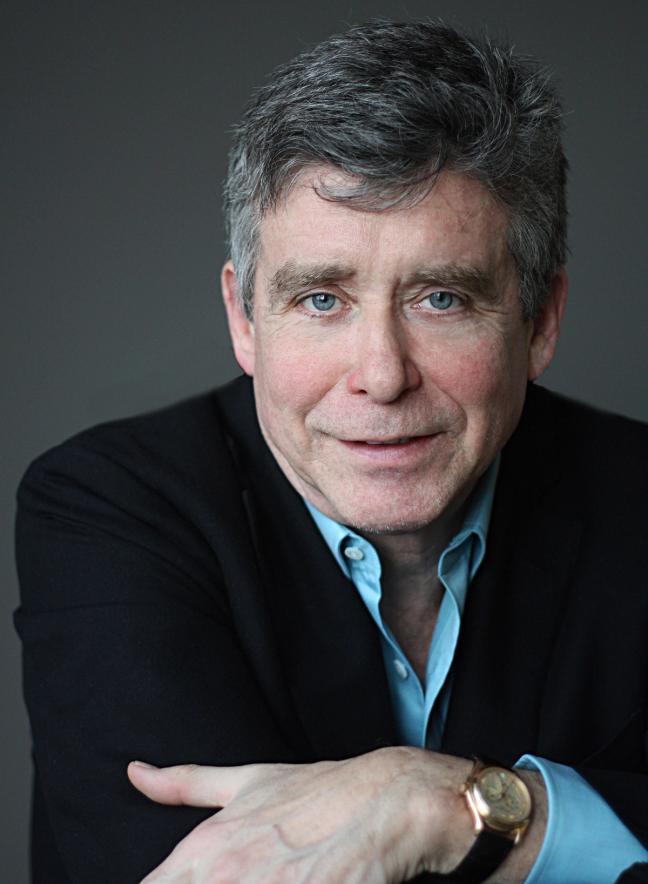
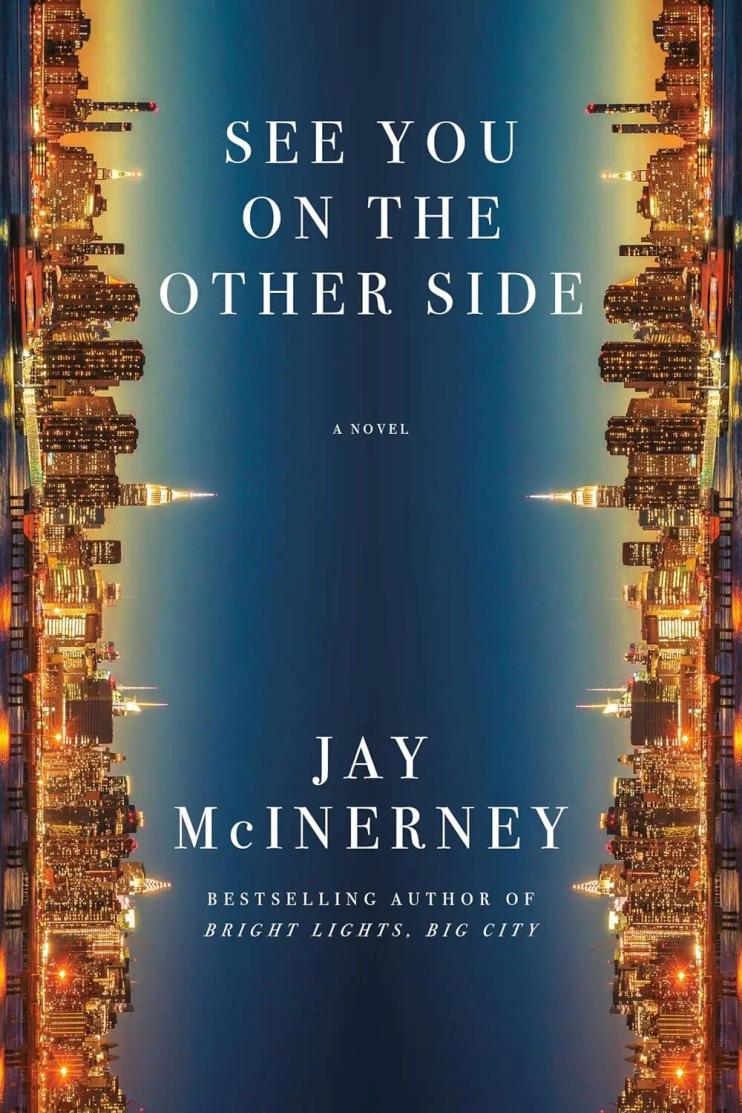
That fixation now takes the form of McInerney’s newest book, See You on the Other Side, whose cover shimmers this time with the mirrored skyline of Manhattan. It is the fourth and final novel in a tetralogy which has followed the debonair couple Russell and Corinne Calloway and their oofy Manhattan pals from the go-go 80s to the no-no present day. McInerney got the title from a sign he saw outside a shuttered diner during the pandemic: “See ya on the other side.” During its composition, he saw a little of the other side himself, following a fall in 2023 and emergency brain surgery in 2024 — and then a heart bypass operation pretty much immediately after that. McInerney, a proper wine collector, took a half bottle of Krug into the hospital with him for the procedure. When he was done, the writer’s block that had plagued this latest novel had cleared, and he completed most of the manuscript within a week.
When we talk, over a transatlantic Zoom call that beams me straight into the top decks of McInerney’s rather lovely Manhattan apartment, he looks younger than those operations imply, sun-tanned in a Lacoste polo shirt — a character from his own novels, perhaps. Soon, he will write himself into the bibliography for real, however, with a memoir which will surely be one of the most fascinating and bombastic in the recent memory of the chattering classes. McInerney knew everyone, dated quite a lot of them, and did coke with the best of them. The book will likely form the third part of an unofficial triptych of roistering twentieth-century Manhattan memoirs that includes those of editor Graydon Carter and restaurateur Keith McNally, both released last year. McNally, of course, was the restaurateur who opened The Odeon in the first place and who helped forge that downtown scene — artistic, literary, commercial, hedonistic — which the author and his enfant terrible siblings, Brett Easton Ellis and Tama Janowitz, famously inhabited. Jay McInerney, in many ways, began at The Odeon — and so we did, too. JB
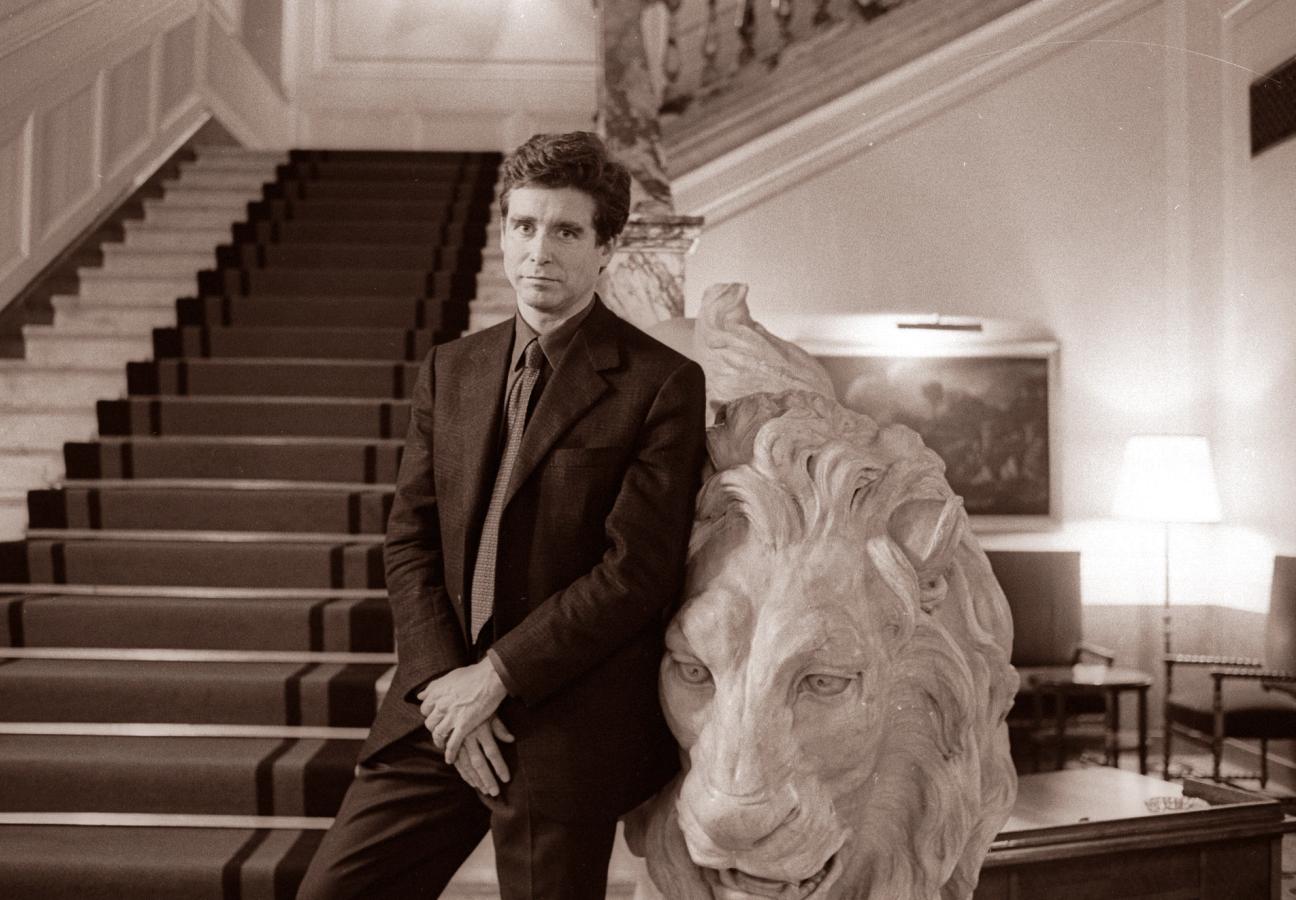
McInerney in Nardo, Italy, 1996. “I think younger people are nostalgic for the pre-digital age…”
_____
Jay: The Odeon opened very shortly after I arrived in New York City. It was really the first downtown restaurant which opened in an area that had previously been kind of derelict, but which was increasingly attracting artists. Artists became a key constituent for that place, along with the Saturday Night Live cast, and models. It became very fashionable very quickly.
I couldn’t really afford to eat and drink there, so I would usually just drink and watch the people, which was kind of fun. And then eventually, when I wrote Bright Lights, Big City, the Odeon naturally made an appearance in the book. It appeared on the proposed cover, too, so I had to go down and get Keith McNally’s permission. Keith, I guess, looked at the book and didn’t think much of it. So he just said, “Yeah, fine, whatever. Three or four months later, he was walking up Fifth Avenue and spotted many copies of my book through the window of Brentano’s bookstore. So he decided he’d made a mistake not charging me. We have lots of arguments to this day about whether I owe him money or he owes me money…
Joe: There seems to be a renewed fascination with people like McNally, what with the release of his book last year. We seem in a particularly nostalgic moment for the heyday of Manhattan in the ‘80s and ‘90s…
Jay: I think younger people are nostalgic for the pre-digital age and for an age when Manhattan was more manageable. When I moved here, it was possible for a dancer or a writer or even a poet to find a place to live in Manhattan, and usually downtown Manhattan — the less expensive part, the more bohemian part of the city.
I certainly get a lot of interest and queries from people in their twenties about what it was like there in the ‘80s. It was definitely different; grittier. Everything was analogue.
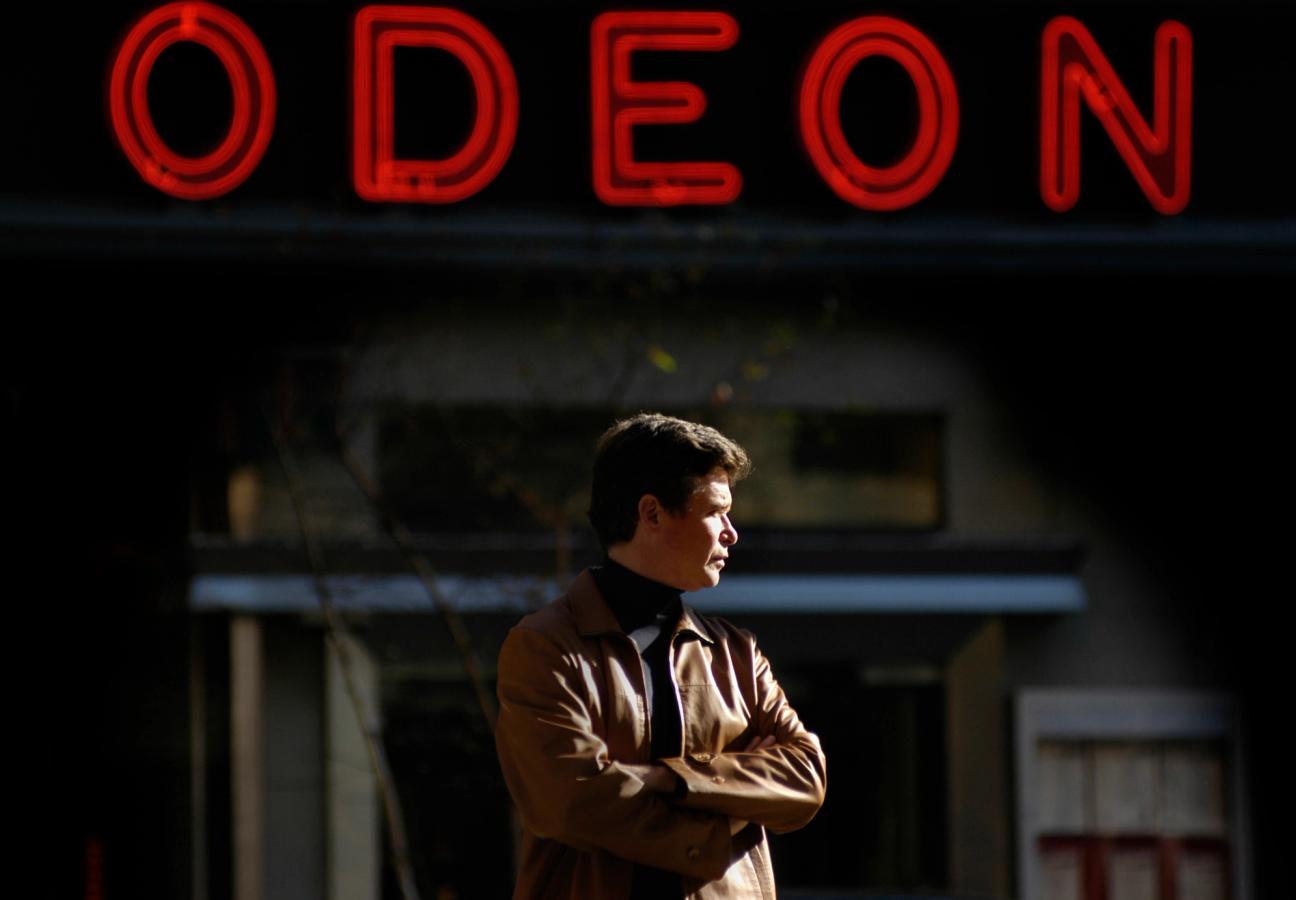
Outside The Odeon in 2004. “At first, I couldn’t afford to eat there, so I’d usually just drink and watch the people…”
Joe: This book brings your tetralogy up to the modern day. I wonder what your sense right now is of New York as a city?
Jay: Well, I don’t want to sound like a delusional old fart, but in some ways, I don’t think it’s as fun as it was. There was a sort of underground when I first started here; scenes that no one knew about. That’s less the case now with social media.
The city has become very gentrified in the sense that the middle class returned to New York, and then the middle class became the upper middle classes, as there’s been a great deal of money generated on Wall Street. There are now virtually no neighbourhoods you could say are marginal and decrepit, as there were when I first came here.
If you were willing to live in certain neighbourhoods, you could afford them. You had to be careful about getting mugged and getting your apartment broken into — but at least you could live here.
Joe: The novel is, in many ways, also your goodbye to the Calloways. Was that emotional in some way?
Jay: It was emotional when I finished the book because I knew I was saying a definite goodbye. It was fun having them in my life, in a sense. But now I’m on to new things. I have this new memoir, which I wrote at the same time as I was writing this, which will probably be published fairly soon if we can get over the legal hurdles.
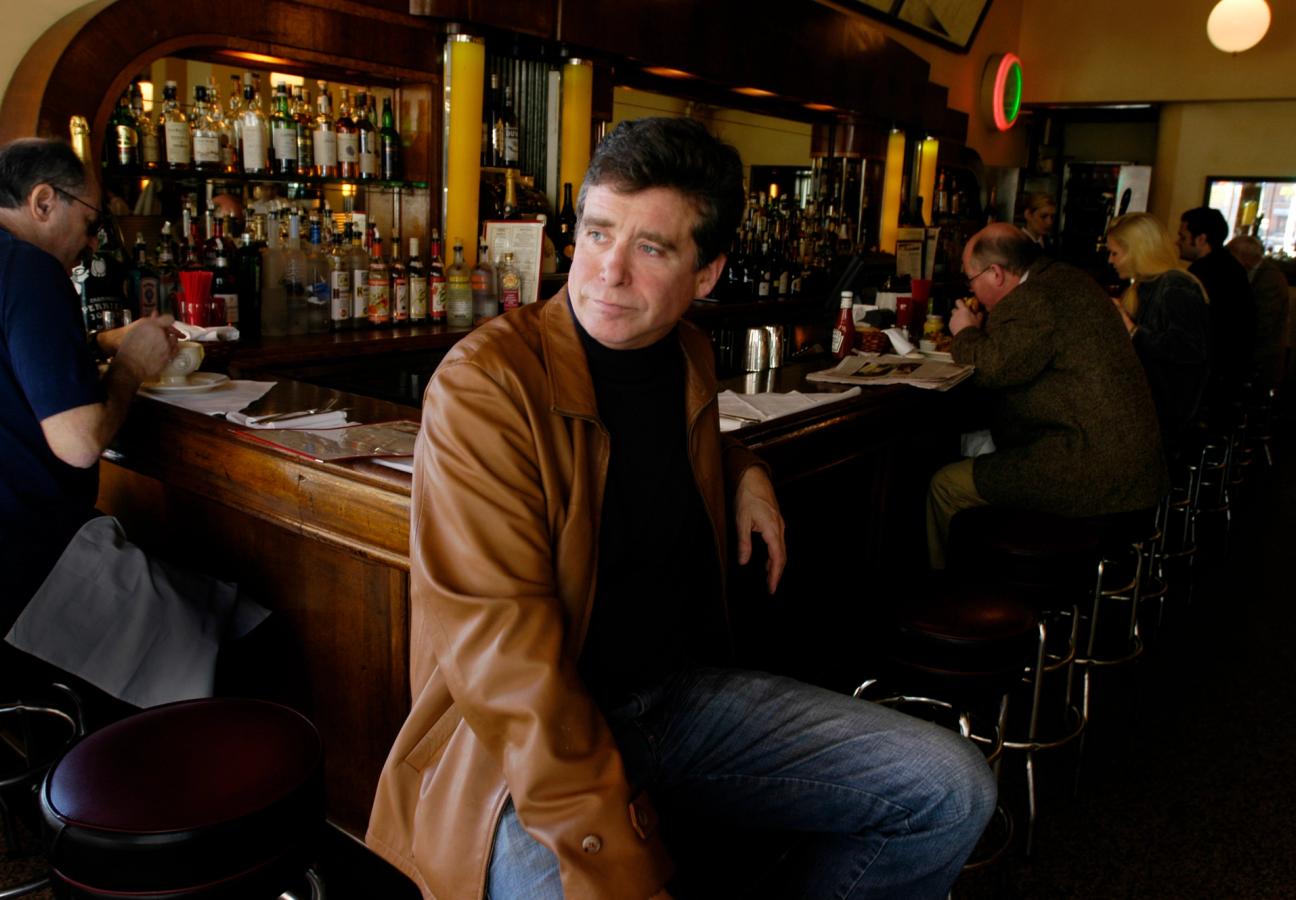
“In some ways, I don’t think Manhattan is as fun as it once was…”
Joe: It’s harder writing about real people in that way, I suppose…
Jay: Yeah. Ex-wives, girlfriends. I feel like I’m generous to almost everybody in the memoir, but that won’t stop certain people from being irritated to see themselves. We shall see.
Joe: I can’t think of a richer New York life to dig into — apart from perhaps George Plimpton’s [the bon vivant and owner-editor of The Paris Review, who famously only committed to doing his long-anticipated memoirs just before he died in 2003]...
Jay: George died quite young, considering he was very athletic. But he also had some bad habits. He was a very good friend of mine, and he published my first story. I borrowed his house for three months to finish Brightness Falls.
Unfortunately, there’s no one like him now. The centre of the literary world was really his townhouse on East 72nd Street. He would have these amazing parties, and every living writer I could think of was there when I first started going — Robert Stone, Truman Capote, William Styron, Gay Talese. They were all there playing pool and chasing girls. It was great.
Joe: Everyone wanted his memoir for the same reason they’re dying to read yours. You seem to have had a picaresque way of bumping into lots of significant people along the way, and your life traces the highs and lows of your city over the past 40 or 50 years…
Jay: It helps, number one, to be in New York, and number two, to be fairly well known. There are lots of interesting people in my memoir like Mick Jagger, Tom Cruise, Michael J. Fox, Carrie Fisher, Andy Warhol, Truman Capote. I’ve had a privileged perch here, I guess. Mostly it’s been fun. Some of it has been very taxing.
Joe: Is it a strange thing to sit down and put your life on paper? It must be a very different activity to novel-writing…
Jay: It’s very strange. You’ve got to deal with the vagaries of memory, and you have to dredge back. I suppose I also have to consider my motivations for various activities in my life. It’s strange, but I’m glad it’s almost finished rather than just starting. I started it back in 2020, and it was a lot of work. It was probably more work than writing this novel.
Joe: See You on the Other Side is also a covid novel. We’re still sort of getting our heads around the pandemic. I wonder what that time was like for you in particular — as a noted gallivanter and host and man-about-town…
Jay: Well, it was terrible in some ways. But it was terrible for everyone. One of the only good things about the pandemic was that it was a leveler for us. Most people experienced it in a similar way, although some people had more space to wander around in than others, and I was one of those because we do have a second home in the Hamptons on Long Island.
That was pretty much where I retreated because New York ceased to be New York in a way. It became a city of architecture, not much else. What makes New York is the people, the activities, the social life, and all of that disappeared almost overnight.
That’s what I write about. So at first, I just thought, I can’t really write about this. There were no gatherings, no restaurants, no affairs. I mean, how did you have an affair during the pandemic? Which actually comes into play in this book because Russell probably would have had an affair, but suddenly we were back to the 19th Century. There were obstacles to people getting together outside of marriage.
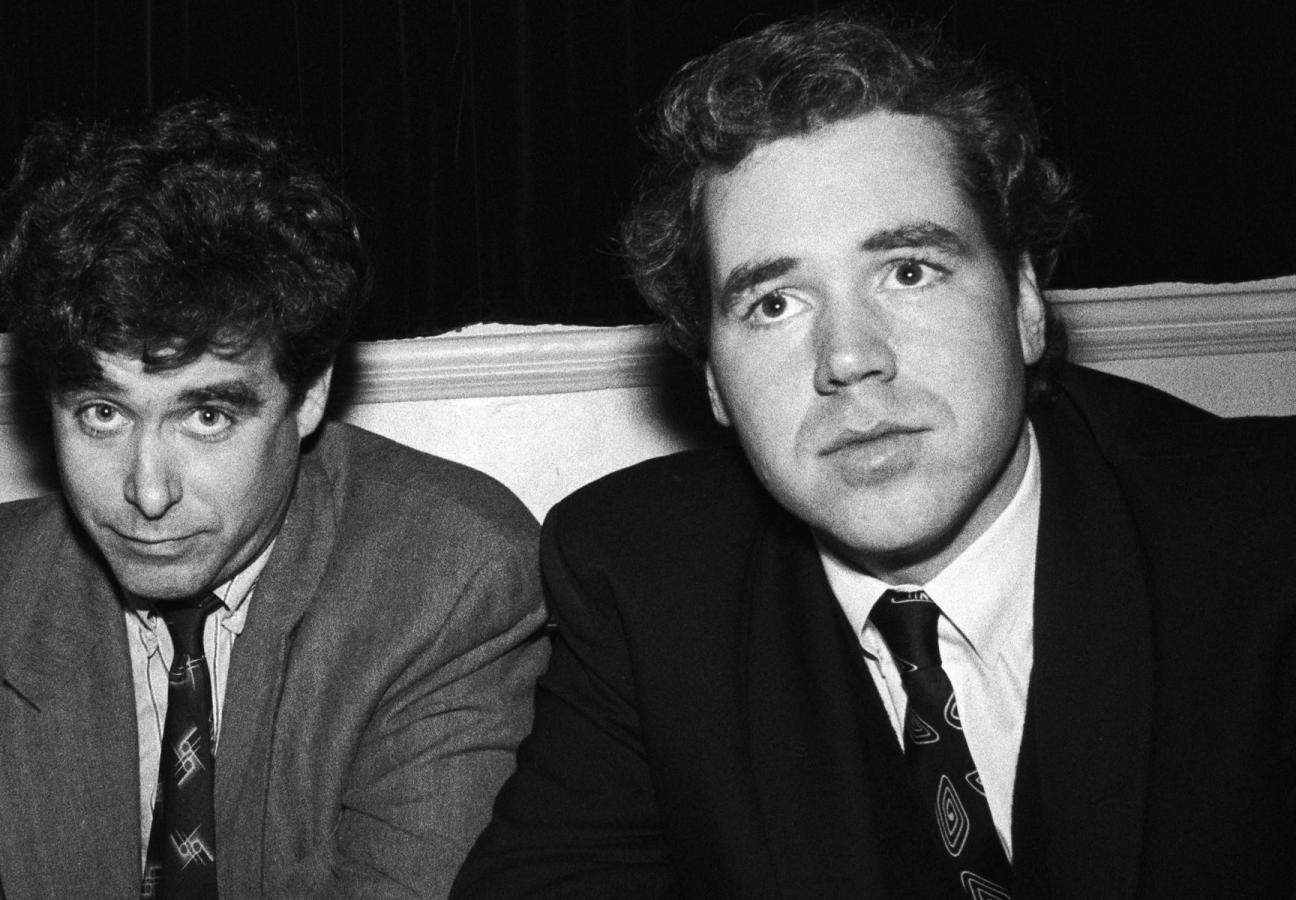
With Bret Easton Ellis, a fellow member of the literary ‘Brat Pack’, in 1990
Joe: I’ve read you say that you nearly quit writing this book several times. Is that right?
Jay: I remember getting very frustrated for a while. I just wasn’t sure where I was going. I think that was partly the sense of the lack of activity during the pandemic and the lack of, ultimately, material during that time.
And then 2024 was a bad year for me because I had brain surgery and heart surgery. After the brain surgery, I’d been blocked for about three months. It turned out to coincide with this period where I had something called a subdural hematoma.
After I had the brain surgery, I suddenly felt very inspired and sat down and finished the book. My neurosurgeon thinks it was all his doing. Maybe he poked the right thing in there. But it was a terrible year, 2024. I got hit with everything all at once.
Joe: The last time that happened to you was in the lead-up to your first novel — during which you lost your job, had a divorce, and sadly lost your mother. That was a very bad year. But bad years seem quite good for you creatively, in an odd way.
Jay: It’s true. I think the first person that said this as far as I can determine was Hemingway. He said that the best thing that can happen to you as a writer is the worst thing that can happen to you as a human — so long as it doesn’t kill you. He said: then you can write about that thing. I think there’s some truth to that.
Joe: I love the detail that you brought a half bottle of Krug into your surgery. Is that right?
Jay: Oh, you read that? I did bring a half bottle of Krug, yes. I was chastised for that, but I don’t see what it had to do with anything except having some kind of pleasure in the hospital. We’re screwed otherwise.
Joe: That first novel catapulted you into celebrity, and it’s often said that you and your ‘Brat Pack’ were the last proper literary celebrities we had. Do you think there’s any way we could return to that age?
Jay: It doesn’t seem to be happening. It’s such a different universe. There weren’t as many distractions then as there are now, and the novel still had a kind of cachet that it may be losing.
Now there’s so much more television. When I was writing Bright Lights, Big City, there were three channels. There was no quality adult drama particularly on TV. It was just sitcoms and cop shows, that’s what we have.
So I think it’s more pervasive and diverse than it was. And then there’s social media too, which is a whole different creature. I’m not sure it’s going to happen again. I still like to read novels by young people because there’s a certain music in the spheres that you hear when you’re young that you stop hearing when you get older…


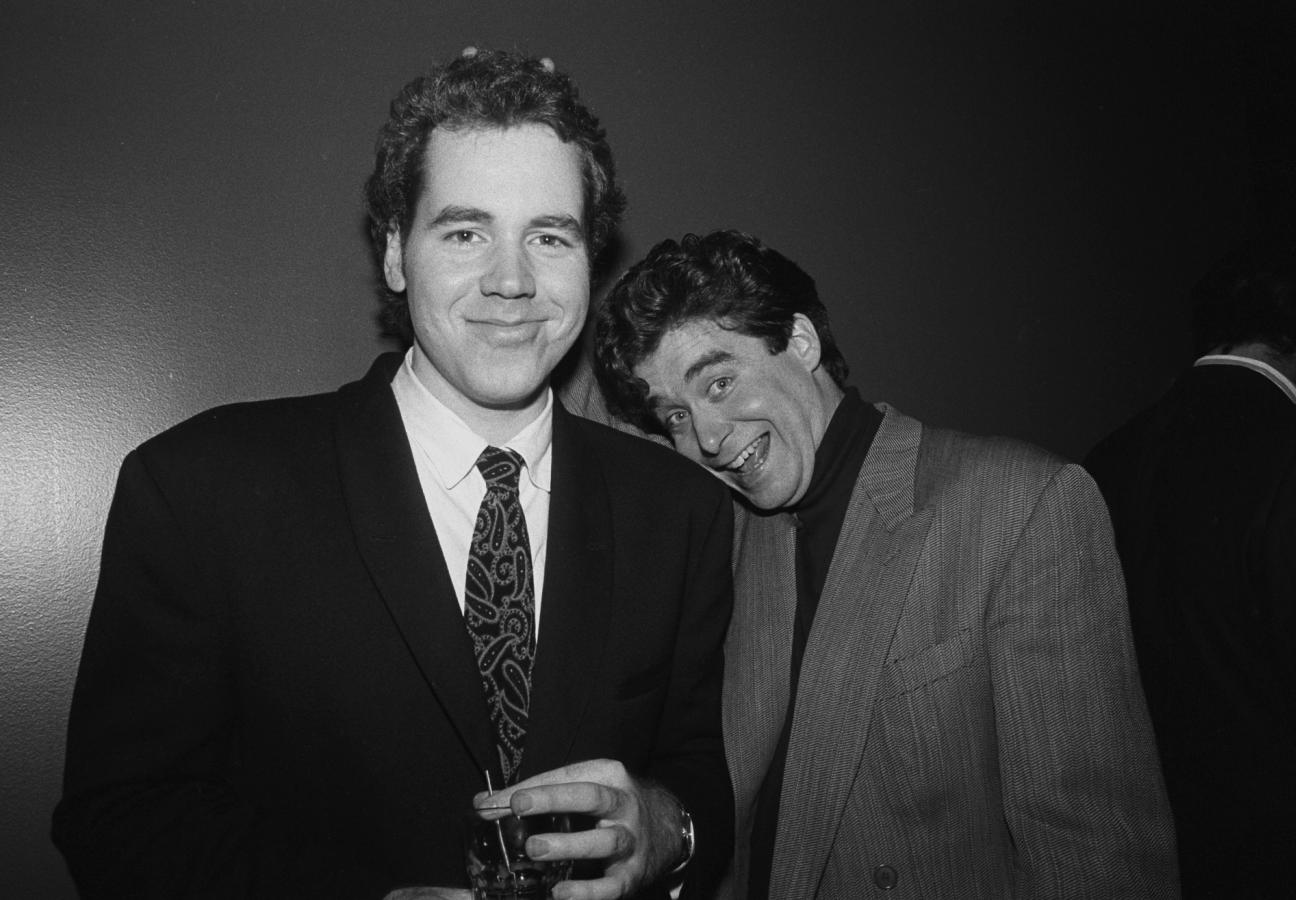
“I think the party-going both helped and hurt my reputation…”
Joe: Do you think your reputation as a party-goer, as an enfant terrible, helped your success as a novelist?
Jay: It helps and it hurts. I think my reputation, the sort of persona that developed around me, was helpful in the sense that people knew who I was. But it was not very helpful in terms of literary critics with very stunted social lives writing about me resentfully. There was a lot of schadenfreude attached to that as well. So it’s a mixed blessing.
Joe: I interviewed Jann Wenner a few years ago [the founder and longtime editor of Rolling Stone magazine], who obviously had a party-going streak himself. He told me at one point that he regretted most, but not all, of the lines of cocaine he snorted. I wondered what your sense is of that lifestyle now, looking back?
Jay: Ha! Well, I snorted cocaine with Jann a few times. In my case, I can say that cocaine gave me a subject in Bright Lights, Big City. It was a pretty substantial part of the book, so certainly that time wasn’t wasted. But I wish I’d left the party a little sooner. I can’t remember the last time I did cocaine, but it was quite a while ago. And I think at this point I would just become really paranoid and weird and anxious. There was a time when I missed it and I used to dream about it a lot, but now I don’t at all. I don’t miss it. And I realized that there was a lot of wasted time and energy and blather associated with cocaine. But you can’t take it back.
Joe: Wine is an enduring pleasure of yours. Why is so much wine writing so bad, when wine itself is so evocative?
Jay: Well, that’s why I started doing it. When the editor of House and Garden first asked me to write about wine, I said, “I’m not an expert. I don’t know that much.” And she said, “Yeah, but I’ve heard you talk about wine. Unlike most people, it’s sort of fun when you talk about wine.” And she said, “also as a novelist, why don’t you just try to write about wine the way you write your novels and write about the characters that make it?”
And the other thing that’s bad about most wine writing is that you’d never realize that wine makes you buzzed. It’s one of the reasons that we drink it. It’s not just because it has flavours of raspberry and red fruit and oak…
And I think that a lot of wine writing is either too technical, or else it piles on these descriptors of things that most people can’t really taste, adjective after adjective of alleged flavours found in the glass.
And I think metaphor and simile are more useful when describing wine. Saying the Chablis is like Kate Moss gives you a certain sense of leanness. (I was about to say elegance, but that’s not quite right with Kate Moss…)
Joe: It’s an interesting industry because it’s quite ripe for bullshit. Which is part of its charm and part of its difficulty. I know you wrote before about Rudy Kurniawan, the famously brazen fraudster of Burgundy wines. I wonder if you think you have a good nose for bullshit, as a novelist who is also an expert on wine in some way…
Jay: Well, I always thought Rudy was a fraud. I tried to interview him, and he didn’t want to talk to me because I think he saw a lot of downside and not much upside.
I just thought there was something too good to be true about how this guy who suddenly, within the space of two or three years, accumulated such a big cellar full of all these rare wines that nobody had seen in years.
And what finally tripped him up was that, at the last auction he sold wine at, he sold a number of bottles that didn’t even exist. He sold the 1937 Clos de la Roche, and Laurent Ponsot said, “We didn’t own the vineyard back then.” There were five or six wines like that that could never have existed, and he finally got tripped up.
Joe: Did you encounter any of the other great fraudsters of New York? Did you know Bernie Madoff?
Jay: No, I didn’t know him. The financial fraudsters are not particularly looking for me… I encountered that woman, Anna Delvey, though. She seemed very weird to me. New York is a good place to come and pretend to be someone that you’re not. And some people never get caught.
Jay McInerney
See You on the Other Side
£18