Cars -- 5 days ago

Fit is the quiet determinant of whether running becomes habit or irritation. A shoe that allows the foot to swell, flex and settle will carry you further than any promise of speed.
The quickest way to tell whether a man runs is not to ask him about his weekly mileage. It is to glance at his toes when he takes his running shoes off. Blackened nails, raw blisters and plasters arranged like battlefield dressings usually indicate a gentleman who has bought "good running trainers" and then treated sizing as an optional extra.
The tragedy is that running shoe fit is not arcane. It has simply been buried under jargon, brand mythology and the male tendency to assume that if one suffers in the name of sport, one must be doing it correctly. In truth, a running shoe has a rather dull brief, hold the foot securely, give the toes room to behave themselves, and permit you to leave the house without returning maimed. Everything else is marketing.
Think of this, then, as the Department of Sensible Footwear. Calm, slightly officious, and dedicated to saving you from your own heroics.
Begin with the most unpopular fact in menswear: your “usual size” is largely fictional. It may work for loafers and Oxfords, but in running shoes, your feet demand their own terms.
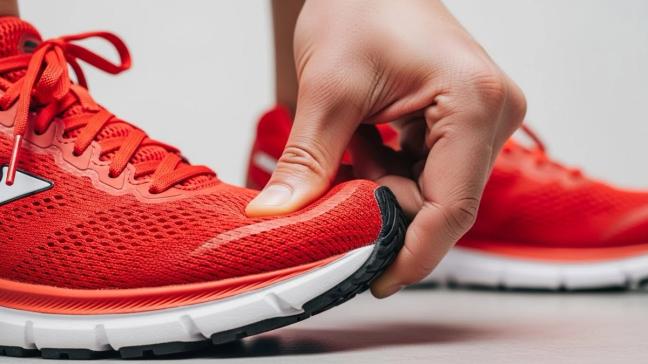
Stand up in the shoe with your heel gently snugged into the back. There should be a modest but meaningful gap between your longest toe and the end of the shoe, roughly the width of a thumb, no more, no less. Your longest toe may be the big one; equally, it may be the second, in which case you must trust anatomy over ego and measure from that instead.
That little buffer is not indulgence. It is the region in which your foot lengthens and migrates as you run, particularly downhill or towards the end of a longer effort. Remove it, and every footstrike becomes a minor collision between toenail and toebox. The result is familiar. Bruising, black nails, and eventually the ghastly moment in the shower when half of one decides it no longer wishes to be attached.
For many men, this means going up half a size from their everyday shoes, occasionally a full size if they are running serious distances or have particularly enthusiastic foot swell. One may cling to the psychological comfort of “being a 9” if one wishes; one’s toes, however, will file across-party motion for a 9.5.
If you are in doubt, err very slightly larger rather than smaller. A shoe that is a fraction generous in length can be coaxed into obedience with socks and lacing. A shoe that is genuinely too short has only one career trajectory, and it is towards the bin.
Once length is under control, the question becomes how the shoe treats the rest of your foot. The broad principle is simple. Secure through the heel and midfoot, freedom at the front. A quiet dictatorship at the back, a polite democracy at the toes.
Lace the shoes in your usual fashion and stand. Across the midfoot, the upper should feel as though it is gently embracing your foot, not interrogating it. You should be able to slide a finger under the laces without needing a crowbar; any sensation of burning, tingling, or the top of your foot pleading for representation suggests that either the shoe is too shallow or your lacing is too enthusiastic.
At the forefoot, things grow liberal. Your toes should be able to move individually, lift and spread. The small toe should not feel as though it is attending its own inquisition against the sidewall. Light contact is fine. Constant pressure is not. If the upper stretches like a drum over your forefoot, the shoe is too narrow; if it billows like spare sailcloth, it is too wide or too high volume, and you will spend your runs sliding decorously from side to side.
Most respectable brands now offer width options, although they bury this information as if it were a security classification. A man whose entire adult life has been spent thinking “shoes are always a bit tight across the front” may discover, to his astonishment, that a wide fit exists and is not a moral failing. Equally, those with narrower feet may find that a dedicated narrow last stops them from having to lash the laces together like spare rigging just to stop the shoe wandering off.
Volume matters as much as width. Some shoes are high-heeled through the midfoot and forefoot, others are low slung. If you feel a constant pressure across the top of your foot, even when the laces are loose, the shoe is too shallow. If you have to pull the eyelets almost together to get any sense of hold, the shoe has too much volume, and you will eventually own an elegant blister collection.

The back of the shoe is where blisters are either prevented or quietly incubated. The heel collar should cup the back of your foot firmly enough that, when you walk or jog a few steps, there is no obvious lift. A fraction of motion is acceptable; your heel attempting to leave the premises altogether is not.
Crucially, this is not solved by buying a shorter shoe. That simply relocates the problem to your toenails. If the length is correct, yet the heel slips, you have three options. You can adjust the lacing, for instance, by using a runner’s loop through the top eyelets to create a more secure hold around the ankle. You can try a marginally thicker running sock that fills the collar a little better. Or you can accept that the shape of that particular heel counter and your anatomy are not on speaking terms.
Continuing out of brand loyalty is valiant, but about as sensible as reappointing a minister who has already resigned twice. When a heel really does not suit you, no amount of wishful thinking will prevent blisters. A different model from the same brand, or an entirely different brand with a narrower or wider heel, will usually solve the problem with far less drama than you expect.
It is tempting to believe feet are broadly the same. Shoe companies, for many years, behaved as if they were. In reality, you are dealing with an awkward mixture of genetics, sport, work and history. Flat arches, high arches, broad forefeet, bony heels, tailors’ bunions picked up from years in formal shoes: all of these change how a model feels on you.
A high arched foot often likes a shoe with a more generous instep and a slightly higher volume. Try to force it into a low slung upper, and the laces will dig in long before the shoe has properly locked down. A wider forefoot may prefer brands and models that are known for broader toe boxes, such as certain New Balance or Altra shapes, rather than narrower, racier silhouettes that assume the forefoot of a gazelle.
The only way to discover which suits you is to try them. Some men discover that everything made by a particular brand fits like a mild rebuke. Others find that one model in a range is perfect, while its more expensive sibling feels like a tax. Treat manufacturers as options, not as tribes. You are not required to swear eternal allegiance to any of them.

Lacing is often treated as purely decorative. In reality, it is a rather handy tool for fine-tuning fit. You would not rewrite an entire policy document when a paragraph tweak would do. The same applies here.
If your toes feel cramped on top, missing out one of the lower eyelets to create more space over the forefoot can relieve pressure. If your midfoot needs more hold, starting the lacing lower and using every eyelet up to the top can give you that supportive “hug” without bruising the tongue.
The runner’s loop at the top two eyelets is worth mastering. It creates a small extra loop on each side through which the lace passes, pulling the heel pocket tight around your ankle without over-tightening the rest of the shoe. This simple adjustment solves more heel slips and Achilles blisters than any amount of switching sizes.
Alternate patterns exist for high insteps, narrow heels, wide forefeet and all combinations thereof. None of them will rescue a shoe that is fundamentally the wrong shape. They will, however, turn a nearly right fit into a quietly perfect one, which is the sort of marginal gain that matters more than another two millimetres of foam.
Many gentlemen now arrive at the running shop carrying insoles as if they were legal documents. Custom orthotics and over-the-counter inserts can be extremely helpful, but they change fit in ways that must be accounted for.
If you use a prescribed orthotic, remove the manufacturer’s insole from the shoe and replace it. Then reassess length and volume. An insole that is thicker than the original will raise your foot further into the upper, reducing perceived room across the top and around the ankle. A thinner one may make the shoe feel a touch more cavernous.
Orthotics also occupy a little of that precious space in the toebox. The thumb’s width rule still applies, but you must test it with the insert in place. If you ignore this, you will end up with an exquisitely supported arch and a savaged big toe, which rather undermines the whole exercise.
Shoes marketed as “supportive” can sometimes clash with orthotics. Doubling up on structure can make a shoe feel brick-like and unforgiving. If you run with orthotics full-time, a neutral model is often a better canvas. The orthotic provides the control. The shoe provides protection and grip. Each sticks to its brief.
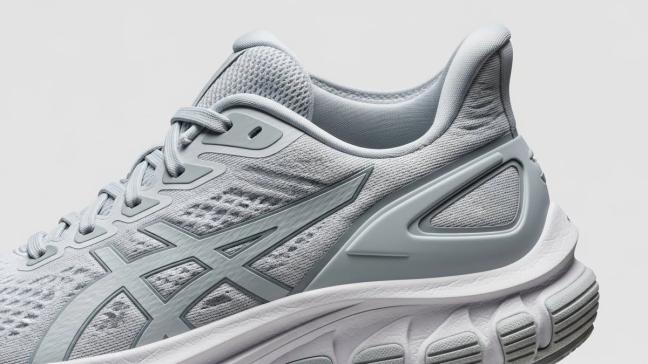
In an ideal world, everyone would visit a specialist running shop, be fitted by a human being with opinions, and trot away with the correct shoes. In reality, people work late, live far from such places, or find themselves seduced by late night discount codes.
If you must buy online, do so with a little process. Measure your feet standing on a piece of paper, marking heel and longest toe, then comparing the distance to the brand’s own size chart, not a generic one. Remember that each manufacturer has its own idea of what a “10” looks like.
Order two sizes if your budget and the returns policy permit, your suspected size and the half size above. Try both late in the day, in your running socks, on both feet. Most of us have one that is marginally larger or more opinionated. Keep the pair that feels correct for the more demanding foot, not the well behaved one.
Walk in them indoors on a clean surface. Jog on the spot. Use any grace period to be ruthless. If you have even a small doubt, an area that feels off, a sense of sloppiness you are hoping will disappear, send them back. The sunk cost fallacy is responsible for a great many injuries. Shoes do not become better because the return label has expired.
A modern running shoe requires very little breaking in by historical standards. Unlike old leather boots, they do not need weeks of creaking and blistering before they consent to cooperate. The midsole foam will soften a touch in the first few runs. The upper will relax around your foot. That is all.
If a shoe feels fundamentally wrong on the first or second outing, if it pinches, rubs, or leaves you limping home convinced that perhaps cycling is the answer, it is not going to blossom into a soulmate. The break in period is for the shoe to mould ever so slightly to your foot, not for your foot to surrender to poor fit.
Introduce new shoes gradually. Alternate them with your old pair for a week or two. This gives your body time to adjust to any difference in cushioning, drop or support. It also gives you a fair test of whether the new model is actually an upgrade or merely a change. Joints are conservative. They prefer incremental reform to abrupt revolutions.
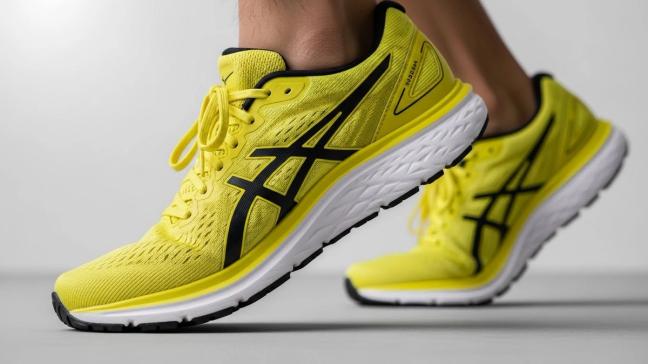
Runners are remarkably good at normalising misery. Certain forms of discomfort, however, are not evidence of stoicism; they are evidence that your shoes are wrong.
If your toes repeatedly hit the front on descents, or even on the flat when you accelerate, the shoe is too short or too shallow. The solution is not thicker plasters. There is more room.
If you experience numbness or burning across the top of the foot, particularly around the laces, you are probably being strangled. Loosen the upper eyelets, experiment with alternative lacing patterns, and if that fails, accept that the shoe’s volume does not suit you.
Persistent blisters around the heel or at the back of the ankle, despite sensibly cushioned socks and halfway intelligent lacing, suggest that the collar shape is at odds with your Achilles. One can bravely soldier on. One can also stop sabotaging one’s tendons and try a different brand.
And if, having changed shoes, you suddenly develop odd aches in knees, hips or lower back, it is time for a quiet review. A drastic alteration in heel drop, support level or overall geometry can shift where the load falls. Sometimes your body adapts. Sometimes it sends a memo. Read it.
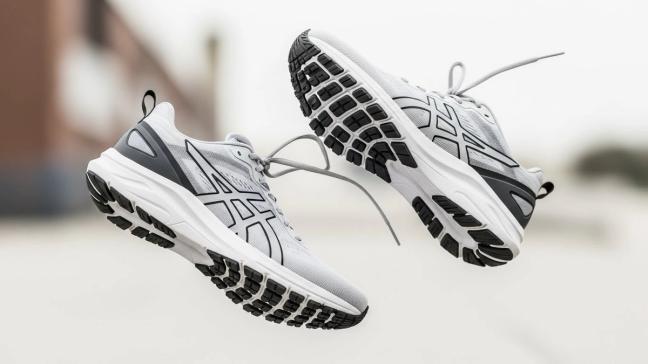
A well-fitting running shoe is a rare luxury in that it is defined by absence. No pinching, no rubbing, no banging of toes, no sense that you must “break them in” like a recalcitrant horse. After the first few minutes of a run, you should cease to be aware of them altogether.
That, ultimately, is the goal. Not to own the most flamboyant colourway, nor the model currently adorning the feet of someone implausibly fast on television, but to lace up, step out and discover that for half an hour or an hour, the most interesting thing about your run is everything except your feet.
Choosing that shoe is less about brand mythology and more about a small, disciplined checklist. Enough length. Sufficient width. Secure heel. Comfortable midfoot. Sensible timing. Appropriate socks. A willingness to walk away from anything that rubs, pinches or slips on day one, no matter how persuasive the marketing copy or how attractive the colour.
For the modern gentleman, that is the real quiet luxury. Not owning a wardrobe of exotic carbon-plated contraptions, but having one pair of running shoes that fit so well you forget they exist until you take them off and realise, with mild surprise, that absolutely nothing hurts that did not already. At which point you may look down, regard your entirely intact toenails, and feel a small, justifiable glow of bureaucratic satisfaction.
To receive the latest in style, watches, cars and luxury news, plus receive great offers from the world’s greatest brands every Friday.