
Style -- 3 days ago
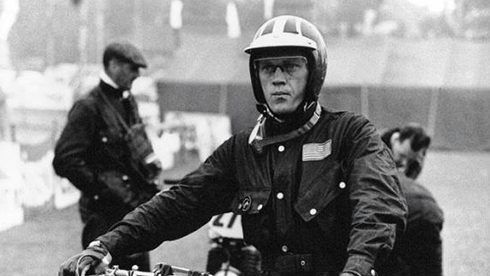
Waxed cotton was born of necessity, shaped by weather and work rather than fashion. Its journey from deck to field to city speaks to durability, repair and a refusal to hurry change.
In the great wardrobe of British menswear, the wax jacket occupies a curious position. It smells faintly of wet dog and linseed, looks as if it has seen things on a moor that cannot be discussed in company, and is just as likely to be hanging in a Kensington hallway as on a peg in a Northumberland boot room. It is, simultaneously, the uniform of gamekeepers, minor royals, festival-goers, architects, barristers and people who insist they are “thinking of moving to the country” while never quite leaving Zone 2.
Like most things that now signal taste, it did not begin as a style decision. It began as a way not to die of exposure.

The wax jacket’s family tree starts at sea. Long before anyone in the 19th century thought of a flattering cut for the grouse moor, sailors were experimenting with ways to keep themselves marginally less miserable on deck.
In the Age of Sail, crews discovered that coating canvas with fish oil or greasy concoctions made it both more wind-efficient and less prone to soaking through. The sails survived longer, the ships went faster, and, because nothing on a ship is ever wasted, offcuts of this treated canvas were turned into capes and smocks. These were crude, heavy things that smelt like an argument with a trawler, but they did the essential job.
By the 19th century, British and Scottish mills were producing linseed-oil-coated cloth specifically for clipper sails and maritime garments. Useful, certainly. Elegant, no. Early oilskins cracked in the cold, stiffened like cardboard and aged to a queasy yellow. Romantic in paintings, less so when you were wearing one in a North Sea gale.
Still, the template was set. Tightly woven cotton or canvas, impregnated with something water-resistant, could keep a man dry enough to remain functional. All that remained was to refine it to the point where you might willingly put it on without also accepting the aroma of a working harbour.
The turning point came in the early 20th century, when British textile wizardry got involved. Mills such as British Millerain and Halley Stevensons began experimenting with paraffin and other wax treatments for cotton. The aim was straightforward. Retain the water resistance of oilcloth, get rid of the smell, reduce the cracking and ideally avoid walking around looking like a nicotine stain.
The result was waxed cotton. Tightly woven, impregnated with a blend of waxes that could flex with the fabric, it shed water, shrugged off wind and, with enough use, developed the kind of lived-in patina that modern marketing departments now call “character”. It also weighed less than the old oilskins and could be cut into garments that looked like clothing rather than improvised tarpaulins.
This was the moment when the wax jacket as we recognise it became viable. A fabric that began as an industrial innovation for ships quietly migrated ashore, where enterprising outfitters noticed that Britain had another set of people who spent a lot of time being rained on: fishermen, farmers and anyone whose working life involved standing in a field wondering why they were not in Spain.
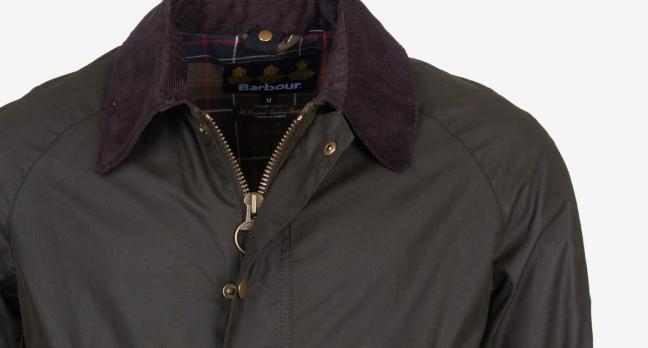
Enter Barbour. Founded in 1894 in South Shields, J. Barbour & Sons began by supplying oilskin clothing to sailors, fishermen and dock workers in a town where horizontal rain is less of an occasional event and more of a civic feature. The company’s early catalogues are full of tarpaulin-like coats and sou’westers designed for men who considered being soaked to the skin an occupational hazard.
When waxed cotton appeared as a serious alternative to traditional oilcloth, Barbour adopted it with enthusiasm. Suddenly, they could offer garments that kept the North Sea on the outside without making the wearer smell like the hold of a trawler. As the 20th century progressed, Barbour’s clientele crept inland. Farmers, gamekeepers and outdoor workers appreciated the combination of weather resistance and toughness. A jacket that could be worn daily, snagged on barbed wire, dragged through gorse, then sent back to South Shields for fresh wax and repairs, had obvious appeal.
Barbour’s genius lay in the shapes it chose to cut from this new fabric. The Bedale, the Beaufort, the Border: these were not fashion pieces in the modern sense, but they were proportioned for riding, walking and shooting in a way that made them immediately useful. Generous pockets for cartridges and cold hands. Rear game pockets. Corduroy collars that absorbed rain and gun recoil with equal stoicism. Slightly boxy bodies that allowed layering without strangling the wearer.
By the time a certain sort of royal and half the county set had adopted Barbour as semi-official country uniform, the wax jacket had quietly graduated from workwear to class marker. What had once been designed to survive South Shields fish docks was now as likely to be seen supervising spaniels as supervising cargo.
If Barbour represents the wax jacket’s journey inland, Belstaff is the branch of the family that stayed loyal to the smell of petrol. Founded in Stoke-on-Trent in 1924, Belstaff specialised from the start in waterproof garments for motorcyclists and aviators, using waxed cotton and leather.
In an era when early motorbikes flung water, mud and whatever lay on the road directly at the rider, a fabric that could keep out at least some of that assault was a competitive advantage. Belstaff’s Trialmaster and similar designs wrapped motorcyclists in a second skin of waxed cotton that protected them from weather, abrasion and the worst of the British road network. The Belstaff kit appeared on racers, record breakers and, later, actors who liked to give the impression they might at any moment ride something dangerously under-braked across a continent.
Where Barbour’s wax jackets tended towards fields, dogs and Land Rovers, Belstaff’s had a whiff of long roads, service stations and cigarettes about them. Both, however, relied on the same basic miracle: waxed cotton that could be re-waxed, re-sewn and re-worn until the garment seemed to have developed its own biography.

By the mid-20th century, the wax jacket had become embedded in British life. It was, in essence, a uniform for anyone obliged to spend time outdoors without the option of simply cancelling the countryside.
In the shires, a classic olive Barbour with a brown corduroy collar was as ubiquitous in winter as mud. Land agents, keepers, game shots, dog walkers, pony-mad teenagers: all wore them. It was not unusual for a family to have one or two Barbours in permanent rotation, hung by the back door and shared according to who had to go outside first. Pockets contained a sediment of cartridges, baler twine, dog biscuits and receipts from a feed merchant.
The jackets were never precious. That was precisely the point. They were meant to be abused, then rescued. Barbour’s repair and rewaxing service became, in its quiet way, one of the brand’s greatest luxuries. The fact that you could send in a decade-old, mud-encrusted coat and receive it back with fresh wax, new lining and a reprieve from the bin spoke to a sort of practicality that feels almost radical in the age of disposable everything. A Barbour that had been repaired three or four times said less about thrift than about loyalty.
Belstaff’s waxed jackets played a similar role in the motorcycling world. They were rarely pristine. Scuffed elbows, frayed cuffs and patched panels told stories of roads travelled and, occasionally, roads misjudged. In photographs from the 1950s and 1960s, the silhouettes of British riders are defined as much by waxed cotton as by engines: belts cinched, collars turned up, pockets bulging with tools and maps.
Of course, the moment anything is sufficiently authentic and unbothered by its own appearance, fashion will eventually arrive with a notebook. From the 1970s onward, the wax jacket began to drift into city life with increasing confidence.
Under Dame Margaret Barbour, the company expanded from pure utility into something closer to rural chic. The core shapes remained, but new colours, linings and collaborative projects nudged the wax jacket into the realm of aspirational dressing. If you lived in Chelsea but owned a dog and a car, you were, by the 1980s, almost obligated to own a Barbour as proof that you occasionally ventured somewhere with grass.
The pattern repeated in the 1990s and early 2000s, when musicians and festival-goers adopted wax jackets as an antidote to logo-heavy outerwear. There is a particular kind of Glastonbury photograph in which the mud is up to the shins, the expression is one of wry resignation and the only thing standing between the wearer and pneumonia is a veteran Beaufort. Suddenly, the jacket that had once belonged to gamekeepers and royal spouses had a second life as armour for indie bands and their followers.
Belstaff, meanwhile, leaned into its cinematic associations. Its waxed Trialmaster appears often enough on screen that it now carries the faint aura of a costume piece even when worn in real life. If Barbour says “my family has a view of some hills”, Belstaff says “I have considered riding across continents, even if in practice I mostly ride to coffee”. Both are acceptable positions.
Around them, other British names quietly joined the waxed-jacket firmament. Private White V.C. in Manchester cut sharply tailored field coats from Millerain cloth. Purdey and Holland & Holland specified waxed cotton for shooting coats designed to withstand both weather and the kind of scrutiny that comes with double guns. The fabric remained essentially the same. The contexts multiplied.
Objectively, there are now more efficient ways of staying dry. Laminated membranes, taped seams, breathable shells that keep out rain while allowing you to puff your way up a hill without turning your jacket into a personal greenhouse. On paper, the wax jacket has been technologically outgunned.
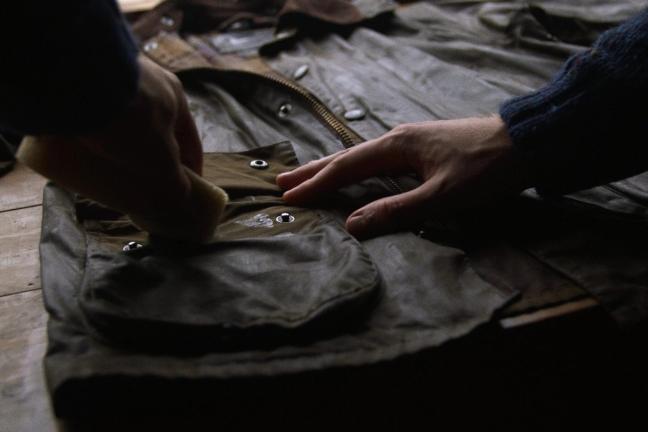
Yet it persists. Not because anyone is under the illusion that waxed cotton is more performant than a three-layer Gore-Tex, but because it does something different. It is quiet. It does not rustle. It does not look as if you are permanently braced for an expedition. It takes on the shape and marks of the life it is worn in. Creases appear where you move. Scratches record encounters with branches and walls. The wax wears at stress points and is renewed by hand, at a kitchen table or by a factory that has seen it all before.
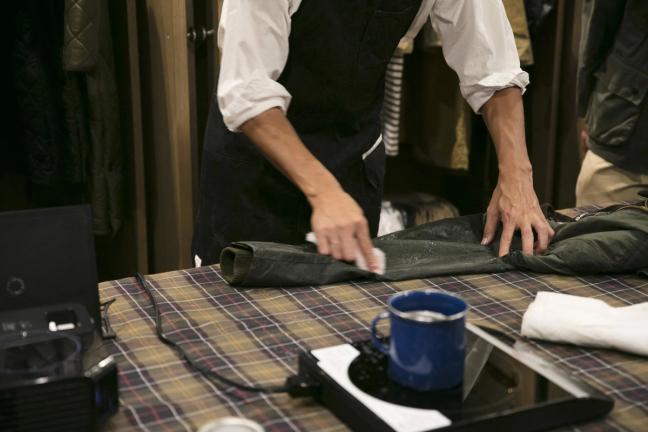
There is also an honesty to the maintenance. A technical shell has a finite life that arrives suddenly when the membrane fails. A wax jacket tells you, long before that, that it is getting tired. Rain no longer beads quite as enthusiastically. The colour has dulled. The shoulders and cuffs look a little hungry. You respond, if you are sensible, by warming some tin of wax, working it into the cloth and restoring the jacket to something close to full function. It is as much ritual as repair, a small act of domestic shipwrighting.
In an age that talks endlessly about sustainability while throwing away perfectly good coats every three seasons, the idea of a jacket designed from the start to be re-waxed, re-lined and re-buttoned for decades feels quietly subversive. Barbour’s repair department has seen jackets older than some of its staff. Belstaff pieces have been passed down from parents who once actually rode in the rain rather than pretended to on social media.
Strip away the marketing, and the nostalgia and the wax jacket is, at heart, a piece of equipment that admits the British climate exists and must be negotiated with. It is not pristine. It is not delicate. It improves with use and accepts, without complaint, that you will occasionally drop it on a pub floor.
A new wax jacket can look faintly affected, as if the wearer is auditioning for a catalogue. A wax jacket that has been worn hard, taken on and off thousands of times, sat in cars and on wet fences, attended shoots and supermarket runs, tells a different story. It suggests continuity. That someone has been paying attention to their environment long enough to dress for it properly. That they accept that they will get rained on and have decided to meet that fact with something tougher than a commuter’s mac.
Barbour, Belstaff and the rest did not invent this instinct. They simply gave it a structure, some pockets and a corduroy collar. The history that began with damp sailors coating canvas in fish oil now plays out every time a man shrugs into an old waxed coat, hears that familiar faint crackle and smells, very faintly, the promise of rain.
It is not a fashion in the fleeting sense. It is infrastructure. And like all good infrastructure, you only really notice it when it fails. The rest of the time, it simply allows you to get on with life, whatever the weather is doing, with a bit more dignity than you probably deserve.
To receive the latest in style, watches, cars and luxury news, plus receive great offers from the world’s greatest brands every Friday.