Lifestyle -- 4 days ago

During production on Three Days of the Condor (1975), Robert Redford pulled costume designer Joseph Aulisi aside with a quiet suggestion. His character’s jeans, he felt, ran a touch long — but he didn’t want to lose their distressed, flared look. And so he proposed a ‘Hollywood hem’: trimming the trousers, then reattaching the frayed cuff. It was a tiny, almost imperceptible tweak, but it revealed something telling about the late Robert Redford — this was a man who understood the power of style.
Because, while the legendary actor leaves behind a remarkable body of work, Redford’s real legacy may well be the way he dressed — on-screen and off. It wasn’t loud. It wasn’t theatrical. Yet it had the kind of offhand authenticity that could only come from a man who understood both his own character, and that of every role he played.
And he often blurred the line between the two. A year after Condor, Redford made All the President’s Men (1976), and worked closely with costume designer Bernie Pollack to achieve near-documentary realism. There were corduroy suits and button-down collars, displaying measured restraint in every detail. Yet, at the film’s DC premiere, Redford arrived in a paisley shirt with a collar wider than Washington — proving that even if audiences thought they had his style pegged, he could still tilt the frame.

Because, like his characters, Redford’s wardrobe had many layers. He could wear a bolo tie with black tie, or zip up a terrycloth tracksuit during his first trip to Cannes’ Croisette in 1972, and make each look entirely his own. His splashier on-screen styles — the famous navy Condor peacoat, his newsboy cap from The Sting (1973), the pink Ralph Lauren suit in The Great Gatsby (1974) — may have dominated recent retrospectives, but it’s the actor’s quieter fashion choices that continue to shape men’s wardrobes.
On Gatsby, for instance, the actor collaborated with costume designer Theoni V Aldredge, who would later win an Oscar for her work on the movie. Despite the glitz and glamour of the costumes, Redford knew that the pastel-toned shirts, highlighted in a key scene, were essential to the heart of both the wardrobe and the story. Jermyn Street’s Turnbull & Asser were chosen to produce these vintage-styled shirts (off set, Redford’s shirting loyalty lay with Anto of Beverly Hills, masters of his preferred spearpoint collar).
Even for such period pictures, Redford seemed to simply reach into his own wardrobe. The Way We Were (1973) dressed him in various varsity knits and collegiate sweaters, setting the tone for an entire generation of preppy, Lauren-esque American menswear. And Jeremiah Johnson (1972), with its iconic red plaid jacket and frontier layering, reignited a love of rugged western wear that still manages to echo in modern workwear today.
Those Western threads, also front and centre in The Electric Horseman (1979), would stay with Redford. Even into his later years, presiding over the Sundance Film Festival in Utah, his uniform remained largely unchanged: bootcut Levi’s, hand-tooled belts, weathered boots and chequered flannel shirts. There were deviations, of course — some soft-shouldered suiting in the mid-90s, and a flirtation with monochrome minimalism around 2005 — but it was always home to the range.
Film, though, even more than western wear, was always Redford’s greatest style inspiration, and its flow of influence ran both ways. After starring in Downhill Racer (1969), for which Seattle based Roffe outfitted the actor in sleek skiwear, Redford became a lifelong client — commissioning custom suits from the brand for decades to come. And then there were his accessories, the finishing touches: the Persols and Randolphs, the wire-rims and dark, round frames he donned on set before adopting as his own. Redford always understood what eyewear could do for a world-famous face — just as he understood what costume could do for a character.
He was, of course, many things: an activist, an environmentalist, a director, a performer. But Redford’s truest, most enduring gift may have been his instinct for authenticity — an ability to make whatever he wore feel lived-in, effortless, and natural. And that, perhaps, is entry #1 in the Redford rulebook: pay enough attention to the details, and your style will speak for itself.
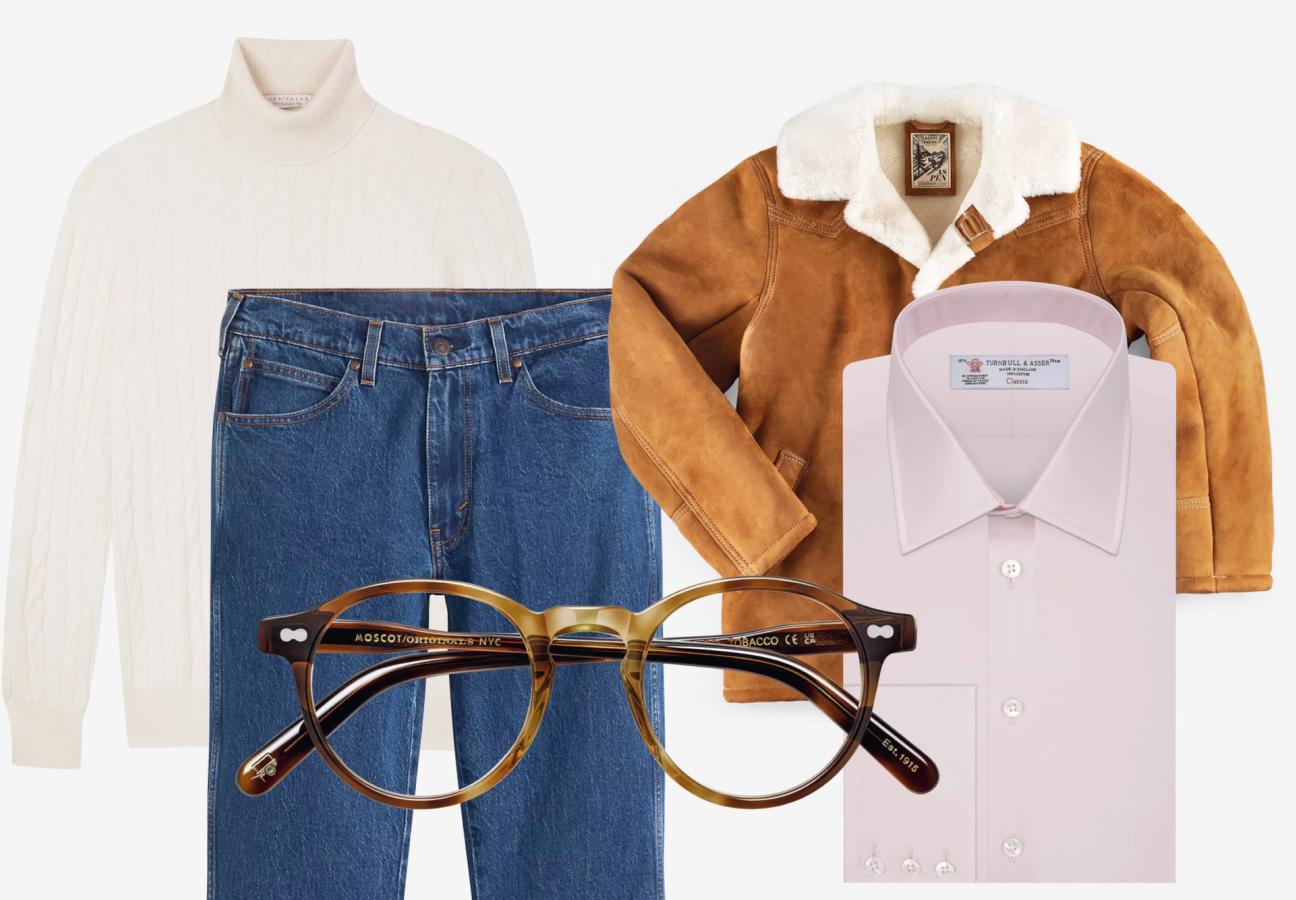
Inspired by The Way We Were
Inspired by Spy Game
Inspired by The Great Gatsby
Inspired by Three Days of The Condor
Inspired by Downhill Racer
Inspired by The Electric Horseman
To receive the latest in style, watches, cars and luxury news, plus receive great offers from the world’s greatest brands every Friday.