
Food & Drink -- 9 days ago

Not everyone wants a scoop and a bottle before training. Gummies appeal to those who value convenience, predictable dosing and a gentler lead-in to a workout.
At some point, the supplement industry looked at grown adults mixing powder into shakers and decided this was far too dignified. Why, they thought, should only children get their vitamins in the form of sweets shaped like something cheerful? Why not give the same treatment to people in stringer vests and compression tights?
Enter pre-workout gummies. Neon, chewable, carefully photographed in front of squat racks. They promise focus, pump and performance in a form factor that looks suspiciously like the pick-and-mix you were told to abandon at sixteen. Instead of scooping and shaking, you unwrap a handful, chew thoughtfully and wait to feel like a menace.
The question, of course, is whether any of this actually works, or whether we are all just eating expensive sweets in gym kit.

To understand the gummy, you have to understand what it is imitating. A traditional pre-workout powder is essentially a legal stimulant cocktail. In its more respectable forms, it contains a few ingredients that actually have evidence behind them.
Caffeine, the old warhorse, increases alertness, reduces perceived effort and, in sufficient doses, persuades you that Bulgarian split squats are a sensible use of an afternoon. Beta-alanine, taken consistently, raises carnosine levels in the muscle and helps buffer acidity during high-intensity efforts, so you can suffer slightly longer before your legs quit. Citrulline helps with blood flow, and that modestly inflated, mirror-pleasing “pump” people write entire manifestos about. There are often supporting players: taurine, tyrosine, theanine, perhaps some B vitamins to justify the word “energy” on the label.
All of this is delivered as a large scoop of dubious fruit flavouring mixed with water. It is not subtle, but it is effective. Powders have one enormous advantage. They are mostly active ingredients. The rest is taste, colouring and a little anti-caking agent. If you want more of a given compound, you use a bigger scoop.
A gummy does not enjoy that luxury. It has to be, first and foremost, a gummy. That means gelatine or pectin, sugars or sweeteners, and acids to keep things preserved and vaguely palatable. Somewhere in that sticky real estate, the formulator then attempts to hide the same ingredients that normally require a scoop the size of a small shovel.
You begin to see the problem.
Look at the labels on many pre-workout gummies, and a pattern emerges.
You will almost always find a sensible amount of caffeine. Two hundred milligrams is common; three hundred if the brand wishes to suggest that its customers are made of sterner stuff than the average accountant. This is achievable in a gummy, as caffeine is potent enough that you do not need much space to deliver an effective dose. Chew four or five sweets, swallow, and within half an hour, your central nervous system knows exactly where it stands on the question of energy.
Beyond caffeine, things become less impressive. Ingredients such as beta-alanine and citrulline are required in gram quantities to match the doses used in most performance studies. Under lab conditions, we are talking three to six grams of beta-alanine per day, and three to five grams of citrulline in the hours before exercise. Cramming that into a handful of sweets without turning them into chalky bricks is a challenge even the most optimistic food technologist might approach with caution.
So you tend to see compromise. A gram or so of citrulline here, eight hundred milligrams of beta alanine there. Enough to write the names on the front of the packet, not quite enough to impress anyone who reads the back. You will find taurine, theanine, perhaps a nootropic or two scattered in at doses that are politely referred to as “supportive” and less politely described as “for show”.
This is not to say they do nothing. Some beta alanine is still some beta alanine; taken regularly, even lower doses will add up over weeks. A small amount of citrulline can still have a modest effect on blood flow. But if you are imagining the full, clinically dosed experience of a serious powder, slipped into a chew that resembles a fruit pastille, you are expecting more from confectionery than physics is prepared to offer.
In practice, most pre-workout gummies work primarily as caffeine delivery systems with decorative extras attached.

If that sounds harsh, it is worth acknowledging why these things exist at all. Convenience is a powerful force, especially in a life where everything else already demands logistics.
A tub of powder requires forethought. You need a scoop, a shaker, water, and a sense of proportion. You need to remember to wash the shaker before it evolves a new ecosystem. A strip of gummies sits obediently in a gym bag or desk drawer, waiting to be chewed in a lift or car park. No sloshing liquid, no suspicion from colleagues, no chance of spilling fluorescent fluid on your shirt just before a meeting.
For some, this alone is enough. A reliable two hundred milligrams of caffeine in a format that does not require an extra vessel is, in itself, a perfectly defensible product. If your idea of pre-workout is
“something stronger than coffee that will prevent me from wandering out of the gym halfway through my warm-up”,
gummies can absolutely perform that function.
There is also the question of tolerance. Not everyone enjoys the full-scale assault of a heavily dosed powder. Some find large hits of beta-alanine uncomfortable, dislike the flush and fizz and prefer a more civilised uplift. Gummies, by virtue of their physical limitations, are unambitious. They deliver a gentler profile. For those who merely wish to feel more awake rather than as if they have joined a cult, this is arguably a virtue.
The trouble is when marketing pretends otherwise.
If you believed every label, you might think you were chewing a complete pre-workout disguised as a sweet. In reality, you are often getting one or two effective ingredients and a supporting cast that looks better in photographs than in studies.
Take the more respectable American offerings that appear in round-ups and on the digital shelves. One brand leans into its “Beast Mode” positioning with a tidy dose of caffeine and then sprinkles in carnitine, theanine and ginkgo at levels unlikely to terrify the peer-reviewed literature. Another, rather more earnest, offers citrulline and beta alanine as well as caffeine, but at doses that would need meritorious patience and a strong jaw to reach the amounts used in most trials. A third goes for broke on caffeine and then attempts to cram the rest of a traditional pre-workout into whatever gelling agent and flavour system will tolerate it.
They are not fraudulent. The ingredients really are present. It is simply that the format imposes ceilings which the marketing copy politely fails to mention. Powders can simply increase the scoop if they want more of a given compound. Gummies cannot plausibly ask you to eat thirty chews without inviting questions about your dental health and your judgment.
Something similar has already played out with creatine gummies. Laboratory testing of several popular products found that the manufacturing process and the acidic, sweet matrix degraded a disconcerting portion of the creatine into inactive by-products. Some contained roughly half of what they claimed. A few contained almost nothing at all beyond sugar and enthusiasm. It would be naive to assume every gummy category is automatically immune to that kind of problem.
The lesson is not that all gummies are scams. It is that chewable supplements are harder to formulate properly and more prone to cutting corners, both deliberate and accidental. As ever, third-party testing and a mildly sceptical temperament go a long way.
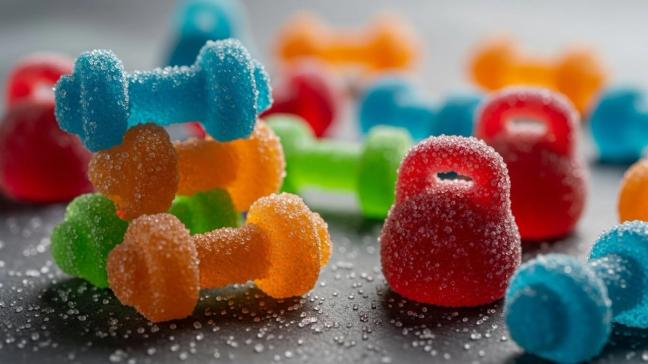
Then there is the question of what else you are swallowing along with your ambition.
Many pre-workout gummies are, unsurprisingly, quite sweet. They rely on sugar, glucose syrups or sugar alcohols to achieve a texture and taste that will not cause a revolt. That means a few extra grams of sugar per serving, or a festival of polyols that can upset a delicate stomach if consumed at speed. For most healthy people, this is hardly catastrophic, but if you are already drinking flavoured drinks, using energy gels or simply trying to keep an eye on your intake, it is not entirely trivial.
The acidic nature of many formulations, thanks to citric and malic acid, also means they are not ideal as something to chew all day idly. Dentists look at people who habitually suck on sour sweets with the same expression they reserve for those who believe flossing is a conspiracy. Pre-workout gummies, used sensibly before training, are unlikely to damage your enamel. Used as a sort of rolling snack throughout the afternoon, they might begin to attract comment.
Again, none of this is a reason to regard them as toxic. It is simply a reminder that they are, in fact, sweets with benefits, not benefits with a hint of sweet.
Once the novelty wears off, the real question is not “do they work?” but “do they work for the sort of person you are?” Different gym characters will find different answers.
If you are a relatively casual lifter, a runner with an on-again off off-again relationship with the weights area, or a busy professional for whom training is squeezed between other obligations, a convenient, mildly dosed gummy might be entirely appropriate. You want something portable that gives you a nudge of caffeine, a little sense of occasion and perhaps a faint tingle to suggest something is happening. You are not trying to optimise your split times to the decimal place.
If you are genuinely chasing performance, training hard and often, and you care enough to know your own caffeine tolerance and your creatine protocol, the calculus changes. At that point, the underdosing of beta-alanine and citrulline in most gummies, plus the occasional mystery around actual content, becomes harder to ignore. A well-formulated powder, dull as it seems, suddenly looks like the grown-up choice. It is cheaper per effective dose, more flexible and easier to stack with other supplements without becoming an accidental confectioner.
There is also the matter of control. With powders, you can adjust your serving. More on heavy days, less when you merely require light encouragement. With a gummy, you are constrained to whole pieces. Five feels silly, six feels unwise and chewing seven begins to look like psychodrama.
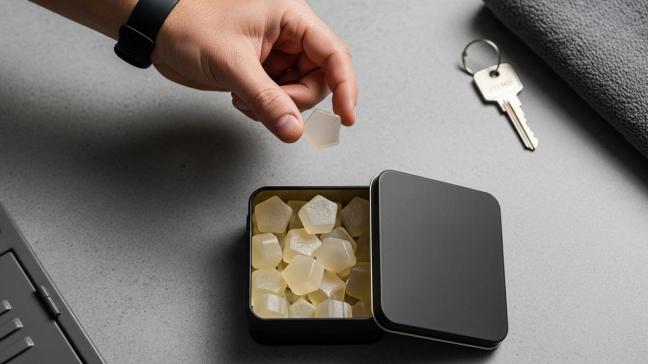
If you are determined to join the chewable brigade, there are a few principles that stop the experience from sliding entirely into theatre.
Read the back of the packet, not just the front. Look at the actual quantities of caffeine, beta alanine and citrulline, not the mere presence of their names in bold, italic type. If the doses of the non-stimulant ingredients are dramatically lower than those used in most trials, assume you are buying a caffeine vehicle with garnish and treat it accordingly.
Favour brands that submit to independent testing and are transparent about their formulations. Anyone can stamp “lab tested” on a label. Fewer go through properly recognised programmes and publish certificates. At the very least, pick companies with reputations they would prefer not to lose over a handful of sweets.
Use them as an option, not a crutch. A gummy is a pleasant way to take on a small amount of caffeine and ritual before a difficult session. It is not proof that you are serious about your fitness, and it is not a requirement for walking onto a gym floor. If you start to believe you cannot possibly train without a bag of chewy stimulants, it may be time to revisit your relationship with both exercise and sugar.
And remember, you are allowed to be boring. A measured coffee, a glass of water and a tolerant nervous system have fuelled many more great training sessions than all the trending innovations combined.
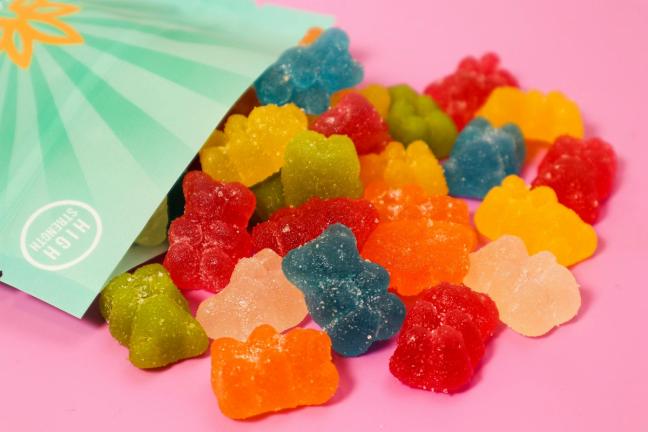
So, do pre-workout gummies actually work?. Yes, within limits. Chewed at the right time, the better examples on the American market will make you more alert, a little more willing to work and, occasionally, faintly tingly. They will not, in most cases, deliver the full suite of performance benefits that a properly dosed powder can provide, simply because there is only so much chemistry you can hide inside something that looks like a fruit chew.
Think of them as the pocket square of your training routine. Stylish, slightly frivolous, capable of contributing more than one might suppose, but not the thing holding the entire outfit together. Rely on them entirely, and you may end up slightly underdressed. Use them judiciously, understand what they can and cannot do, and they can be a perfectly charming accessory to the serious business of getting stronger.
Just do not tell yourself you are taking your training to “the next level” when, in reality, you are mainly taking your sweet intake to a different aisle.
To receive the latest in style, watches, cars and luxury news, plus receive great offers from the world’s greatest brands every Friday.