"Stay on the right side of wrong" — Behind the success of People's, New York's most beloved new spot
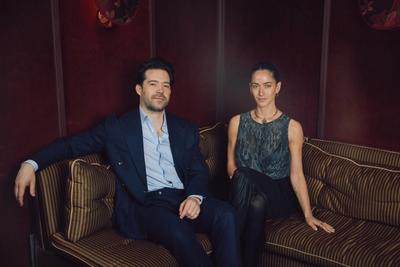
Margot Hauer-King & Emmet McDermott
In a special episode recorded at their five-night residency below Simpsons-in-the-Strand in London, People's co-founders Margot Hauer-King and Emmet McDermott discuss the origin of the venue's name, their cinematic first meeting, and why it's important to be 'the rope and the wave'.
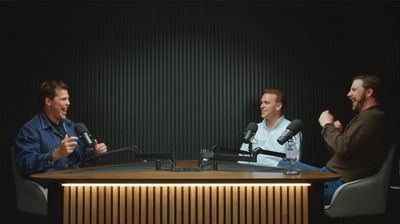
JB: Hello, and welcome to another episode of the Gentleman’s Journal podcast. We’re sitting here at Nelly’s underneath Simpsons in the Strand, and we’re talking to Margot Hauer King and Emmett McDermott about People’s, which it’s not a club, it’s not a pub, it’s not a bar, it’s not a restaurant. It’s much, much more than that. And we’re going to speak to them about how they met, how they had such success with this incredible venue and what they’re doing here in London this week.
But before we begin, I’d love to tell you about Gentleman’s Journal’s Clubhouse. This is our full membership package, which unlocks a whole host of benefits across print and digital, including two magazine issues per year, full access to all our paywalled content, exclusive invites to in-person events, including live panel shows, for example, with some of our podcast guests, and a newsletter in your inbox every single week full of the best stories on Gentleman’s Journal.
JB: Margot.
MHK: Hi.
JB: Emmett.
EM: Hello.
JB: How are you?
EM: Good.
MHK: Bit tired.
JB: Bit tired. You said you got seven hours sleep last night.
MHK: Seven hours sleep is good. No, it’s...
EM: But seven hours coming off of two hours?
MHK: Yeah.
JB: Okay.
EM: You know?
MHK: Yeah.
JB: That’s more like it. That’s what we expect from our hospitality.
EM: The cumulative sleep deficit.
MHK: The cumulative sleep deficit isn’t great. We knew we were buckling in for a week. We have five nights here. It’s full on, but it’s been incredibly fun so far.
JB: So this is the People’s Podcast.
MHK: This is the People’s Podcast.
JB: I might change the whole name of it.
MHK: Take it.
EM: We’re taking over.
MHK: Take it. You’ve got to put our logo on it. But other than that, free reign.
JB: There maybe some legal issues, some copyright stuff.
MHK: You’ll be hearing from my lawyer. My husband’s a lawyer, so you will be hearing from my lawyer.
JB: Okay. I look forward to meeting him, actually. So we’re here to talk about, and we are sitting in, the People’s Manifestation—I don’t know how I’m finishing this sentence—in London. And it’s a wonderful place. It’s beautiful. How does it feel to be sitting here?
EM: Residency, we’re calling it.
JB: A residency.
MHK: Yeah, we cancelled the P word.
JB: Yeah, P word being pop-up.
MHK: P word being pop-up. You know, just on that, because I think... It’s not that there’s anything inherently wrong with them. It’s become a very done thing. It’s happening a lot. We’re seeing it a lot. And I think there is something in the whole way that this came together, where we’re doing it, our relationship to the space that we’re sat in, that makes it feel a bit more than a pop-up. We’ve always talked about People’s, even when we were designing People’s, how do we bring a residential feel to the room, and the experience, and even the food and the drinks. So residence always just felt better for us.
EM: Yeah, more intentional. Yeah, I feel like when you get a word that’s used so many times by brands, and whatever, it loses meaning. And we put a lot of thought into this. It’s kind of a long time coming.
MHK: A somewhat homecoming. And it’s funny, because to state the possibly obvious, this space isn’t People’s. This is typically Nelly’s. Nelly’s, which sits, tucks rather sexily underneath Simpsons in the Strand, a restaurant my dad opened four months... Actually, the week I got married. Yeah, four months ago. And people keep asking us, you know, why here? And of course, there is the fact that there’s this lovely kind of story, because dad’s role that he’s played for us as sort of advisor at times through the past few years. But it’s just also that the environment have had that right feel.
It has that right, I’ll use the word Emmett used, intentionality. People walk in here, it almost feels like New York. And it has that allure to it. It’s funny though, because when we opened People’s, everyone would come up to us and say, “Oh my God, it’s so beautiful.” And we just have to say thank you so much, because you don’t want to be a dick. Whereas here, it’s really fun, because when people say, oh my God, this space is so beautiful. You can be like, yeah, it is. Because we didn’t do it, we can actually talk about that. But no, it’s been—it’s very exciting.
JB: So to zoom out for a moment, for people who’ve never been to People’s in New York, it’s hard to kind of sum up what that is.
MHK: And that’s by design.
JB: Exactly.
JB: I’ve got a quote from you, Margot, “It’s not a nightclub. It’s not a bar. It’s not a restaurant. It’s something else.”
MHK: Yeah, we’ve been those incredibly pretentious people. It’s kind of William Faulkner-esque. We describe what we’re doing in negatives. But the reason for that is, we felt a need in New York for something. There was a very specific moment that was a bit of a rallying cry to us, as people are sitting around the end of a dinner party or out at a restaurant, and what should we do? And where should we go? And we could go off, and likely will, talking about the exact set of sorts of context and circumstances that led to this feeling right. But we realized we didn’t want to open something that sat in a category that already existed. There’s a lot of great bars or great galleries or great restaurants.
And what does it mean to play in some sort of third space that isn’t somewhere else? And one of the best compliments we can get is when people say, oh, there isn’t that much of a comp for it. We don’t know how—it’s not this or that. We don’t really know how to describe it.
And we give our guests a lot of room to sort of project their own stuff onto it. Some people might use it to look at art. Some people might use it to come and have a burger. Other people might use it to come and dance. And by not being overly rigid in how we label it, we create more of a stage for people’s interpretation.
EM: And again, like when you do put labels on things, you fall into the cliche trap. And it’s the same reason why we’re not describing this as a pop-up. Like when you hear a club, in New York specifically, apart from like, you know, like the older clubs, which are just like such a tiny, tiny percentage of social life in New York, you associate it with nightclub. And even nightclub has all of these connotations of like everything from decor to the type of music or the type of dress or ball service or sparklers or whatever has now become associated with that experience that like we very adamantly just wanted to draw around that.
JB: So no sparklers?
MHK: Sadly, no.
EM: Just Margot, the human sparkler.
MHK: And it sets me off at the end of the night. Yeah, mostly that.
JB: So no, you don’t have topless men lifting a bottle of...
MHK: Oh, we do have that. It’s definitely ridiculous.
JB: I was going to say.
MHK: We have it. I’m the sparkler, he’s the topless man. We actually had one of our DJs take their shirt off one day and had to have a bit of a word, because we talk a lot about the right side of wrong. Our matches have a quote on them, which is, “If you can’t be good, be less bad,” which is actually something my dad said to us as children. And if you can’t be good, be less bad or right side of wrong.
JB: Right side of wrong.
MHK: I think part of the kind of part, so much the language that Emmett and I speak with each other and it’s in everything from the vibe in the room to the photos that are going on our Instagram. We love flirting down this cheeky, at times like irreverent line, but ultimately want to keep a sense of sophistication and chicness because, you know, and Emmett speaks on this so beautifully, like there’s such a role for places that become institutions. And if you want to institutionalize a venue, you do to a degree need intergenerational appeal. It can’t be overly, we can’t go too in any direction, whether that’s topless DJs or we have to keep to a place that feels fun and cheeky. We love cheekiness, but without going to the wrong side of wrong.
JB: And so could I bring my dad, 76 years old?
MHK: A hundred percent. I think he’d like it. We have some diehard older regulars and we love them and they’re phenomenal guests. They drink champagne and they’re just fun and they dress well.
EM: I’d go one step further and say they’re essential because if you don’t have intergenerational clientele, guests, you do kind of fall into this space. Once you start catering exclusively to a certain demo, then you alienate the other demographics.
JB: Or they age out.
EM: They age out. And we always wanted this to be a place where you could take your parents or children, like whatever, and like kind of have this experience that unfolds throughout the evening. My start at six o’clock with some wine and maybe a burger or something like, you know, and then people might peel off and then the music, the volume goes up a little bit. The crowd changes a bit, but it’s never the same. Every hour has a different character there.
MHK: My mother’s been known to be spinning around the dance floor.
JB: What gets your mother up on the dance floor?
MHK: Literally anything. It’s kind of remarkable. It’s remarkable. We were raised in a very dance-oriented household.
JB: A dance-oriented household?
MHK: But to Emmett’s point, and we started doing Zumba classes on Zoom, led by my mother during COVID, because all my friends were like, “We need your mother’s dance Zumba.”
JB: Zumba seems like a throwback.
EM: Well, quick side anecdote. I had a dinner party a couple of years ago, and it was probably one of the first times I met Deb’s, Margot’s mother. And I don’t know, like 10, 12 people over, and we had a great party. And probably like midnight, 1am, it turned into this immersive ABBA musical.
JB: Really?
MHK: Performance art.
EM: Performance art.
JB: It was Deb’s all four members of ABBA at different times.
MHK: Of course, yeah.
EM: And her ensemble.
MHK: And we also did. There was a very fully fledged performance of Total Eclipse of the Heart, which is timely because RIP this week, I think Tuesday.
JB: Bonnie Tyler.
MHK: We lost Bonnie Tyler. And actually, about six people from that dinner party at your apartment texted me, “Did you see that Bonnie Tyler died?” I do have a People’s related-
EM: Wait, just the punchline of the story is...
MHK: I think I’m going to the same place.
EM: Halfway through the performance, Deb decides to demonstrate her squat technique, her body weight squat. And this is, you know, when she’s just turned 70.
MHK: That woman’s in better form than any of us.
EM: Yeah.
MHK: So what I thought you were going to say, which, and this is a sort of funny jump back into People’s, and I can’t believe…Maybe this is wrong side of wrong, but it’s funny. Emmett had this incredible idea quite early on in the People’s process. He’s a very—you’re quite detail obsessive, very detail obsessive. And he started texting me at all sort of strange hours of day and night, “We need a scent. We need a People’s scent.”
EM: I was diagnosed with ADHD halfway through.
MHK: I could have told him at the beginning, but he had to pay someone else to tell him. So Emmett goes down this incredible rabbit hole with this amazing candle maker, scent creator to find the People’s scent. So if there was about a three month period where Emmett would be like, “Come over, come over.” And there would be sort of 30, 40 vials and he’d be making me smell them. And I would leave inevitably with a terrible headache, feeling incredibly confused and not wear perfume for a week.
Anyway, at one point I was helping tidy up in the kitchen and I come back into the room and I see my mother sitting on the sofa, surrounded by our contemporary age friends going like this. Oh my word. And I’m like, “Who the hell gave my mother poppers? Who gave my mother poppers?” And I panicked. And I was like, “I haven’t seen those floating around in a while.” And I was horrified. And I was like, “it’s time to take her home.
JB: Horrified but not surprised.
MHK: No, surprised. Debs will kill you. And Emmett was, as it became very normal, having her test the People’s scents. And she, I think, actually gave a final approval to the one that made the cart.
JB: And so we do have a People’s scent.
MHK: We have a People’s scent.
EM: We do, yeah. We have it here in London.
JB: Really? Can I smell it now?
MHK: Yeah, if I can find it.
JB: Is it in there?
EM: No, it’s not.
MHK: You’ll know if it was.
JB: It hasn’t activated yet.
MHK: Yeah, I was saving it for the weekend. Someone gave us a great piece of advice early on. We were speaking with a sort of would-be investor. And when Emmett and I get going on People’s and all the things we want to do, we have this sort of terrible habit of just running. And we were just talking. And we’re going to do this. We’re going to do this. There’ll be silver trays of French fries for everyone at midnight. And all of this sort of ideas. And he said, “My one piece of advice to you is: “Don’t do it all at once.” You have told me you want longevity. You want to go the full way. You’re brimming with ideas. Don’t give it away at once.
JB: You don’t need to open on day one with a scent.
MHK: Not with everything. And so, as we were thinking through this weekend or five days, very long weekend, even as we were thinking through this residence, we’re like, how do we sort of do a time capsule of that experience of just giving people a little more every night? What are the moments of sort of people-isms or moments of generosity that we can just keep layering on top of each other as the week goes on? Because five nights in many ways is a great litmus test for what we’re trying to do over much longer periods of time. You want people to have fun on the Tuesday, but you want people still coming on the Saturday.
And that’s one of the biggest challenges opening in New York, particularly in an age of what I would call social media hospitality, where we’ve seen time and time again, these sort of incredible frenzies around an opening. And every single person has to go in the first three weeks. And if you didn’t and you don’t post about it, you’re essentially no one. And then they sort of just move on.
And aside from the fact that commercially it’s a disaster, because often when people go just to take a photo, they don’t really eat or drink and spend actual money. We were like, we don’t want that. We don’t want Tuesday night or month one to be so good that there’s nothing else. You never want to peak too early.
JB: No.
MHK: So it’s like you just keep sort of feeding more in there.
JB: That’s kind of like all great evenings, if you’re at someone’s house, they’ve got little surprise things. They’ve got, “Oh, now I’ve got a homemade ice cream.” You’re like, “Oh, amazing. Just when I thought this was getting boring.”
EM: I feel like a good brand generally should be four dimensional in that way. This idea of surprising and delighting. Surprise loses its essence after the first go because obviously it’s not a surprise anymore.
JB: If you’re waiting at 11.59 for the trip.
EM: Yeah, so that surprise delight variable has to change over time, has to evolve, which obviously it has to feel familiar in the space or whatever. But like there’s a lot of pressure, especially in hospitality to constantly change what you’re doing, because there’s so much competition. There’s so much happening, especially in New York, which is the most chaotic city on earth. And there is a lot of distractions, a lot of viral cocktails or whatever.
MHK: And I love that point about distractions because and that’s where we have so much fun. We have a team around us that is vastly more sort of operationally experienced. We both love telling stories. We love the creativity that is hospitality. And like, that’s where we have such fun.
It’s like, what is a surprise and delight moment? What is something we can do that in no way feels trendy or viral chasing? We actively caught the opposite of virality. We very intentionally have kept ourselves as far off TikTok as possible because we don’t want that. But we do those fun things? So even, one example on Tuesday night, or maybe it was Wednesday night, they’re blowing together already—at sort of 10.30, we brought out huge family-style tiramisu.
JB: Oh, delicious.
JB: Yeah. Did I say that right? You and Jack were teasing me how I said it the other day. What did I say?
EM: She couldn’t decide if it was tiramisu or tiramisu.
JB: Oh yeah, tiramisu. They were laughing at me for saying it wrong.
EM: I’m pretty sure it’s tiramisu.
JB: Tiramisu.
MHK: Tiramisu. No, I’m losing it again.
EM: Which is Italian for?
JB: You told me this, take me higher. Tiramisu, take me higher.
EM: Tiramisu.
JB: Yeah, well it is caffeinated. So it’s like, how do you layer in these little excitements, but never let people get complacent, never to your point be like, where’s my surprise? When we were kids, you know when you have the hiccups and someone tries to scare you, the minute they’ve done it once, you can’t do it again. You can’t scare someone twice; you can’t surprise them twice.
So that’s our job, is to figure out how do you... But also, what do you add in, but also what stays the same? Like what are the pillars and the anchors and the familiarities of people? Because the total flip side to everything we’re talking about is we live in a, not to be overly philosophical, we’re living in an incredibly volatile world. I don’t watch crickets at all, but there’s apparently a great cricket phrase, “the corridor of uncertainty.” We’re living in a corridor of uncertainty.
Like the world geographically, like everything feels uncertain and very moving at a pace. So I think one of the things people have really grabbed onto and People’s is, you know, we hear, “This feels like it’s been here forever.” I think there’s a subconscious impact on guests that our space is a 200 plus year old townhouse that’s landmarked and has this rich history as a gallery.
And there’s a sense of groundedness in it and permanence. There’s something in the fact that I would confidently say 70% of the people who come to People’s are diehard regulars. So whilst there’s always newness, there’s also the continuity. We are part of that continuity. Our burger is part of that continuity. So whilst we might introduce menu items, there are certain through lines.
You never leave people. I remember a weird memory going swimming once in a place with massive waves and it was meant to be incredibly fun. But they actually had a big rope out in the water between two docks so that you could enjoy the madness of the waves because you had something to hold on to.
JB: That’s a great analogy.
MHK: And I think, that’s really weird. That just came up. I was like 10.
JB: So, you are the rope and the wave.
MHK: We being the rope and the waves. We’re the rope and the waves. The burger is the rope.
JB: You do a pub called The Rope and The Waves.
MHK: Tiramisu is the waves. So I think that’s such a fun thing for us to constantly be flirting with and playing with. And how do you find that right balance? And Christine, who flew over from New York, she’s our resident DJ, but she also programs all of our music. We had endless conversations about, we don’t want to just have a set rota of DJs, but Christine keeps coming back. We have our people who are absolutely part of the fabric of what you hear when you come to People’s. And then we’re constantly introducing new names. So it’s like finessing the rope/wave dynamic is really good fun.
JB: Amazing.
EM: A friend of mine recently, a woman was described kind of feminine energy as not chasing, but attracting. I think we have a good balance of both. I think we chase and we attract at the same time.
MHK: I’m the chaser; he’s the attracter.
EM: And that’s the rope and the waves, you know, you do have to put in a proactive effort of creating a building, but also of maintaining a lure. And it is a hard balance because one requires change and one requires stasis. But I mean, even that comes down to like the design of the space, you know, and our balance as partners as well.
MHK: You don’t actually see that many male/female hospitality duos. And I’d never noticed that until we started working together and people kept commenting on it. And once people started commenting, I was like, wow, that’s actually really interesting to me because so often this is an industry and actually this is true of so many things. We were so inclined to overthink and over focus group and over-engineer. And actually, sort of raw lived experience and instinct is incredibly powerful. But Emmett and I have two very different lived experiences.
To give you an example. I remember when we were talking about material for our banquette, there was this material that we were completely and utterly in love with. It was stunning, so cool, really different. And I suddenly said, “Well, actually, if I’m wearing a dress, I don’t want that material to touch my legs.”
And I think it’s those moments where something…Emmett thinks and sees and experiences the world in ways that I won’t. And I experienced the world in ways that he won’t. And when you put that together, actually it creates a more whole picture than one of us together.
JB: Well, maybe that’s a good time to talk about how you guys met and how this all came to be, because it’s very filmic. It’s kind of like a reverse rom-com. It seems like it’s really interesting.
MHK: We’re the most contemporary rom-com ever, because it’s no sex, all business.
EM: It’s like the most boring rom-com ever.
MHK: It’s like the business school rom-com.
JB: Yeah, Stephen Bartlett rom-com.
MHK: Exactly. No, I mean, we were introduced, and this is at times sort of being picked up and-
JB: A lot of features like to open with this.
MHK: Yeah, and at times, honestly, it’s been made almost distorted into being, I think, a little cruder than it actually was, because the way we actually met was incredibly natural New York. And why I think we both love living there, which is that everyone has this like, pull up a chair, I’m going to introduce my friends.
I think there are other societies or cultures where people are quite cagey about their friendships and they like to keep their friends. Whereas in New York, there is this real abundance and generosity. And if you know someone cool, you’re going to introduce them to someone else. There’s just this sort of constant Pokemon card sharing.
JB: It doesn’t happen here enough.
MHK: Doesn’t happen.
JB: It’s a real shame.
MHK: If I flew to London and you invited me for dinner, I was like, “Oh, can I bring my friend?” You’d be like, “Who?” And that’s normal here. In New York, you’d be like, “Sure, you can sit on my lap if we don’t have an extra chair. We’ll make it work.”
And I think without getting sidetracked, I think one of the big reasons for that is so few people in New York are from New York. Everyone’s been the new guy. Everyone has had to kind of go through this experience. And so there is this kind of pass it forward generosity. Anyway, slight digression. But we met through a very close mutual friend who, in his words, thought we’d hit it off.
JB: Who’s this friend? Can we say his name?
MHK: Originally your friend, Christian Bjelland, B-J-E-L-L-A-N-D.
JB: And he now owns 70% of People’s, I think?
MHK: Absolutely. 100, actually.
EM: He loves to remind us.
MHK: No. And this is against in New York, Christian and Emmett knew each other from college. Christian ended up being on the co-op board at my first apartment that I moved into in New York.
JB: That’s such a New York sentence. Had mutual friends. And he and his wife, when I was going through quite a sort of, I guess, messy single period in my life, that was the apartment I would walk down the hallway to, and they’d make me a freshly cooked meal and listen to my chaotic ramblings from the weekend before. And Christian put the two of us together. And it wasn’t a, oh, you’re going on a blind date at a fancy white tablecloth restaurant. Emmett did not arrive with a rose. I did not wear high heels. It was very natural.
EM: I did.
MHK: Emmett wore high heels and I arrived with a rose. That would have been sweet. But we met, and this is to your filmic point, it really did have that kismet feel. We sat down and we were talking within minutes as if we’d known each other half our lives.
I remember like a week after we met, I invited him to my 18 persons 30th birthday dinner. And all my friends were like, “can I swear on him?” All my friends were like, “Who the fuck is this guy?” And I was like, “It’s my best friend.” And they were like, what is going on? And we so quickly just sort of connected and globbed onto each other.
We both have siblings. I think we both, but neither of us live where our siblings live. So I think there was also this element of like finding your person away from home. That was really special. And I mean, you should tell the Woolsey thing because it’s funnier when you tell them. More embarrassing.
EM: Well, I think when you meet somebody, you just kind of like ramble a bit and I was just going on about this dream project that I wanted to get off the ground and how I had just spent loads of time. I was working on a film in London and spending loads of time here and came back to New York kind of after the pandemic, just so energized about the hospitality and like just all the great places in London that had seemingly just survived the pandemic. I mean, obviously this isn’t true, but survive the pandemic unscathed and like nothing had really changed here because institutions here last forever.
And New York was so badly injured by it. And everyone’s like, well, will hospitality ever recover? Will New York come back? It was just horrible, hyperbole. But I came back like just, yeah, inspired and wanting to open a space and do something… I was just a bit over the film business and wanted to do something different.
Anyway, I’m filling Margot’s ear with all of this and giving her all these examples of places. And I was like, “Yeah, like, have you ever been to the Wolseley? Huge inspiration.” And she’s there like, you know, she’s just smiling and nodding.
And I’m like, yeah, Jeremy King, just, you know, easily the most magnificent restaurateur in London, possibly ever like situated. I’m just going on and on. And then eventually Margot was like, “Yeah, no, I’ve heard of it. I actually used to work there when I was 15.” I was like, “Whoa, like how random?” And she’s like, “No, it’s not random.” And then we connected.
MHK: It’s a really hard thing to then say. Like the words to be like, oh, that’s my dad. You just sound like a pratt. So you didn’t say it? No, I said I worked there, which in retrospect is way worse and like way more obnoxious. It’s really, really-
EM: It did come out at some point in the conversation.
JB: Okay, so that day. Fine.
MHK: I did it within 10 minutes. No. I didn’t leave it hanging there.
31EM: But it’s an unbelievable moment of like, yeah, kismet’s the word or just planets aligning. And it’s funny, I have to tell you something. But it’s unbelievable moment of like, yeah, kismet’s the word or just like, yeah, yeah, planets aligning. And it’s funny, you know, like, when you’re talking about like, these features talk about, oh, like they met on a first date, blah, blah. But there was no chemistry and there was no attraction.
I was enormously attracted to Margot. We had an amazing spark. And I think on a first date, it could be anything. And where you go from there, romantic, whatever. We didn’t go that way. And I think even maybe a week after that, we were like, are we going to do this? But in a way, a lot of people are like, what kind of relationship is going to be? But we’re like, we’re going to build something.
JB: What kind of business?
EM: But it wasn’t so clear as like, this isn’t that, but it could be that. It was just magic and we channelled it in a certain direction.
MHK: Yeah. That idea of, oh, well, they didn’t want to pursue something romantic, so there wasn’t chemistry. We wouldn’t be having as much fun as we’re having.
EM: Yeah.
MHK: There’s so many forms of chemistry. Like you have chemistry with your best mate. But there is this sort of magnetism. And I think the risk of being really gushy on a Friday morning or afternoon, like you want to work with someone that makes you want to be better and that makes you feel more creative and that makes you feel excited. Because yes, saying we’re going to open a bar is an incredibly fun thing to say. Opening a bar is actually quite hard and there are lots of challenges. There are very practical challenges and there are personal challenges. People are tired. There’s alcohol, there’s friends. It’s complicated.
And I feel so, you know, we took such a roll of the dice, but it felt so obvious. It didn’t feel…We were literally signing a partnership agreement within two weeks of meeting. And you’re short of the first date with someone you end up getting married with. That’s the perfect first date. It doesn’t really, it’s so hard-
JB: People should do this more.
MHK: -to get better than that. Looking back, of course, it sounds mental. We did not know each other and we just went all in. The only way I can be honest in describing it is it just felt right. It just felt obvious. I felt like Emmett had walked into my life at this very specific moment for this incredibly specific reason. And we just felt our futures intertwined. We’re like, we’re going to build something incredible together. And that’s been in all the chaos and everything that’s happened over the past couple of years and ceilings collapsing during an investor tour.
JB: Yeah. What’s the worst thing? Because it all sounds very glamorous and chic so far.
MHK: It’s not glamorous at all.
JB: So let’s get some horror stories out.
MHK: Basements, flood, toilet, people flush things down the toilet that they shouldn’t.
EM: You would think grown adults would know the difference between a toilet roll and paper towel.
MHK: They don’t. It’s actually a great PSA. Please stop flushing paper towels down the toilets of People’s.
JB: In this old 19th Century plumbing.
EM: Very old plumbing, give us a break.
MHK: I arrived at People’s once and God bless him…We now have like an actual proper sort of plumbing infrastructure around us. I arrived at People’s once and Emmett was on the floor fixing the screws, because people had been standing on the toilet, taking photos and unscrewed it from the wall.
I think, which goes back to this sort of right side of wrong. You want people to have fun. You want people to have that sort of energy and feeling, but you also don’t want them to break your house. And it is our house.
And every single thing in People’s was put there with such intention, such money, and also such love from us. We care about that space. So when you see people cross into taking the person…I mean, but joking aside, I think the worst thing that happened is we had a basement floods.
JB: Okay. And was that heavy rain or a pipe, or how does that happen?
MHK: It was a pipe.
EM: And there was a very A-list event happening upstairs.
JB: Really?
MHK: Yeah. No, and it was not ideal. The show had to go on. The show had to go on. And no one goes down there, but it essentially meant that the staff were going to be screwed. The ice that was upstairs was the ice they had to work with.
JB: And no one found out?
MHK: No one upstairs knew, which is incredible because I think the only thing more stressful than the flood was when we called an emergency plumber and he arrived in practically a hazmat suit. I was like, “Paparazzi outside.” I was like “this man arrives in a hazmat.” And I’m like, “you’re going to have to take that off to walk through the space.”
JB: It could be a look. It could be just a vibe.
MHK: And he’s got all his tools and all his kit. And he’s like, “No, I’m going in like this.” And he walked through the party and I sort of ducked my head.
EM: We had to like shield him.
JB: Oh God, it was…
EM: If you imagine.
JB: People might think it’s a celebrity under there who’s being snuck in.
MHK: If it had been the Met, we would have got away with it. Someone would have been, wow, like what a fascinating interpretation of the brief. This is so interesting and sort of avant-garde, but in the context of the event, it was an absolute mess. And then another sort of hilarious one, I was talking about this recently is we opened in the dead of winter and we have a 17-foot skylight, which is huge. So temperature control was from the start hard because in the winter you have the risk of insane colds in the summer. You can light up like a greenhouse. We’ve had to do some fairly serious finessing on our sort of engineering after about six months.
But we open in winter, we’ve got heat on full two or three. And the way I described it was it felt like a Hitchcock movie because normally when power goes out somewhere, if power went out right now, everything would suddenly stop. The lights would go off.
The electrics would stop working. The bathrooms wouldn’t flush. It would all happen at once. Air conditioning would go. Our power went off, but it went off in this sort of Hitchcockian, yes. So, three minutes between things.
And I felt like I was in Psycho or something like that, or maybe like The Shining and someone sort of following you because first it was the music. We’re like, “Oh no, our music’s gone.” So, then we’re downstairs looking at the music. Then it’s the POS. So our team is like, “We can’t charge cards.” Like, oh God, something’s happened with the electric.
EM: It was like a serial killer pulling up.
MHK: And then it was the heat. And it went one by one by one until finally we were plunged into darkness. We were like, “Power’s out.” And it was just this sort of like...
JB: So that was night over, presumably?
MHK: Yeah, that was actually night over. It’s hard to come back from that. We didn’t have quite enough candles on site to make it work. And the other problem is no one carries cash anymore. I mean, the truth is I would have loved to just say forget about the bills. We’ll just do it anyway.
EM: But I would no music and no light.
MHK: No music, no light. And it’s actually funny because dad’s always been very supportive to us. He was always very clear from the beginning that if we wanted to talk about people’s friendly advice, it was us together. He was like, “This is you and Emmett’s thing. And if you want to talk about it, Margot, you talk about it with me together.” He kept incredibly hands off. And in some ways, his biggest way he let in was our Friday therapies, where we’d have a sort of hour early on Friday afternoon, and we would just sort of talk-
JB: Everybody.
MHK: -To dad for a while.
EM: We started to call it Jerapee.
MHK: Jerapee. And Theramee as well. Theramee was good. Emmett would text me, “Are you ready for Theramee?” And it was great. And we would talk to him and he would sort of tell us stories. And he never once said you should do this. But it was just this incredible kind of picture painting that would guide us and ground us.
Anyways, when we’re telling him about the worst night in the world and death by a thousand power cuts, he said, “That’s funny. There was a split pipe at the Ritz yesterday, which meant we had no water at Arlington for the day. None. They’re trying to get through the end of service. The team having to wash their hands in like distilled water that they brought in like night before that.
And so he tells us this story, he’s got a smile on his face. I was like, “So what you’re telling me dad is that it doesn’t get better.” And he was like, “What I’m telling you is the problems don’t go away. You will never face a day, however well you and Emmett do or don’t do, there will never come a day where you have no problems. Don’t spend energy worrying about having problems. Spend energy on meeting the problems when they inevitably arise.” But no, it’s those sorts of things have happened.
EM: His most comforting words were, “Don’t worry. The worst that can happen is you burn down.” That’s the worst that can happen.
MHK: And even going into this week, I texted him at some point last week. And I said, “I have to be really honest with you dad. I’m feeling a little bit nervous about this People’s in London thing.” And he said, “Why? Lots of things are going to go wrong. That’s okay” And it’s incredibly, I think we’re both fairly go with the flow, but also a level of perfectionism. Dad is the ultimate perfectionist, but he’s found a way of balancing that perfectionism with radical pragmatism. I think we’ve learned a lot from that. Like, things will be hard.
JB: Hello. And just a quick reminder about the Gentlemen’s Journal clubhouse. It’s our membership package, which unlocks a whole host of benefits across the world of Gentlemen’s Journal, including two magazine issues per year, full access to all our paywalled content, membership invites to exclusive events and a weekly newsletter direct to your inbox. Enter POD20 at the www.gentlemansjournal.com (http://www.gentlemansjournal.com) to get 20% off the usual price for a clubhouse membership.
MHK: Just meet them in the right way.
EM: And if you expect that things are going to go wrong.
JB: It’s a great way to start.
EM: Yeah.
MHK: Yeah.
EM: It’s like, I went to see Scotland play Brazil in Miami. Yeah.
MHK: Perfect analogy. And I have to give it to the Scots because they went in bagpiped blaring, like top of the world. They all knew they were going to lose. They knew.
JB: All upside.
EM: There was just nothing to dappen their spirits; they’re just so chuffed to be there. And had a great time. Everyone’s drinking. Brazil scoring goal after goal and nothing. They’re still cheering.
MHK: It doesn’t matter.
EM: That’s it. It’s like you have to just go in and because that’s life and everything is going to go or could go wrong. And so when it does, you’re not surprised, you’re not disappointed.
MHK: You have to laugh.
EM: You just kind of roll with it.
MHK: Yeah. And playing the bagpipes-
EM: Yeah. While the world is burning.
MHK: -Into a game against Brazil is perfect.
JB: That’s kind of beautiful.
EM: And on the way out!
MHK: Yeah. And for the past few weeks, when I was flying over here, we boarded a flight… I was in Edinburgh for a very close friend’s wedding on the way to London. So I flew from New York to Edinburgh and our plane was full of Scots flying home from America. Fucking triumphant. And that is just the spirit. And hospitality is a comedy of errors. It’s the play that must go wrong. And it’s in that sense, as Emmett says, it’s such a beautiful kind of reminder for life.
And people often say, you know, why is Jeremy, how’s your dad so calm? And it’s like, because he’s been doing this. And I think we already, and it turned to me the other day is, we have some new things coming in New York and we were talking about it. And I started feeling that kind of rising. Oh my God. And I was like, no, we’re never going to feel like it’s never going to feel like when we open People’s because we’d never…You can rationally say things will be tough. We hadn’t lived what we’re describing yet. And now we’ve had close to two years of seeing the inevitable happen and people continuing to dance.
We had a pride party last June too. We do every year, but the first one we ever did. So it’s the final weekend in June called God Save the Queen and our AC went out at People’s.
EM: In the middle of June.
MHK: No, like, don’t get me wrong. London’s pretty steamy this week, New York that time of year, you’re talking like 38 degrees and humidity. I’m held together by Hasbro and blister pads. It’s tough.
And we had finally cracked our AC and we’re feeling really smug and good about ourselves and it blew on the night of the pride party, and everyone whips out fans and a dancing and people are literally in there sweating, but having the time of their lives.
JB: That’s something.
MHK: And if we panic, they panic. The more that we are cool and calm and collected, the more people…
JB: Maybe this was meant to happen. Maybe this was one of the surprises.
MHK: It was kind of sexy. It was kind of people were glowing.
JB: Like the video for Hot in Here, for example.
MHK: Yeah, exactly.
JB: One of Sean Paul’s videos, I think is in a basement and it gets pretty hot.
MHK: The Rihanna video, it’s sort of dancing in the rain puddles. But it was fun and it was memorable. And this is also in my head from this recent wedding, but Maya Angelou quote about people won’t remember what you said or what you did, they’ll remember how you made them feel.
Hospitality at the end of the day is not an exercise in facts or doing, it’s feeling. And so whilst we might spend an inordinate amount of time on things like glassware, we don’t want anyone to think about, oh, like look at this pretty glass. We want them to just subliminally remember the experience of drinking from it and that it was there and that they liked it. And our job is to translate a million tiny choices into one very just felt experience.
JB: Yeah. And that’s it, isn’t it? It sounds very simple when you say it like that, but I’m often, and when I’m talking to hospitality people, trying to work out how we can bottle like the unbottleable, and your father’s obviously amazing in it. There are lots of places we can think of a London, which it’s so much greater than the sum of its parts.
If we have to try and work out some formula, which maybe we can’t, what is the secret to places which just have a nice energy and have a good vibe and that you really remember and want to go back to? I’m kind of asking you an impossible question here.
MHK: I mean, part of the clue is in our name.
EM: Yeah.
JB: Why is it called People’s?
MHK: Versions of this.
EM: There are very various versions of this. I mean, I think the most immediate version explanation, rooted in the space, the history of the space. When a hundred years ago, it was the downtown galleries, very formative, influential art space in New York was the first gallery that represented exclusively American artists. Many of the early American modernists started there and they all belong to an art collective called the People’s.
JB: Oh, nice.
EM: So it’s kind of a nod to the bohemian history of the area ties to the arts generally. I think it’s kind of taken on a bit of layers of irony maybe, and it’s just kind of, I don’t know. It’s funny actually, when Margot and I met and I mentioned the name, she was like, “You know, I’ve worked in branding for like many, many, many years and it’s so rare for a name to click immediately.”
MHK: Naming projects in Bratton agencies are the ones you don’t want to get. It’s awful. It’s awful. And the truth is most names, dad was saying to us yesterday, if you had said, oh, there’s going to be one of those important bands of all time, it can be called the Beatles. It’s like a cool play on the beat, like you will be like, [cringe]. We build equity into names.
But the minute Emmett said People’s to me, I was like, I just get it. And whenever we’ve had one of those moments, and I actually think that’s a part of the answer to your question is you cannot—and Emmett’s point about attracting or chasing, like when it’s right, when it comes to you, don’t over-engineer it, just follow those feelings, those moments of rightness. And so the minute he said People’s, I was like, “Yeah, I couldn’t agree more. It’s People’s.” We didn’t try other names, we didn’t focus group it, we didn’t have, you know, seven different territories to discover with it and work with a designer to bring the most life. We’re just like, it’s People’s.
JB: So why was it People’s? Why did that chime with you?
MHK: Well, I think for the historical point, you know, I think what’s so interesting about the gallery sort of past of our space, and there is a law. And again, I think everything we do is constantly dancing a line between like facts and fantasy almost.
The facts are really interesting. This woman, Edith Halpert, everything Emmett just said about like first gallery and Abby Rockefeller being the benefactor who built the space, the philanthropist who built the space with her. There’s a lot of really genuinely juicy facts.
Where the fantasy starts coming to life, and you’re talking about the 1920s in New York. And the 1920s, to slightly put it crudely, the artists are downtown. They’re in Bowery and they’re downtown and the galleries are uptown. This is the time when we’re building sort of museum mile. And there is this sort of incredibly strange separation of art and art buyer, collector and creator. And what The Downtown Gallery, which is what the space was called, or the downtown gallery and what Edith set out to do was create more of a salon, a fusion.
I mean, she put it in her name, The Downtown Gallery. And, we’ve picked up on that part of her history through our dress code, which is downtown formal. And so she put a gallery in kind of the heart of where the artists and the creators were. And suddenly you have a situation where the buyers and the artists and everyone’s sort of together. And there’s a lot of incredible archived material about her gallery. And Jackson Pollock in there, drinking wine and this almost sort of madness of the space that was, to Emmett’s point, bohemian, but inherently social and about the people.
So she kind of set a blueprint from us of yes, she opened a gallery, but she opened a gallery that had a sort of social promise to her, that went beyond what galleries were doing at the time. And we similarly have sort of adopted, I think, that spirit in how we approach our name and the idea of people’s. And when people tell us that People’s is theirs and, you know, they love it. It’s so gratifying for us. You need your people to claim it. They have to have a personal relationship with it. So it’s almost like it is people’s. It’s ours, of course, but it’s also people’s.
And they feel their part in it and they feel that sense of belonging and care over the place. And I think when you talk about bottling up hospitality, I think part of the reason it’s a hard question to answer is that I don’t think you can. But I would say that it’s almost impossible to get right if you don’t care about the people in there and take care of them and be thoughtful about who they are and what they want and what they need and how you’re going to keep them happy over time.
I think, you know, not getting lost in cliches and labels and ways things are done is really important, but just as important is not reinventing the wheel for the sake of it. We were very, very clear when we were working with, for example, an incredible bartender on designing our drinks menu. We were like, we don’t want to come up with drinks that people like, wow, I’ve never heard of anything like that.
So there can be a temptation to overly new. And Emmett, I’m quoting you in front of you, but Emmett talks a lot about the balance of craveability with innovation, and like, yes, have a point of view. Our menu doesn’t just say Margarita, Espresso, Martini, Aperol Spritz, but we’re also not trying to force upon people some completely new and mind-blowing experience. So we have a drink that if you love an Espresso, Martini, you’re going to like this. We have a drink that if you love Margarita, you’re going to like this.
And it’s so I think all of those things coming together, what’s the stage you’re setting? What’s the feeling you want people to leave with? How are you taking care of those people? What’s your point of view—but don’t force it down people’s throats. Those can somewhat become the scaffolding, but I don’t think you can bottle it. And even you see the same, you know, you can see the same people, the same group do many things with more or less success because at a certain point, the fun is that you just don’t know until people are in there.
JB: Exactly.
EM: I think for anyone interested in hospitality, or I guess a brand building generally, it is the idea of feeling and the feeling that you want people to leave with. And every restaurant, hotel, whatever has to think about the feeling they want to create in a room. Every room is different. The chemistry in a space can take you on in any direction. A library is very different from bustling restaurants and very different feelings.
And I think with People’s, we were very sensitive to the fact that, you know, we were coming out of the pandemic. I mean, this is nothing new. People wanted to spend time together. I think we were also tapping into a New York nostalgia that we had lost, this downtown velvet rope experience, bringing back the butterflies of walking up to a door and not knowing if you’re going to get in.
This movement of speaking of salons, of salonism, a movement defined by the particular chemistry of a room in the community that identifies with that. And we have the gift of a relatively small space. I think we can cater to very, very directly to our set of clientele. And they’ve created an identity in a space. I think independently we could build a space and try to channel behaviors through design. But ultimately, people are going to do what they’re going to do. It’s going to happen organically, naturally. The identity of the space and the brand is going to happen independent of what you set out to accomplish.
And then you have to roll with it and be like, okay, this is what people want. We’ve had to make certain concessions and in terms of, you know, I came into People’s having a very hard-line position on dress code, for example.
MHK: He wanted jackets.
EM: And just one example, and I will happily admit that I was wrong about that. New York is very different.
MHK: But he’s always impeccably turned out. And that is an important point of like, we have a role in sort of setting the tone for how we expect people to be.
JB: So you wear a blazer, people might be more likely to, but they don’t have to.
EM: Correct. And it’s true. You walk into a space and you see everybody wearing a certain thing, you feel social pressure to wear that thing as well. I think what makes New York unique is that there are sets of people walk into a room and adamantly want to do something different. And you have to embrace that.
That’s what makes New York really amazing. And when someone walks up to a People’s in an outfit that I find absolutely bonkers and I have to respect the fact that this is their point of view and they put work into it and it’s that’s their identity. And as long as it is thoughtfully assembled, by all means, come in. It’s the effort that counts really.
MHK: It’s effort that counts. And I think it’s funny just on dress code in New York, I remember a friend of mine sort of slightly passive, slight neg saying to me, “You’ll love New York because as hard as you try, you’ll never be the most crazily dressed person on the street,” because there is that feeling there. I actually think it’s somewhat being lost in New York right now.
And social media and the way we’re all consuming the same things means you have these moments where suddenly every single girl on the streets wearing the same outfit with the same hair and the same sunglasses. So I think to Emmett’s point, we learn into a different version of dress codes that actually encourage that personality and uniqueness. And I think in general, there’s been things we’ve had to give concessions on, but then I think what is equally important is what are the sacred cows? Because you have to always be responsive.
And I’m just going to use a London example. It’s a very tactical thing, but we had spent time on Tuesday with the team here figuring out our lighting settings. So what are the lights like at 6pm when people come in? What are the lights like at 9pm? And what are they like at 11pm? And we’d gone through the sort of painstaking work of deciding exactly how we want it. And yesterday it was 35 degrees in London. And every single person who walks in here was like, Oh my God, it’s so hot out there. Don’t give me a kiss. I’m like, I feel so hot.
And so we decided let’s drop the lights now because we can’t control how they feel walking in off the street, but we can control if they’re self-conscious that they might look sweaty. So we’re going to like to death, like go fuck the plan. Fuck this lighting schedule. Let’s drop them at eight down to the lowest setting. And you could feel people immediately sort of relax and be like, okay, good.
Because normally with heat, your body cares less than your brain does. Your brain is more self-conscious than your actual body. We’re fine. You’re normally okay. But your brain gets very worked up.
But by the same token, you have to know, and some of our biggest conversations over the past year and a half are what are the things that we won’t earn from. And someone said to me once, or maybe I read it, I can’t remember, but “Your principles aren’t principles until they cost you something.” And when we opened People’s with this principle around invitation by referral and not just chasing revenue for revenue’s sake, and not trying to fill it too quickly. When our team started saying to us, “Well, you have this beautiful environment and it’s not full, fill it. We want our tips.” That’s how people get paid in New York. And very understandable pushback to us.
It was like, get bodies in, marketing, marketing, marketing. And we said, “No, give us a moment’s grace, because that was one of the sacred cows of like, we’re not erring from that. So yeah, we’ll change the lights, we’ll change the menu, we’ll adjust the music. We will move and respond to how people want to be interacting with our environment as long as we keep certain things completely die hard.
JB: I think you’ve described it before. This may be an imperfect tag as a non-membership members club. I think it’s a really interesting phenomenon that because a friend of mine who runs a magazine called Broadsheet is from Melbourne and he came over to London, he’s setting up here and it’s great. And he was like, “I understand members clubs where you have to remember to get in, understand pubs and restaurants where you can get a reservation or just walk in. Sometimes it’s hard to get a reservation because like, but there’s this weird middle ground where there’s these things that aren’t members clubs that have memberships, but you can’t get into, and you have to know someone or there’s a secret WhatsApp number, all these weird things.”
And he sorts of described it as “a city of closed doors” because it felt like as an outsider, I didn’t know that person from years ago. So how do I get the WhatsApp number to, I don’t know, the fat badger or something. And it’s a real clear pushback to probably algorithmic recommendations, which means we all know about everything. And so people flood to one place, as you say, probably just to get the photo, but it’s kind of an interesting space to play in. And maybe in some ways that’s how things were.
MHK: And it makes me so sad to hear that language of “a city of closed doors,” because I think I’m quoting you again, sorry. But Emmett once said, “We’re not exclusive for the sake of being exclusive.” I did the door one night at people’s because I was like, “I want to know what this is like and what Frankie is dealing with out here every night.
JB: Frankie we should say is your doorman.
MHK: Frankie has been part of the project since very early on.
JB: What was he christened by the New Yorker?
MHK: Pickiest doorman in New York.
EM: Well earned.
MHK: Well earned.
EM: Last night, we were, you know, and to be fair, it is inhumanly hot in London right now. And we’ve had a few guests show up in shorts and we do have a fairly, you know, I mean, speaking of sacred cows, like shorts is one, baseball hats is another one.
MHK: Unless it’s ours.
EM: But that’s by design and for fun. We had a guest show up last night in shorts and Frankie was like, “Unfortunately, we can’t let you in shorts.” And he was a bit of a back and forth. And Frankie’s so used to any number of replies to his refusals. And then he said, “Well, you know, if the shorts were a skirt, it wouldn’t be a problem. And then this gentleman went found a scissors, sat down on the on the pavement, and snipped by hand his shorts until the entire crotch was open. And it was-
MHK: A kilt.
EM: -Somewhat resemblant of a kilt. Yeah, it looks more kilty.
MHK: It looks more like a kilt-like object than a skirt.
JB: And he got in?
MHK: And he did.
EM: Again, effort.
MHK: Effort.
JB: Yeah. If you’re willing to sacrifice your gusset on your shorts. I believe that’s the right term.
MHK: Yeah, gusset down, but experience up.
JB: It reminds me, maybe of that scene in Mean Girls, where she cuts the holes out of the thing, and then it becomes a thing.
MHK: It’s going to become a thing. If you want to get past Frankie, you’ve got to go gussetless.
JB: Can I wear gussetless shorts tonight?
MHK: Absolutely.
JB: The problem is, then it wouldn’t be organic. And that would be a lazy kind of effort. Yeah. Well, I know that was a thing. I need to do my own thing.
MHK: I think you’d get away with that.
JB: Thank you.
MHK: I think you could get away with that.
MHK: I’ve got strong legs.
EM: We’ll see.
MHK: Frankie always says he doesn’t want to see a man’s knees. Especially not in the evening.
JB: God, no. I won’t.
EM: Knees and toes.
MHK: Knees and toes.
JB: Toes?
EM: Yeah.
JB: Toes are okay.
MHK: Men’s toes.
JB: Fine. Yeah.
MHK: I don’t like to see men’s toes.
JB: I don’t like to see men’s toes.
MHK: What’s that amazing line in Succession? Sales out, nails out. Cousin Greg gets really upset because he hasn’t had his pedicure. No, male toes are typically best left away. We were sort of playing around with what’s some language we could put. Remind people about dress code. And I sort of said just because the sun’s out doesn’t mean your knees need to be.
JB: That’s very true.
MHK: And I found a more delicate way of putting it, which is “if you think it’s too casual, it is.” I think that idea of closed doors makes me sad in a way. Because again, I think that’s what we wanted to push back on. Yeah, it is not a free-for-all. You do need to be invited or sort of brought into the community in some way. And to this point, if it’s not for the sake of being assholes, it’s for the sake of protecting a space from getting overridden, from losing that familiarity, from losing.
Even here this week, people are running into each other that they didn’t know would be here. They haven’t seen in years. You can’t do that if it’s just a constant stream. But equally, we were adamant that we were not going to be a membership club for a whole number of reasons.
But what I love about why Frankie’s role is so important and that we need Frankie not just like a robot standing at the door, is that it’s a constantly evolving door. So your friend, if he came to New York, if he showed up at People’s and had a nice conversation with Frankie, had that je ne sais quoi and was polite and looked cool and interesting, he’d come in and then that door would be open because your friend would walk in.
JB: Would he get in the first time? Say if I didn’t know you guys and I went to New York and I wore prosthetics so they didn’t know who I was, not that I know who I am anyway. And I went up to him. Could you on the first time get in with Frankie?
MHK: Yes. With your charming and nice? That’s how I met Frankie, by the way. Frankie was doing the door somewhere else. This is six years ago now. And I showed up and Frankie just went, we chatted for a second.
He’s like, “I like your energy. What’s your name?” And that was the beginning of our friendship. So he’s incredibly receptive. We don’t have this sort of Excel spreadsheet. And if you’re not…what was that Claxon song? If you’re not on the list, you’re not getting in? We do focus on reservations. It’s true. And that’s partly to be respectful neighbors, not have big crowds outside.
We do focus on reservations and reservations do come through sort of referrals through the community. But yeah, the whole purpose of having Frankie is so that people can open that door and that it’s not just sort of perpetually shut. The whole point of non-membership members club was to remove some of the rigidity of the members model of you can only have three guests.
EM: And the staleness to it. It allows us to stay dynamic, keep moving and keep some like new faces coming in. There is like a tension, I think, between being in hospitality, wanting to be hospitable and also wanting to build a community, right? You want to be able to say, come on, come all. That’s the spirit of what we do.
MHK: But it’s literally impossible.
EM: But it’s impossible. Yeah, it’s like you’re dealing with four walls that has, you know, there are fire codes that exist in New York for a reason.
MHK: And remember that guy, when I was doing the door, this guy came up to me, he was never going to get in because he was absolutely, he turned up steaming. And we like people to have a good fun, good time, but it was the…
JB: He was the wrong side of wrong.
MHK: Wrong side of wrong before he’d even walked in. And that’s never a good sign. Like if they’re too drunk and they haven’t even bought a drink yet, you just say no. So he was never getting in. But I was very polite. There’s a million ways to say no. And some of them are nicer than others. So I was having a perfectly…I’m English. We’re people pleaser after all. I’m being very nice to this guy.
And I’m underlining that because he then turns to me, looks me in the eye and says, “Do you get off on disappointing people, turning people away.” And I was like, “Now I kind of am because you’re being an ass.”
And we have this incredible, incredible member of our door team, Jay, who’s out there with Frankie, who despite being fairly young, has the calm and the confidence of someone way beyond his years. And he’s a fair bit bigger than I am, much taller than me. And I’m having this sort of interaction with this man and it’s so nice because he’s just sort of there.
And he’s like, “Do we have a problem over here?” And so we have to hold our integrity and peace and do things. When we say no, we have to say no in a way that we feel comfortable with. But we do have to say no. As to Emmett’s point, it’s not feasible.
JB: And by the way, when I think Nick was talking about that, it was with an intrigue more than a sadness, because in many ways, that is how things were for a lot of the—even in the nineties, your local Italian restaurant, you might not be able to get a table if you call them up on the landline and they recognize your number. They go, oh, I just…
MHK: And that’s been a big part when we first opened and people were like, “Wow, tell us about this really interesting new model that you guys have.” Nothing about this is new. Studio 54, Beatrice, Waverly, these places didn’t have memberships, but they also weren’t just a free for all on Dorcia and Resi. There’s an intention and a community building, but I was like, we didn’t invent shit out here.
EM: And by the way, you know, like, oh, that person skipped the line or whatever, the type of person that just walks into a place and you’re waiting in line and you’re like, what an a-hole or whatever. And maybe that’s true for this particular place but People’s, there are regulars who just walk in and there are crowds outside of people waiting. And it gives off the impression that we’re picky or choosy or this or that and it’s really not that deep.
MHK: Yes.
EM: This person who just breezes in breezes in because they’re there every week, you know, they know our staff, they’re friends of the house.
MHK: The best way to breeze in on a Saturday night is to come on a Tuesday, say, I’d love to have a drink, be polite to the staff, you know, put in some time and some effort and then go there.
The people who get really angry that they don’t get to just waltz in the first time they show up somewhere at 11 o’clock when we’re slammed, quite frankly, aren’t the people we want anyway, because there’s an entitlement to that. I didn’t get that. Every single person has had their moment of being turned away. And it’s actually a great Frankie line, he always knows the minute someone responds, then him not even saying no, but saying, can you wait a minute? I’m just talking to someone. He always says he knows because there’s a type of person in his line who’s never faced adversity and has never been told no. You don’t want them anyway, because guess what? They’re probably going to be rude to your staff. They’re probably not going to tip well, everything’s a problem, the other guests are a problem, the music’s not good. So the people who conversely say, understand, thank you so much. I’ll try another time are much more likely to then get yanked back.
EM: Or removed from the space.
MHK: There’s a little bit of decorum and common sense.
EM: Typical bar, obviously there’s a limit to how drunk you can get and you’ll get kicked out. If you’re rude to our staff, you’ll be out.
MHK: Oh, immediate, and not come back.
EM: Yeah, like So-and-So, you know, “Why was I kicked out? I wasn’t doing anything.” I’m like, well, you were being rude. And maybe you don’t realize that. Everyone else around you can see that.
JB: Maybe this is a teachable moment, as they say. Maybe we should learn from this.
EM: And trust me, like when you go, when you meet Jay, who’s like on our door team, the sweetest man ever, if Jay is coming inside to ask you to leave, you’ve made a grave error.
MHK: Yeah, you’ve messed up.
EM: I promise, it has nothing to do with, like, drinking too much or this or that.
MHK: It’s typically messed up.
EM: And this again, is the benefit of not being a members club, because we can prune the tree however and whenever. We don’t owe anybody anything. All we ask is to show up and contribute.
MHK: And because people know that, they behave better.
EM: There’s no entitlement.
MHK: And they make an effort with other guests. And even here, I think I said to Emmett, one of my big fears of putting People’s in here is like, it does get a bit chaotic. I’ve been known to dance on a sofa. But the thing is, we-
EM: Often.
MHK: Quite often. Outfit dependent. But what’s interesting is I don’t have children, but I have enough friends with children to sort of have picked up on comments from them. The best way to describe it is the difference between taking care of your own children and babysitting your friend’s children.
And there’s something about being in this space that it’s, you know, the worst people you can piss off at people’s, me and Emma, actually the worst person to piss off would be Frankie. Whereas here, it’s like the idea of damaging something in a space that isn’t technically ours. But actually, as ever, people treat it with the utmost respect.
Because I think there’s a reciprocity and a sort of mutual agreement that happens when they walk in here and they’re greeted with love and they’ve been invited and they’ve made the effort and they’re happy to be here and they want to stay here. So, they don’t get-
EM: When you are a regular, you do feel a sense of ownership of the space. You don’t want to damage it because you’re bringing your friends there.
JB: Yeah, we’ll be back next week.
EM: Yeah.
JB: There you go.
MHK: There you go.
JB: Well, I’ve got a million more questions, but I think we’re probably well over time. So how should we wrap this up? Power to the peoples? Is there some sort of phrase you guys have?
EM: How does he know our secret?
JB: What’s your motto? Do you have like a huddle before every night and you go, Emmett, remember?
MHK: Behave.
EM: Behave.
MHK: Oh, yeah. Frankie’s is the easiest sort of tagline motto, which is, “not tonight.” Just because we were sort of on that topic. Honestly, the thing we probably say to each other most is like, we love this. This is fun. And it’s not so boring as an answer, but it is quite honest and sincere.
JB: It’s really lovely. That’s all you ever want, right?
MHK: We often will text each other at two o’clock in the morning on the, like, going on a taxi home from a successful night, just being like, “I’m still happy. Still happy. It feels just, it feels so good.” And, you know, yeah, power to the people.
EM: It is just, yeah, it’s gratitude mostly.
MHK: Power to the people. Or squinch, but we win.
EM: Just grateful, yeah. I mean, it’s amazing to do this and to have people respond to it. Yeah, it’s magic. It’s cool.
JB: Beautiful. Before you go, just a final reminder about the Clubhouse membership, our way to unlock a whole host of benefits across the world of Gentleman’s Journal, including two magazine issues delivered to your door each year, full access to all our paywall content, members-only invites to exclusive events, and a weekly newsletter delivered into your inbox every weekend.
This episode has been recorded at Nellys underneath Simpsons in the Strand
You might also like


Topjaw turns 10: An interview with Jesse Burgess and Will Warr
Jesse Burgess and Will Warr
Listen now