Watch of the week: Breitling’s all-new, streamlined Chronomat
Swiss watchmaker to pilots both civil and military (plus Jerry Seinfeld) has fine-tuned its most high-flying icon
- Words by: Alex Doak
While the world gazes in disbelief at shopping-mall riots incited by a £335 plastic pocket Swatch in the shape of an Audemars Piguet, Breitling has quietly unveiled a collection-wide refresh of its Chronomat: a watch that, on each side of the transaction, has never not exuded cool, calm and collected maturity. Not to mention real-world sensibility and real-war professionalism.
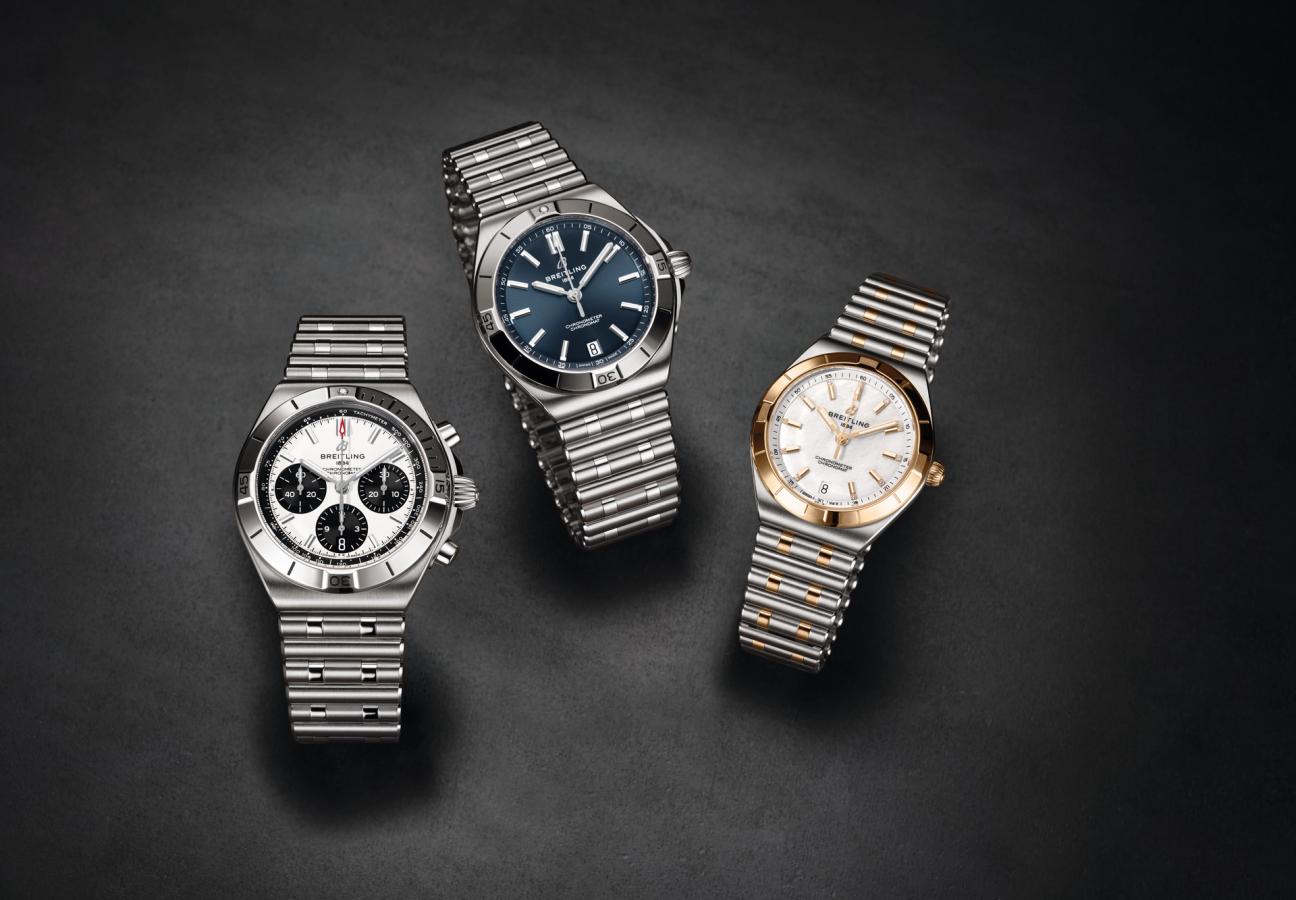
The Chronomat arguably shares parallel pedigree with Omega and its Speedmaster, since Breitling (founded 1884) is a Swiss watchmaker hand-built on the stopwatch-function 'chronograph’. The pioneering nature of it (the two-pushbutton format of 1923 vs the Speedmaster and its bezel-calibrated tachymeter), the making of it (in-house, column-wheel-controlled ‘B01’ calibre vs Omega’s long line of mechanical workhorses) and the kitting-out of all those magnificent men in their flying machines, from wartime heroes to the Mavericks of today (Red Arrows included, while Omega continues to be rocked by the right stuff at NASA).
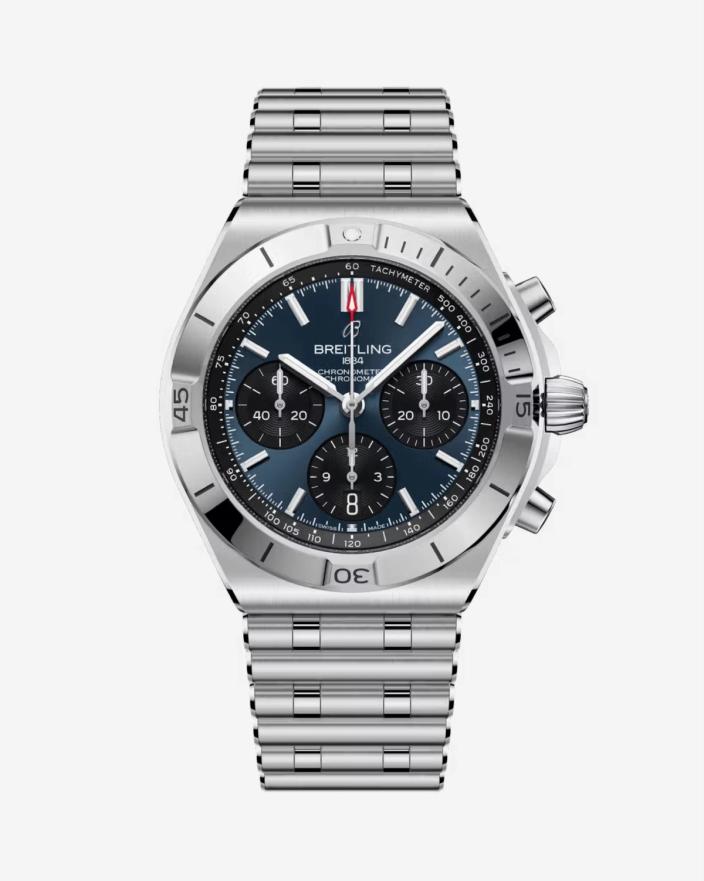
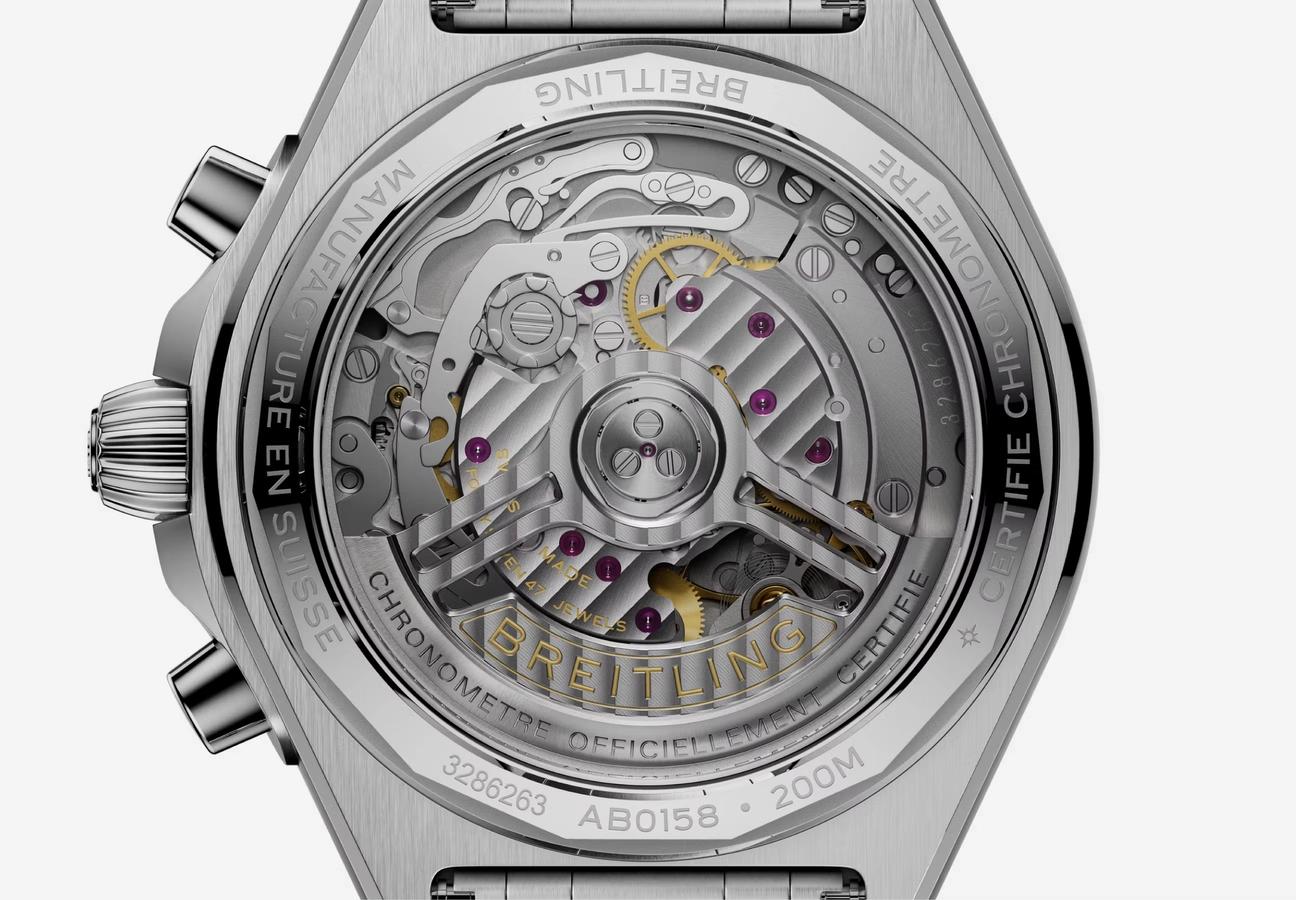
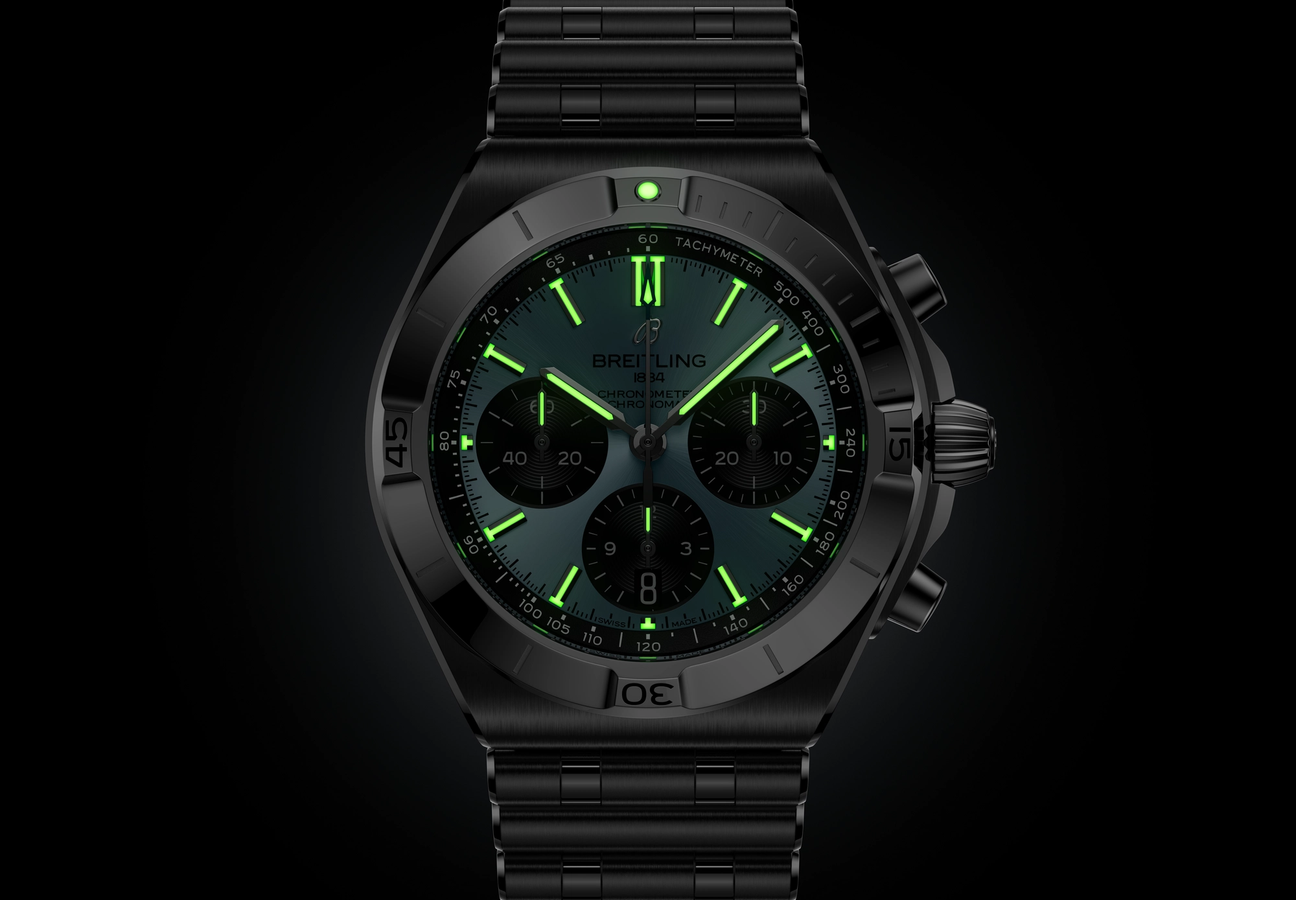
Chronomat B01 Chronograph 42
It’s a single-model saga that charts modern watchmaking itself, let alone the chronograph. And in a surprise drop from Breitling’s newly coined ‘House of Brands’, fresh from re-launching another, totally standalone chronograph legend, Universal, here comes the most slick, civvy-street-ready Chronomat ever. Ultimately stemming from WWII RAF pilots, whose lives depended on their cockpit-mounted chronographs to work out fuel reserves.

The brand they depended upon came ultimately from the watchmaker’s ‘HUIT’ Aviation Division – ‘huit’ referring in French to its instruments’ 8-day power reserve. But it was another instrument that was to make the company famous during the war years: the ur ‘Chronomat’, driven by (despite portmanteau-ed nomenclature) a non-automatic, manually wound ‘Venus’ movement, unique for a mathematical slide rule circling its dial.
Those two logarithmic scales came to define Breitling’s other enduring icon, the Navitimer of 1952; immediately adopted by the international civil-aviation authority and still unfathomable by anyone – apart from aerial navigators – lacking a mid-century grammar education involving logarithmic tables.
Fast forward to 1983 and the story of the modern Chronomat ‘as we know it’ begins, ironically enough, at the height of the quartz crisis in 1983, just four years after Ernest Schneider acquired Breitling.
An avid pilot, Schneider partnered with the Italian Air Force’s beloved aerobatics team, the Frecce Tricolori, to create an analogue watch that could stand up to the cockpit but was polished enough to wear at formal events (we’re talking about Italians here, after all). And the result defied expectations: a flight-ready chronograph equipped even with dive capabilities drawn from Breitling’s own ‘Seamaster’, the Superocean.
It was powered by a newfangled cam-clutch chronograph movement launched in 1973 on the threshold of an era dominated by cheap, East-Asian electronic quartz. Not only that, but a mechanical movement now universally known, and highly regarded as the ‘Valjoux 7750’, used – and cloned – to this day, for all its affordable, failsafe perfection since its birth.

The publicly available Chronomat, launched in 1984 to celebrate Breitling’s centennial didn’t just play a part in the 7750’s saviour, it flight-proved the 7750 and how much combat aviators value a trusty analogue wristwatch. Built to withstand up to 20G forces — far beyond the 7G forces the human body can endure — 1983’s Chronomat was rugged, professional, and had a bold, unmistakable presence.
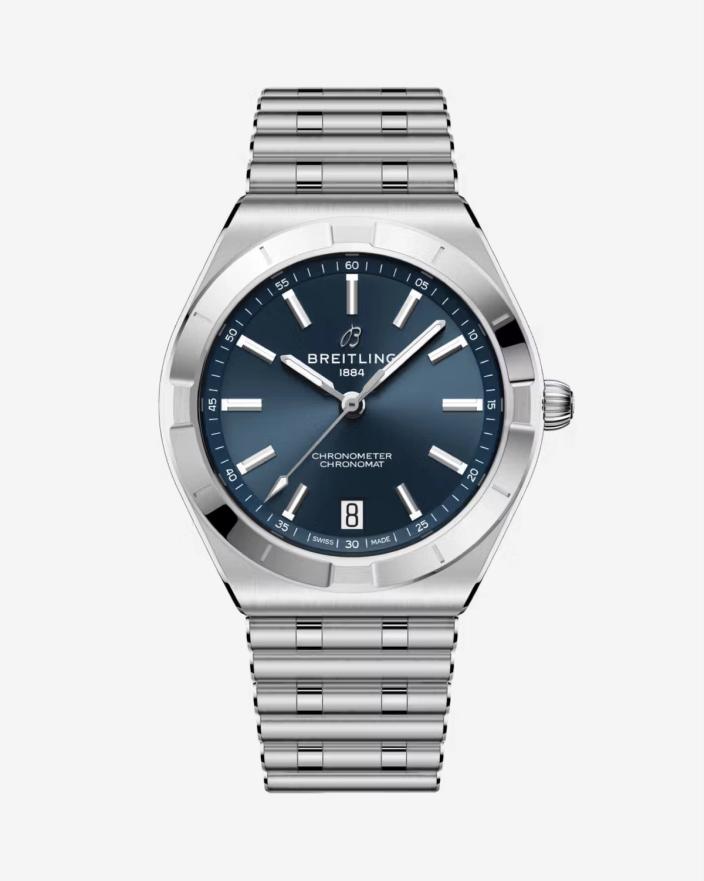
Chronomat B31 Automatic 40
Its sumptuously tactile, ladder-rung ‘Rouleaux’ bracelet sealed its identity, bringing comfort and presence in equal measure. From that moment on, the watch was no longer confined to the cockpit. By the 1990s, the Chronomat was everywhere: on wrists across the U.S. and appearing on American TV shows like Friends and Seinfeld. Across the Pacific, it entered Japanese pop culture as a plot device in the manga Kaiji. It was also worn by influential figures such as celebrity chef Gordon Ramsay (goodness knows what the hygiene inspectors would have to say about what lurks in his yellow strap’s pin bars).
In short: the Chronomat earned the title “the great new watch for the Nineties” from American Vogue.
All laying the foundation for the 2026 redux Chronomat, which, in the rightful words of CEO Georges Kern, “refines what made it iconic in the first place. We’ve evolved the design while keeping it true to its identity.”
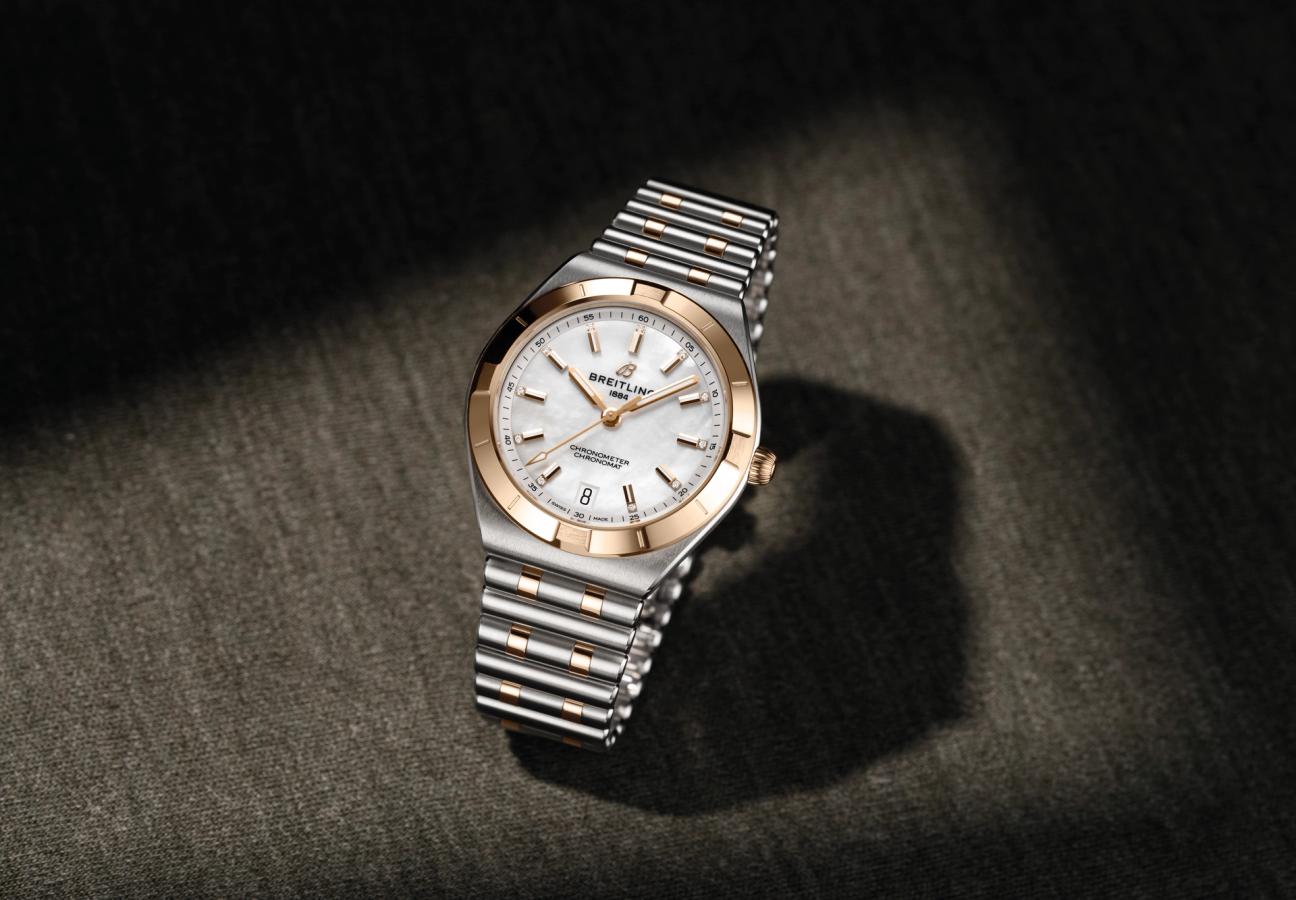
Words that may ring hollow to less interested parties, but when you consider Herr Kern is fresh from relaunching Breitling’s newly acquired bedfellow – the similarly iconic, latterly moribund chronograph brand, Universal – it goes to show how iterative and detail-obsessive you have to be, evolving brothers from other mothers without competing with yourself.
The first thing Chronomat fans will notice is the move from a semi-integrated bracelet to a fully integrated case and bracelet design. Where some integrated bracelet watches are limited in strap changeability, the new Chronomat avoids this compromise by cleverly concealing the lugs behind the case, keeping alternative straps as a viable option.
The Rouleaux bracelet on steel as well as two-tone models features a micro-adjustment system, allowing you to avoid scratching the thing with a link-removal tool you might have found on eBay, elegantly extending or retracting by one link at a time, on each side of the concealed butterfly clasp. Even while still on the wrist.
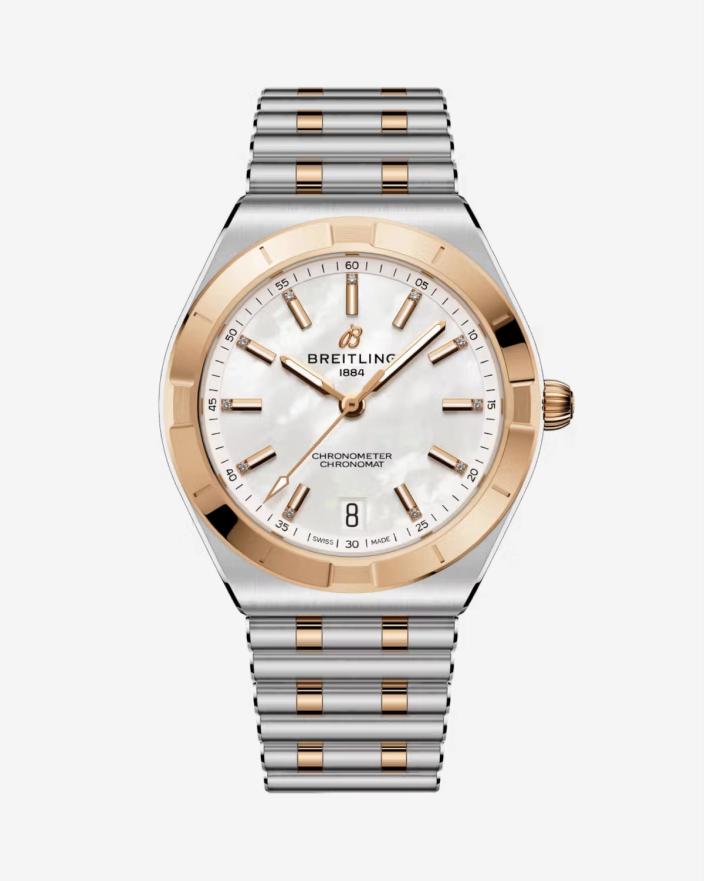
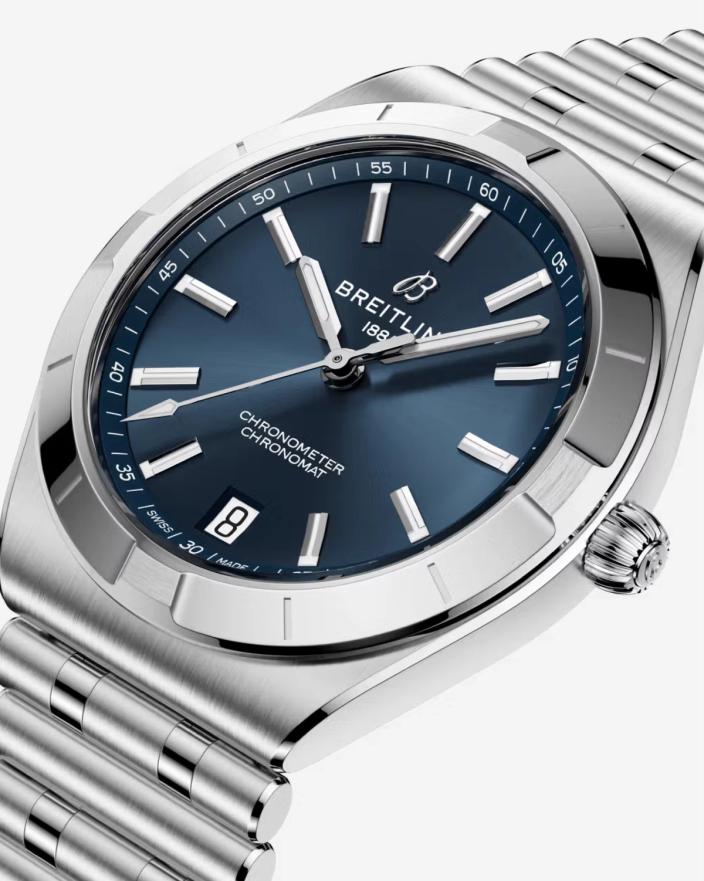
Chronomat Automatic 36

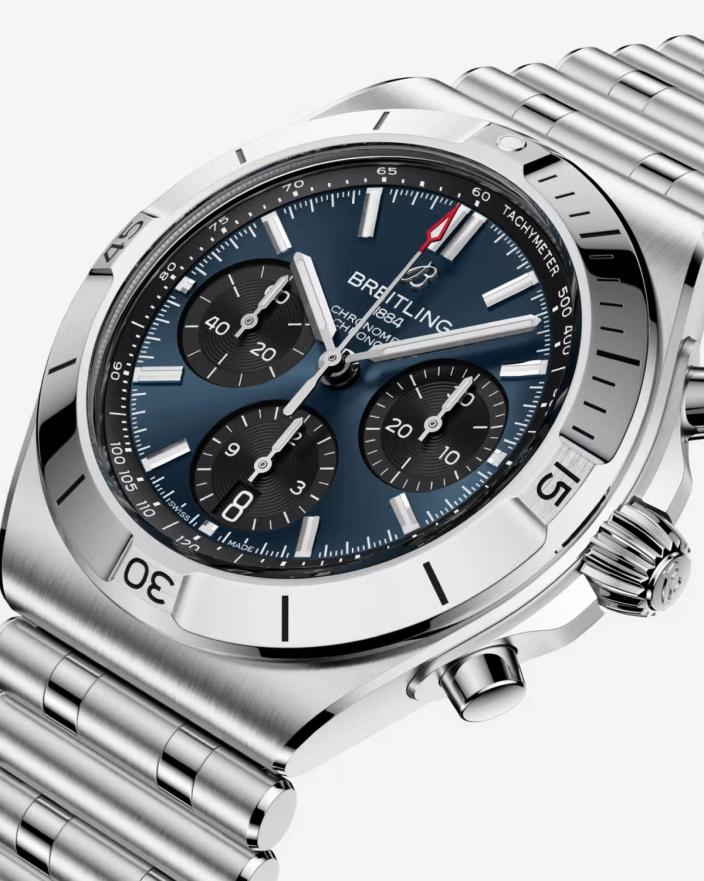
On the B01 42 chronograph model (up to £44,000 in gold-on-gold) model the surrounding bezel is streamlined down from 18 individual components, by integrating the bezel ring, insert, 'rider tabs', and screws all into a single piece. A spruce-up that extends to better wearability beneath a fitted French cuff: Breitling has reduced the case thickness from 15.1 mm to 13.77 mm. And believe us, in the watch world, a mere 1.33 millimetres makes one world of difference.
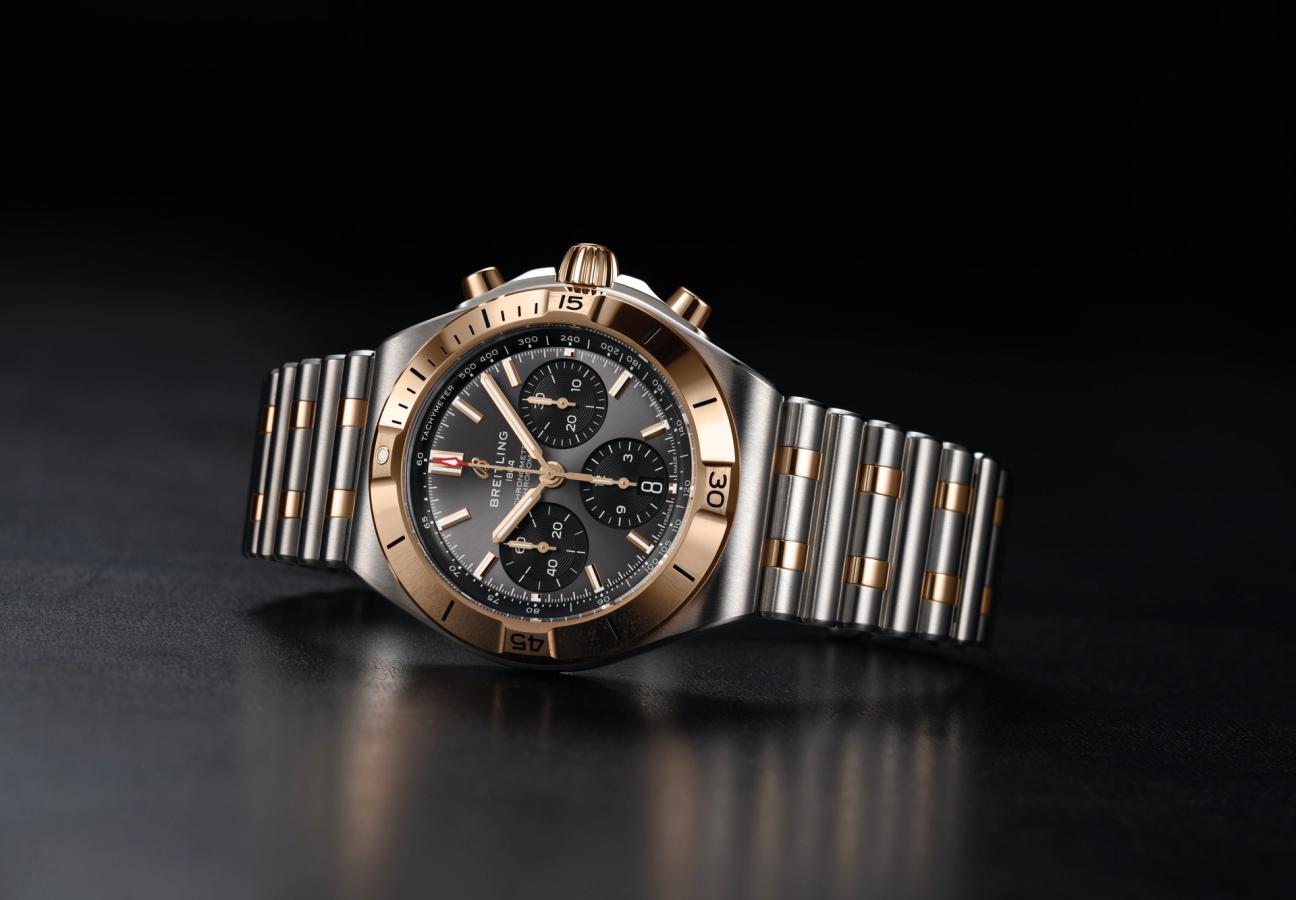
Further, the removal of the circular 1/100 scale from what the Swiss-Francophone call the ‘rehaut’ (AKA ‘flange’, in-between dial edge and crystal dome) improves legibility and simplicity. The crown guard has also been downsized, making winding and setting more comfortable.
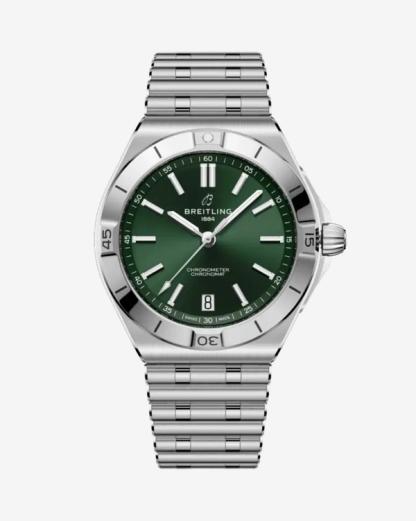

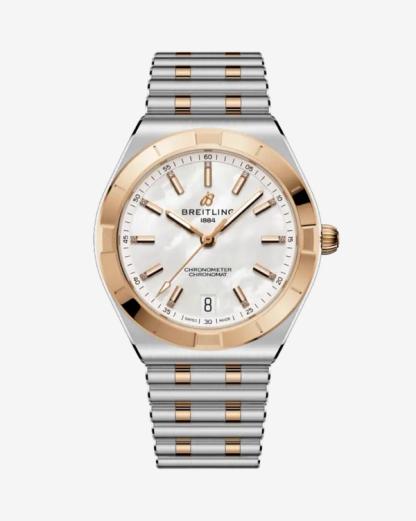
At the entry point (£4,750) the Chronomat Automatic B31 model is powered by Breitling’s new COSC-certified ‘manufacture’ caliber B31, unveiled last year in the Top Time 31 (£4,650), with a ‘weekend-proof’ 78-hour power reserve. Not, unlike the Chronomat chrono’s B01, produced in-house at Breitling’s La Chaux-de-Fonds facility, externally by Sellita Manufacture AMT, a bespoke division of Sellita Watch Co. S.A. down the valley.
Sleek, exclusive, debonair… much like Ramsay’s food, Seinfeld’s comedy, or an Italian fighter pilot.
Find our more about the all-new streamlined Breitling Chronomat