Watch of the week: A Watch of wonders
IWC stole this week’s Genevan trade-fair extravaganza, gazing to the heavens in cahoots with US space privateers, ‘VAST’… And horolo-design guru Christian Knoop is here to tell us where the cool factor lies
- Words by: Alex Doak
"I enjoyed this project as it’s close to my personal aesthetic. But especially in combination with such crucial engineering preferences,” says IWC’s usually reserved, unusually animated creative chief, Christian Knoop - enthusing about him and his team’s epic collab with would-be spacemen-of-the-moment, ‘Vast’.
On even the most basic level, IWC’s new Pilot’s Venturer “Vertical Drive” - launched in spectacular fashion at this week’s Watches and Wonders trade spectacular in Geneva – is a curveball, and admittedly 'Marmite' progression of a restless horological legacy, IWC's blue-blood heritage literally duty-bound as a self-styled pilot / explorer / deep-sea watchmaker to launch itself into the next beyond.
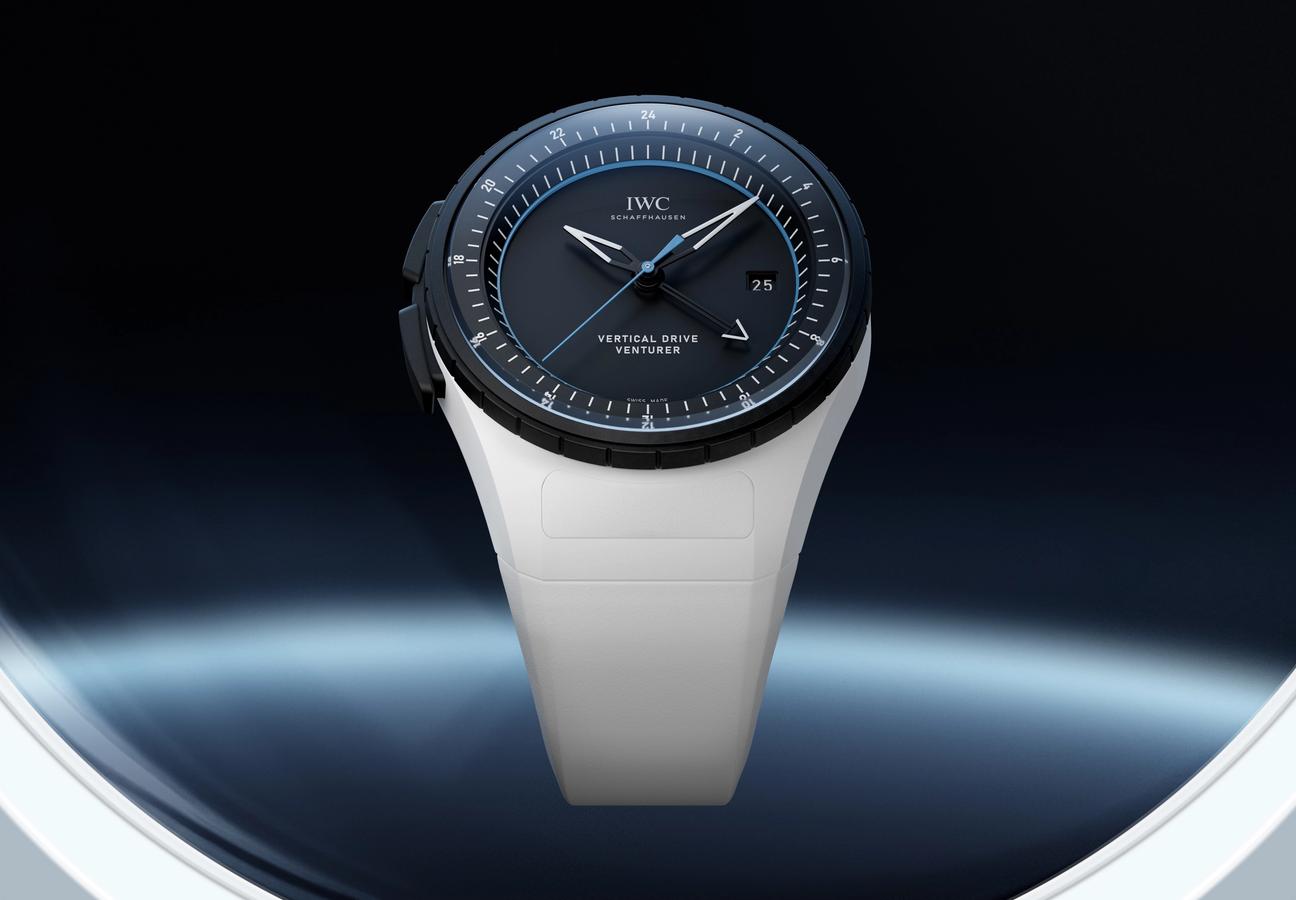
And yet, the watch itself…
Instead of the usual side-on, laterally operated winding crown, the Venturer Vertical Clutch is operated - as the name implies - via the top-mounted bezel.
It’s a radical rethink of how you interact with a mechanical watch, let alone a febrile evolution of the aviation formula coined so brilliantly by IWC during WWII with their monochrome, antimagnetic and pin-precise Mk11 for the RAF. (Their pilots wore it till the the Eighties. And this year marks the watchmaker of Shaffhausen’s full 90 years’ pedigree equipping cockpits worldwide.)
Designed for “extreme environments” the new, dual-time zone Venturer has been radically designed and engineered to function in harsh conditions, at the fingers of be-gloved explorers with lightweight Ceratanium materials science adding to the practicality. Super-stylishly to boot.
The benign David-and Goliath creative-collaboration between Germano-Swiss
Christian Knoop - design guru for IWC - and astro boffins at ‘Vast’ isn’t just a marketing tie-in. For one, it’s a natural progression from the watchmaker’s recent quartermaster duties, kitting out the SpaceX ‘Polaris Dawn’ spacewalk mission of 2024. Deployed at the hands of several engineers who now find themselves at Vast (while mission leader Jared Isaacman now finds himself as NASA administrator, answering to the press about last week’s Artemis II moonshot success story.)
Vast is a California-based space company focused on building commercial space stations for the post-ISS era - a genuinely worthwhile and well-intentioned replacement programme once the Station is retired in 2030, in light of NASA’s publically funded shortfall and a whirling Wild West of stellar, private ego-trips.
Vast’s goal is to create privately operated habitats in low Earth orbit that support astronauts, researchers, and eventually industrial activity in space. Its flagship programme is the Haven series, starting with Haven-1. Delayed for another year, but very much on the slate, this first mission aims to launch a small, single-module station that can host short-duration crewed missions, serving as a testbed for life-support systems, habitability, and commercial operations. It is designed to work with existing crew vehicles and act as a stepping stone.

Longer term, Haven missions aim to scale into larger stations (Haven-2 and beyond) that will ultimately build a sustainable human presence in orbit, driven by commercial infrastructure rather than government programs.
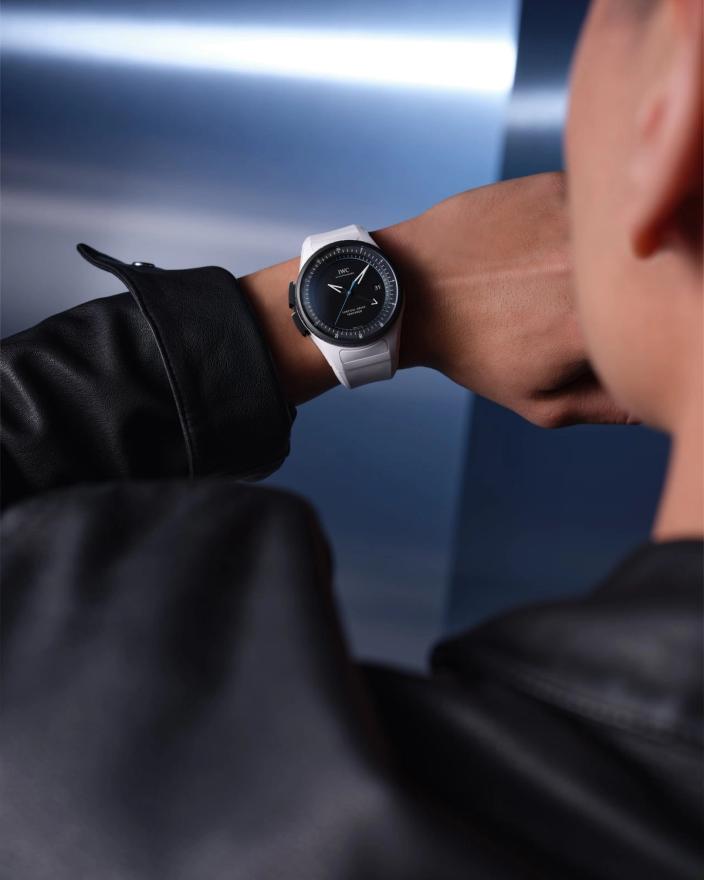
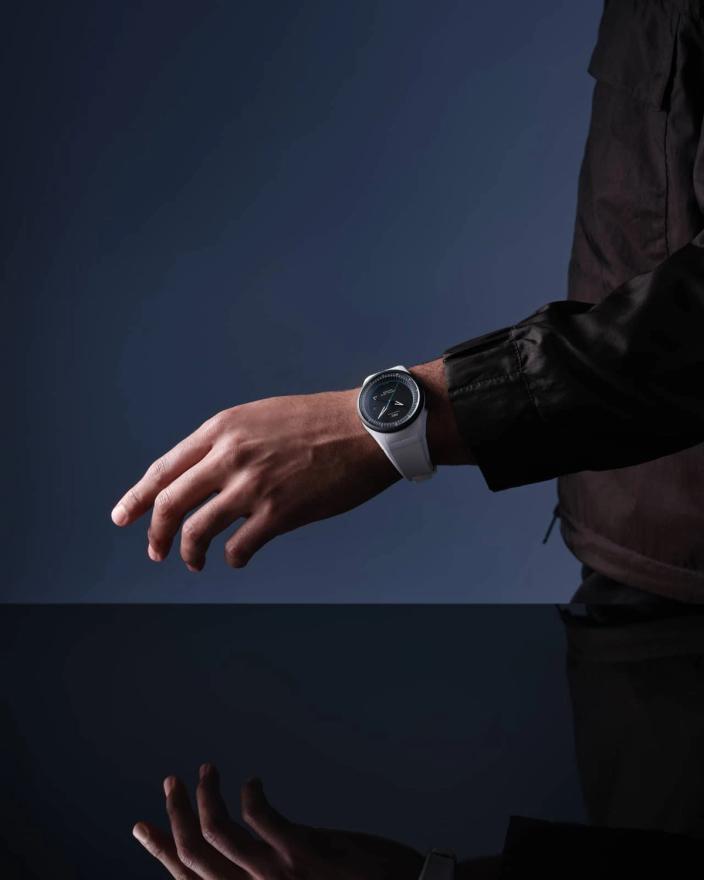
And on the protagonists’ wrists (as well as fanboys who can waltz into a IWC boutique (or click below) to buy now at little over £20,000) is the suitably futuristic-looking Venturer.
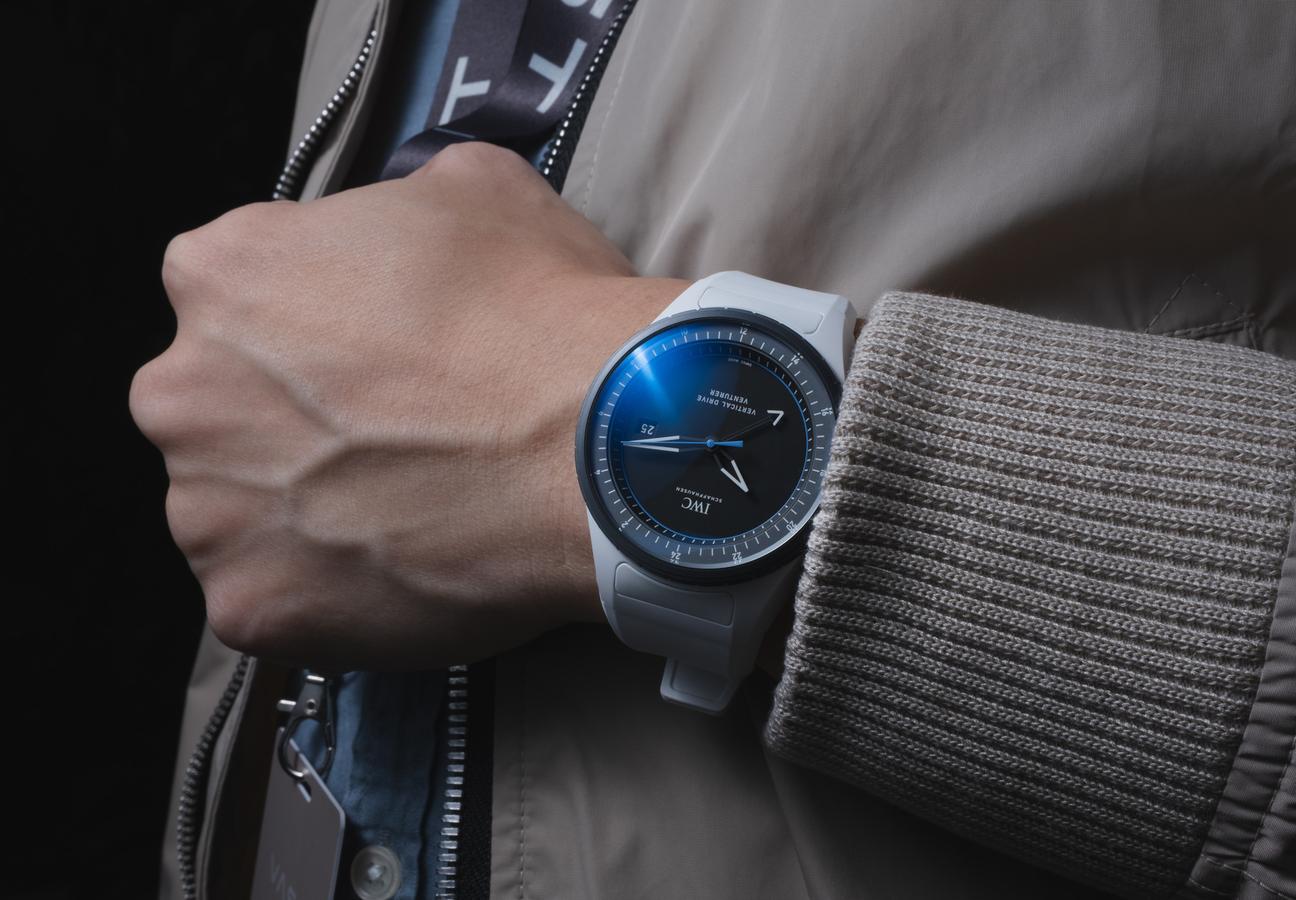
Christian Knoop didn’t just style the Venturer—he and IWC’s formidable engineering department worked with Vast to define what a true space watch ‘should’ be. Omega’s Speedmaster gets all the historic accolades (four of its X-33 digital iterations flying aboard Artemis II, even) but remember: the Speedie was never designed specifically with space in mind (atmospheric flight, alone).
Knoop translated astronaut needs into less “luxury watch inspired by space” and more:
“piece of space hardware that happens to be wearable on Earth.”
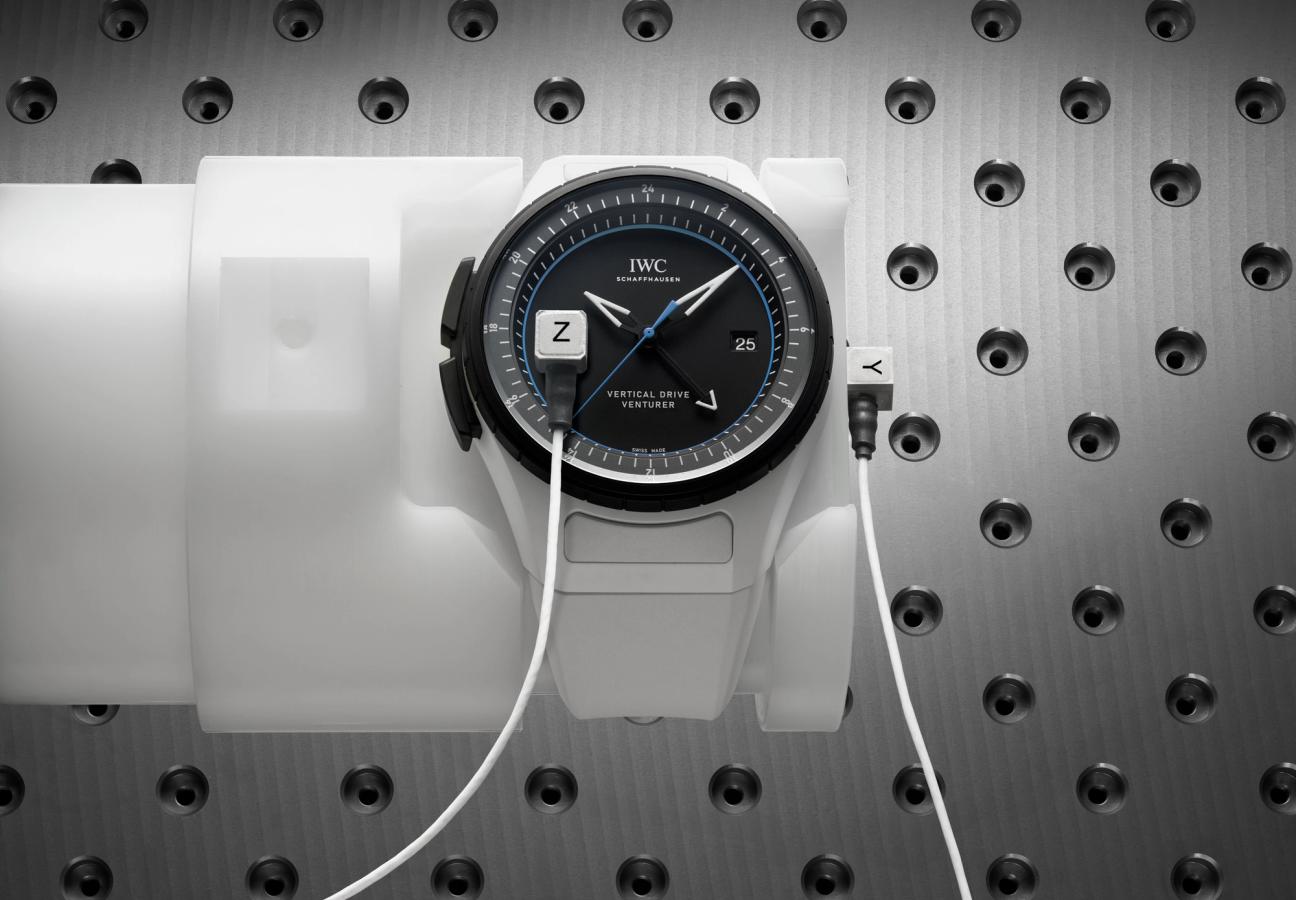
The watches’ Vertical Drive emerged from a “blank sheet” mindset: Knoop broke away from IWC’s traditional design codes (no crown, minimal dial, stark black/white look) to focus on real astronaut-use cases, not heritage aesthetic. The biggest benefit being that nothing catches on your spacesuit; plus, you can keep track of time back at home. All tested to the hilt at all temperature extremes and poised to give back crucial data, post-Haven-1, about how it performs in space.
“The new space age is shaped by innovative and ambitious companies that push the boundaries of science and technology,” says Knoop, instinctively lapsing back to his design roots:
“To reflect this, we have chosen a forward-looking, dynamic and beautifully minimalist design expression.
“Collectors will notice my love of IWC’s titanium collaborations with Porsche Design in the early Eighties. The Venturer’s flowing, biomorphic design has a lot of the IWC Ocean 2000 about it!”
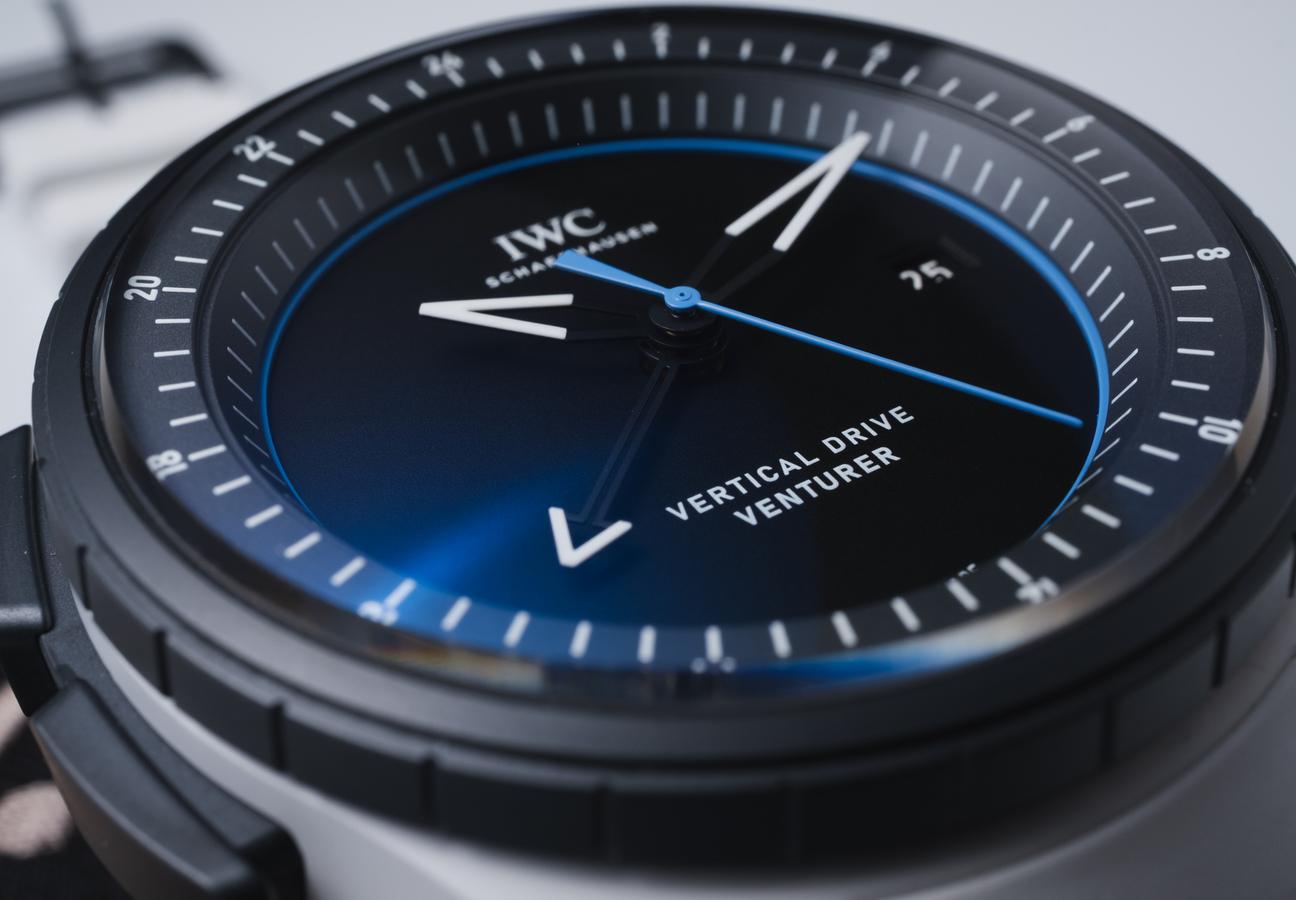
The look is minimalist, modern, and forward-looking, with rounded forms and a stark black-and-white palette… much as the current crop of private-sector NASA sub-contractors are adopting. Especially the nigh-on 2001: Space Odyssey vibes of the ISS’s go-to workhorse Dragon capsule.
What “vertical drive” means is the bezel sits on top of the movement. Once you push and unclip the rocking lock lever on the left side (easily, wearing gloves) you rotate the bezel, whose motion is transmitted downward (‘vertically’) into the mechanism. This uses a stacked system of cams, clutches, and vertical gear trains to switch between modes: time-setting, winding, and GMT zone setting.
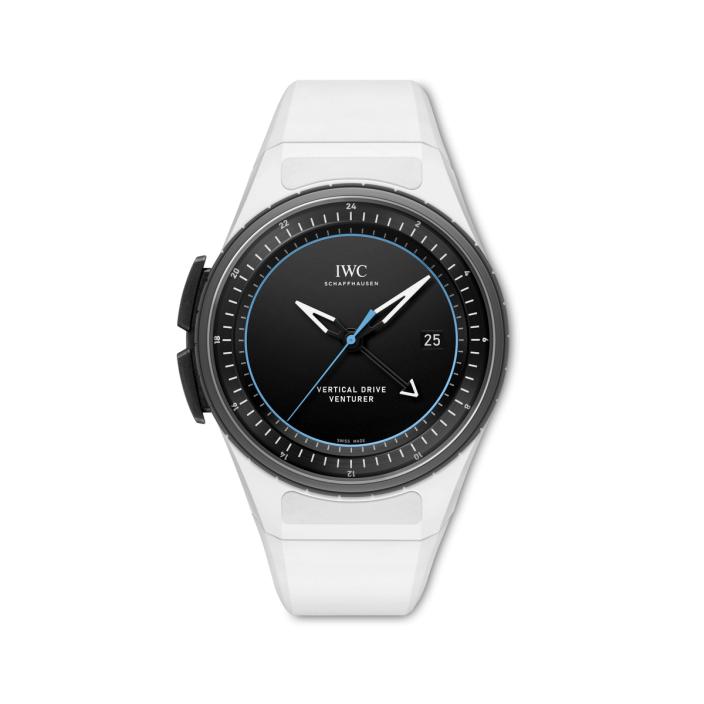
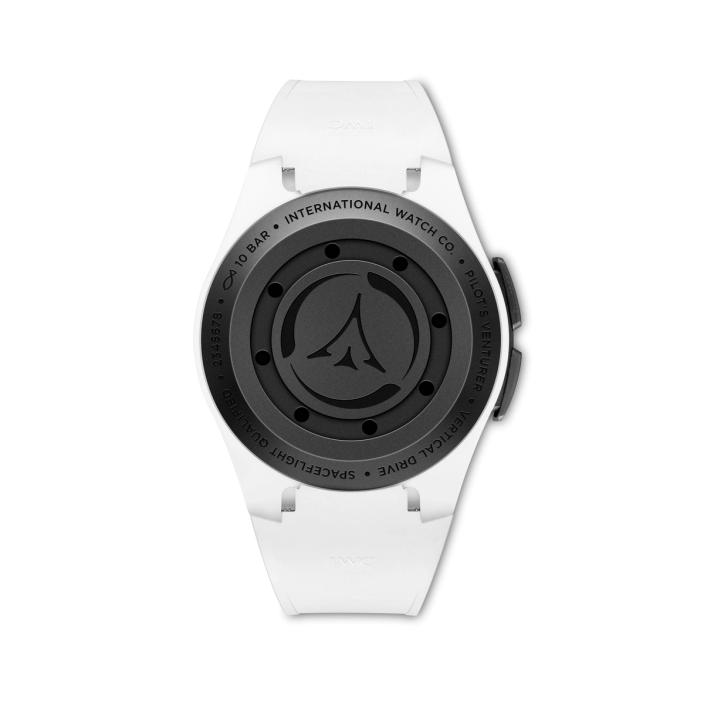
Besides the engineering challenges betwixt IWC’s timeworn (pun intended) expertise and newfound prototype-level adventures over at Vast, what this ultimately does is remove the dust/water ingress issues that a crown presents, and introduces a fresh, intuitive way of interacting with a multi-functional ‘tool’ watch.
“We’re always striving for purity,” as Knoop notes, “but the best design comes from where the likes of astronauts and deep-sea divers are at a disadvantage - by default “
IWC Pilot's Venturer Vertical Drive specifications
- Reference
- IW328601
- Dial
- Matte black with date window at 3:00 and blue ring on perimeter, white minute markings and 24-hour scale on raised peripheral ring
- Case Material
- White ceramic with black Ceratanium bezel and function-switching pushers
- Case Dimensions
- 44.3mm (diameter) × 16.7mm (thickness)
- Crystal
- Sapphire with antireflective coating
- Case Back
- Black Ceratanium, screw-in
- Movement
- IWC 32722: automatic with manual winding, 28,800vph (4Hz) frequency, 120-hour power reserve, 21 jewels
- Water Resistance
- 10 bar
- Strap
- Integrated white FKM rubber (20/18mm) with black Ceratanium pin buckle
- Functions
- Mission time (central 24-hour hand with independent adjustment, minutes, and seconds), second time zone (additional 24-hour hand), and date
- Price
- €28,900 / US$28,200 / £22,600 / CHF 24,000