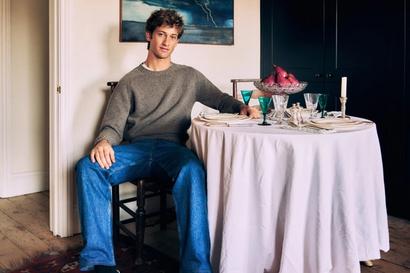
Out to Lunch With Matthew Friend
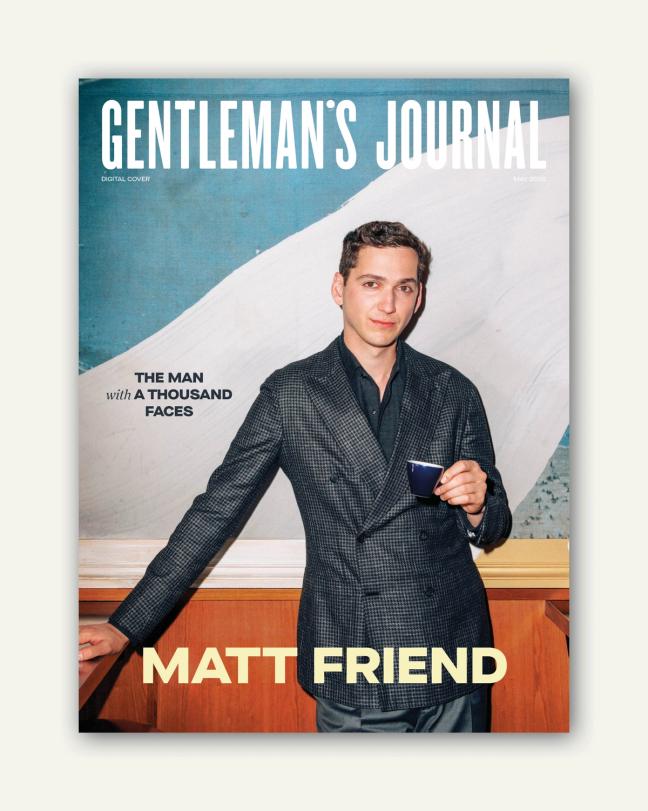
From Johnny Carson and Rich Little to TikTok and the Golden Globes, Matthew Friend is leading the revival of impressionism for a new generation. Over lunch in New York, the comedian explains why mimicry never really went out of style.
- Words by: Dana Brown
- Photography: Fred Castleberry
- Styling: Renée Ryan
- Grooming: Ryan Carter
Comedy may not be the oldest profession, but it’s almost certainly the oldest instinct. Long before anyone was getting paid for it, someone somewhere was getting a laugh. Let’s go way back, where I can imagine a scenario like this: a band of Neanderthals are doing whatever it is Neanderthals passed the time doing—hunt, gather, procreate—when one of them does something stupid. We don't know what. Maybe he trips. Maybe he grunts the wrong thing to the wrong dude. Maybe he shits himself. But someone sees it happen, and then stands up and does it back to him and his pals, slightly exaggerated, perfectly observed, and the whole group loses its mind. A form is born—one that eventually gets you, 50,000 years later, onto the Golden Globes red carpet doing Paul Giamatti to Paul Giamatti's face, which is where this story is ultimately going and brings us up to date.
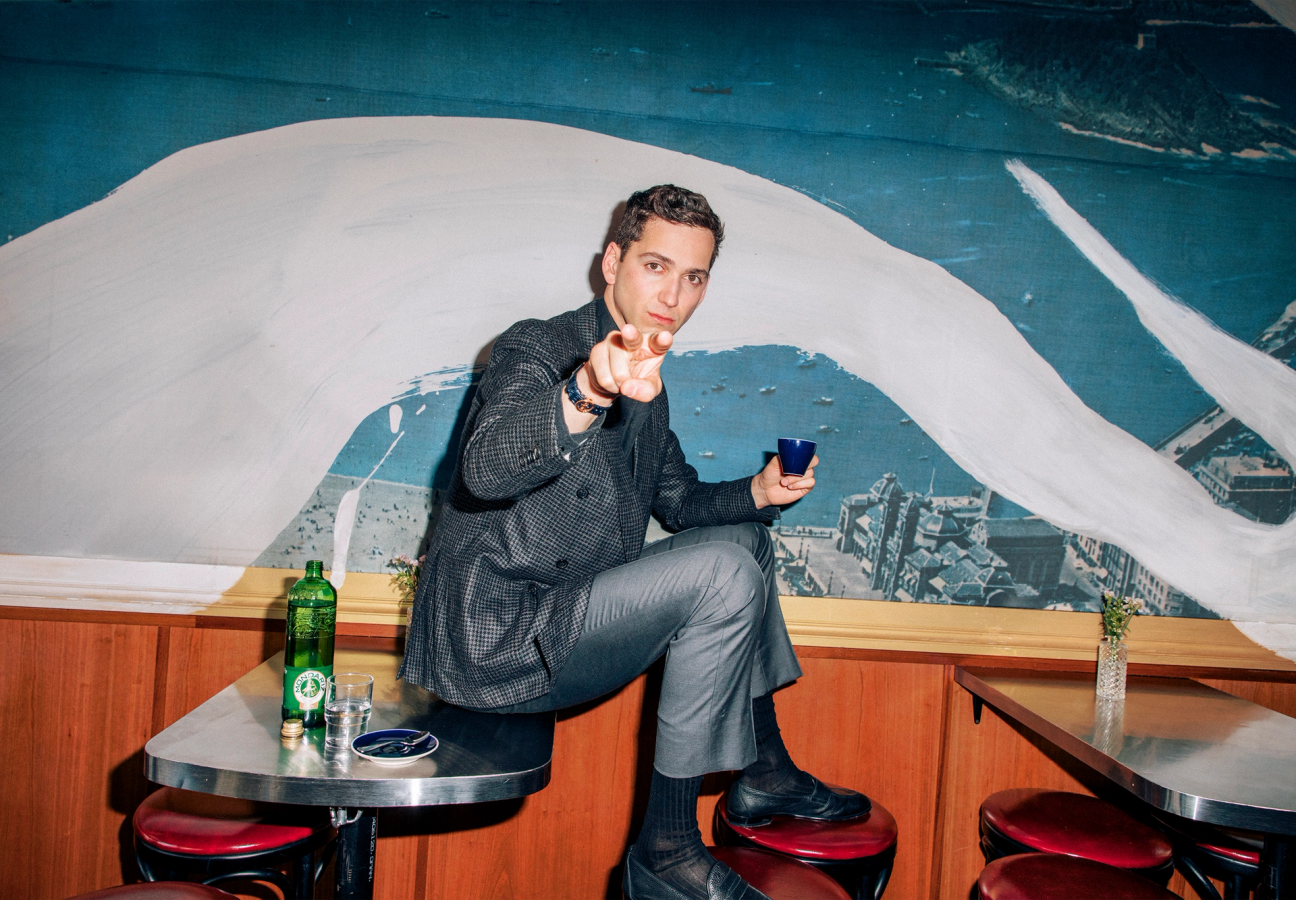
Brioni Blazer, £5,182; Shirt, £415; Trouser, £555, all brioni.com
The point is: impressionism is ancient. It is hardwired into us. The impulse to watch someone, absorb them completely, and give them back to the room in a form that makes everyone recognize something true, that's not a novelty act. That's a primal human instinct. The ancient Greeks had a word for it, mimesis, which meant not just copying but representing: the act of making the invisible visible. Which makes it all the more interesting that at some point, sometime in the mid- to late 80s, the entertainment industry decided the whole thing was finished.
Matthew Friend would like a word about that.
We're at Bar Oliver, a happening Spanish pintxos spot on a quiet corner in Chinatown—Dua Lipa was in the night before for dinner, at this exact same table—and Friend has been here approximately four minutes before he is doing a pitch-perfect Jeff Goldlum ordering a steak. Friend is 27 years old, born in Chicago, with the loose, alert energy of someone who processes the world at a slightly different frame rate than everyone else. Everything is observed. Everything is potentially material. He also orders an espresso, leans back, and grins.
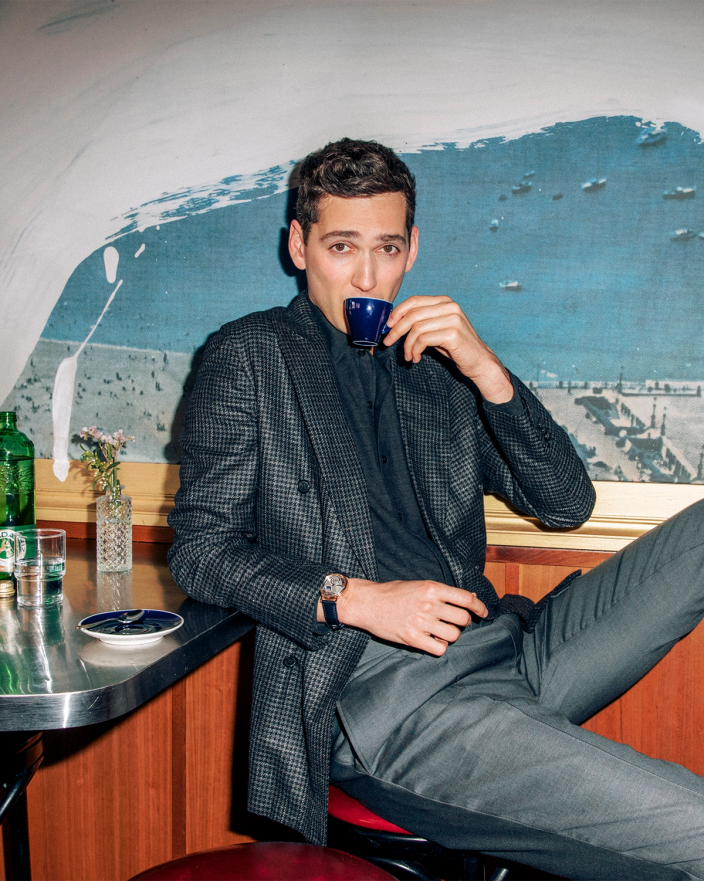
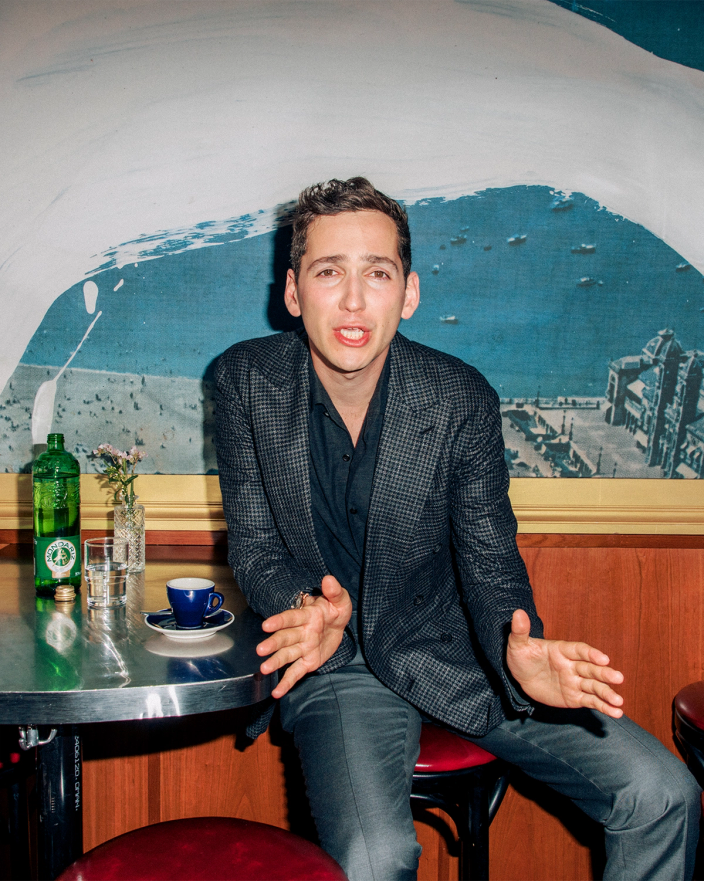
"I was four years old," he tells me, "watching Austin Powers, and I just became completely drawn to Fat Bastard, Dr. Evil, the whole Mike Myers universe. That was the beginning of everything."
It's a disarmingly ordinary origin story for someone who would go on to consume the comedy canon with the focus of a doctoral student. Growing up in a normal Midwest household, Friend fell for comedy, found his way to Carson sets, Dean Martin Roasts, Ed Sullivan clips, and George Burns biographies entirely on his own, through sheer obsession. YouTube was his conservatory. "I discovered Carson, Rickles, Ed Sullivan, George Carlin, Richard Pryor, Bill Hader, Phil Hartman, Eddie Murphy, Jim Carrey, Robin Williams," he says. "I was just consuming all of it. Born in 1998, idolizing Johnny Carson. It doesn't really make sense, but I was very drawn to this era that was long before I even existed." (Friend does a killer Carson, by the way.) He catalogued these performers like a scientist of sound, isolating the specific frequencies of voice and gesture: Carson's half-smile, Howard Stern's mock grandeur, the way Rickles could make an insult feel like an embrace.
He pauses, apparently still genuinely puzzled by his own origin story. "I'm not from a show business family. Normal upbringing, Midwest, great family. I don't really subscribe to the belief that you had to have tragedy in your life to get into this. Mel Brooks—similar situation, great family, just wanting to make people laugh around him. That was the case with me."
Impressionism was once the spine of American comedy. From the vaudeville stage through the Sullivan era and into the Vegas showrooms of the 1960s and 70s, the ability to inhabit a famous voice was considered a marquee skill, a headlining act in its own right. Stars like Rich Little and Frank Gorshin could parade through a dozen famous personalities in a single appearance—the act was spectacle and subversion at once, a way to hold the powerful up to laughter. Carson did impressions. The early years of SNL were built substantially on them—Chevy Chase, Dan Aykroyd, later Phil Hartman, the form woven into the show's DNA. But somewhere in the late 1980s, as alternative comedy began its cultural ascent, impressionism started to feel like a relic. If the new comedy said here is my authentic self, impressionism said here is someone else entirely, and for a while that felt like precisely the wrong answer. Through the 1990s and into the 2000s, the impressionist was increasingly associated with nostalgia, with novelty, with Las Vegas residencies and the kind of entertainment your parents liked. The form didn't die, exactly. It got exiled.
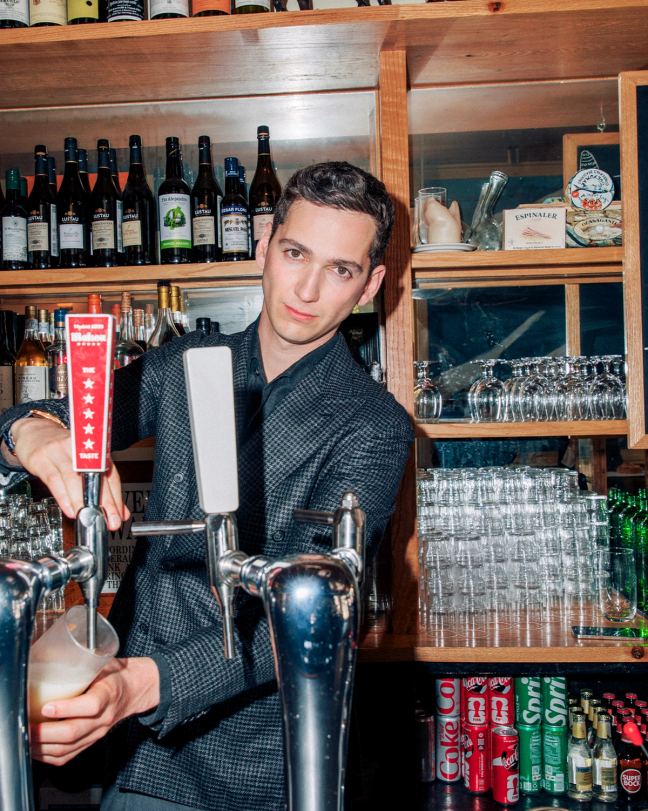
Then came social media—and it turned out that short-form video was impressionism's native habitat, the format the genre had been waiting for without knowing it. An impression, after all, is a miniature: the essence of recognition delivered in seconds, no setup required. You scroll, you hear a familiar cadence, and you're in on the joke before you know why you're laughing. The architecture of virality—the quick hit, the visual hook—turned out to be the same architecture that once made impressions work in smoky clubs. And Friend, arriving on TikTok early and with genuine ability, caught the wave at exactly the right moment. "You could argue it's just the next incarnation," he says, referencing Marshall McLuhan’s book The Medium is the Message. “There's vaudeville into radio, into television. This is what it is now. I'm just a product of my generation. I wouldn't know any other way."
He was finishing at NYU, doing stand-up in the clubs every night "like a maniac," when COVID hit and the rooms went dark. Rather than wait it out, Friend launched on TikTok with a Chalamet video that caught fire almost immediately. "I remember watching the views going crazy and thinking, What is going on here?" He built from there: Goldblum luxuriating over a face mask ("Yes, yes, this mask is wonderful, the texture of the mask..."), Ramy Malek communing with a very comfortable chair, Fauci, Biden, a growing roster of political figures that would take on a life of its own.
When New York reopened, he filled Caroline's on Broadway—the legendary comedy club—powered almost entirely by his online following. "It was this crazy moment of, Oh my God, I'm selling out this big comedy club. A line of people who'd seen me from their phone, which I didn't know could happen yet." And then, rather than retreat completely into the safety of the screen, he pushed further onto the stage, where he now tours with a full 60-minute stand-up set, a fact that tends to get buried under the social media conversation and deserves more attention, because a tight hour of stand-up is a different discipline entirely, one that has humbled performers with far longer résumés. "Impressions are definitely at the heart of it," he says, "maybe 35 percent, woven in through stories." But it isn't a clip show. It's a reflection on his actual life right now. The impressions serve the narrative. They're not the party trick. They're the point of entry.
It's at this precise moment that a family of German tourists—parents with two teenagers in tow, visibly pleased to have found somewhere authentic that isn't a tourist trap—are seated at a table near us. They settle in, open their menus. A perfectly peaceful afternoon in New York.
Then Friend, mid-sentence, slips without warning into Trump. Not gently. The full deployment—the syntax, the grievance, the specific spiraling logic, the hands, all of it arriving at full volume.
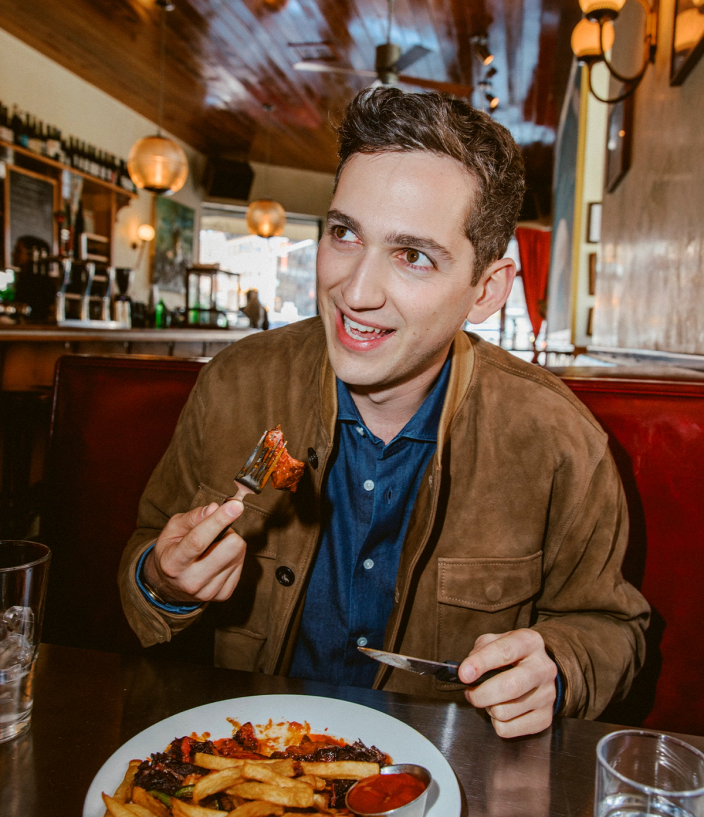
Slowear jacket, £1,440; shirt, £270, both slowear.com
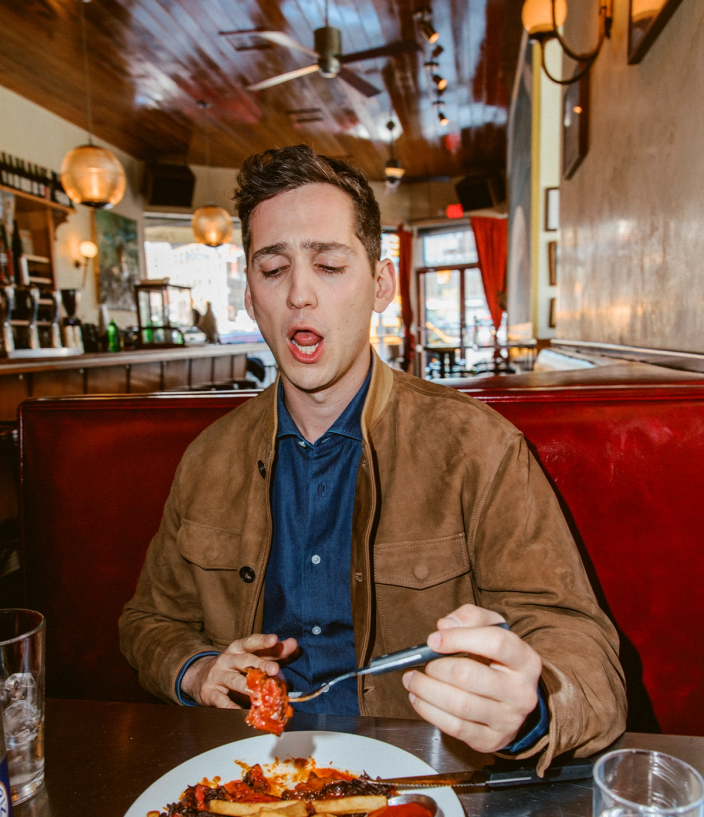
The German family looks over. The parents exchange a glance that contains an entire conversation about Americans. The teenagers stare, frozen mid-menu. Friend surfaces from the impression, completely unbothered, and reaches for his espresso.
"Politically, there's JD Vance, who I'm working on," he says, as if nothing has happened. "My Memah, Pepah, look at this sinator—it's all about the keywords with him." He grins. His political impressions belong to a long lineage—from Chaplin's Adolph Hitler to Dana Carvey's Bush to Alec Baldwin's Trump—of mimicry as a form of exposure, the revelation that the politician was already, in essence, a caricature. The impressionist doesn't invent the behavior. He distills it, shows us what we already sensed but hadn't yet seen clearly.
The red carpet work—Friend doing Austin Butler to Austin Butler's actual face, Giamatti to Giamatti, Nic Cage to Nic Cage, the entire cast of Succession confronted with themselves—is a chapter he's now deliberately “retiring.” ("You can't go bigger than the Oscars," he says simply.) What it produced is genuinely remarkable: a moment with Jamie Foxx at the Golden Globes that doubled his Instagram following inside 24 hours. (He now has 2 million.) Ted Sarandos, the Netflix CEO, seeking him out on the carpet. "That's the magic of this. These people who run the world—everyone’s taking a dump, everybody's scrolling, and watching their phone. It offers real power to the creator."
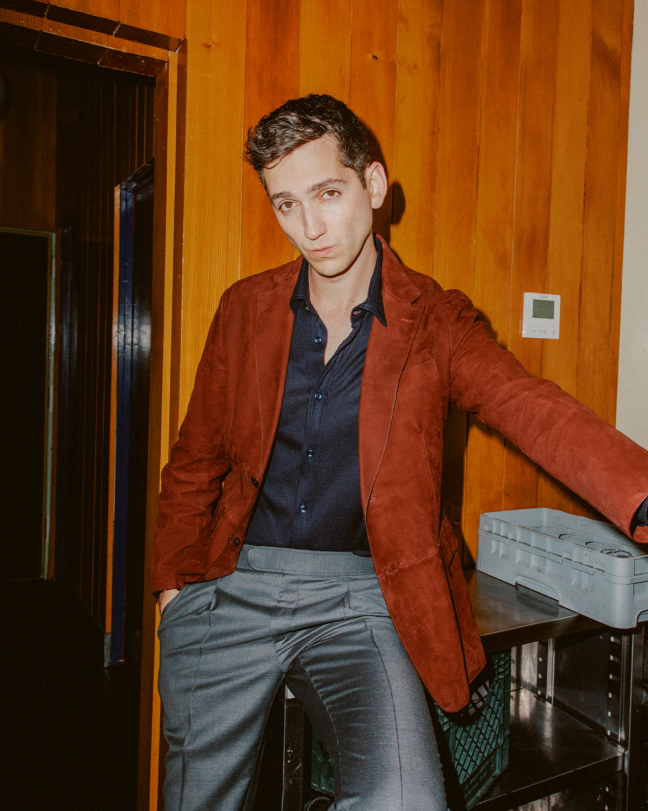
Brioni Blazer, £POA; Button Down Shirt, £POA; Trouser, £555, all brioni.com
He's clear-eyed, though, about what the screen can and can’t do. "There's a difference," he says, leaning forward, "between being able to entertain on a phone versus… can you actually make a room of Middle America laugh? Can you hold your own on a stage? That's a whole other thing." He's also untroubled by the AI conversation that's making other performers nervous. "I have a very old-school—I guess you'd call it a talent. And I'll find a way to take it out of the phone. You have to get out of the screen." He's right to be untroubled. A machine can replicate tone, but not irony. It can reproduce cadence, but not the human awareness of absurdity that makes an impression land rather than merely register.
What comes next is still taking shape, but the ambition is unmistakable and the references are telling. He invokes Seth MacFarlane's refusal to do just one thing, Carlin's radical reinvention across decades, Hader's evolution from impressionist to serious dramatic actor. “I do have acting ambition,” Friend says. He’s interested in a talk show. He wants it to be something that retrieves the glamour and intentionality of classic television and makes it feel necessary again. "I believe in glamour and showbiz, made new again," he says. "I want to bring something like that back and be at the center of it. Not a podcast where I'm a comedian with Cheeto dust on my shirt talking to a conspiracy theorist. I believe in the thing itself."
He is only 27. The arc, as he seems to understand in the best possible way—not as pressure, but as permission—is just beginning.
The German family, by the time we're finishing up, is on their way out. One of the teenagers is staring at their phone. There is a possibility they are watching a TikTok or Instagram video of the man sitting a few feet away from them.
Matthew Friend pulls on his jacket, and steps back out into Chinatown—no doubt already watching, already listening, already finding the next person worth becoming for 30 seconds.