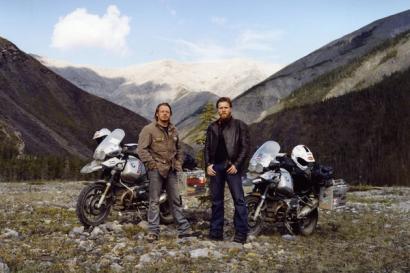
Inside Moto Guzzi’s historic home, reimagined
We explore the Italian motorcycle manufacturer’s €50 million renovation, delving into architect Greg Lynn’s bold vision for its next chapter…
- Words by: Jonathan Wells
Moto Guzzi knows a thing or two about shifting gears. The early V-twins from the Italian motorcycle manufacturer featured incredibly sophisticated transmission engineering. Just before the millennium, a new lightweight six-speed gearbox with a radically revised selector mechanism slotted into place. And, earlier this decade, the V100 Mandello even introduced Guzzi’s first quickshifter.
Things are shifting, too, at the site that lent that last bike its name: the scenic Lombardy town of Mandello del Lario, where Moto Guzzi has been building motorcycles for more than 100 years. After almost five years of work and investment totalling more than €50 million, the brand has unveiled its refurbished home: a modern, multifunctional hub comprising the factory, the Motoplex Store, a museum, café and new auditorium.
Redesigned by American architect Greg Lynn, the site is now part factory, part museum, part showroom, part gathering place. Gentleman’s Journal headed to Mandello earlier this month to take a look around — and to speak to Lynn himself about how he created “a dialogue between the legacy motorcycles in the museum and the modern motorcycles in the factory.”
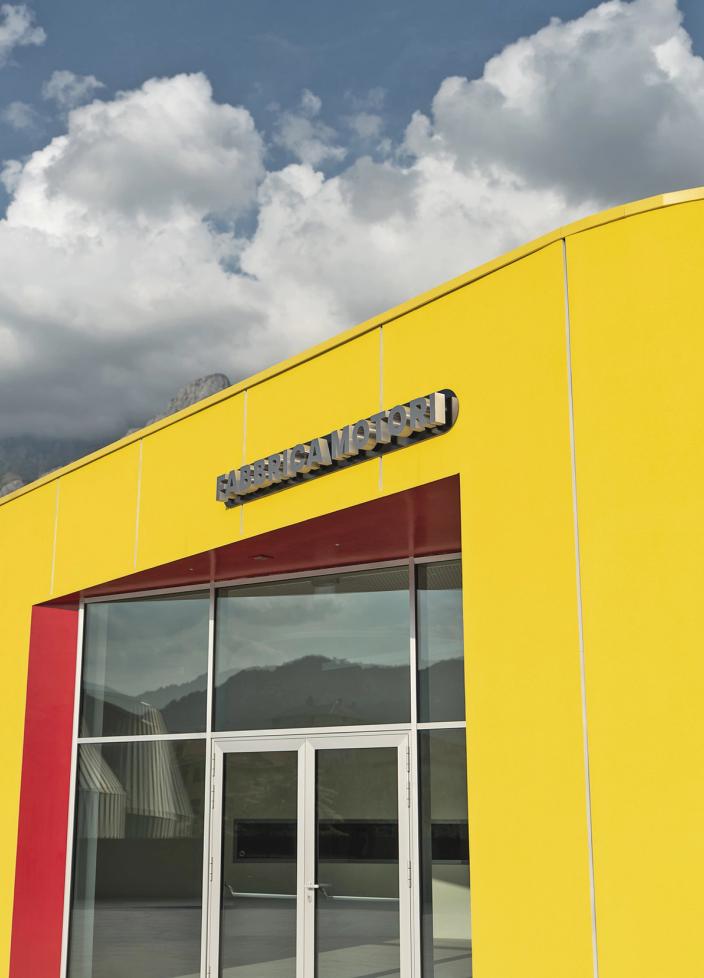
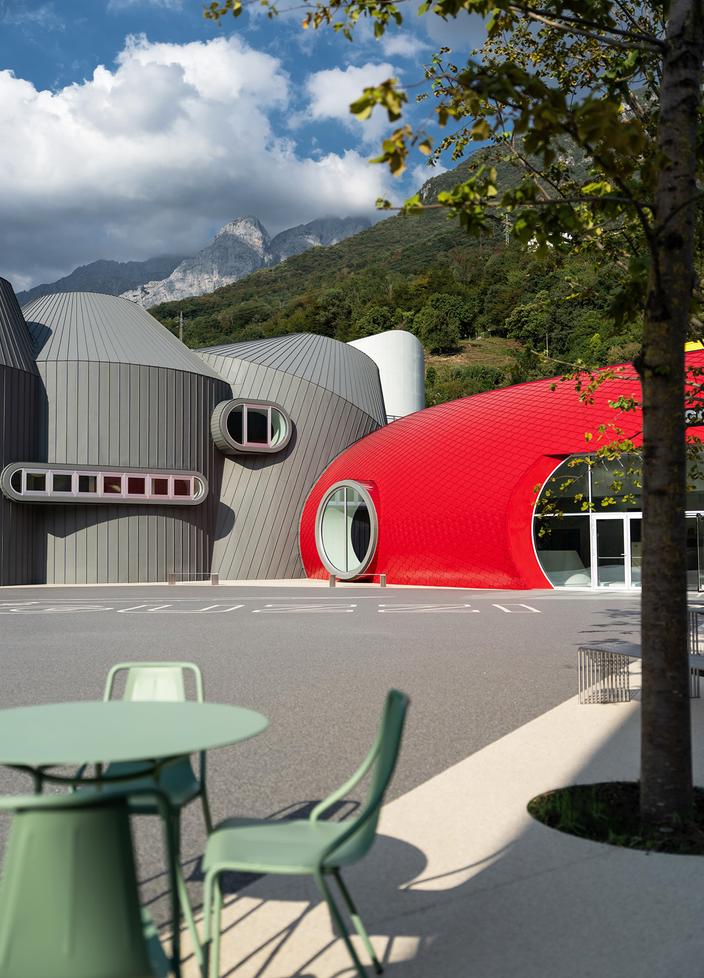
“What I hope people feel is continuity,” says Lynn, a previous winner of the Golden Lion at the Venice Biennale of Architecture. “Motorcycles have been built on this exact ground for 105 years. You should feel that before anyone explains it to you.”
It’s a tall order. But Lynn and Moto Guzzi worked closely together to carve two distinct worlds from the existing site. The first is anchored by the historic wind tunnel — the Galleria del Vento — while the second brings the museum into an interplay with working buildings including the assembly plant and engine factory. “One plaza holds the history of innovation on the site,” says Lynn. “The other holds the future of it.”
The vision itself is captivating: all bold sweeps and bright colours. But Lynn admits that the real engine of the project was “spatial rather than stylistic”. “We didn’t ask the new buildings to be polite about the old ones,” he adds. “We wrapped a public plaza inside a working factory.”
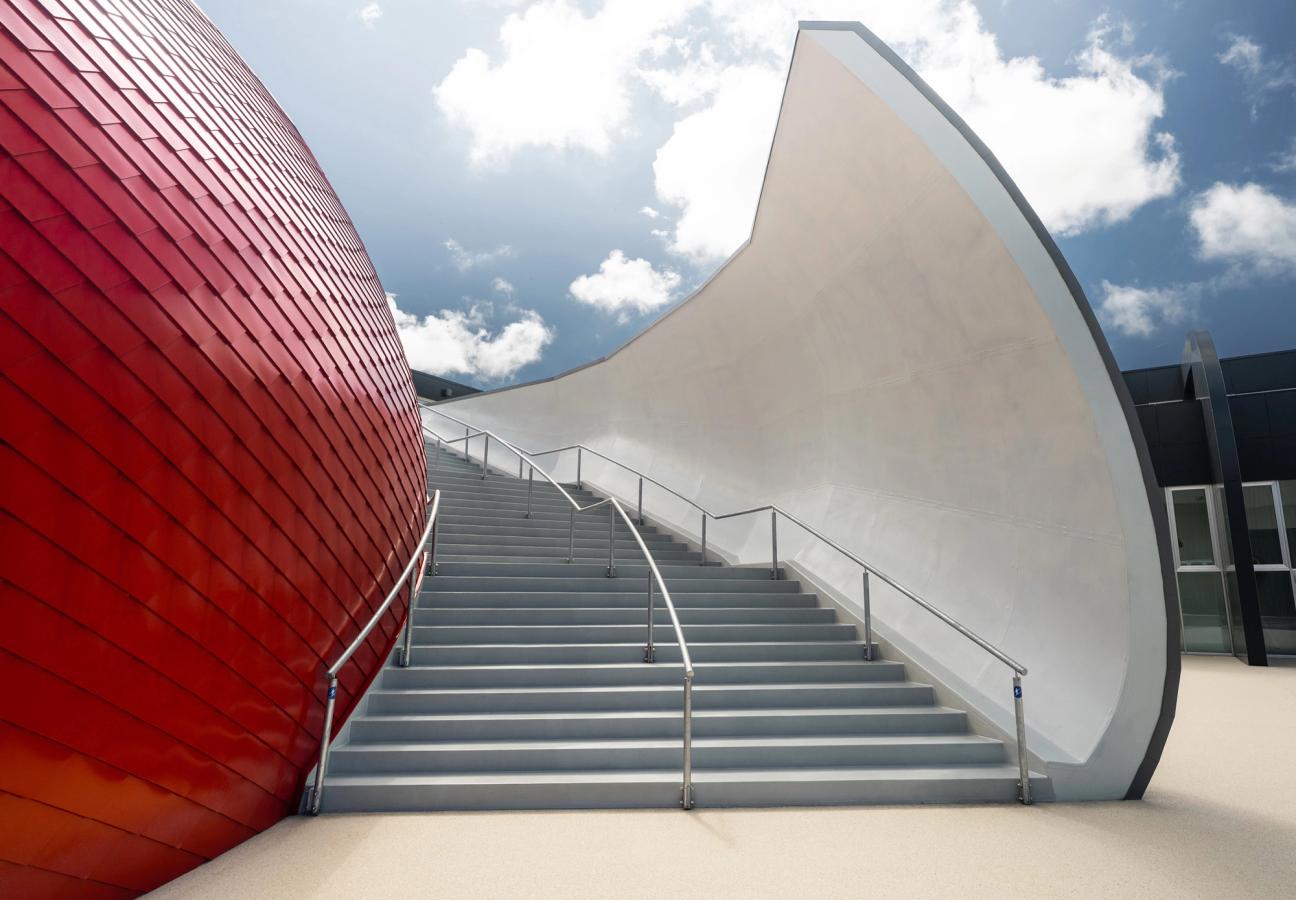
The factory, in turn, is wrapped in nature. Engineered with a constant, razor-sharp focus on environmental sustainability and the efficient use of resources, the whole site sits on the Lecco side of Como, squarely between the lake and the mountains. Among its green credentials, perhaps the most impressive feature is a freshly installed 1,300-square-metre array of photovoltaic panels, designed to drink in Italy’s abundant natural light.
“That one actually came from the workers,” explains Lynn. “They asked for natural light in the new engine plant. Separately, the historic collection of motorcycles in the museum deserves to be lit by the same sunlight they were ridden in, so both pushed us towards bringing in light from above.”
“We didn’t ask the new buildings to be polite about the old ones…”
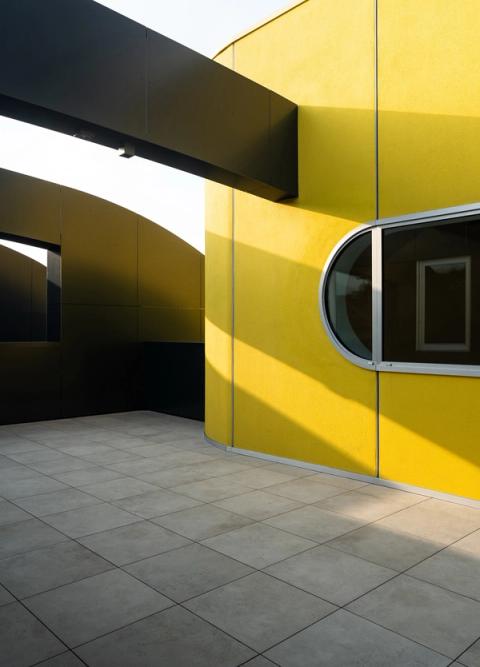
It’s a neat design. The museum and canteen are vaguely cone-shaped, while the engine plant is topped by an angular, folded roof Lynn designed to draw soft, diffuse daylight deep into the building. "The light of Mandello changes dramatically from morning to evening, and across the seasons,” he says, “and it illuminates the new buildings so well that — much of the time — electrical lighting simply isn't needed.”
The silhouettes of these redesigned structures also brought about what the architect calls a “collateral discovery” — and another nod to nature. “At large scale in models, their profiles looked like mountains,” he says. “Those zig-zag roofs around the plaza frame the peaks and resonate with the landscape.”
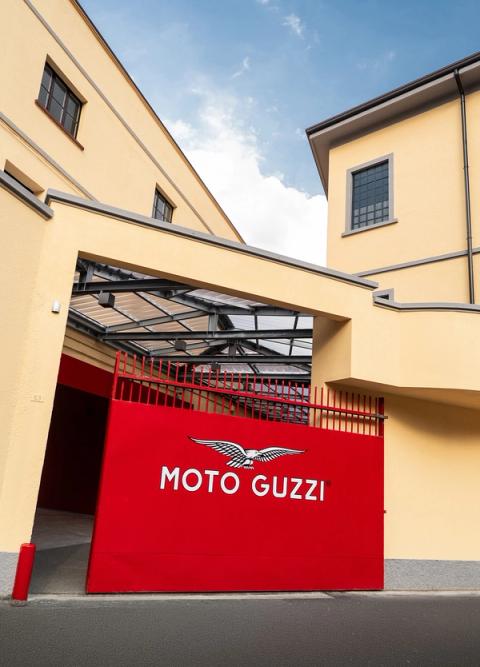
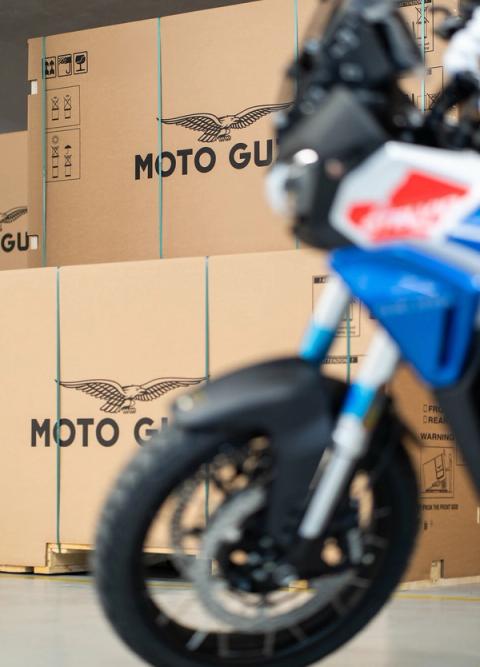
There were man-made landmarks to be honoured, too. Principally, the red gate on Via Parodi, the entrance for Moto Guzzi’s technicians, workers and engineers since 1921, which has evolved into a place of pilgrimage for riders from all over the world. “One of the main goals was a pedestrian experience,” says Lynn, “through that historic gate and into the site, where visitors can safely experience a state-of-the-art, living, working factory.”
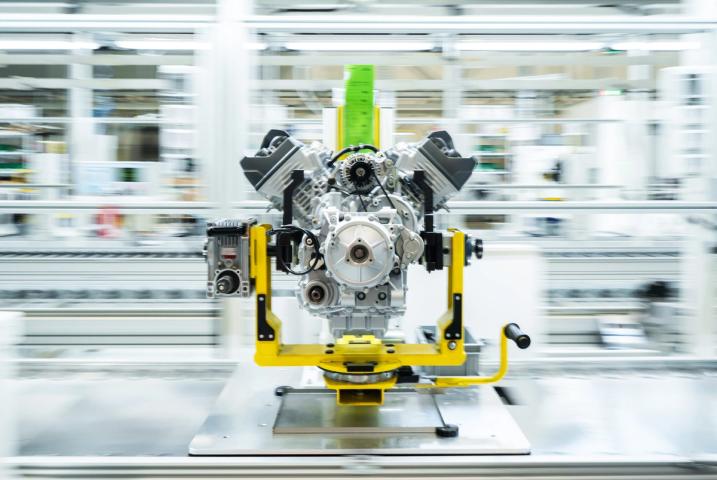
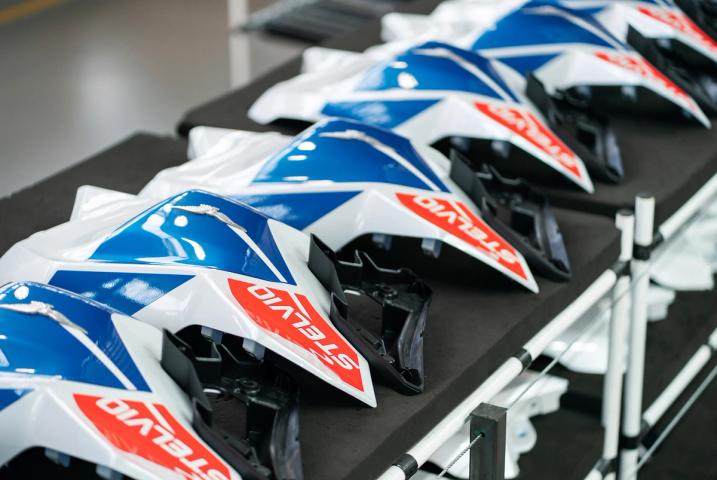
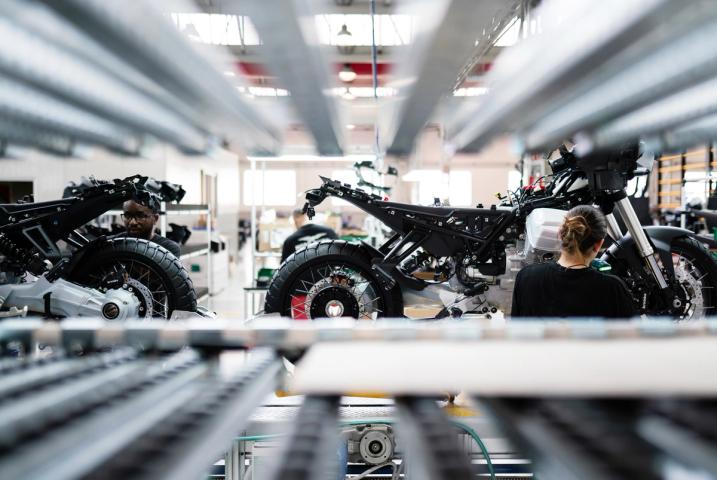
And so, we step into the factory itself. Situated at the heart of the original site, Lynn has transformed the industrial areas completely but harmoniously, introducing 5,500 square metres of new buildings to boost Moto Guzzi’s annual output to more than 30,000 motorcycles. From both a mezzanine level and through large, ground-level windows, visitors can watch workers, robots and assembly lines at work, following a bike as it takes shape before their eyes.
“We wanted visitors to see the choreography between people and machines,” says Lynn. “That word matters to me: choreography. This isn't automation replacing Italian craftsmanship, it's the two of them timed to one another, and you can see it just by watching for a few minutes.”
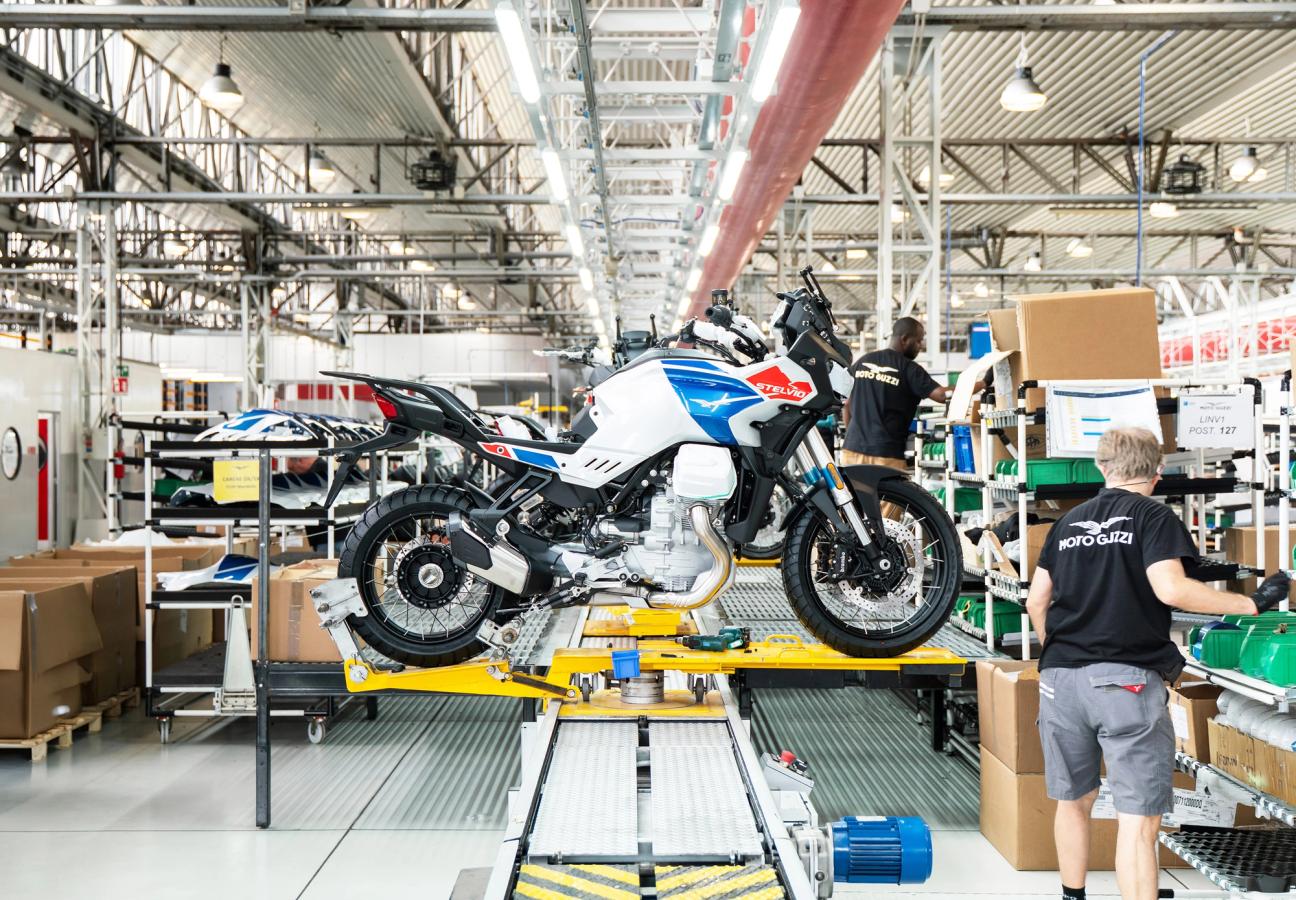
The technology, too, has been brought firmly into the future. The final assembly plant is particularly impressive, linked to the engine shop by a sophisticated robotic conveyor system. Here, the motorbikes are handed over to ‘ground drones’ designed by Piaggio and sent for final testing autonomously. This was conceived both as a way to keep workers safe, and to visually streamline the site.
“What’s noticeable is what you don’t see,” says Lynn. “Trucks, vans, forklifts. The robots move goods without the need for heavy vehicles that used to clutter this site, and the multiple docks, roadways and turning areas are gone. By eliminating roadways for space-hungry vehicles, we recovered space for people.”
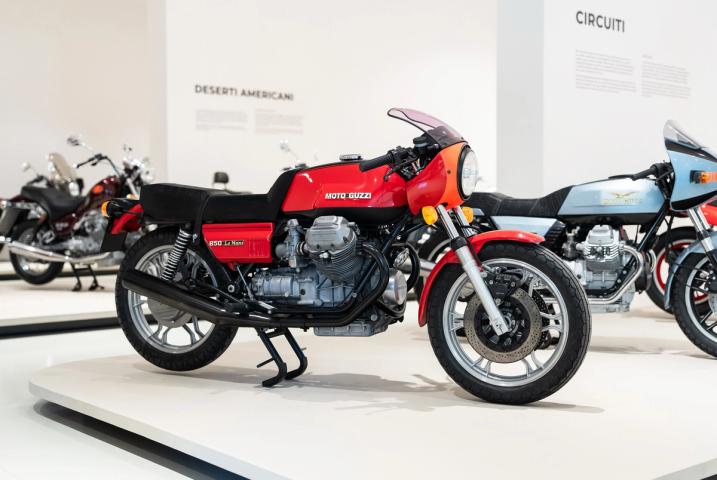
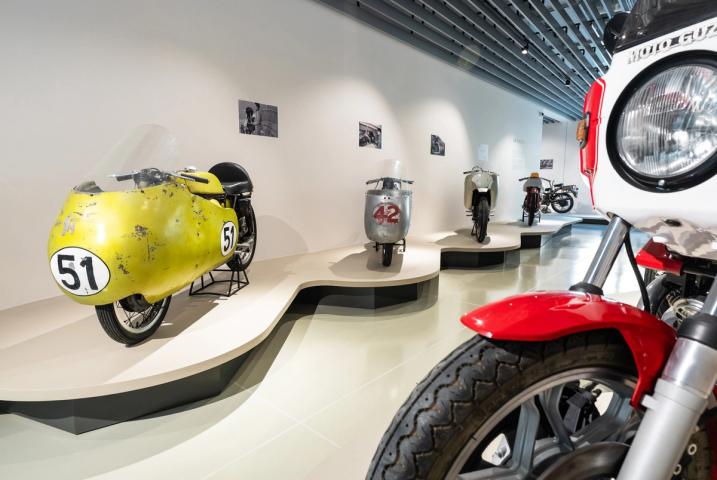
Visitors, while doubtlessly enthralled by the ins-and-outs of a working factory, will also be drawn to the museum — an ark of vintage models and technical titbits, complete with projections of motorsport victories and a handsomely adorned trophy vault. More than 160 meticulously restored two-wheelers are on display, from the G.P. — an early prototype designed by Carlo Guzzi and Giorgio Ripamonti in 1919 — to modern racers, which have scooped the brand 14 MotoGP World Championship titles to date.
The museum also traces Moto Guzzi’s presence in cinema and the arts, as well as its role across military and police forces. Outside, the homages to heritage continue, from the monumental mosaic of the Moto Guzzi eagle in the central piazza (the logo was chosen to honour Giovanni Ravelli, a military pilot and the third founding member of the brand) to the restored Galleria del Vento wind tunnel.
So voracious was this wind tunnel’s appetite for power in Moto Guzzi’s early years that “every time they ran [it], they notified the citizens of Mandello that it could turn their lights out,” says Lynn. It has become one of his favourite spots on the site, thanks to the now-exposed rock face of the mountain, which descends directly into the plaza in front of the tunnel.
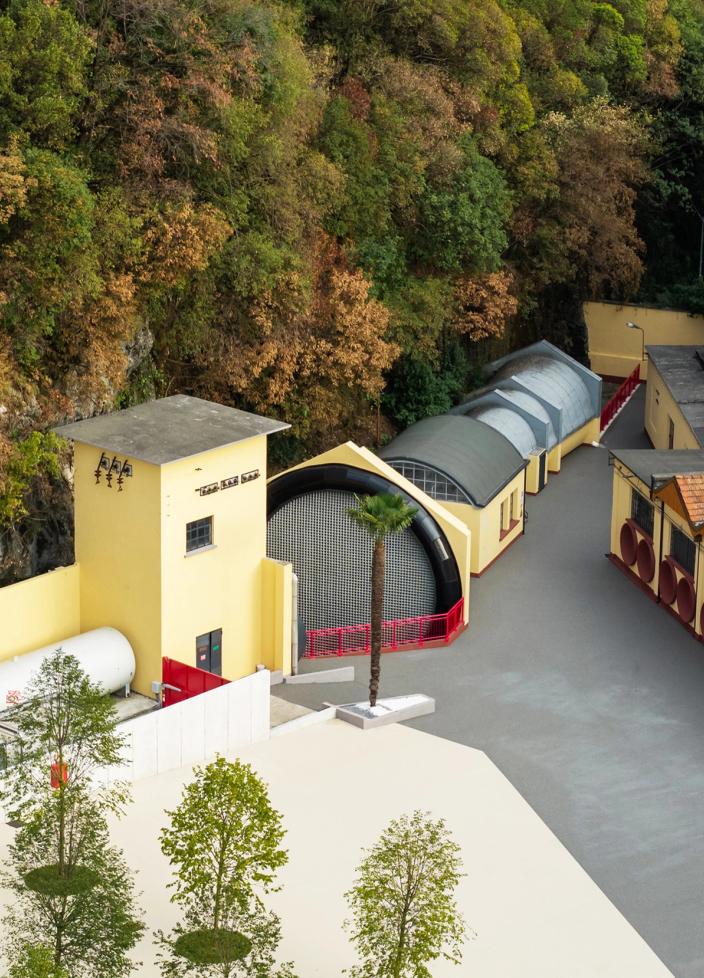
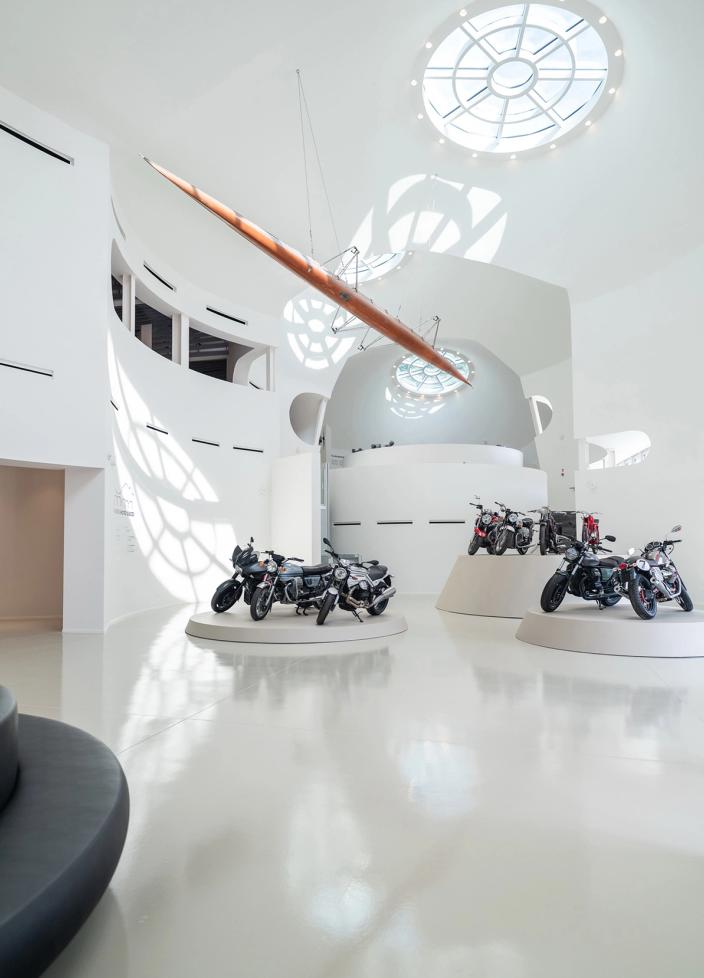
“It had been hidden by the 1970s-era engine plant for decades,” Lynn explains. “Now, the exposed rock, the moss and the dripping water, juxtaposed with the historic buildings and the new engine plant, makes this a place unlike any other. A factory that has continuously produced motorcycles for 105 years, manufactured between a granite wall and one of the deepest lakes in the world, is unique.”
It’s clear that Lynn’s affinity for Moto Guzzi runs as deep as the brand’s own commitment to creating fine motorcycles. But, with over a century of history already in the rear-view mirror — every milestone chronicled and catalogued in the museum — what does the architect hope for the future of his own contribution to Moto Guzzi?
“It is this: the café full on a Tuesday morning, with people from Mandello who have visited the site for generations, and tourists visiting the region. Riders arriving from across Europe and instead of just snapping a photo and leaving, staying for hours, observing the factory and museum. Because, without visiting Mandello, one doesn't understand that the home of Moto Guzzi motorcycles is in such a magical place.”

Want more from the manufacturer? We took the Moto Guzzi V85 TT on an Italian adventure…
Become a Gentleman’s Journal member. Find out how here.