
Style -- 2 hours ago

The first sign is always subtle. A little more scalp in the bathroom mirror. A little less hair in the shower drain. A hairline that seems to have attended one too many budget meetings and decided to quietly withdraw from public life. Hair loss, for most men, creeps in with the diplomatic stealth of a backbench minister repositioning himself for a future leadership bid.
It happens slowly, then suddenly. One day you are a man with thick, heedless, adolescent hair. The next, you find yourself Googling “best hairstyles for thinning crown” at 1:17 a.m. while eating yoghurt directly from the tub and insisting, to no one in particular, that you are merely “curious.”
But hair loss is not a mystery, nor is it a moral verdict, nor is it a referendum on your masculinity. It is a biological, hormonal, genetic, environmental, medical, and occasionally self inflicted saga, a drama with as many characters as a well funded BBC ensemble series.
To understand what causes hair loss is to remove the fear, reclaim the narrative, and begin making informed decisions. The science is clear, the factors are measurable, and the solutions range from “do nothing and look excellent” to “deploy pharmaceutical brilliance.”
First, however, you must know the enemy, or more accurately, the politely underperforming system in charge of your follicles.
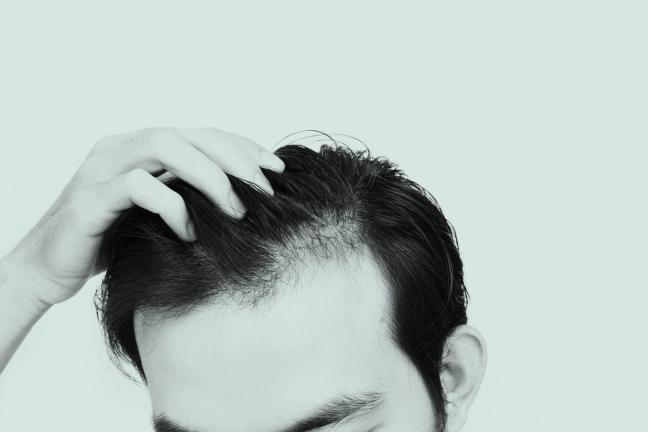
Let us begin with genetics, because it is both the star of the show and the villain responsible for nearly every man’s follicular frustrations. Male pattern baldness, or androgenetic alopecia if you want to sound clever at dinner, is governed almost entirely by inherited sensitivity to DHT, the powerful hormonal cousin of testosterone.
Here is the brutal truth. Your follicles arrived preprogrammed. Some are stoic, unbothered by DHT’s chemical advances. Others, however, are genetically inclined to surrender under pressure, shrinking year by year like a department facing budget cuts. They produce thinner, shorter, weaker hairs until eventually producing no hair at all. A follicle does not die dramatically; it simply retires, much like a civil servant quietly leaving the office for the final time without fuss.
Contrary to pub lore, baldness does not come solely from your mother’s father. It can come from your father, your mother, your mother’s brother, your father’s mother, or any combination that fate sees fit. Hair loss plays bipartisan politics.
If your family gatherings resemble a convention for men who believe a baseball cap constitutes “evening wear,” your fate may already be inscribed in the family archives.
If genetics built the balding machine, hormones are responsible for turning it on.
Testosterone, through the enzyme 5 alpha reductase, is converted into dihydrotestosterone, or DHT, a hormone so potent that it single handedly triggers the entire balding process. Some follicles shrug this off. Others behave as though DHT is an intrusive government inspector demanding compliance paperwork to prove their worth.
The key detail is that hair loss has nothing to do with testosterone levels. Your testosterone might be completely normal, heroic even. The issue is that your follicles treat DHT like a hostile takeover. Men with abundant testosterone may have a full head of hair at 80; men with average testosterone may begin thinning at 22.
Hair loss, therefore, is not a referendum on virility. It is a referendum on your follicular diplomacy.
Even men blessed with good genetics and calm hormones eventually notice some degree of thinning as they age. Ageing skin becomes thinner. Blood flow slows. Follicles cycle more slowly. Regrowth takes longer. Hairs that once returned in vigorous waves now saunter back with the leisurely pace of a civil servant approaching retirement. Even everyday grooming habits, such as the occasional close pass with beard trimmers, can make this slow change feel more noticeable over time.
This is normal. Ageing hair behaves like ageing bureaucracy. It still functions, just not with youthful immediacy.
Age-related thinning rarely results in dramatic balding, but it can produce a gradual loss of density, that quiet hollowing, that gentle transparency, that faintly visible scalp that was not visible five years earlier. It is not betrayal. It is biology.

If hormones and genetics are the main political parties in the parliament of hair, stress is the unpredictable independent MP who occasionally stands up, shouts something disruptive, and collapses the entire system into confusion.
Severe stress, the sort triggered by illness, grief, surgery, extreme dieting, months of poor sleep, financial crisis, heartbreak, or a particularly punishing quarterly report, can cause telogen effluvium, a temporary but dramatic hair shedding event.
Suddenly, hundreds of hairs that were mid growth shift into the resting phase and fall out simultaneously. The shed can last months. It is distressing. It is dramatic. But, crucially, it is temporary. Once the stress passes, the follicles resume normal operations.
Think of it not as balding, but as your follicles taking industrial action in protest of poor working conditions.
Hair is not optional for the body. It is decorative, not essential. When nutrients are scarce, the body prioritises vital organs long before it thinks about maintaining a luscious mane.
Dietary deficiencies such as iron, vitamin D, protein, zinc and essential fatty acids can cause diffuse shedding. Crash diets, restrictive eating or long term poor nutrition leave hair looking thin, fragile and prematurely aged.
If you eat like a university student living on a dare, your follicles will behave like underfunded institutions on the verge of collapse.
Some forms of hair loss arrive with less subtlety.
Autoimmune disorders like alopecia areata cause the immune system to attack hair follicles directly. One morning, you may find a perfectly round bald patch on your beard or scalp, as though someone has taken a topographical survey of your head, and no amount of careful grooming or nourishing beard oils can disguise it.
Thyroid disorders, hormonal imbalances, lupus, severe infections and chronic illnesses can all disrupt follicular cycles. Chemotherapy is well known for causing hair loss, but numerous other medications can contribute as well.
In these cases, the cause is medical, not cosmetic, and must be treated accordingly.
The hair will often return once the underlying condition stabilises, though at times it requires medical intervention.
Men, it must be said, occasionally commit crimes against their own follicles.
Not serious crimes. Not prosecutable crimes. But offences that would trouble a trichologist nonetheless.
Tight hairstyles, aggressive brushing, chemical relaxers applied with missionary zeal, bleaching sessions that leave the scalp questioning its life choices, excessive heat styling, or tying hair back with the determination of a man securing luggage to a roof rack can all cause traction alopecia, a form of hair loss triggered by repeated physical stress on the hair follicle.
The condition develops gradually, which is part of the problem. By the time one notices the receding at the temples or the thinning along the parting, the damage may have been accumulating for years. The follicles, having endured sustained mistreatment, eventually conclude that producing hair is more trouble than it warrants.
The good news, and there is good news, is that traction alopecia is entirely preventable and, if identified early, largely reversible. Cease the offending behaviour, treat the scalp with the respect it deserves, and follicles will generally resume normal operations. Continue regardless, and the loss becomes permanent. The follicles, like any long suffering employee, will eventually stop turning up altogether.
Consider this the public service announcement portion of the article.
A surprising number of medications can affect hair density. Antidepressants, acne drugs, blood thinners, blood pressure medication, anabolic steroids, retinoids and hormonal treatments can all influence hair growth cycles.
This does not mean the medications are wrong for you. It simply means your follicles are reacting to biochemical change. Most drug related shedding is reversible once the treatment is adjusted or discontinued.
If your hair begins thinning shortly after starting something new, the connection is worth investigating. Ideally with a doctor, not a Reddit thread.
For the sake of public health and public sanity, certain myths require formal retirement.
Hats do not cause balding. If they did, the entire population of Canada would be follicularly compromised by November. Construction workers, soldiers, chefs, and the entire membership of any respectable gentleman's club would be smooth of scalp by their thirtieth birthday. The hat myth persists because men often begin wearing hats to conceal thinning hair, creating a correlation that implies causation where none exists. Your favourite cap is innocent. Wear it without guilt.
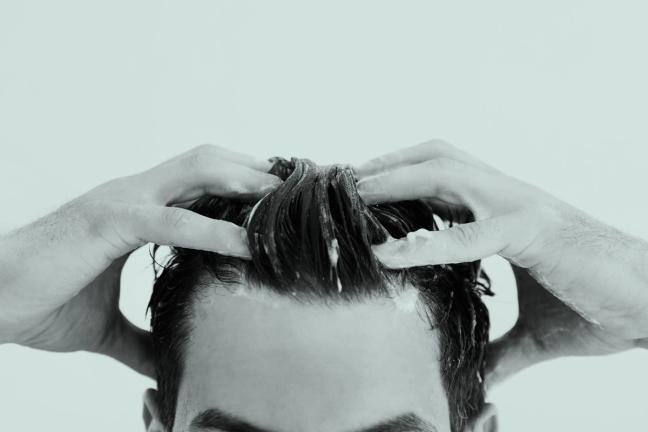
Frequent hair washing does not thin hair. Cleanliness has never been demonstrated to harbour anti follicular sentiment. What washing does is remove hair that has already detached from the follicle, which can create the alarming but misleading impression that the shower drain is consuming your hairline. Those hairs were leaving regardless. The shampoo merely expedited their departure. If anything, a clean scalp provides a healthier environment for the hair that remains committed to staying.
Masturbation has nothing whatsoever to do with hair loss. This particular myth has persisted for reasons that likely say more about the people who propagate it than about any biological reality. The theory, such as it is, involves testosterone and protein depletion, neither of which holds up to even cursory scientific scrutiny. It is nonsense. Complete and utter nonsense. One suspects it was invented by someone who wished to discourage the practice and thought hair loss might prove a more compelling deterrent than moral objection.
Bad shampoo cannot make you go bald. It can make you smell aggressively of citrus or, worse, of synthetic ocean breeze. It can leave your hair feeling like straw or looking like it has been laminated. It can irritate your scalp and inspire regret. But it cannot induce pattern baldness. The follicle operates on deeper instructions than anything a bottle can countermand. Choose your shampoo for comfort and aesthetics, not out of fear.
Stress alone cannot cause male pattern baldness. It can accelerate shedding in those already predisposed, and it can trigger telogen effluvium, a temporary condition in which hair enters its resting phase prematurely. But stress cannot create androgenetic alopecia where the genetic predisposition does not exist. Your difficult colleagues are not responsible for your receding hairline, however satisfying it might be to blame them. Your hairline was always going to do what it was going to do. Stress merely affects the timetable.
Gel and wax do not clog follicles. If they did, every Italian barber in existence would have been forced to close decades ago, and the evidence suggests they remain robustly in business. Styling products sit on the hair shaft, not inside the follicle. They may build up over time and require proper washing to remove, but they pose no threat to hair growth itself. The pompadour is safe. The slicked back look carries no medical risk. Style freely.
You cannot train your hairline through styling. Hair does not respond to discipline. Combing it in a particular direction, willing it to behave, or applying product with optimistic intent will not convince follicles to produce hair where they have decided not to. The hairline is not a negotiation. It is a unilateral decision made by genetics, and it does not take feedback.
You cannot boost regrowth by cutting your hair short. This is sympathetic magic, not science. The belief appears to stem from the observation that hair seems thicker after a cut, which it does, because cutting removes the tapered ends and leaves blunt tips. The follicle beneath the scalp neither knows nor cares what length the hair above it has been trimmed to. Cutting provides the illusion of density. It does not create actual density.
And no, rosemary oil cannot overthrow genetics. It smells pleasant. It may improve scalp circulation marginally. Some studies suggest modest benefits, though none that would survive comparison with actual medical treatments. It will not reverse what your DNA has already decided. If you enjoy the ritual of scalp massage and the scent of Mediterranean herbs, proceed with pleasure. But do not expect miracles. Rosemary is for lamb, primarily.
There is no secret cure your barber knows that dermatologists have somehow overlooked. If such a cure existed, dermatologists would be using it. They have hair too. They have mortgages and vanity and every incentive to solve the problem. The absence of a miracle cure is not a conspiracy. It is simply the current state of scientific progress. What works, works modestly. What does not work sells well on the internet. The distinction matters.
Hair loss is rarely the result of a single factor. It is the interplay, the coalition if you prefer, of several influences operating simultaneously and often without the courtesy of announcing themselves. Genetics loads the gun, as the expression goes, but environment, behaviour, and circumstance determine when and how decisively it fires.
Consider two identical twins, genetically indistinguishable, carrying precisely the same predisposition for androgenetic alopecia. The first smokes heavily, sleeps poorly, eats with the nutritional discernment of a university student, works hours that would concern a Victorian factory inspector, and starts a medication that quietly disrupts hair growth cycles. The second lives with something approaching monk like restraint: balanced diet, regular sleep, moderate exercise, minimal stress, no pharmaceutical complications. By forty, these two men will look as though they inherited entirely different scalps. The genetic predisposition was identical. The expression of that predisposition was not.
This is why hair loss so often feels unpredictable, even capricious. A man watches his father thin dramatically by thirty five, steels himself for the same fate, and then reaches fifty with a hairline his father would have envied. Another assumes he has escaped the family curse entirely, only to find his crown betraying him at forty two. The genetic component is necessary but not sufficient. It requires activation, acceleration, permission from a constellation of other factors before it fully manifests.
Yet despite this apparent randomness, the underlying mechanisms are steady and entirely logical. Each contributing factor operates through identifiable pathways. Hormones bind to receptors. Blood delivers or fails to deliver nutrients. Inflammation disrupts or does not disrupt the growth cycle. Stress hormones circulate at levels that either matter or do not. The complexity lies in the interaction of these systems, not in any fundamental mystery about how each one works.
You are not losing hair because you angered the gods. You are not being punished for sins aesthetic or otherwise. The universe has not singled you out for follicular misfortune.
You are losing hair because your follicles are following instructions. Instructions written in your genetic code, modified by your hormonal environment, influenced by your lifestyle, and expressed according to a timetable that was never entirely within your control. Understanding this will not restore a single strand. But it may restore a measure of perspective, which is worth something.
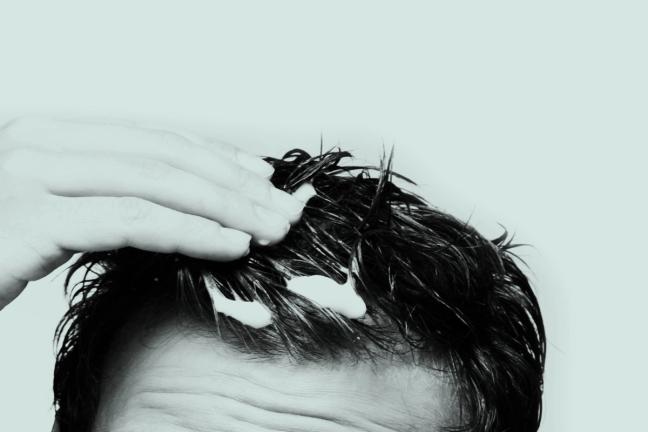
The truth is that hair loss is neither shameful nor sentimental. It is biology expressing itself, nothing more and nothing less. The follicle is not making a moral judgment. It is not commenting on your worth as a man, your attractiveness, your competence, or your prospects. It is simply responding to chemical signals in the manner it was programmed to respond. To interpret this as failure or misfortune is to assign meaning where none exists.
Some men lean into baldness and look magnificent. Bold, structured, definitive. The shaved head or the closely cropped remnant becomes not a concession but a statement, an assertion of confidence that requires no apology and invites no pity. These men understood something important: that fighting a losing battle is optional, and that surrender, when executed with style, can look remarkably like victory. Patrick Stewart did not become less commanding when his hair departed. It could be argued he became more so.
Others pursue treatment and achieve remarkable results. Medication halts progression in a significant percentage of cases. PRP therapy stimulates dormant follicles with varying but sometimes impressive success. Hair transplants, once the province of obvious and regrettable plugs, have evolved into genuinely sophisticated procedures capable of producing results that even intimate acquaintances might not detect. Lifestyle modifications, while rarely sufficient alone, can support and enhance other interventions. The options available to the modern man facing hair loss are more numerous and more effective than at any previous point in history.
There is no correct response. Only the response that restores your confidence, supports your identity, and aligns with your temperament. The man who would feel fraudulent with transplanted hair should not have a transplant. The man who would feel diminished without intervention should pursue it without embarrassment. Neither choice reflects weakness. Both reflect self knowledge, which is considerably more valuable than hair.
You may treat hair loss. You may embrace it. You may delay it, manage it, monitor it with the vigilance of a man watching share prices, or counteract it with the considerable miracle of modern follicular surgery. You may combine approaches, beginning with medication and progressing to transplantation if results prove insufficient. You may try everything available and then, finding peace, abandon the effort entirely. The path need not be linear, and changing course is not hypocrisy.
But whatever you choose, choose it consciously. Not in fear. Not in panic. Not at three in the morning in response to an ill advised Google search that has led you down a rabbit hole of miracle cures, catastrophic warnings, and before and after photographs of questionable provenance. Decisions made in desperation rarely serve us well. Hair loss, for all its emotional weight, is not an emergency. It permits deliberation. It allows for consultation, consideration, and measured response.
Hair loss may be inevitable for many men, but so is wisdom. And the wise gentleman recognises that hair, while lovely, is ultimately optional. Confidence is not. Character is not. Charm, wit, kindness, competence, and the ability to enter a room without apologising for your existence are decidedly not optional. These are the things that determine how others experience your presence, and not one of them has ever been located in a follicle.
The mirror will show you what genetics and time have decided. What it cannot show you is how little that reflection matters to anyone paying attention to the right things.
What this article captures so well is that hair loss is not a single event or a single cause — it’s a process.
In clinical practice, we see men and women who assume their hair loss is either inevitable or untreatable, when in reality the question is not “Will I lose hair?” but “How is my hair loss behaving, and what options suit me at this stage?”
For some, that answer is reassurance and observation. For others, it’s medical treatment to stabilise further loss. And for a smaller group, surgical restoration may be appropriate — but only when the pattern, progression, and long-term plan make sense.
The most important step is not rushing into treatment, but understanding what is actually happening on your scalp. Once that’s clear, decisions tend to feel far less emotional and far more practical.
Modern hair transplantation offers more to patients than ever before, including AI-assisted surgical planning and simulation of achievable results. Solutions to prevent and maintain hair are also evolving, and it’s advisable to seek expert guidance and education to help evaluate your options.
Nadeem Khan, CEO, Harley Street Hair Clinic
Harley Street Hair Clinic offers specialist consultations for men who want a clear, evidence-based understanding of their hair loss — with or without treatment.
To receive the latest in style, watches, cars and luxury news, plus receive great offers from the world’s greatest brands every Friday.