Property -- 3 days ago

A good bed changes how the day begins rather than how the bedroom looks. Quality materials, thoughtful construction and balance all play their part once the lights go out.
There comes a moment, usually around half past two in the morning on a Sunday, when you realise the problem is not coffee, email or the late-night doom scroll. The problem is the thing you are lying on. Or rather, the thing you are failing to sleep on.
Then, infuriatingly, you remember that you sleep perfectly well in certain hotels. On a Hypnos in the country. On a Savoir in a London suite. On the other hand, stitched in Sweden at Hästens, which costs roughly the same as a car. It is almost as if the rest of the world has decided that a bed is infrastructure, while your bedroom is still operating on emergency funding.
So what do luxury beds actually do for you, beyond giving interior designers something to photograph? Quite a lot, as it happens, and not only for your back.
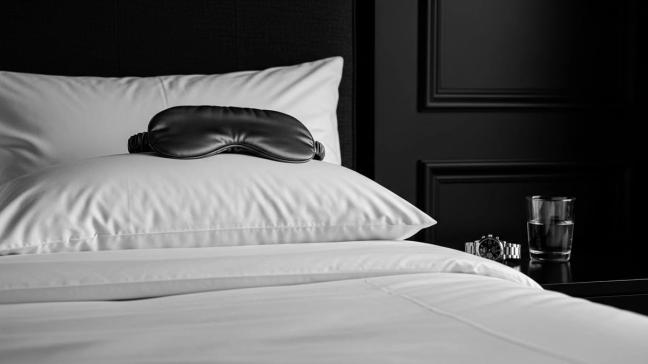
The first and most boring benefit of a luxury bed is that you actually sleep. Not in the vague, on and off, occasionally conscious way you do on a tired old mattress, but in long, unbroken stretches that involve proper deep sleep and the sort of dreams that do not feature emails.
Medium-firm mattresses, which are where most luxury brands quietly park themselves, are consistently linked with better sleep quality. They keep you supported without feeling punitive, which makes it easier to stay asleep instead of rolling over every twenty minutes to escape a numb shoulder or complaining hip.
Brands like Vispring, Hypnos and Duxiana lean heavily into this sweet spot. Pocket springs provide the underlying structure, then layers of horsehair, wool, cotton or latex let your body sink just enough. You are held, but not immobilised. Savoir will even adjust the spring tension on each side if you and your partner belong to different species.
You can call that indulgence if you like. Your nervous system calls it an absence of reasons to wake up.
Cheap or worn-out mattresses fail in two predictable ways. They sag in the middle, and they push too hard at the shoulders and hips. The result is a spine that spends the night in a quiet S shape, which is exactly as helpful as it sounds.
Luxury beds attack that problem with engineering. High spring counts, arranged in zones, give firmer support where you are heavier and gentler support where you are not. Foams and natural fibres contour to curves instead of ignoring them. The aim is a neutral spine, so your back is neither arched nor twisted for hours at a time.
Tempur, in its very subtle science fiction way, does this with dense, slow-response foam that moulds to your exact outline. Vispring and Hästens do it with thousands of pocket springs and kilograms of hand-teased natural fillings. Duxiana goes a step further with adjustable cassettes of springs in the lumbar area so you can fine-tune support as your back or weight changes.
Clinical studies are tediously clear on the outcome. When people move from too soft or too hard mattresses to a well-designed medium-firm surface, back and neck pain generally improves. Sleep onset is quicker. Groaning over the edge of the bed in the morning becomes less theatrical.
Will a luxury bed cure a lifetime of terrible posture and office chairs designed by someone with a grudge? Probably not. Will it stop your mattress from actively making those problems worse every night? Very likely.
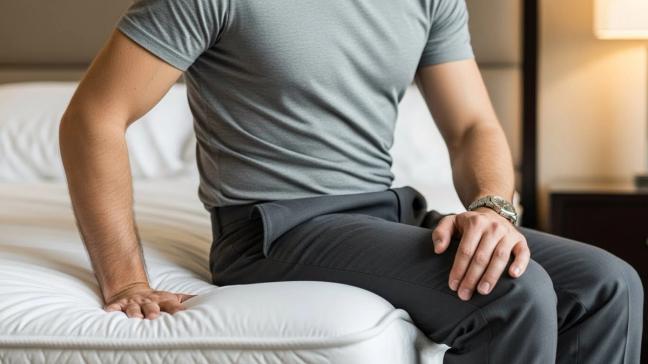
If you sleep on your side, your body weight rests mostly on two small areas: your shoulders and your hips. On a basic mattress, those points take the full load, which is why you wake up needing to rotate like a chicken.
Luxury beds address this by spreading the pressure. Memory foam and latex, used judiciously, allow your hips and shoulders to sink while keeping everything else lifted. Pocket springs compress independently, allowing the bed to adapt to your shape rather than treating you as a flat object.
Brands such as Emma in its premium ranges, Simba Hybrid Luxe, and the plusher Tempur and Sealy models are built entirely around that principle. So are the top tiers of Hästens and Savoir, albeit using very different materials and a decidedly more aristocratic vocabulary.
The effect is not just comfort for its own sake. Even weight distribution improves circulation and reduces the micro-awakenings that happen when one patch of skin becomes uncomfortable. You sleep longer in each position and wake less often. The perceived luxury is the side effect. The real benefit is that your body no longer feels as if it has spent a night on a park bench.
One area where luxury beds excel, and cheaper ones rarely bother, is motion isolation. In practical terms, this is the difference between your partner turning over and your partner launching you a couple of inches to the left every time they move.
Individually pocketed springs, dense foams and thoughtful layering mean that movement on one side of the mattress does not automatically transfer to the other. You can get out of bed without waking someone. They can get in without waking you. Tempur made a marketing career out of dropping bowling balls next to glasses of wine to prove this. The physics may be heavy-handed, but the principle stands.
For couples, this is not a trivial luxury. If you share a bed with a fidgeter, a luxury mattress that damps down their movements is effectively gifting you an extra hour of sleep a night. Which, over the life of a bed, is worth more to your health than almost any gym membership you have not used.
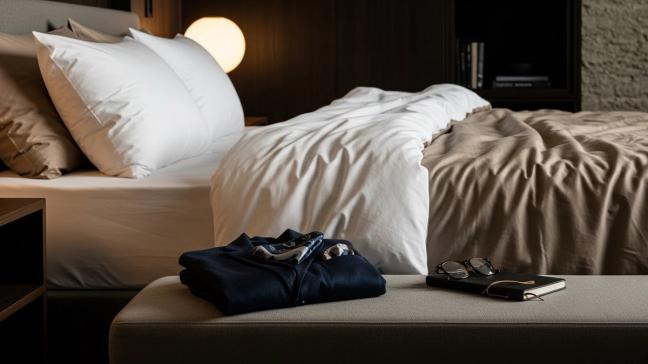
Ask people why they woke in the night and somewhere near the top of the list, after stress and neighbours, sits overheating. Many basic foam mattresses trap heat. You warm the surface with your body, it warms you back, and the whole arrangement becomes unpleasantly circular around four in the morning.
Luxury beds tend to approach this with more imagination. Hästens and Vispring rely on breathable natural fillings like wool, cotton, horsehair and flax, which wick moisture and allow air to circulate through the mattress. Hybrid brands build ventilation channels around their spring, and use open-cell foams that let air move instead of imprisoning it. High-end Tempur and similar lines incorporate cooling covers and phase change fabrics that absorb and release heat more calmly than your existing duvet.
The result is a more stable microclimate around the body. You are less likely to wake up sweaty, fling the duvet off, cool down too much, then haul it back on in a never-ending cycle of self-sabotage. You remain in something closer to thermal neutrality, which your brain interprets as permission to stay asleep.
A new budget mattress can feel broadly acceptable for a year or two. Then the inevitable happens. Springs fatigue. Foams compress. The middle starts to resemble a shallow valley with your silhouette etched into it. Your body does what it always does in the face of a dip. It slides to the lowest point, spine curves, and shoulders protest.
Luxury beds cost more partly because they use better materials, thicker, denser and more resilient. Natural fibres recover faster and last longer than cheap polyester padding. High tensile springs tolerate years of compression. Quality foams preserve their structure rather than collapsing into a tired pancake.
The effect over time is that a luxury mattress at five or seven years old often feels more like itself than a cheap mattress at three. Brands such as Vispring, Hästens, Savoir and Hypnos are confident enough to offer long warranties because they know what their products look like after a decade in the wild. Many hospitality ranges from Sealy, Simmons and Hypnos are specifically designed to withstand nightly use in hotels, then sold in slightly modified form to civilians.
There is, in short, a difference between comfort that lasts and comfort that is only there for the showroom.
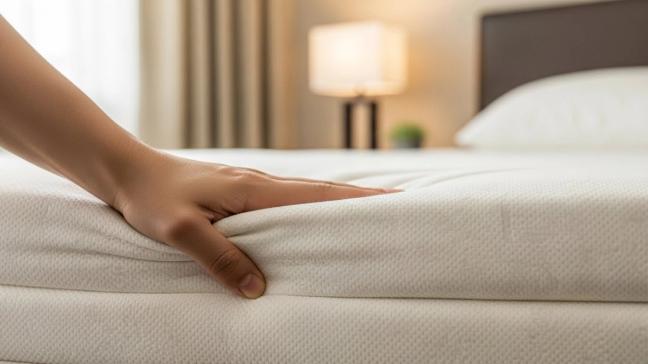
One of the more modern benefits of high-end beds is that they acknowledge the inconvenient truth that your body does not stay the same. Weight changes. Injuries happen. Pregnancy appears. Backs age.
Duxiana hides adjustable spring cassettes under the surface so you can stiffen or soften support zones later. Some premium air beds from the likes of Sleep Number let you dial firmness up or down on each side with a remote, and remember your settings. Certain Tempur models offer replaceable or reconfigurable comfort layers so you can subtly alter the feel without replacing the entire mattress.
This is particularly useful for couples who are structurally incompatible. One person wants firm, the other wants plush. A bed that allows two different settings is quieter, more elegant and significantly less expensive than running a domestic cold war over the correct level of bounce.
Not all the benefits of a luxury bed are mechanical. Some live in the quietly psychological realm, where data is much harder to produce, but the effect is still real.
A well-made bed from a Savoir, a Hästens, a Hypnos or a Vispring looks and feels like a serious object. Solid frame, deep mattress, upholstery that does not squeak. It turns the bedroom from a place you end up in to a place you go to. That shift in perception matters. You are more inclined to treat sleep as an event, not an accident.
The act of climbing into a bed that has been designed, rather than purchased in resignation, reinforces the idea that you are allowed to stop working. Pillows that actually support your neck and linens that feel good against your skin tell your nervous system that it can stand down.
It is fashionable to dismiss this as lifestyle fluff, but we are creatures of association. If your bed feels like an afterthought, you are more likely to treat sleep that way. If it feels like a civilised destination, you are marginally more likely to arrive there with your phone out of reach and your shoulders no longer welded to your ears.
The obvious objection to luxury beds is that they are expensive, and they are. A handmade Vispring, a top-tier Hästens or a fully specified Savoir will set you back a figure that, on paper, could also buy you a small hatchback. Even the more accessible luxury offerings from Hypnos, Tempur or Simba in their upper ranges will cost more than the average person expects to spend on anything that does not have an engine.
The question is what you get in return. A mattress you sleep on every night for eight to ten years will host you for roughly three thousand nights. If it reduces pain, improves sleep quality, keeps the peace between you and whoever shares the bed, stabilises your temperature and makes your own bedroom feel like somewhere you want to be, the cost per use begins to look embarrassingly reasonable.
You do not need the most expensive thing on the market. Plenty of sensibly priced hybrids and pocket-sprung beds from reputable makers will deliver most of the benefits described above. What you probably do need is to stop thinking of your bed as furniture and start thinking of it as part of your health.
In the end, the case for a luxury bed is not that it is glamorous, although many of them are. It is that it quietly upgrades one third of your life. Better sleep leads to better days. Better days accumulate into a better decade.
Civilisation does not, in fact, begin with the wheel. It begins with a mattress that does not leave you negotiating with your lumbar spine at dawn. And if that mattress happens to be hand-stitched by someone in Sweden who knows your preferred spring tension by name, so much the better.
To receive the latest in style, watches, cars and luxury news, plus receive great offers from the world’s greatest brands every Friday.