250 years of Louis Roederer: inside the Champagne house that still does things differently
As Louis Roederer celebrates its 250th anniversary, and 150 years of Cristal, Harry Jarman travelled to Reims to discover why one of Champagne’s last great independent houses remains the smart choice for those in the know
- Words by: Harry Jarman
- Photography: Noah Sapoon
There are few names in Champagne that carry quite the same weight as Louis Roederer. And even fewer that have managed to do so while remaining independent, family-owned and, in many respects, resolutely individual.
Founded in Reims in 1776, Roederer today occupies an unusual position in the luxury world. It is internationally recognised while remaining remarkably understated. It produces one of the most famous wines on Earth, Cristal, the champagne of champagnes, yet behind that famous gold label is a house whose modern identity is increasingly defined by its vineyards, biodiversity, organic farming and an almost obsessive attention to the land.
It is also still controlled by the same family. Frédéric Rouzaud, its chairman and CEO, represents the seventh generation, and that continuity matters. In an industry increasingly populated by houses owned by enormous luxury groups, Roederer has retained the ability to think not in quarters or even years, but in generations.
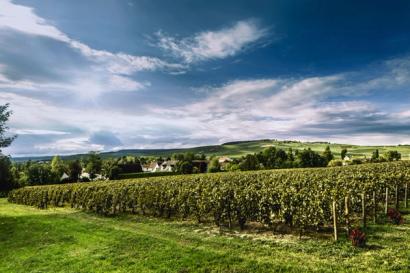
This year, that long-term view feels particularly pertinent. Louis Roederer is celebrating its 250th anniversary, while Cristal turns 150. The house now owns 250 hectares across some 420 individual plots, spread between the Montagne de Reims, Vallée de la Marne and Côte des Blancs. More than half, 135 hectares, are certified organic, giving Roederer what it says is the largest organically certified vineyard holding in Champagne. Not a bad flex.
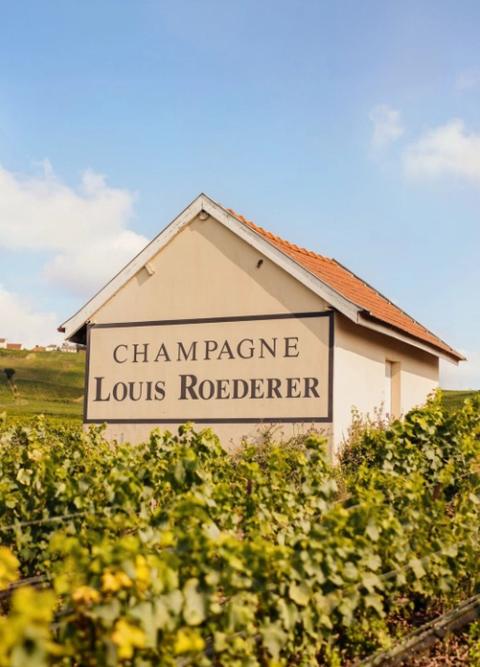
Vineyard ownership has underpinned Roederer’s independence since the house’s first purchase in 1841.
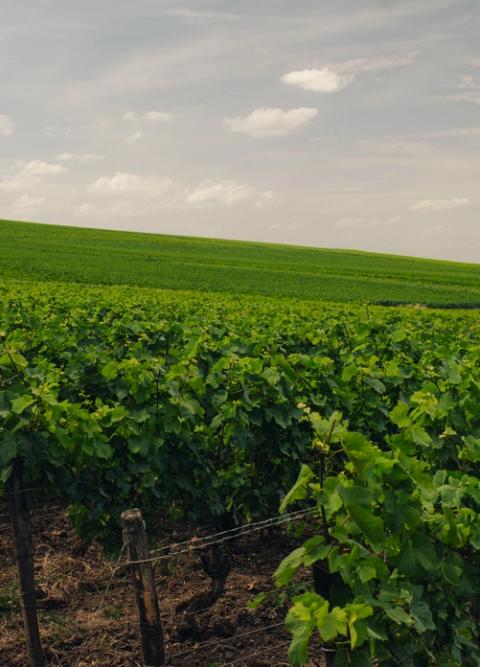
Roederer’s 250 hectares span some 420 individual plots, tended parcel by parcel.
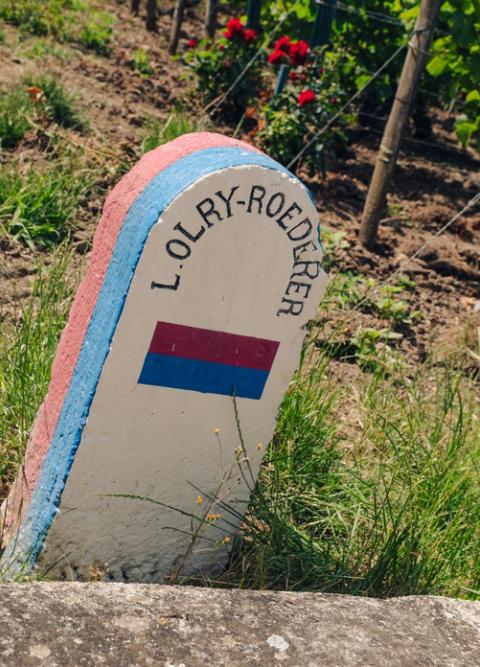
A family legacy rooted in the land: Roederer’s vineyards have been assembled over generations.
I was fortunate enough to see this world at close quarters in June, when my friend and photographer Noah Sapoon and I caught the train from Paris to Reims. What followed was a day that took us deep underground into Roederer’s cellars before ending around a table with Rouzaud himself at the family’s Château.
And, somewhere between the bottles resting silently beneath Reims and a glass of Cristal 2016 over lunch, you begin to understand what makes Roederer special.
The story begins in 1776, but the decisive moment came in 1833, when Louis Roederer inherited the house and gave it his name. His great insight was relatively simple: if you wanted to make exceptional wine, you needed control over the vines that produced it. At a time when Champagne houses largely relied on buying grapes from growers, Roederer began acquiring his own vineyards. In 1841, he bought his first three hectares in Verzenay.
It proved to be a remarkably prescient decision. Over successive generations, the family continued acquiring exceptional sites, creating the enormous patchwork of vineyards that exists today. That ownership gives Roederer something priceless: control. The house can determine how its land is farmed, when its grapes are picked and how individual parcels are treated, rather than simply specifying the fruit it wishes to buy.
Louis Roederer also understood something else that feels distinctly modern: the importance of looking beyond France. During the 19th century, Russia became an enormously important market for the house, culminating in a request that would change Champagne forever. Tsar Alexander II wanted something extraordinary. And, in 1876, Roederer created it.
Cristal is widely regarded as the first prestige cuvée in Champagne. Its distinctive clear bottle and flat base were created for the Russian emperor; the latter is traditionally said to have been designed to remove anywhere that an explosive could be concealed. Whether one buys entirely into the intrigue or not, the result was a bottle that looked unlike anything else, and contained a wine designed to do the same.
One hundred and fifty years later, Cristal remains Roederer’s hero. It is made from 45 Grand Cru plots spanning around 80 hectares, drawn from three estates, La Rivière, La Montagne and La Côte, that the family has assembled since 1841. It is only produced when the grapes achieve the required maturity and spend six to 10 years ageing in bottle, with riddling still carried out by hand.
Two and a half centuries inevitably bring difficult chapters. Revolution, war and profound changes in the global wine trade all threatened Champagne’s great houses. Roederer’s Russian success was hardly an advantage following the 1917 Revolution, while the economic and political upheavals of the first half of the 20th century created another existential test.
One of the most important figures in the company’s history emerged from that period. Camille Olry-Roederer took control following the death of her husband, Léon, and ran the house from 1932 until 1975.
She was, by all accounts, formidable. Camille reinvigorated the house, entertaining clients, travelling and rebuilding its international reputation while protecting its independence. She was known for inviting important customers to her table, serving Champagne as an aperitif before surprising them with still wines produced from exceptional Roederer parcels over lunch.
Jean-Claude Rouzaud subsequently pushed the viticultural philosophy further, and today his son Frédéric continues it alongside cellar master Jean-Baptiste Lécaillon. That has led to perhaps the most interesting chapter in Roederer’s modern history.
Luxury is fond of talking about sustainability. Roederer’s approach feels rather more fundamental. Organic practices began around the turn of the millennium, with the Cristal vineyards beginning their conversion in 2006. By 2023, 135 of the estate’s 250 hectares had achieved French organic certification. The house has also established its own vine nursery and conservatories for plant material as part of a wider attempt to understand the relationship between vine, soil, climate and wine. At Roederer, biodiversity is not presented as an adjunct to winemaking. It is winemaking.
Its 420 parcels are tended individually, grapes are harvested by hand and plots can be vinified separately. Instead of treating Champagne as one homogeneous landscape, the house increasingly talks about its vineyards as individual places with their own personalities. It is an approach that becomes particularly apparent when you descend beneath Reims.
Noah and I arrived from Paris in June and began our visit with a tour of the cellars. There is something inherently impressive about Champagne underground. Above ground, Reims is elegant, ordered and reassuringly civilised. Below it lies another world: corridors disappearing into darkness, chalk, bottles and an atmosphere governed almost entirely by time. But scale alone isn’t what stays with you at Roederer. It is the care.
Walking through the cellars, you begin to understand that Champagne is fundamentally an exercise in delayed gratification. Wine is made, blended, bottled and then left. Some of Roederer’s greatest wines will spend the better part of a decade underground before their eventual release. Cristal can rest for six to 10 years in bottle alone.
And the deeper you get into Roederer, the more you realise that this willingness to wait extends throughout the business. An independent house can plant a vineyard knowing that its real potential may only be understood by the next generation. It can farm differently because the benefits might emerge over decades. It can hold wine back because it simply isn’t ready.
But perhaps Roederer’s greatest achievement is that the rest of the house has never been allowed to become merely supporting cast. The scale of Roederer’s vineyard operation is impressive, 250 hectares, 420 plots: but the numbers almost miss the point. What matters is the degree to which those plots are allowed to remain individual. Cristal alone draws on 45 specific Grand Cru plots, and Roederer’s Collection wines take another approach, combining a particular harvest with its Perpetual Reserve, established in 2012, and reserve wines from earlier years.
Collection 246, which we would later drink over lunch, is a particularly good example. Built around the difficult 2021 harvest, it incorporates a 35 per cent Perpetual Reserve stretching back through previous vintages, alongside oak-aged reserve wines. It is Champagne blending not as a means of making every year taste identical, but as a way of allowing each new edition to have a personality of its own. By the time we resurfaced, I felt I understood the bottle on the table rather differently. And there were several bottles still to come.
From the cellars we headed to Roederer’s Chateau for what can only be described as an incredibly special lunch with Frédéric Rouzaud. The setting had itself been transformed for the anniversary. Artist Bianca Bondi had conceived an immersive installation that turned the space into an organic landscape, exploring nature, transformation, crystallisation and the passage of time. It was an appropriately artistic expression of many of the ideas we had just encountered underground.
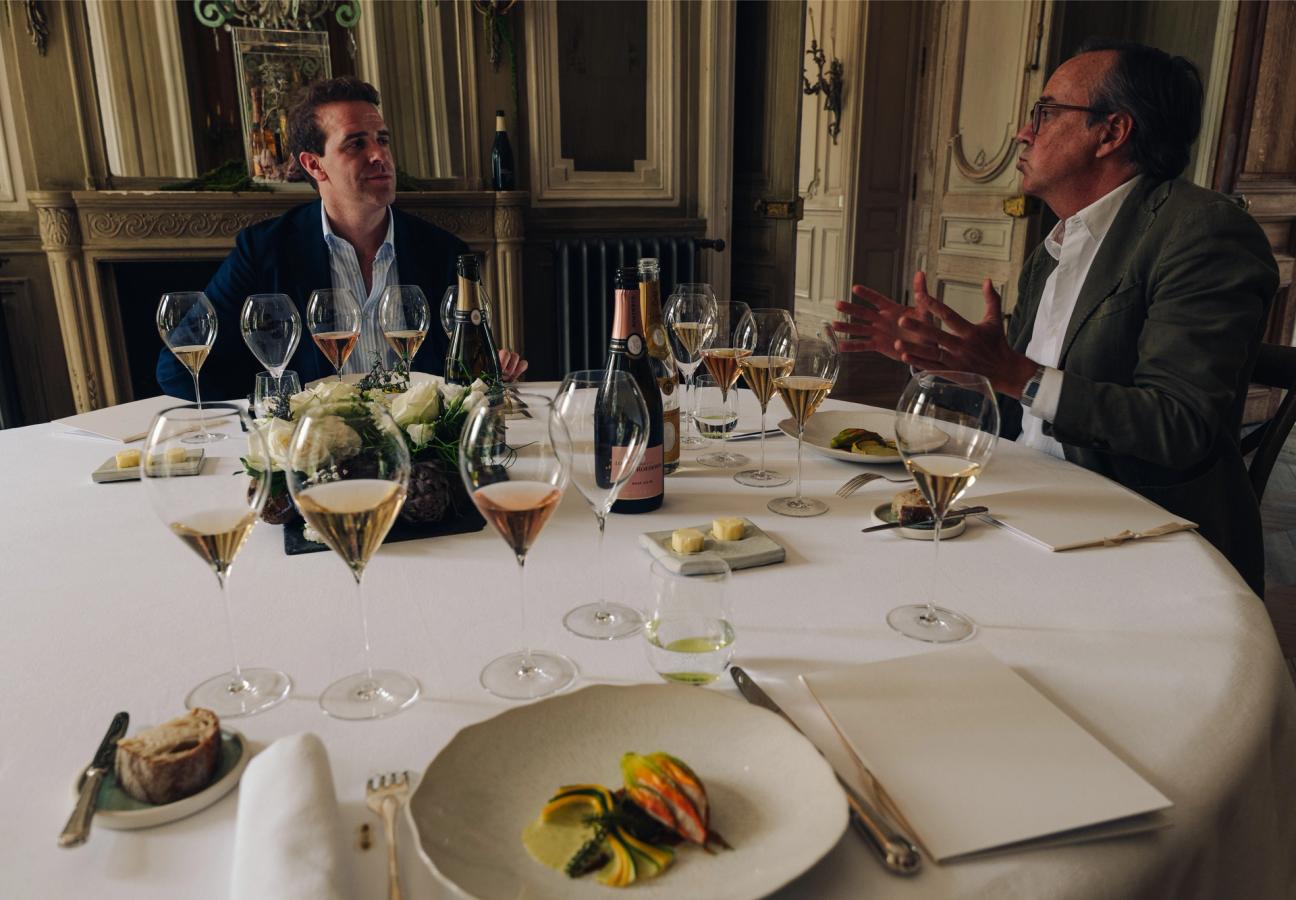
Harry Jarman joins Frédéric Rouzaud for lunch at the family’s château.
Two-Michelin-starred chef Philippe Mille had created a menu to work in harmony with the champagnes. We began with a series of amuse-bouches, smoked salmon heart, wine-lees tomato, celery and seaweed millefeuille, and cucumber with yuzu, followed by hand-cut langoustines, lightly warmed and served with leek cream, peas and sorrel. John Dory arrived with samphire, green tomato, lettuce, green bean and oyster leaf, followed by Champagne guinea fowl in a courgette blossom, with zucchini millefeuille and green curry sabayon. Dessert was chilled red berries with tarragon and mint emulsion, with Champagne sorbet beneath a sweet tile. It was exceptional cooking, but it was the progression of wines that really told the story of the house.
Brut Nature 2018 came first, a zero-dosage Champagne that shows a tauter, more uncompromising side of Roederer. Then came Collection 246, fresh, energetic and built around that fascinating perpetual reserve.
And then came Cristal 2016. There are certain luxury products so famous that the mythology can threaten to overshadow the thing itself. Cristal could easily be one of them. It has appeared on the tables of emperors, collectors and billionaires. Its gold label and clear bottle have become visual shorthand for Champagne at its most rarefied. Yet drinking it at Roederer has almost the opposite effect. Remove the noise surrounding Cristal and you are reminded that it is, above all else, a serious wine.
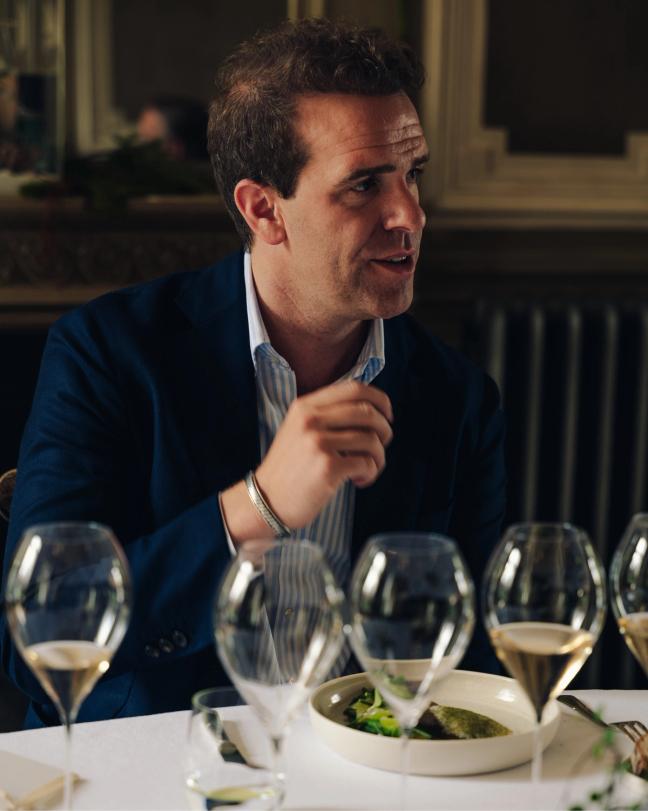
Harry Jarman sampling Roederer’s cuvées over lunch at the château.
Rosé 2018 followed, demonstrating the same philosophy from another direction, before Carte Blanche brought the lunch to a close: richer, softer and particularly suited to the final stages of a meal.
But sitting opposite Rouzaud, it was difficult not to think about what 250 years really means. There have now been seven generations involved in shaping Roederer. For most companies, 1776 belongs to another world entirely. Yet here was a family still working with vineyards bought by its ancestors, and making a wine first created for a Russian emperor 150 years ago.
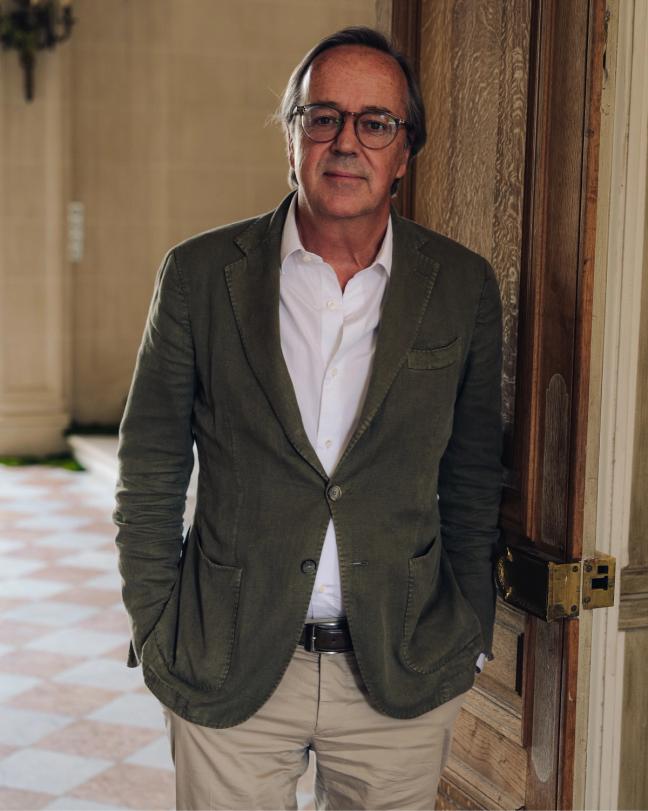
Frédéric Rouzaud, the seventh generation of the family to lead Louis Roederer.
There is something pleasing about the symmetry of this anniversary year, too. The house is 250 years old and Cristal is 150. It feels appropriate. A family business does not survive for 250 years by remaining exactly the same. It survives by understanding what should change and, perhaps more importantly, what shouldn’t.
On the train back from Reims, I kept returning to something that had become increasingly apparent throughout the day. Louis Roederer doesn’t shout. Cristal may be one of the most recognisable names in wine, but the house behind it feels surprisingly discreet.
There is a particular sort of luxury brand that becomes more interesting the more you know about it. You start with the label and then discover the vineyards. You start with Cristal and then discover Collection, Brut Nature or Rosé. You start with 250 years of history and then discover a house preoccupied not with preserving its past in aspic, but with improving what it hands to the next generation.
After a day in Reims, from the quiet of the cellars to lunch with the man now responsible for carrying that story forward, I came away thinking that Louis Roederer is one of those increasingly rare brands whose appeal lies as much in what it doesn’t say as what it does.
Those who know, know. And that is what makes it the smart choice.