Interview -- 3 days ago

Luxury on this show feels surgical, chosen to signal power without pleading for attention. Once you notice what Patek Philippe was in Succession, the choice reads as strategy rather than decoration.
In the opening act of Succession, Tom Wambsgans brings Logan Roy a Patek Philippe for his birthday, and the room instantly understands what Tom takes slightly longer to grasp. This is not a present in the usual sense. It is a petition wrapped in lacquer and good intentions.
Tom does that thing socially ambitious people do when they are trying to look relaxed while performing a small opera of deference. He smiles, he softens his voice, he offers a little joke about the watch’s accuracy and what it tells you about wealth, and he waits for the warmth that should follow. The warmth does not arrive. It rarely does in this family. The Roys run on dominance, not gratitude, and certainly not etiquette.
A Patek Philippe carries an old-world aura, the reassuring scent of tradition and permanence. It suggests lineage without shouting, refinement without desperation, and taste without the need to explain itself. Tom chooses it because he wants to be recognised as a man who belongs in the room. The tragedy, as the show will demonstrate with relentless tact, is that the room was never going to grant him that comfort.
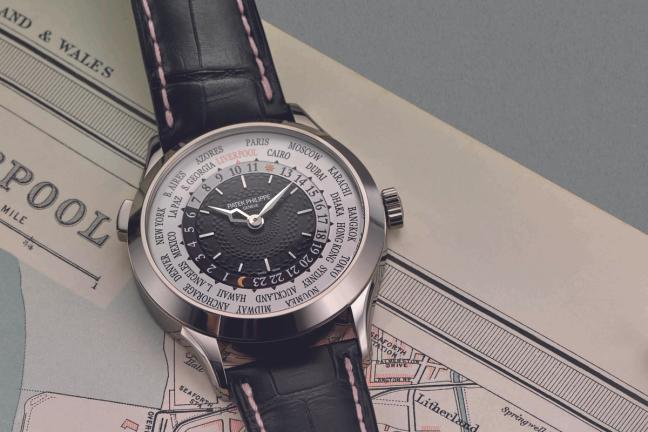
Watches are one of the last acceptable ways for men to speak about themselves without admitting they are doing it. They are personal, they are public, and they sit there on the wrist, insisting that the wearer has made choices. A Patek Philippe, in particular, suggests that the wearer has chosen heritage over hype, craft over noise, and restraint over display.
In polite society, that sort of signal works. It tells a quiet story about education, discretion, and a preference for things that will still matter when the fashion cycle has moved on. It is a luxury that tries to behave. It does not demand applause. It expects recognition from the right people, which is to say, those who already know.
In the Roy universe, though, credentials are not admired in the way Tom hopes. They are assessed as leverage. The watch is less an emblem of taste and more an invitation to be judged. Tom thinks he is demonstrating familiarity with the codes. Logan sees a man asking permission to exist.
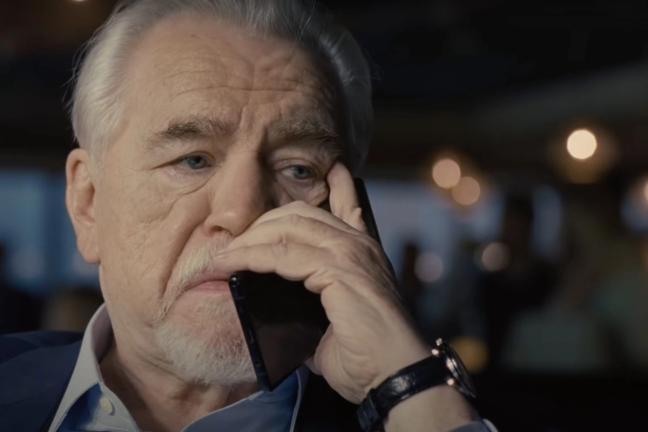
Logan Roy does not react like a normal recipient because Logan Roy is not running a normal social contract. He does not need to be gracious. He does not need to be charming. He does not need to be anything other than the sun around which everyone else anxiously orbits.
His lack of interest is not rudeness in the ordinary sense. It is an assertion of hierarchy. If he pauses to admire the watch, he acknowledges Tom’s taste. If he thanks Tom properly, he grants Tom a moment of equality, however brief. Logan does neither. The gift lands, and Logan treats it as though it were a leaflet pushed into his hand on the street.
Status is maintained by what you refuse to dignify. Power is exercised by making other people do emotional work while you remain blank, or close enough to blank to be terrifying.
Tom has brought a symbol meant to impress. Logan’s refusal to be impressed turns the symbol into a lesson.
Tom’s relationship with the Roys is defined by a particular species of hopeful dread. He wants in, he wants to be safe, and he wants to be liked by people who treat liking as a weakness. The Patek Philippe is his attempt to convert anxiety into acceptance.
That is the thing about luxury in Succession. It is never merely decorative. It is coping. It is camouflage. It is the way characters try to impose meaning on relationships that are, at their core, transactional and unstable.
Tom chooses something that speaks of permanence because he feels impermanent. He chooses something that whispers tradition because he suspects the family will always hear him as new money adjacent, even if he himself is not new money, merely new enough not to be trusted. The watch is the sort of object that says, I understand the rules. The Roys respond, in effect, with a silent correction. There are no rules, only us.
Then the show does something both clever and quietly vicious. The Patek Philippe does not remain a symbol of aspiration for long. It is almost immediately repurposed. After Roman’s cruel little stunt at the softball game, the problem is not handled with apology, remorse, or anything that would require a moral spine. It is handled with a document and a gesture. The watch becomes part of the settlement.
This is important. The Patek moves from gift to instrument, from social signal to administrative solution. In one stroke, Succession tells you exactly how the Roys see the world. Harm is not the scandal. The scandal is untidiness. The goal is not justice. The goal is closure, preferably with signatures.
A watch of that calibre is useful because it is not cash. Cash is vulgar, cash is explicit, cash admits what is happening. A mechanical watch, by contrast, can be offered with a straight face, as if it were compensation delivered in good faith rather than a tidy way to make the story go away.
The watch becomes a piece of paperwork that happens to tick.

There is a great deal of talk online about the show’s understated wardrobe, its beautifully boring coats, its muted palettes, its refusal to dress the ultra-rich like cartoon villains. People call it quiet luxury, as if the point were the silhouettes and not the souls inside them.
The truth is that Succession uses restraint as a weapon. The clothes and accessories are not there to dazzle you. They are there to normalise a level of power that would otherwise seem obscene. Everything is tasteful, which makes the ugliness easier to swallow. It is the same trick certain institutions use when they want to look benevolent while doing something unpleasant behind a mahogany door.
A Patek Philippe fits this perfectly. It is elegant. It is discreet. It is the kind of thing you can wear while insisting you are not the type to care about such things. Then, in the hands of the Roy machine, it becomes a tool for silencing a family who has been humiliated. That contrast is the show’s moral aesthetic in miniature. Refinement on the surface, rot underneath, and a smile while the forms are filed.
Tom is not stupid. He is simply loyal to a set of assumptions that do not apply here. He thinks that if he makes the right moves, if he reads the room, if he offers a gift with cultural weight, he will be protected by the logic of good manners. He believes that taste can function as a passport.
Logan and the Roy children operate on a different system. For them, taste is optional. Power is the only credential that cannot be revoked. A beautiful object is admired only insofar as it can be used, or insofar as it flatters the person holding it. The moment it stops being useful, it becomes invisible.
This is why Tom’s offering is so revealing. It shows what he values. It shows what he hopes will matter. It also shows what he does not yet understand, which is that the Roys do not reward people for knowing the codes. They reward people for writing the code, and then changing it whenever it suits.
Tom brings a watch that implies continuity. The Roys thrive on disruption.
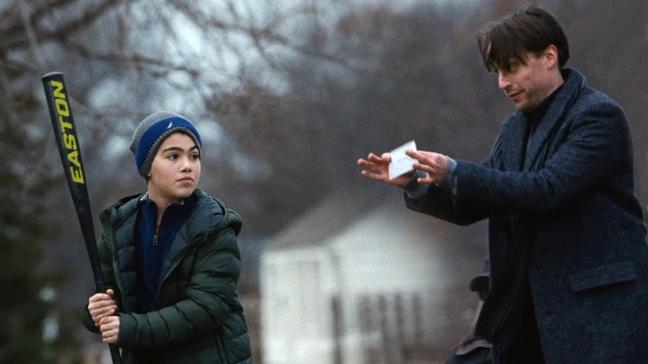
Roman’s softball episode is not a side note. It is the show’s manifesto. Roman toys with a child’s hope in public, as casually as someone might flick a crumb from a lapel. The family’s response is not a moral reckoning. It is a management exercise.
Here, the spirit becomes unmistakable. The question is not, was this wrong. The question is, how do we contain it. The Roys treat disgrace like a spill on a carpet. They want it cleaned quickly, quietly, and by someone else.
The Patek Philippe slides neatly into this mindset. It is a high-status object being used to patch over low behaviour. It is the illusion of generosity deployed as a barrier against consequence. It allows the family to feel, if not good, then at least finished.
If you want a single image that captures what money can do in the hands of people who mistake it for virtue, it is this. A watch built to measure time, used to shorten a conversation.
It is no accident that a watch plays this role, because Succession is obsessed with time in every direction. There is the time Logan has left, which terrifies the family because they have built their lives around his gravity. There is the time the children have wasted, circling the throne like planets with entitlement issues. There is a time Tom is always trying to buy, in the hope it will eventually become a belonging.
A watch is a perfect object for that obsession. It is intimate and symbolic, and it sits on the body like a constant reminder that time is passing, whether you are ready or not. Yet in this universe, time is treated as something to dominate. People schedule feelings. People timetable loyalty. People treat ageing as a business problem.
Tom’s line about the watch telling you how rich you are is funny because it is the kind of joke you make when you want to appear in control. The deeper joke is that nobody here is in control of time. The Roys can purchase privacy, influence, and distance. They cannot purchase relief.
The Patek, with all its calm precision, becomes an emblem of the one thing they cannot bully.
So why was Patek Philippe in Succession? It was never a simple flex, and it was certainly not a love letter to watchmaking, however much one might admire the craft in other contexts. In the show, it is a narrative object that carries several meanings at once, which is why it works so well.
It is Tom’s longing to be legitimate, rendered in steel and politeness. It is Logan’s ability to refuse connection without lifting a finger. It is the family’s habit of translating harm into settlement and turning shame into a signature. It is quite luxurious, revealing itself as a form of quiet violence, because it can glide into a room without attracting attention, and still do its work.
Most of all, it is a reminder that in the Roy world, even the finest objects are not safe from becoming instruments. Beauty does not soften the system. It simply makes the system look better-lit.
And that, in the end, is the show’s most British joke of all. The watch is impeccably made. The people are not.
To receive the latest in style, watches, cars and luxury news, plus receive great offers from the world’s greatest brands every Friday.