
Property -- 4 days ago

Luxury hotels choose their mattresses with more care than most guests realise. Every layer, stitch and spring is selected to create sleep that feels both deliberate and indulgent.
There is a particular kind of betrayal that takes place around 3 a.m. in a very good hotel. You roll over, realise you have not woken up once since midnight, and understand with sickening clarity that the best night’s sleep you have had in years is happening on a luxury bed that does not belong to you.
You make a mental note to “find out what bed this is” and then, naturally, forget. Until you go home, lie on your own lumpy compromise and discover that you are suddenly very motivated indeed.
So what mattresses do luxury hotels use? And why do they feel as if someone has quietly run a focus group on your spine?
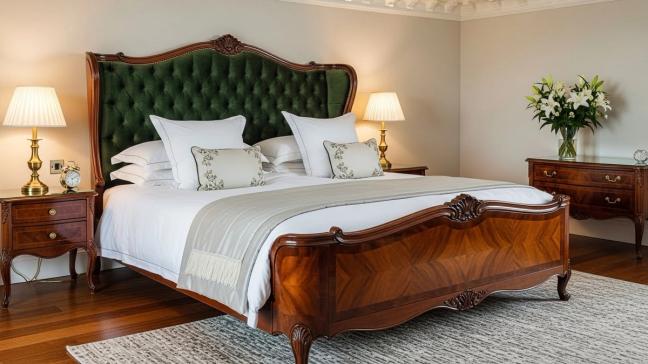
Part of the answer, of course, is theatre. Hotels dress the bed like a minor head of state. Crisp white sheets, voluptuous duvets, six pillows, bolsters of uncertain purpose. Your eyes register abundance before your back has weighed in.
But under the laundry, there is method. High-end hotels are not in the business of taking chances with sleep. A bad night turns into a bad review. A good night becomes free marketing. So they invest in mattresses that are built for two things: survival and consensus.
Survival is obvious. A hotel mattress is used every night, by everyone from honeymooners to jet-lagged toddlers. It must cope with abuse, weight, spilt drinks, enthusiastic room service and the occasional crime against housekeeping.
Consensus is subtler. The bed has to feel right to couples, solo travellers, people who sleep on their back like a pharaoh and people who cocoon themselves diagonally. It cannot be too firm or too soft, too deep or too thin. It must be the Switzerland of mattresses.
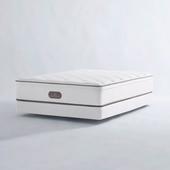
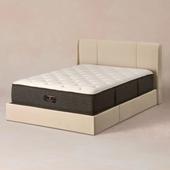
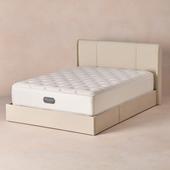
This is why the vast majority of luxury hotels settle on a similar formula: a medium-firm pocket-spring core with a plush, forgiving top. Serious support underneath. A little cloud on top. Democracy, but with taste.
Strip off the glamorous bedding, and you are usually looking at a hybrid. The lower half is all business: hundreds, often thousands, of individually wrapped springs that move independently. That gives you proper spinal support and stops you from bouncing every time the person on the other side of the bed contemplates turning over.
Above that, the hotel adds diplomacy. Layers of foams, gel infusions, perhaps a little latex, sometimes a generous pillow-top quilted with soft fibres. This is what makes the bed feel “luxurious” rather than “orthopaedic”. Your joints meet the cushion first, then slowly discover the structure underneath.
Almost every serious hotel mattress also has reinforced edges. This sounds dull until you remember how often you sit on the side of the bed to put on shoes, answer emails or question your life choices. A good edge stops that sinking feeling and gives you more usable surface to sprawl on.
The overall tension is usually medium-firm. Not the monastic hardness some people boast about, not the marshmallow others secretly favour. Something in the middle that offends almost no one.
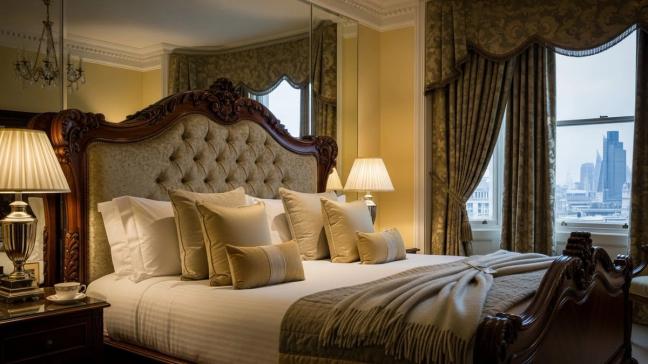
Over the past two decades, big hotel groups have discovered that “the bed” is an asset, not just a piece of equipment. The result has been a quiet arms race in mattresses, complete with names.
Four Seasons has the Four Seasons Signature Mattress. It is a pocket-coil hybrid available in firm, signature and plush versions, usually with a zip-off topper that can be swapped to suit your preference. You can buy it for a price that suggests it will be delivered by butlers.
The Ritz-Carlton has the Ritz-Carlton Bed, a 114-inch monument to coil counts and comfort layers. Again, a hybrid design: individually wrapped springs, dual layers of foam, a surface that feels soft while remaining politely supportive.
Westin more or less started the public phase of this war with the Heavenly Bed, launched in the late nineties and endlessly copied since. It is made for them by Simmons, uses a proper spring core and a quilted pillow-top, and is explicitly designed to make you think: “I should really get one of these at home.” Westin will happily sell you one. Marriott, Sofitel, St Regis and others now do the same, through their own retail shops.
Behind the scenes, a small number of manufacturers do most of the heavy lifting. Simmons, Sealy, Serta and a handful of European specialists build hotel-spec ranges that are then tweaked and rebadged for each chain. When you fall in love with a bed in New York and then again in Hong Kong, there is a fair chance it was born in the same factory.
Here, the story branches slightly, because in Britain we still maintain a fondness for local bed makers.
Many Hilton properties worldwide use the Hilton Serenity Bed by Serta. In the UK, however, Hiltons often feature Sealy Posturepedic hotel mattresses, built to the same medium-firm, pocket-sprung, top-layer template, but manufactured closer to home.
Premier Inn, although not a luxury chain, deserves a mention because millions of people have now slept on their beds and asked what they are. Their current mattress, made by Silentnight, is a medium-firm pocket-spring design with a Geltex comfort layer, and it is sold directly to the public. It is not glamorous, but it is a very solid example of the modern hotel hybrid and proof that you do not need a chandelier to have a decent night’s sleep.
At the more rarefied end, British names like Hypnos and Naturalmat do brisk business with boutique hotels and country properties. Hypnos beds, all pocket-sprung and often stuffed with wool and cashmere, turn up in smart country-house hotels and better London addresses. Naturalmat supplies hand-crafted, natural-fibre mattresses to stylish groups such as The Hoxton and to spa-heavy retreats like Six Senses.
There are also bespoke makers who build for specific properties: pocket-spring cores, deep layers of cotton, silk or lambswool, stitched and tufted by hand. When you stay in a small, ruinously tasteful hotel in the Cotswolds and wonder why the mattress feels like it was tailored, there is usually one of these firms behind the scenes.
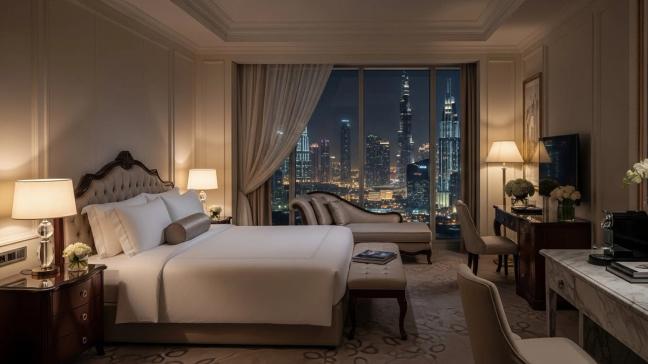
Hotels in Dubai prefers its luxury turned up to a persuasive volume, and the beds are no exception.
Most of the international chains in Dubai import their existing concepts. The Four Seasons in DIFC uses the same Four Seasons Signature Mattress you would find in Park Lane. The Ritz-Carlton on JBR uses the Ritz-Carlton Bed. Westin Mina Seyahi uses the Heavenly Bed. The theory is simple: if it works in Boston and Barcelona, why reinvent it for the Gulf?
Alongside the global names sit local specialists. Brands such as Colunex, Isbir and Millbrook Beds have a presence in high-end Dubai hotels, tailoring pocket-sprung hybrids with plush tops to the climate and clientele. Regional outfits partner with Simmons to build “five-star” mattresses around proven spring units, then adjust the upper layers with cooler fabrics and breathable foams to cope with desert heat and robust air conditioning.
The result, whether you wake up in Mayfair or on the Palm, is surprisingly consistent: a deep, substantial mattress with a hint of cloud on top and enough support underneath that your back is not filing a complaint after one night.

So what mattresses do luxury hotels use? Medium-firm pocket-spring or hybrid designs, mostly built by a handful of large manufacturers and a scattering of artisanal ones, dressed to within an inch of their lives in white cotton and topped with a carefully rationed layer of cloud.
In the UK, that often means Sealy Posturepedic for Hiltons, Silentnight for Premier Inns, Hypnos and Naturalmat for the stately and the stylish. Globally, it means Simmons and Sealy supplying signature beds for Four Seasons, Ritz-Carlton, Westin, Marriott and their peers. In Dubai, it means all of the above, plus a few regional specialists adding their own flourish.
The good news is that, with a little research and some honesty about what you actually like, you can get surprisingly close to that hotel feeling at home. The better news is that you do not need gold taps or bell staff to do it. A well-made hybrid mattress, decent linens and a promise to yourself to make the bed properly every morning will do more for your quality of life than any loyalty scheme.
You may still sleep best on holiday. That is part of the point. But at least your own mattress does not have to feel like a punishment for coming home.
To receive the latest in style, watches, cars and luxury news, plus receive great offers from the world’s greatest brands every Friday.