

Style -- 3 days ago

In association with

From sleep cycles to blood markers, Welbeck is transforming healthcare into a strategy for peak performance...
How do you measure your own success? A personal best on your latest 10K? Heavier lifts in the gym? Maybe even longer hours at the office? In these, success is easy to see. It’s quantifiable; numbers to beat and better. But these days, performance is no longer just physical. It’s less about how you look and more about how you live — and that can be harder to measure.
Of course, you still shouldn’t skip leg day, but some of life’s most important biological metrics can’t be seen in the mirror. Instead, they’re in your blood markers, your sleep cycles, those subtle bodily signals you may have been ignoring — or never noticed at all.
Thankfully, Welbeck is on hand to help. Since 2019, more than 100,000 patients have passed through the doors of the London-based private healthcare provider, joining them at the new frontier of performance: biology. Because if pre-emptive planning, self-betterment and optimisation are demanded in every other area of modern life, why shouldn’t our health be the same?


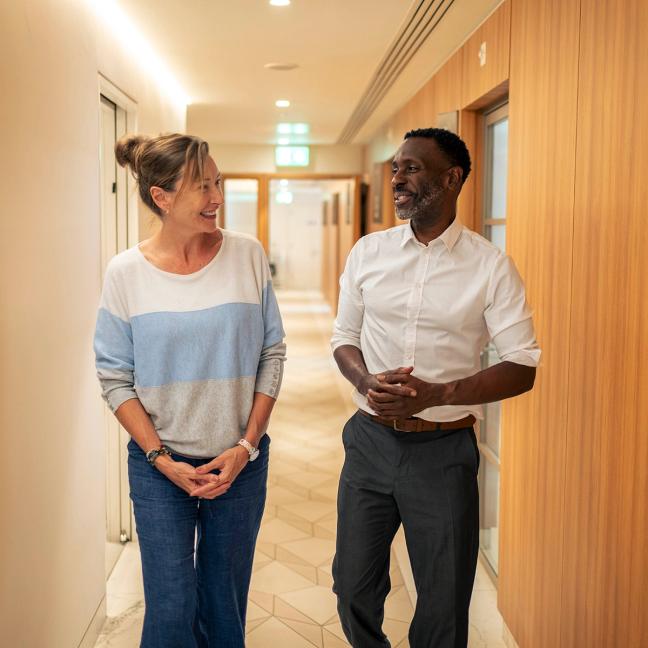
That’s what Welbeck does. Rather than being drawn by illness or immediate necessity, many of its patients are simply searching for answers, driven by a desire to better understand their own bodies. And, from its 50,000-square-foot, purpose-built facility in Marylebone, Welbeck is redefining modern healthcare. There are no crowded waiting rooms, no sense of urgency. Instead, deliberately devoid of clinical severity, the Welbeck experience feels precise, quiet and reassuring.
Patients are assigned a dedicated chaperone upon arrival and guided through a structured day — moving between consultations, imaging suites and private spaces. Meals are served in calm, enclosed pods. Conversations are unhurried and the atmosphere, more than anything, evokes some of London’s finest and most exclusive private members’ clubs — just here with hospital-grade diagnostics.
But it’s not just a single clinic. Additional facilities will soon open in Oxford and Cambridge, and Welbeck already operates as a coordinated network of consultant-led centres. This ensures that every patient’s journey — from initial assessment to specialist care — is seamless. The multidisciplinary team spans cardiology, gastroenterology, radiology and more, and has eliminated referral lag between specialists. The model is built on fluid, performance-driven continuity — optimising time as you optimise yourself.

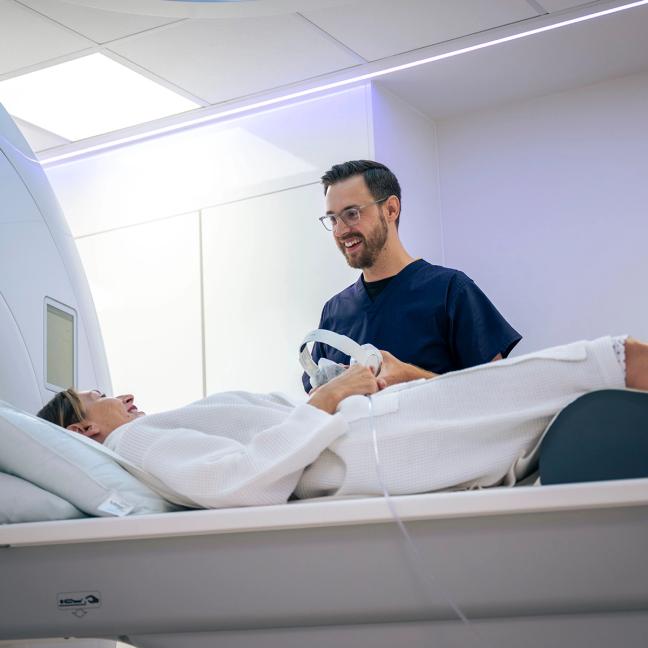
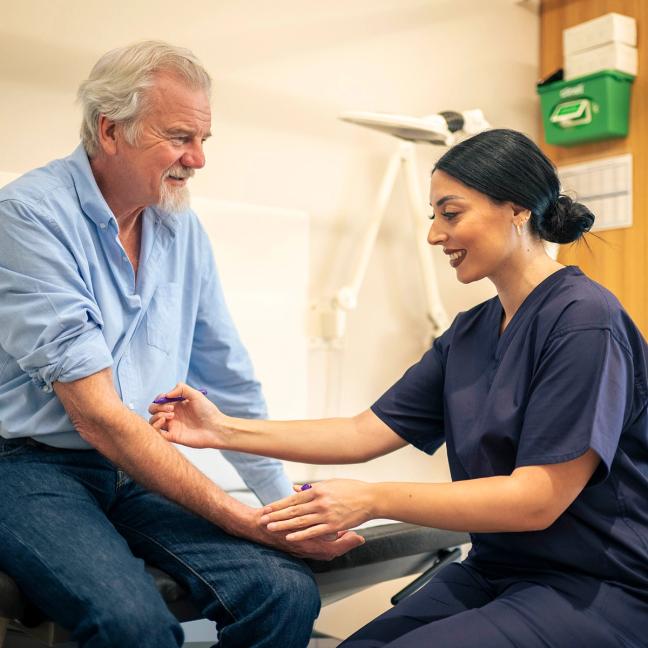
And this time is saved in many ways. Every assessment is led by an experienced consultant physician, meaning you’re dealing with specialists from the outset. They build a picture of your body using an array of advanced diagnostic tools: high-resolution imaging, cardiovascular testing and detailed blood analysis. These are usually extreme diagnostic measures; at Welbeck, they are standard, helping to identify any issues your body may be experiencing.
Because the core of Welbeck’s philosophy is this: health is inherently individual. So why would you follow a fixed menu of tests or a standardised pathway? Instead, like a bespoke three-piece suit, every test and decision is tailored to the patient, informed by medical history, genetic predispositions and lifestyle. The outcome? A personalised health map, designed not only to explain where you are currently, but to anticipate where you might be heading.
This emphasis on early detection defines the entire Welbeck experience. Who wouldn’t want to identify risk before it manifests? By shifting the timeline of intervention forward, often by years, uncertainty is replaced with foresight. Welbeck offers you more than health; it offers control.
“Screening and early detection save lives in very real, measurable ways,” explains Professor Julian Teare, consultant gastroenterologist and founding partner of Welbeck. “In colorectal cancer, for example, we know that for every 28 colonoscopies performed, one case of cancer is prevented. That’s an extraordinary return, not just in clinical terms, but in human terms.”
That human touch is echoed in the on-the-ground experience itself, which consultant cardiologist and chief innovation officer, Professor Richard Schilling, describes as “the forefront of medical innovation, using advanced technology to fundamentally change how — and where — care is delivered. Procedures that once required several days in hospital can now be performed with minimal disruption, reducing both recovery time and the risk of infection.
“What’s changing isn’t just the technology — it’s the entire patient journey…”
“From next-generation MRI scanners that can safely image patients with implanted devices, to 3D cardiac mapping and pulse field ablation, we’re seeing a shift towards more precise, lower-risk interventions that prioritise both outcomes and patient experience,” he adds. “What’s changing isn’t just the technology — it’s the entire patient journey. We’re moving from prolonged hospital stays to highly sophisticated, minimally disruptive care delivered in a matter of hours.”
It’s a new age of healthcare, then — one that feels less like last-minute, emergency intervention and more like strategy. It keeps us ahead of the curve, which brings us back to how we achieve peak performance, and how we each measure success. Because if the old healthcare model was built around fixing, Welbeck has shifted that to refinement and optimisation. You may be doing well, the healthcare provider’s message reminds us, but you can always be better.
Become a Gentleman’s Journal member. Learn more here.
To receive the latest in style, watches, cars and luxury news, plus receive great offers from the world’s greatest brands every Friday.