Style -- 5 days ago

Omega is literally launching itself into 2026 with two lavish interpretations of its already mind-bogglingly iterative space hero. We’re talking about the Speedmaster, of course, its stop-watch ‘chronograph’ functionality famously ‘flight qualified’ by NASA in 1965, and even more famously worn on the lunar surface every time an Apollo astronaut took their own small step.
Which, of course, means we’re talking about the most keenly debated wristwatch of any #watchnerd pub / X debates. And asking: is this actually a ‘Moonwatch’?
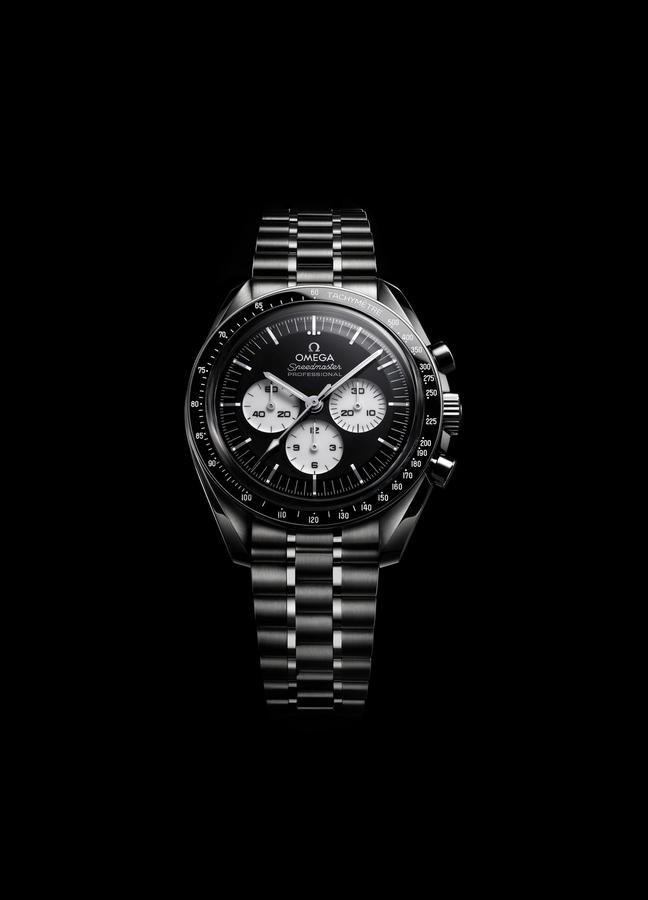
The two launches are each on bracelets (not Velcro) in stainless steel and Omega’s proprietary, long-lasting ‘Moonshine’ yellow gold. Three monochrome ‘reverse panda’ registers feature the signature ‘step’ of the so-called Moonwatch’s black-on-black dial, seamlessly assembled with a double-plate construct. The top surface polished black, with a shimmering lacquer finish, framed by rhodium-plated subdial frames.
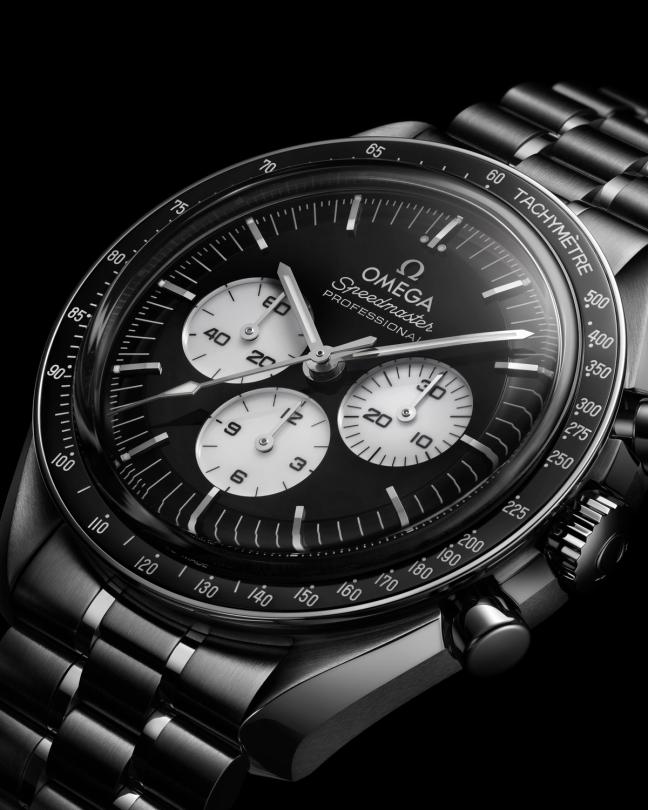
Both are powered by the Calibre 3861 – the most advanced evolution of the cult ‘321’ that NASA’s astronauts trusted from low orbit to the Moon every time, starting with Walter ‘Wally’ Schirra, who first wore his Speedmaster CK2998 on board the Sigma 7 in 1962. His timepiece’s manually wound 321 engine was cam-operated, rather than via a ‘column wheel’, which is essentially saying Wally timed his lift-off by engaging the mechanics via a slightly less smoother clutch.
So now, you have the opportunity to be even better-equipped than those of ‘The Right Stuff’: a watch underwritten by a five-year warranty, along with Master Chronometer certification that guarantees the Swiss industry’s Omega-coined and METAS-certified antimagnetism. Let alone virtually frictionless silicon componentry and +1/-1-per-day precision.
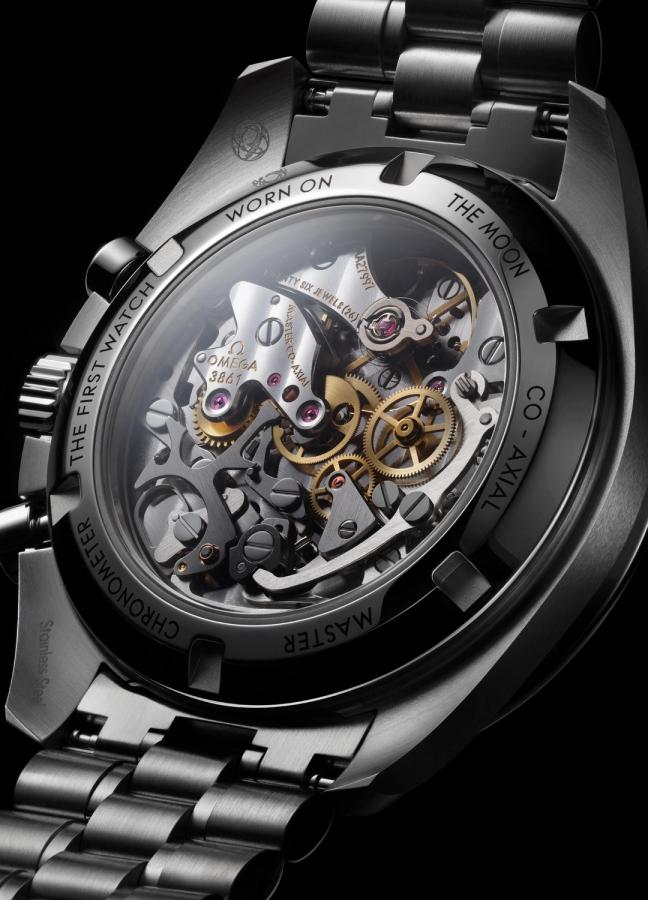
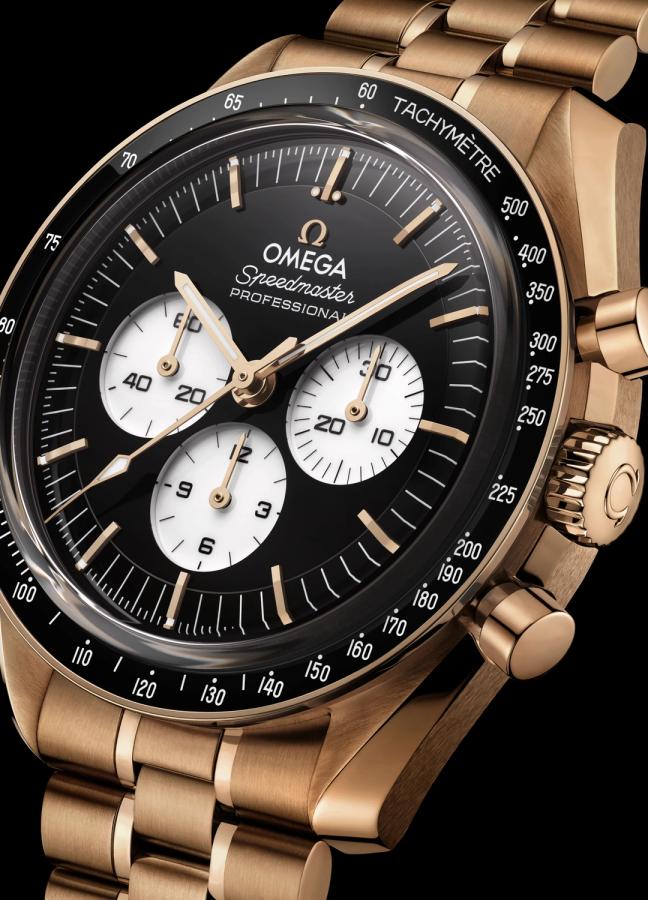
An always-fixable, future-proof investment for life, without a doubt.
But here comes the even-geekier bit, because Schirra’s watch was his own and had nothing to do with NASA. It wasn’t until 1964 that the US space agency requested brands to put forward their chronographs for ‘flight qualification’. Only four responded, with the Speedie outstripping Rolex, Longines-Wittnauer and Hamilton through all manner of temperature and shock tests.
Apollo’s crews were thus kitted out with Omega’s existing ref. 105.003 from 1965: straight-lugs, no crown guards, often also referred to as the ‘pre-Professional’, or ‘Ed White’ since he was the first to use it during a spacewalk on board Gemini IV. ‘Professional’ designation was as result of NASA’s officially designated ref. 105.012, as worn by Armstrong and Aldrin on the Moon (with different case shape and recessed pushers) and ST 145.012 (improved pusher construct; worn by Collins in the lunar-orbital command module during Apollo 11).
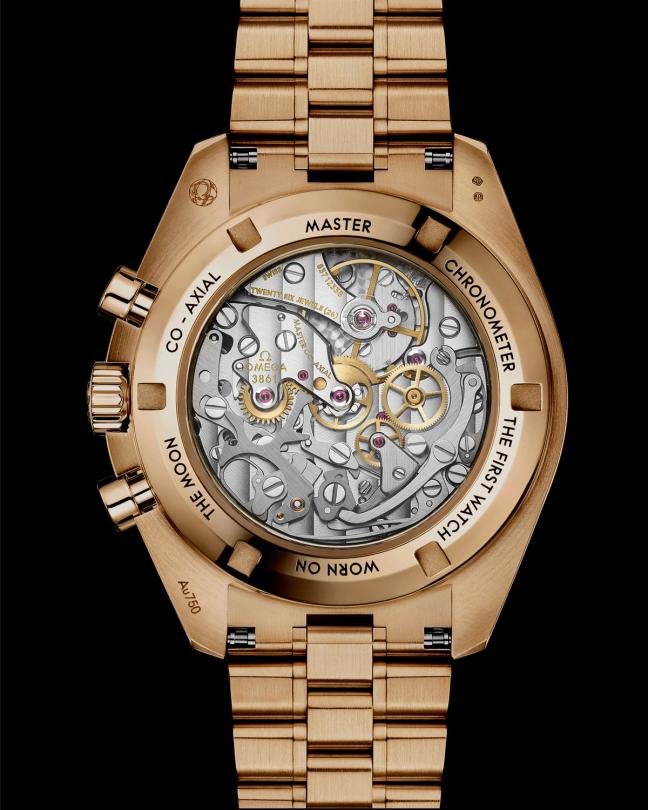
The ref. 145.002 of 1968 was when cams replaced column wheels with the Calibre 861 (now 3861, as above). But despite being duly dubbed ‘Professional’ and ‘Moonwatch’ it’s otherwise known among collector circles as ‘Post-Moon’, since it never walked on the Moon.
If that matters to you, a warm welcome to the conversation. For a conversation is all it is, and it’s why we love watches in the first place. If not, then at least revel in 2026’s first big-hitting brace of horological conversation starters, with sights set on infinity… and beyond!
Omega Speedmaster Moonwatch Black and White in steel and on steel, £8,700; £41,300 in Moonshine yellow gold
To receive the latest in style, watches, cars and luxury news, plus receive great offers from the world’s greatest brands every Friday.