Cars -- 11 days ago

One device measures your day, the other dignifies it. The choice depends on whether you value information on demand or the quiet satisfaction of engineering worn on the wrist.
In a certain sort of boardroom, the smartwatch has become a small diplomatic crisis. On one side sits the mechanical watch, ticking away with the calm self-assurance of an experienced cabinet secretary who has seen at least four governments come and go. On the other hand, a glossy rectangle or circle of glass, vibrating every few minutes with news, emails and unsolicited encouragement to stand up.
The former contains gears, levers and a tiny oscillating heart, assembled by hand under a loupe. The latter contains a processor, sensors and more software than sent the Apollo missions to the Moon. Both are now, in their own way, available in luxurious form. The question is not which one tells the time. It is which one tells the better story?
The watch industry once had a simple taxonomy. Quartz was for civilians, mechanical for people who knew where Vallée de Joux was without having to look it up. Now there is a third category, composed of smartwatches that have quietly elbowed their way into the luxury conversation.
TAG Heuer was early to this particular party. Its Connected series has evolved into the Calibre E5, a watch that looks and feels like a serious piece of kit rather than a fitness band on a gap year. Steel or titanium cases, ceramic bezels, sapphire crystal, integrated bracelets, all the traditional signifiers are present, right up until the AMOLED dial lights up with a complication that would have given your grandfather palpitations.
Louis Vuitton approached the problem in its own predictable fashion and produced the Tambour Horizon Light Up, which is less wearable tech and more illuminated sculpture. Curved sapphire over a ring of monogrammed LEDs, case finishes borrowed from its luggage department, and dials that look as if they were designed by someone with strong opinions about Paris at night.
Hublot built the Big Bang e, essentially a classic Big Bang case with its mechanical innards replaced by a connected module, and Garmin, in a move nobody saw coming ten years ago, created the MARQ and Descent lines, titanium and sapphire instrument watches that happen to feature full smart functionality and dive computers rather more capable than the ones that used to sit on your forearm like a plastic brick.
Even Apple, which does not normally play in Swiss valleys, has enlisted Hermès to dress its Watch in French leather and typography, while the Apple Watch Ultra has crept upmarket in titanium with details that would not look entirely out of place on an over-engineered tool watch.
On the surface, then, luxurious smartwatches are not an oxymoron. They are simply computers wrapped, quite convincingly, in the clothes of old money.
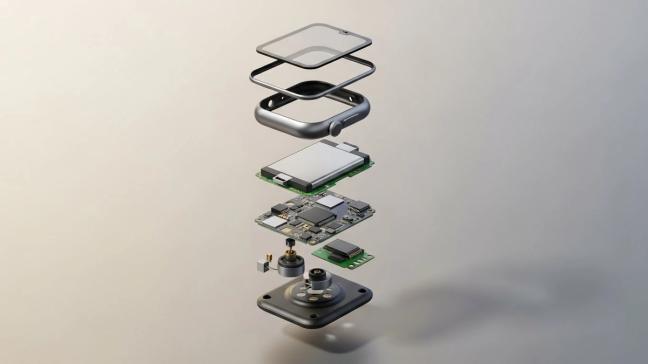
Open a luxury smartwatch, and the illusion stops rather abruptly. Where a traditional movement offers a small city of wheels and springs, all polished edges and brushed bridges, the smart equivalent reveals a printed circuit board, an integrated chip, a battery pouch, and a cluster of sensor modules. And there, almost comically unromantic, is the little green light. It is an LED that flashes against your skin so the watch can read the pulse of blood beneath it. It is clever, certainly, but there is nothing to bevel, nothing to black polish, nothing for a finisseur to spend eight hours caressing with a stick and abrasive paste.
Compare that to high-end mechanical. At Patek Philippe, Audemars Piguet or A. Lange & Söhne, the movement is an end in itself. Bridges are chamfered by hand, screw heads are mirror finished, stripes and perlage are applied to surfaces that only a watchmaker will ever see. The Royal Oak and its complications are as famous for the way their steel is brushed and polished as for anything to do with their calendars. Girard Perregaux’s Laureato, with its three gold bridges, is essentially a thesis in visible movement architecture masquerading as a sports watch.
Luxury smartwatches attempt to bridge that gap by lavishing attention on cases, bezels and straps. Grade 5 titanium, ceramic, sapphire, hand-stitched calf, and even unusually serious clasp engineering are all present and correct. In some cases, the finishing is entirely respectable. What they cannot credibly claim is traditional movement craft, because there is no movement in the mechanical sense. The artistry is in the software and industrial design, and while that has its own virtues, nobody has yet managed to hand-bevel a processor.
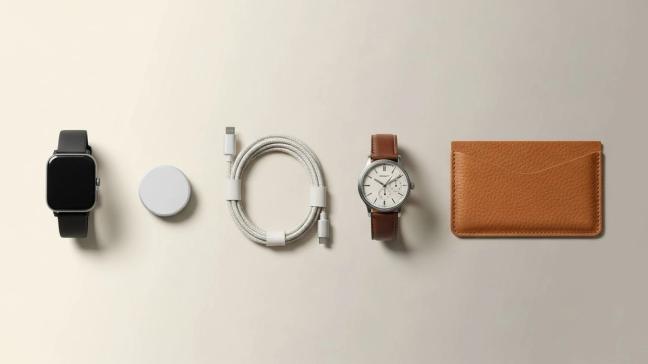
If one judges purely by functional output, smartwatches win by walkover.
A Calibre E5 or Apple Watch Ultra can show you the time in multiple zones, wake you up gently, route you through an unfamiliar city, measure your run, monitor your heart rate, track your sleep, call your taxi, take your messages, remind you that you have not moved in an hour and tap you through the barrier at the Tube, all before a Patek has finished contemplating the power reserve. Garmin’s MARQ and Descent pieces are essentially mission computers in titanium shells, with maps, dive tables, aviation databases and training metrics that would once have required three separate instruments and a favourable wind.
Luxury mechanical watches, by contrast, measure time and possibly one or two other things. A chronograph will time your laps, a GMT will track your flight, and a perpetual calendar will remind you that February is being difficult again. All of this is done through purely mechanical ingenuity and remains, objectively, marvellous. But even the most complicated mechanical will not calculate your VO₂ max or warn you about your resting heart rate unless you develop a very specific delusion.
That is not a criticism. It is simply a recognition that mechanical and smart devices occupy different ends of the usefulness spectrum. One is a multi-function tool masquerading as jewellery. The other is jewellery that happens to be capable of a very refined form of timekeeping.
Where the mechanical watch reasserts itself is on the question of longevity.
A luxury smartwatch exists on a technology cycle. TAG is on its fifth generation of Connected in barely a decade. Apple updates the internals of its Watch with the regularity of a budget speech. Garmin’s flagship lines acquire new sensors, screens and chipsets every few years. At some point, usually around the third or fourth major software update, older models begin to feel slower or are gently dropped from support. Batteries age. Screens burn in. Sensors are eclipsed. The watch remains physically wearable but slips out of the centre of the ecosystem.
A mechanical, on the other hand, assumes a much longer view. The entire Patek Philippe advertising department is built on the notion that you are merely a temporary custodian and that the watch will sail on serenely into the life of some future relative with better hair. Even a less rarefied mechanical, properly serviced every few years, will cheerfully tick its way through decades of abuse in a manner no consumer electronics product has yet matched.
On the secondary market, this difference is brutal. A five-year-old smartwatch, no matter how expensively cased, is likely to have the resale enthusiasm of a used gaming laptop. It still works, but it is yesterday’s processor and last year’s battery. A five-year-old mechanical, particularly from one of the heavy hitters, may be worth not very much less than when it left the boutique, and in certain infamous cases, rather more.
Luxury smartwatches are therefore luxurious in the same way as a very nicely specified car, high quality, genuinely capable, but destined eventually for obsolescence. Luxury mechanicals are closer to furniture or art, things one expects to outlast their first owner.
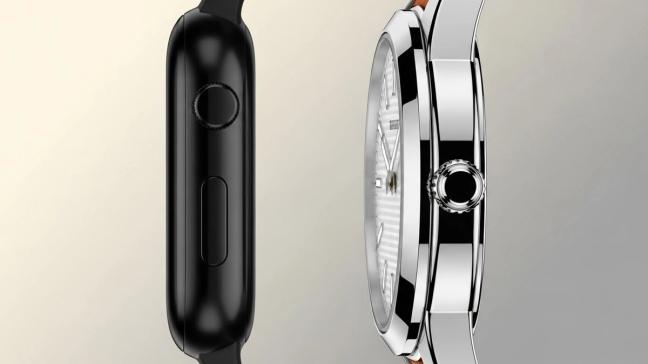
There is also the matter of what, exactly, each kind of watch is trying to say about you, beyond your feelings about notifications.
A TAG Connected E5 or Louis Vuitton Tambour Horizon Light Up suggests a certain comfort with technology and a desire not to compromise aesthetics in order to count your steps. It says you like numbers, perhaps, and that you appreciate a designer dial more than the default digital sludge. It is functional luxury, just as a well-made pair of running shoes or a tailored wax jacket might be.
A Patek, a Royal Oak, a Lange Saxonia, by contrast, says nothing whatsoever about your resting heart rate and quite a lot about your relationship with tradition. It implies you value mechanisms that persist, that you appreciate the idea of a person sitting at a bench decorating individual components by hand, and that you prefer your complications to revolve around the calendar rather than your inbox. Whether any of that is strictly true of your character is immaterial. The cultural signalling is so well established that simply having one on your wrist imports the mythology.
This is why, for many collectors, the luxury smartwatch does not replace the mechanical. It sits alongside it, often on the other wrist metaphorically if not literally, dealing with all the vulgar necessities of modern life while the mechanical handles ceremony. You might wear the Apple Watch Ultra to the gym and the Royal Oak to dinner, secure in the knowledge that only one of them will still be considered desirable when your grandchildren divide the spoils.
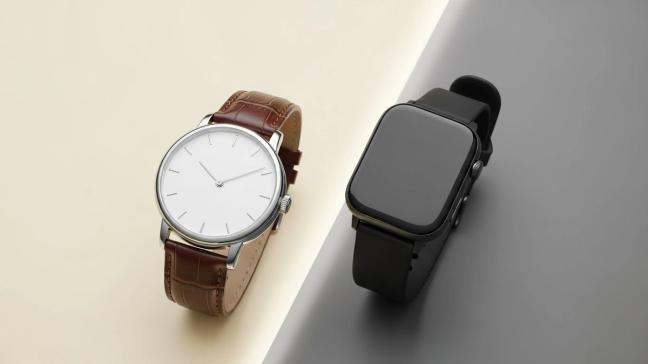
So, luxurious smartwatches or mechanical watches. Which one should occupy that narrow piece of real estate above your hand?
If you are interested in health data, navigation, messaging, payments, and the general business of being a connected citizen, a luxury smartwatch makes perfect sense. If you are going to strap a radio to your wrist, it might as well look as if it deserves its place at the table. A TAG Connected in titanium, a Garmin MARQ on a proper bracelet, an Apple Watch Hermès on leather that smells like a Parisian argument, all these provide competence wrapped in taste.
If, however, you are interested in permanence, in the quiet pleasure of a sweeping seconds hand driven by a spring you can hear when the world is actually silent, then the case for mechanical is unanswerable. No smartwatch has yet inspired a serious book on its movement architecture. No firmware update has ever been described as achingly beautiful.
The obvious, grown-up solution is not to pretend this is an either-or question. Wear a luxury smartwatch when you need what it offers, with a properly made case and strap so that it does not offend your sense of proportion. Wear a mechanical watch when you want to feel time rather than merely read it. One is there to manage the modern world, the other to remind you that the concept of time predates email by some margin.
In a decade, today’s smart modules will have been replaced at least once. The Patek, the Royal Oak, the Lange will still be there, ticking away with the same small, determined movements. And, if we are honest, the person who owns both will probably be the same ,too, just slightly more tired and with a longer list of notifications they are choosing, for once, to ignore.
To receive the latest in style, watches, cars and luxury news, plus receive great offers from the world’s greatest brands every Friday.