Property -- 2 hours ago

Privacy and pace are the luxuries, so behaviour should protect both. In that light, private jet etiquette comes down to discretion, cleanliness, and not making the aircraft about you.
Private aviation flatters us with the idea that we have stepped outside the theatre of modern travel. No queues. No announcements delivered in a tone that suggests we have all committed a minor crime. No frantic shoelace removal in public. You arrive. You depart. You look faintly unbothered by geography. It is wonderful. It is also not, despite appearances, a free-for-all.
Private jet etiquette is less about being precious and more about protecting the calm you have paid for. And given how much does a private jet cost, that calm is worth protecting. Everyone on the aircraft, whether it is your own charter, a shared flight, or a corporate trip with people who have opinions, is trying to preserve a certain mood. It should feel like quiet luxury, which means service is smooth, conversation is civil, and nobody behaves as if the cabin is a nightclub that happens to fly.
The other truth is that private aviation is intimate. Cabin walls are closed. Crew are present. Fellow passengers can be a client, a colleague, or someone you would rather not watch eating crisps at eye level. Small misjudgements land heavily in a confined space. So good manners become practical rather than performative.
This is the good news. The rules are simple. They are mostly the same rules you would apply in a good restaurant, a private members club, or a friend's house that contains nice things and even nicer boundaries. The aircraft merely raises the stakes because you cannot step outside for a breather. You can only fly.
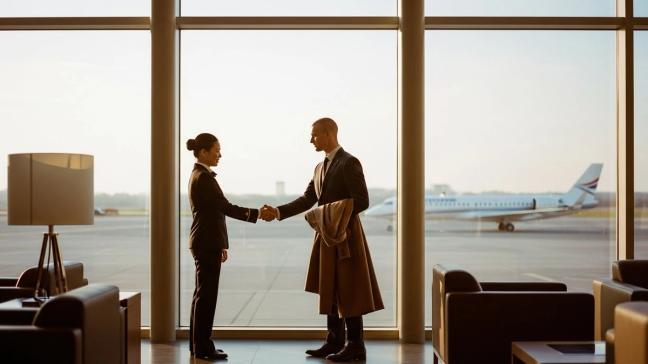
Start with the booking, because etiquette begins long before the door closes. If you are using a jet card programme, understanding how private jet cards work helps you know what is included and what needs requesting in advance. If you have special requests, keep them sensible and communicate them early. Catering, luggage constraints, pet arrangements, passport details for international sectors, and ground transport all sit comfortably in the realm of professionalism when handled in advance. Springing needs at the last moment is not glamorous. It is expensive and faintly childish.
Know who is flying with you and what the trip is. A corporate flight is not a hen party with better upholstery. A family trip is not the moment for a surprise business meeting conducted at full volume. The best private flyers adjust their behaviour to the occasion. They do it without making a point of it.
If you are bringing guests, brief them lightly. Not with a lecture. Just a quiet word about timing, luggage, and general conduct. Nobody enjoys being corrected on the steps of an aircraft. They enjoy it even less at 41,000 feet.
Arrive on time. Private aviation is flexible, not elastic. The crew have duty limits. Slots can matter. The aircraft may be repositioning. A late arrival is not a charming flourish. It is a problem with a tail number.
If you are the principal passenger, you can be tempted to treat timing as part of the perk. Resist. The real perk is that everything runs smoothly. You get that by respecting the machine. The experienced travellers arrive with enough time to board calmly and depart without fuss. They still look effortless. They simply earned it.
On arrival, treat the ground staff as professionals, not props. A greeting and a clear instruction beat theatrical aloofness every time. Quiet confidence reads better than performance.
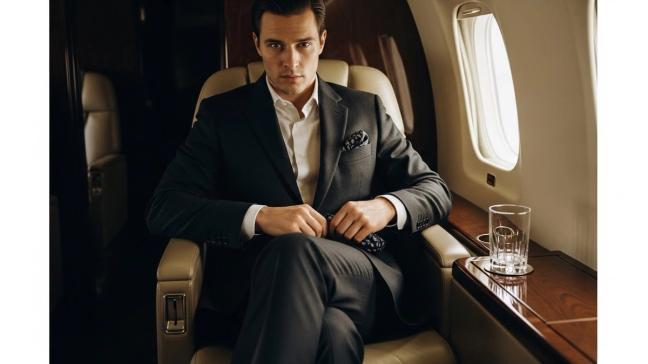
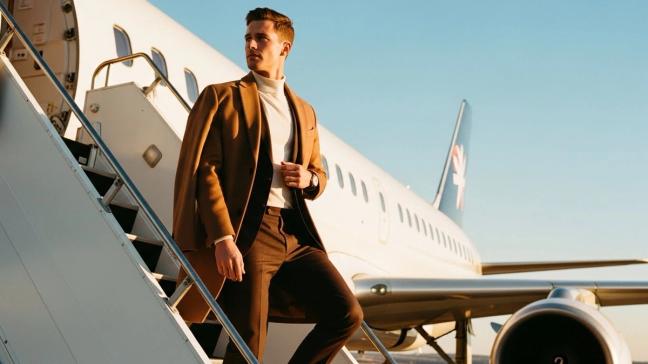
Dress for the aircraft and the destination. Avoid turning it into fancy dress. For most flights, smart casual works beautifully. A well-cut knit, tailored trousers, good trainers that are actually clean, and a coat that knows how to behave. If you are unsure where the line sits, the principles of business casual for men translate well to private aviation. You can do the full suit if it suits your day, but a private jet is not a red carpet. It is a high-quality conveyance.
Comfort matters, particularly on longer flights. Avoid anything that makes you fidget, sprawl, or treat the cabin like a personal lounge. Also, avoid anything that makes the crew's day harder. Stilettos and delicate surfaces rarely get along. The truly polished traveller thinks about practicality and still looks excellent doing it.
Fragrance should be restrained. In-flight air recirculates, and a heavy scent becomes a shared experience nobody asked for. One or two sprays, applied before you leave for the airport, is enough. If you are unsure how much is too much, the same principles that govern how to apply cologne on the ground apply even more strictly at altitude. The cabin will do the rest.
Volume is the first rule. Speak a touch more quietly than you think you need to. Engines, airflow, and headsets can distort your sense of how loud you are. In a small cabin, everyone hears everything, including the parts you assumed were private.
If you are travelling with colleagues or clients, take the tone from the most senior person on the trip, or the most conservative if you cannot read the hierarchy. Keep business discussions discreet. Avoid naming sensitive matters as if you are in a private office. The crew are not eavesdropping, but they are present. So is the flight deck. So is the passenger two seats away, who is pretending not to listen.
If you are travelling socially, remember that the cabin is still shared space. An aircraft encourages intimacy. Do not mistake that for permission to dominate it. Conversation should include rather than perform. Humour should land gently. Nobody wants to spend two hours trapped inside someone else's personality.
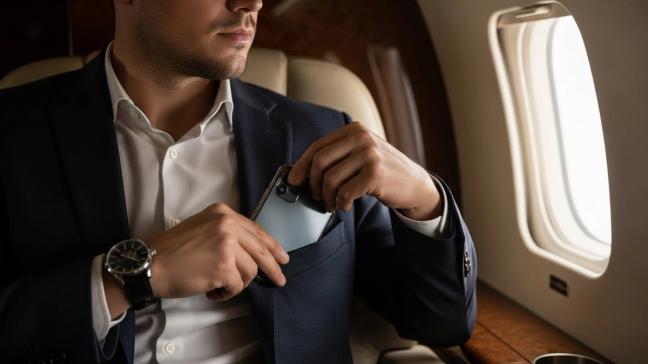
Treat privacy as the default setting. Never assume you can film, photograph, or post without consent. This includes the cabin, the crew, the tail number, and the people around you. Private aviation often exists precisely because certain people prefer not to be part of your content.
Phones should be used discreetly. Take calls quietly. Keep them brief. If you must discuss something sensitive, ask the crew if there is a better moment or a more private way to handle it. Some aircraft have space to step away slightly. Many do not. If they do not, lower your voice and choose your words like an adult.
A good pair of noise-cancelling headphones is worth packing. They let you retreat into your own space without imposing on anyone else's, and they signal politely that you are not available for small talk.
If you are the host, set the tone early. A simple, friendly comment that you would rather keep things off social media saves awkwardness later. It also makes you look impressively in control, which is the point.
The crew are not servants. They are safety professionals and service experts who can make your flight feel effortless. Treat them accordingly. Learn names if it is natural. Use please and thank you. Make requests clearly. Avoid barking instructions across the cabin like you are testing the acoustics.
If something is wrong, address it politely and directly. A calm correction is effective. A tantrum is not. Also, remember the obvious truth that some things cannot be changed mid-flight. If you ordered the wrong catering, you have learned something about your planning. You have not been wronged by the universe.
Do not enter the flight deck unless invited. Do not distract the crew during critical phases like departure and landing. It is basic respect. It is also basic safety.
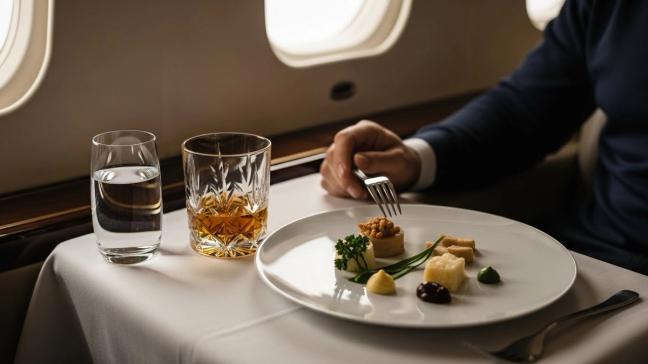
Eat neatly. It sounds absurd to say it out loud. It becomes necessary the moment someone treats a canapé like a personal challenge. Private jets are beautifully finished and infuriatingly easy to stain. The crew will handle catering with care. You should meet them halfway.
Alcohol is where etiquette often fails. The cabin atmosphere can encourage overconfidence, particularly at altitude, where dehydration and fatigue play their part. Drink, if you like, but do not get drunk. Do not become louder. Do not become messier. Do not become emotional. The most elegant drinker on a private jet is the one whose consumption is barely noticeable.
If you are offered a good whisky, treat it with respect. Knowing how to taste whisky properly is a minor skill that pays dividends in these moments. Swirl, nose, sip. Do not throw it back like medicine. The crew often stock well, and the altitude can actually sharpen certain flavours. Enjoy it slowly.
If you have dietary requirements, mention them early. If you simply have preferences, be reasonable. A good operator can accommodate most things. They should not be expected to produce miracles because you changed your mind after boarding.
Some operators permit cigars on certain aircraft, particularly larger cabins with better ventilation. If you are considering it, ask first. Never assume. Even if the answer is yes, be mindful that not everyone shares your enthusiasm for smoke, however fine the tobacco.
If you do light up, know what you are doing. Light the cigar properly, ash carefully, and keep an eye on the ventilation. A cigar enjoyed well is a pleasure. A cigar enjoyed badly is an imposition that lingers in the upholstery and the memory of everyone present.
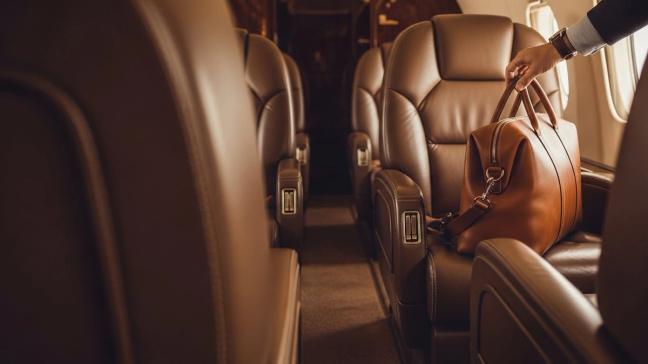
Do not sprawl. Do not treat adjacent seats as storage unless the cabin is yours alone and the crew are content with it. Keep your belongings tidy. A private cabin is not a licence to behave like you have moved in.
Luggage limits are real. Aircraft have weight and balance considerations. Soft bags often work better than rigid cases. If you are unsure, ask before you arrive. Turning up with a heroic amount of luggage and a serene expression is not confidence. It is poor planning.
If you are travelling with others, be mindful of shared space. The best passengers are the ones who leave the cabin looking as good as they found it.
Tipping practices vary by operator and region. Some services include gratuity. Some do not. The simplest approach is to ask the operator discreetly what is customary, then follow that guidance without making a fuss.
Gratitude should not be transactional. A sincere thanks at the end of the flight matters more than a performative flourish. If the crew have handled something difficult, such as a tight turnaround, a weather diversion, or an anxious passenger, acknowledge it. Quiet appreciation is a form of class.
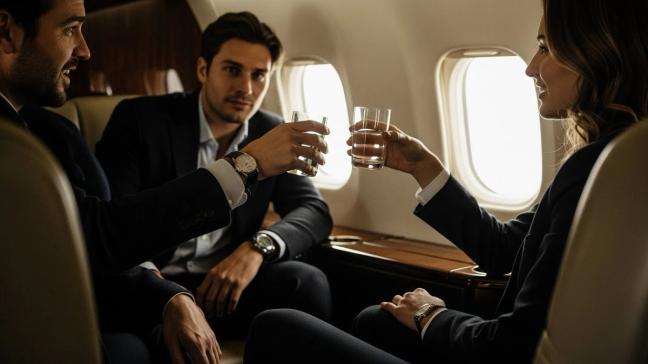
Shared private flights are growing, and they come with their own code. You are not in your own bubble. You are in a premium communal setting. Treat it like a first-rate dining room rather than a private suite.
Arrive on time. Keep phone use discreet. Avoid overly personal conversation at high volume. Respect privacy. Do not assume everyone wants to chat. Polite friendliness is enough. Anything more should be invited.
If you are prone to taking calls, consider booking a private charter. If you are prone to posting, consider not. Or at least consider asking first.
Private aviation works best when everyone behaves as if comfort is a shared project. The crew deliver safety and service. Passengers deliver calm. The operator delivers reliability. When one part fails, the whole experience feels less special, and sometimes less safe.
The finest private flyers are not the ones who demand the most. They are the ones who make the cabin feel easy to inhabit. They arrive prepared. They speak thoughtfully. They treat the crew with respect. They keep their presence light. It is a particular kind of confidence. It never needs to announce itself.
Good etiquette is not about rules for the sake of rules. It is about protecting the rare luxury that private aviation can offer when it is done well. Peace. Privacy. A sense that the world can be managed without noise. That, in the end, is the real upgrade.
To receive the latest in style, watches, cars and luxury news, plus receive great offers from the world’s greatest brands every Friday.