
Style -- 9 days ago

The brochure language blurs the differences, but reality doesn’t. Put NetJets vs Flexjet vs Wheels Up side by side and the gaps show up in access, fleet depth, and how disruption is handled.
Private aviation has a talent for making sensible people talk like minor aristocrats. One moment, you are simply trying to get from London to Milan without losing a day to security theatre and a delayed slot. The next time you are weighing up fleet types, card hours, repositioning rules, and whether the company answering the phone sounds like it knows your children’s names or merely your credit limit. The truth is that choosing between NetJets, Flexjet, and Wheels Up is not really about which logo looks best on a tail. It is about what you are buying and how you expect it to behave when the weather turns, and the diary fills.
All three promise a version of the same fantasy. You decide. A jet appears. Your time becomes your own again. Yet their models are not identical, and the differences matter most on the days you actually care about. The last flight out after a meeting runs late. The Friday before a bank holiday. The weekend when every other wealthy person in Britain has also decided that the Côte d’Azur is essential to their wellbeing.
So let us talk like adults who appreciate good service and dislike nasty surprises. NetJets is the grand institution, the one that feels like it has been doing this since aviation was invented and may continue long after we have all moved on to quieter midlife hobbies. Flexjet is the polished challenger, similarly serious, often slightly more design-led in its presentation, and very keen to convince you that modern luxury can also be operationally disciplined. Wheels Up is the more contemporary proposition, built around membership and on-demand charter energy, and often appealing to those who want flexibility without the full gravity of fractional ownership. Choose the right one, and you will feel like a strategist. Choose the wrong one, and you will feel like a man who bought a white linen suit and then discovered British summer.

NetJets and Flexjet sit most comfortably in the world of fractional ownership and structured access. You buy a share or a committed programme. You get a defined number of hours. You operate within a framework that is built for repeat flying. The promise is consistency. The aircraft is not necessarily the exact same tail every time, but the standard should feel familiar, and the machinery behind the scenes is designed to absorb demand spikes without turning your travel plans into a negotiation.
NetJets tends to be associated with breadth and maturity. It has long experience, a large operational footprint, and a menu that ranges from fractional ownership to jet cards and leases. The tone is quietly corporate in the best sense. Efficient, discreet, and built to serve people who would rather not have to think about aviation at all.
Flexjet plays in a similar arena but often leans harder into the lifestyle polish. The cabins can feel more curated. The brand story is more deliberate. The model still revolves around committed flying, often through fractional shares, leases, and card-style access. The pitch is that you can have operational seriousness without the faint whiff of boardroom carpet.
Wheels Up, by contrast, has historically presented itself as a membership-based gateway to private flying, with on-demand charter at its heart. The appeal is the ability to fly private without the psychological commitment of ownership. You are buying access and convenience, and you are often choosing from a network that can include a mix of operated aircraft and third-party charter. That distinction is not inherently bad. It simply changes what you should expect. The more the model resembles a marketplace, the more outcomes can vary by aircraft, operator, and day.
In short, NetJets and Flexjet are built around structured capacity. Wheels Up is built around flexible access.
Fleet matters for two reasons. The first is practical. Range, runway performance, luggage space, and cabin comfort are not interchangeable. The second is psychological. Regular flyers like knowing what they are getting.
NetJets has traditionally been known for a broad fleet and the ability to match aircraft to mission. Light jets for quick hops. Midsize and super-midsize for serious European work. Large cabin options when you want to cross the Atlantic properly rather than bravely. For a client, the comfort lies in the sense that the machine will fit the trip, even if the trip changes at the last minute.
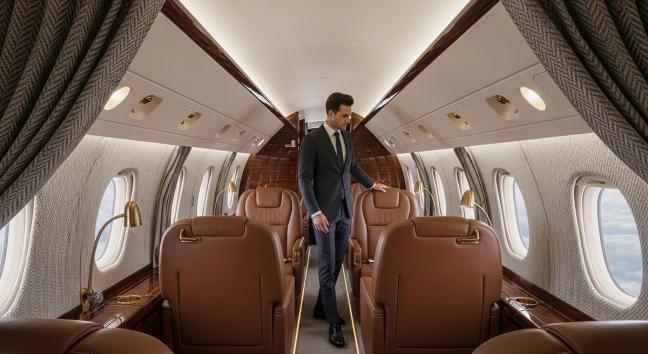
Flexjet is often associated with a more tightly curated fleet mix and a strong emphasis on modern cabin design. If you care about interiors, you may find yourself noticing details you did not expect to notice, like materials, lighting, and how thoughtfully the cabin feels put together. This is not mere vanity. A cabin that feels calm and well designed makes flying more pleasant, especially on longer legs, and it signals a company that pays attention.
Wheels Up commonly attracts customers who are happy to prioritise availability and flexibility over the predictability of a single fleet identity. Depending on the programme and the flight, you may encounter a wider variety of aircraft types and cabin finishes. Sometimes that variety is charming. Sometimes it is a reminder that private aviation includes everything from pristine corporate jets to aircraft that feel like they have carried too many stag parties.
If cabin consistency is vital, fractional style programmes tend to deliver it more reliably. If you are relaxed about variation and simply want the job done, a membership and charter-style approach can suit.
All private aviation companies talk about access. The smarter question is what happens when access is under stress.
Fractional providers like NetJets and Flexjet are designed to provide a high degree of availability because they are selling a product that depends on it. You are not merely calling for a one-off charter. You are buying into a system. That system has dispatch, crews, maintenance planning, and operational depth. It should also have a culture of saying yes, or at least of finding a way to say yes without making you feel like you are begging.
That does not mean every request is effortless. Peak days exist. Weather exists. Airspace disruption exists. The difference is that a well-resourced fractional model is built to handle those issues as part of daily life, rather than as an exceptional inconvenience.
Wheels Up, in a membership and charter environment, can offer excellent availability, particularly when demand is normal and the network is fluid. Yet peak days can be more variable because sourcing aircraft can become a competitive sport. The best charter networks manage this through strong relationships, smart planning, and operational control where possible. Still, the experience can depend more on the specific flight and the supply picture at that moment.
So think about your own flying patterns. If you fly most often at predictable, high-demand times, you will likely value the structural resilience of fractional programmes. If your flying is more opportunistic or you can be flexible with timing, a membership model can feel liberating.
Private aviation pricing is rarely simple. It is also rarely cheap. The important point is how the cost behaves over time, and how much certainty you buy.
NetJets and Flexjet typically involve more commitment, whether through ownership shares, leases, or structured hour programmes. In exchange, you tend to receive clearer pricing mechanics, more predictable access, and a defined service envelope. You are paying for infrastructure as much as you are paying for flight time. For frequent flyers, that can make sense. It is the difference between having a reliable car service on retainer and trying to hail something on a rainy night.
Wheels Up often appeals to those who want less long-term commitment. The pricing can feel more transactional, which is attractive if you fly occasionally or your schedule varies wildly. You pay for the flights you take. You avoid the sense that you have bought a beautiful solution to a problem you only have six times a year.
The trade-off is that transactional models can expose you more directly to market conditions. When demand rises, the price can rise with it. When supply tightens, your options can narrow. Some clients do not mind this. Others discover that what they really wanted was not flexibility but predictability.
A sensible approach is to map your flying over the past twelve months and be brutally honest. If you flew forty or sixty hours, structured programmes deserve serious attention. If you flew six or ten, you may be better served by a membership and charter-style approach, provided you accept that the experience can vary.

Private aviation is ultimately a service business. Aircraft are machines. The people are the product.
NetJets often projects a very mature service culture. The interaction tends to feel professional, discreet, and built around repeat business. The expectation is that problems are solved quietly. You should not have to perform your status. It is assumed.
Flexjet frequently leans into hospitality and design as part of the experience. That can mean cabins that feel more considered and touches that signal a brand that wants to feel modern and premium. The best version of this is not flashy. It is simply smoother. The crew experience can also feel more tailored, although this varies by route, aircraft, and operational realities.
Wheels Up can be excellent when the network is functioning at full strength and the flight is well matched. The service experience may feel more like a high-end concierge model, particularly if you value flexibility and quick arrangements. Yet because the operational structure can involve a wider mix of operators and aircraft, consistency can be more variable. You might have a superb crew and a perfect cabin one week, and a perfectly acceptable but less polished experience the next.
If you are the sort of person who notices everything, fractional consistency will likely soothe you. If you are simply trying to get from A to B without the moral injury of commercial travel, a well-managed charter experience can be plenty.
No civilised person chooses a private aviation provider purely on mood lighting. Safety and operational control should sit at the centre of the decision, even if we prefer not to dwell on it at dinner.
The key idea is operational accountability. When a provider operates its own aircraft with its own crews and maintenance standards, responsibility is more concentrated. When a provider brokers or sources aircraft through a wider charter ecosystem, safety can still be excellent, but the chain of responsibility includes more parties.
NetJets and Flexjet, as structured fractional operators, are generally perceived as highly institutional in this regard. They tend to emphasise standardisation, training, and fleet control. This is part of what you are paying for.
Wheels Up, in a model that can include charter sourcing, should be assessed by how it vets operators, how it manages standards, and how transparently it communicates what you are flying on each trip. A strong charter network can be safe and well-run. A weak one is a gamble. The difference is not the business model itself. It is the rigour of execution.
If you are comparing providers, ask clear questions about who operates the flight, what standards are applied, and how issues are handled. A good provider will answer without defensiveness. A great one will answer without fuss.

Choosing between NetJets vs Flexjet, vs Wheels Up becomes easier when you stop thinking like a shopper and start thinking like a planner.
If you fly often, especially at peak times, and you value certainty over spontaneity, NetJets is often the obvious starting point. The brand carries an institutional confidence. The product is built to serve repeated use. It suits those who want a system that behaves like a well-run private club. You pay for that. You also feel it.
If you fly often and care deeply about modern cabin experience, brand polish, and a slightly more contemporary interpretation of luxury, Flexjet can be compelling. It can feel like the same core promise of fractional reliability delivered with more attention to the atmosphere. For some clients, that difference is irrelevant. For others, it is exactly the point.
If you fly less predictably, want flexibility, and prefer not to commit to ownership style structures, Wheels Up can suit, particularly if you understand the nature of the offer. You are buying access and convenience. You may also need to accept more variability in aircraft and experience, depending on what you book and when. For many, that is a fair trade. For others, it becomes irritating at the worst possible moment.
A quiet rule of thumb is this. The more your flying feels mission-critical, the more you should value structure and control. The more your flying feels discretionary, the more you can value flexibility.

The polished myth of private aviation is that it is all the same once you step through the hangar door. The reality is that the business model shapes experience. NetJets and Flexjet are built to sell consistency through commitment. Wheels Up is built to sell access through flexibility. None of these is morally superior. Each simply suits a different kind of life and a different kind of diary.
The right choice comes down to how much you fly, when you fly, and how allergic you are to uncertainty. Some people can tolerate a bit of variability if it means they are not tied into a long relationship with a single provider. Others want a system that works even when the world is busy, and the weather is in a mood. Those people tend to prefer the fractional universe.
Pick with clear eyes. Ask the slightly awkward questions. Then choose the option that makes your travel feel boring in the best possible way. In private aviation, boredom is the ultimate luxury.
To receive the latest in style, watches, cars and luxury news, plus receive great offers from the world’s greatest brands every Friday.