In association with

How Moët & Chandon became the taste of Formula One victory
It’s been a journey of over seventy-five years for the Champagne of champions, from first toasts to the podium celebrations of today…
- Words by: Jonathan Wells
What’s been your favourite moment from Formula One history? Is it when, at Donington Park in 1993, Ayrton Senna delivered the greatest wet-weather drive in the sport’s history? Perhaps it’s the 1996 Spanish Grand Prix, when Michael Schumacher took his first victory for Ferrari despite a catastrophic engine cylinder failure. Or, speaking of first wins for Ferrari, maybe it’s Lewis Hamilton’s own inaugural triumph for the Scuderia — also in Barcelona, just days ago.
There are too many to choose from. And, despite some uncanny similarities between Schumacher and Hamilton’s finest moments behind the wheel, each of these milestones is unique. Different years. Different tracks. Different continents. Different cars. And yet one constant unites them all: at the end of each race, on podiums around the world, Moët & Chandon was sprayed.
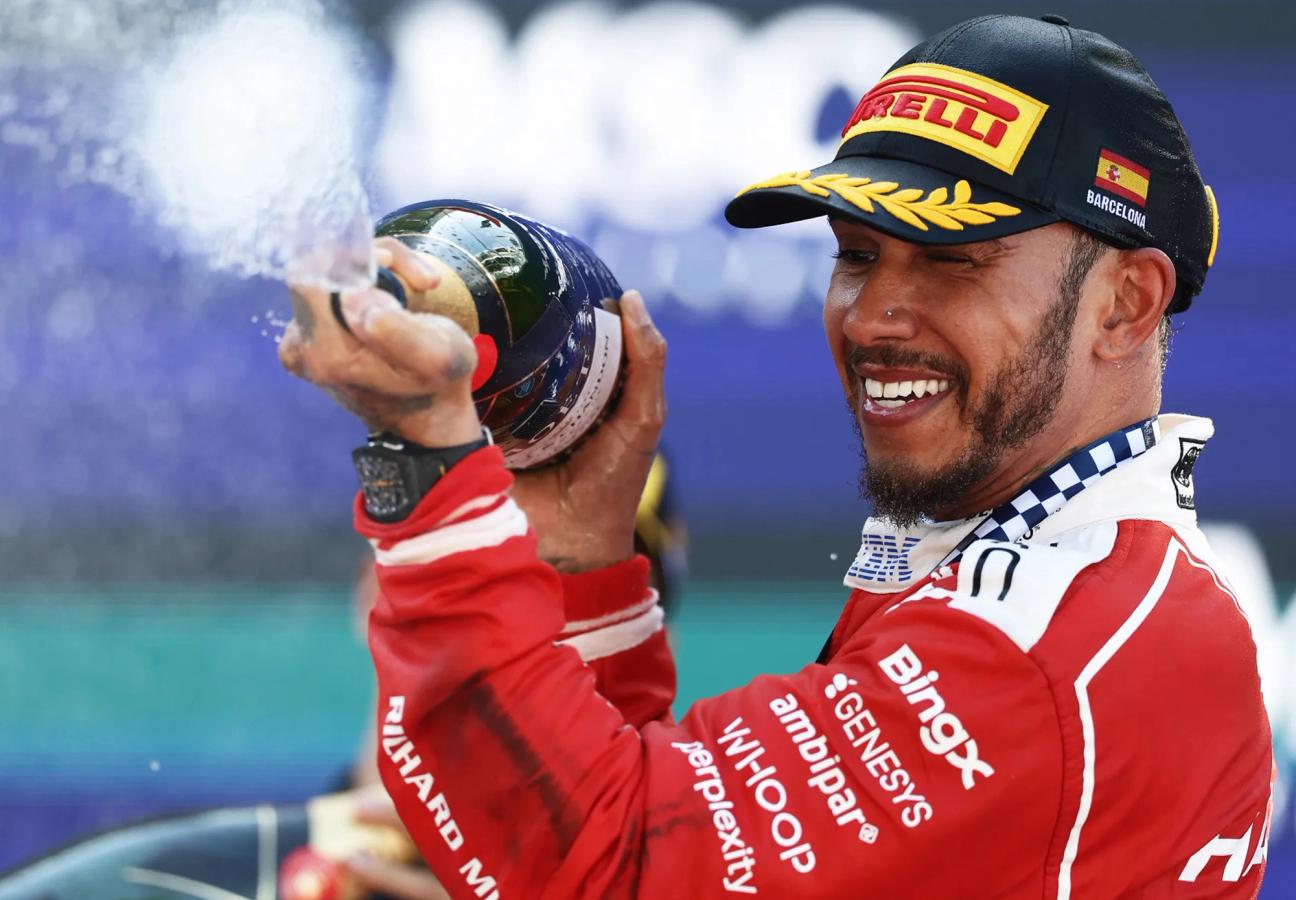
Lewis Hamilton at the 2026 Barcelona-Catalunya Grand Prix
Today, Moët & Chandon is the official Champagne of Formula One, but the association began far more organically — and many decades ago. The year was 1950. At the French Grand Prix — the penultimate race of Formula One’s first-ever World Championship — Juan Manuel Fangio was narrowly leading the standings. After wins in Monaco and Belgium, the Argentine had his sights set on victory at the sun-baked Circuit de Reims-Gueux.
Driving with his signature calm, controlled authority, Fangio took the chequered flag. And, in Champagne as they were, sixth-generation winemaker Frédéric Chandon de Briailles was on hand at the finish line with a bottle to present to the winner. The tradition of spraying Champagne from the podium may not have yet been established in motorsport, but this gesture sparked a ritual that endures to this day: a celebratory Jeroboam as a symbol of triumph.
Formula One, however, was changing. Over the coming years, motorsport became more than the cars on the track — it became a beacon of celebrity, glamour and luxury. By the 1960s, personalities including Jim Clark and Graham Hill began transforming the winners’ podium into a global stage. And, in 1966, Moët & Chandon became the official podium supplier for the sport, a pole position it held — uninterrupted — for 34 high-octane seasons.
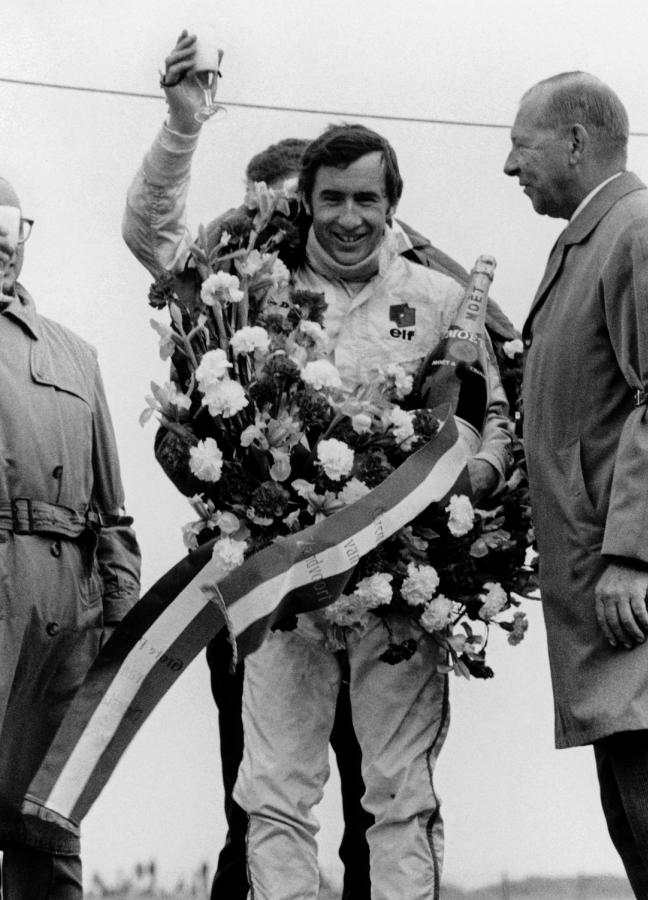
Jackie Stewart at the 1968 Dutch Grand Prix
Jackie Stewart, pictured here with flute aloft after winning the Dutch Grand Prix in 1968, was another icon of the era, during a time when Formula One was entering its modern age and becoming synonymous with speed, sophistication and success. Moët & Chandon was a perfect fit, then, a Champagne that’s always been bright and approachable, aromatic with notes of pear, white peach and citrus, but also layered with hints of honey, almond and brioche. And the texture? Those fine, persistent bubbles give it an almost creamy texture, smoother even than the finely finished tarmac at Zandvoort.
It was around this time that the spraying started, too. First, at the 1966 24 Hours of Le Mans, after three cars from Ford dominated the endurance race, Henry Ford II broke with tradition. Rather than the customary bottle, he requested a Moët & Chandon Jeroboam, declaring that when America wins, it celebrates — naturally — with three litres of Champagne.
However, during the awards ceremony, the Jeroboam presented to Jo Siffert and Colin Davis, the winners of the 2-litre category, had been shaken too vigorously. Its cork burst open, unleashing a shower of champagne over the podium. A year later, at the 1967 24 Hours of Le Mans, Dan Gurney turned that accident into tradition, deliberately shaking his Jeroboam, popping its cork and spraying the crowd.
Two years later, at the 1969 French Grand Prix at Clermont-Ferrand, Jackie Stewart became the first Formula One driver to spray the crowd after a race. Once again, it was largely accidental. "Nobody told me the bottle had been left lying in the sun,” he wrote, years later in his autobiography, Winning Is Not Enough. “And so, as I released the cork, the Champagne foamed out. I thought it would be a shame to waste any, so I pressed my thumb over the top but this only increased the pressure and produced a powerful jet. Everyone was enjoying the spectacle and so, thinking I might as well have some fun, I started spinning around, spraying the Champagne in all directions.”
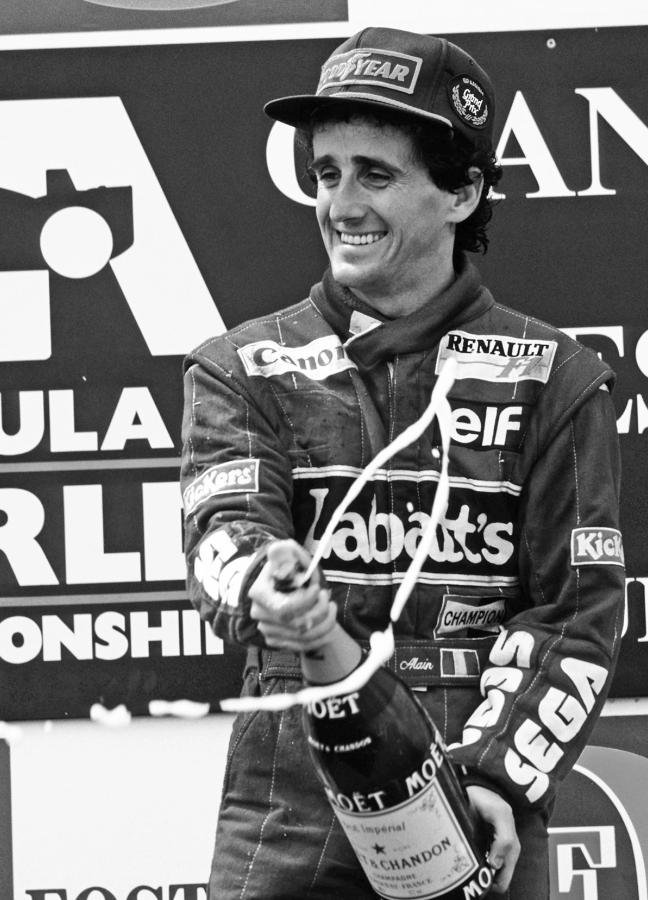
Alain Prost at the 1993 Spanish Grand Prix

Ayrton Senna after winning the 1988 Canadian Grand Prix
It wouldn’t be the first time. Stewart won three world titles, so enjoyed his fair share of Moët & Chandon. But Alain Prost out-fluted even ‘The Flying Scot’. With four titles under his race suit, the Frenchman symbolised the 1980s heyday of Formula One. And, after every race of this golden age came the equally golden bubbles of Épernay's best. By this time, the signature Champagne spray had become de rigueur on the podium — even if Prost wasn’t always the man with the bottle.
Because this was the decade of the famous Prost-Senna rivalry. Ayrton Senna won his first championship in 1988 — a vintage year not only for the young Brazilian racing driver, but also for Moët & Chandon. Widely considered to be one of the finest Champagne harvests of the century, it was followed — a mere two years later — by another flush year for the Maison, 1990 also being a highly-regarded vintage. Coincidentally, it was also another good year for Senna; he once again took the championship.
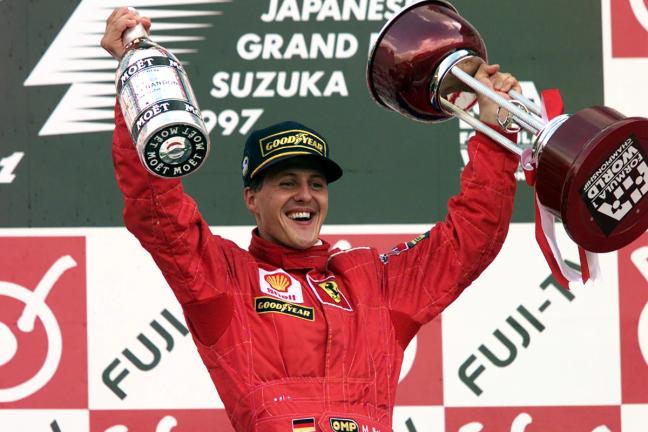
Michael Schumacher at the 1997 Japanese Grand Prix
Michael Schumacher’s timing wasn’t quite so sparkling. The German driver may have won seven titles during his fast and illustrious career (between 1994 and 2004), but he missed out to Damon Hill in 1996 — one of Champagne’s greatest vintage years. But, with 91 Grand Prix wins, Schumacher still both sprayed and sipped his fair share of Moët Impérial Brut.
For several years after the millennium, the Maison stepped back from the sport, but returned during lockdown — when logistical issues made it difficult for the incumbent supplier to get its bottles to the podium. It was a welcome comeback, and one that foreshadowed Moët & Chandon’s full-time return to Formula One in 2024, when a landmark ten-year partnership deal was struck between the sport and luxury group LVMH. Last year, the Maison even became a title sponsor, for the 2025 Moët & Chandon Belgian Grand Prix.
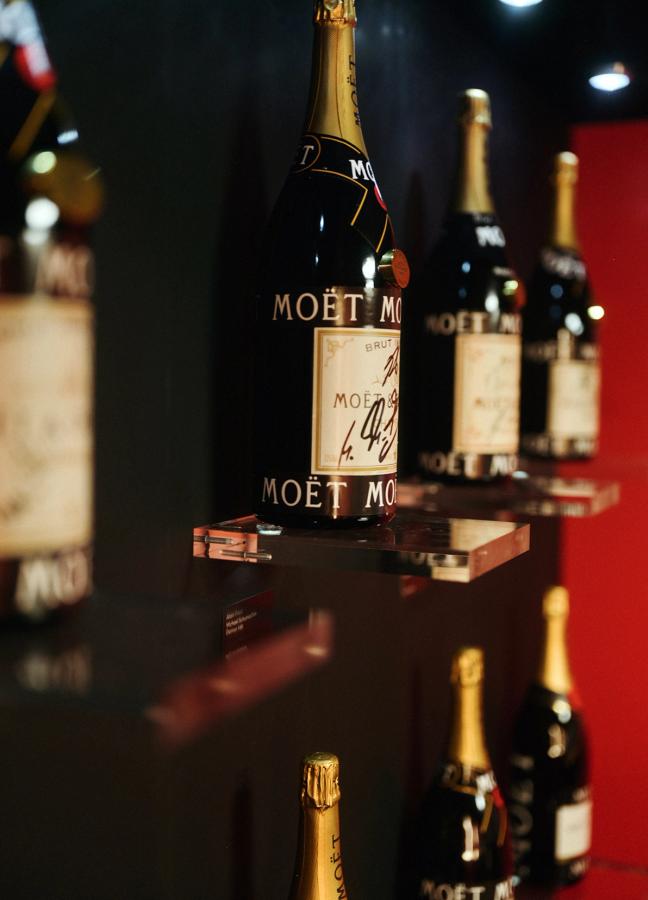
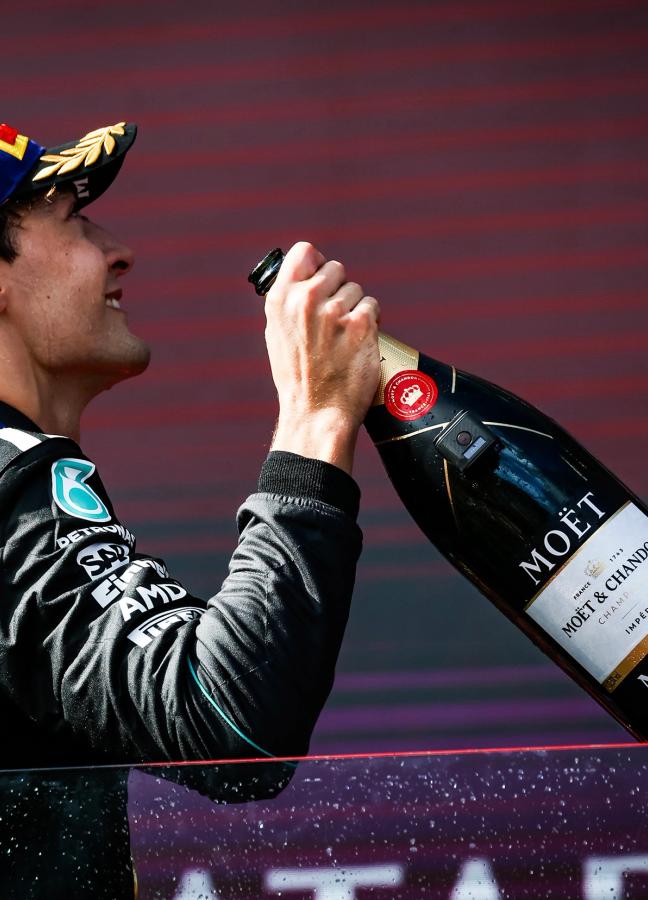
Today, the association is stronger than ever. Deep within the Maison’s historic cellars in Épernay, vaults safeguard a rare and precious reserve of Jeroboams, each one set aside for Formula One. Once they reach the Grand Prix circuit, they are signed by the race winners and shared between the winning teams on the podium.
Certain circuits have an even bolder Moët & Chandon presence, such as Silverstone, where the trackside VIP area of the Silverstone Fusion Lounge has this year been transformed into the exclusive Moët & Chandon Club, a refined and immersive destination designed to celebrate the spirit and legacy of the legendary British Grand Prix.
Because many of these races have indeed become legend. And, for more than seventy-five years, Moët & Chandon has been there for Formula One’s greatest moments — from Fangio’s first victory toast to today’s podium celebrations. The cars get faster, the records get broken and the champions keep changing. But the ritual remains the same: the cork pops, the Champagne showers down and someone’s race suit gets very, very wet.
Want more from Moët & Chandon? We go inside the Maison’s harvest…
Become a Gentleman’s Journal member. Learn more here…