
Style -- 12 days ago

Night-time skincare doesn’t need theatrics, only discipline and a decent moisturiser. With patience and a light touch, how to use retinol for men becomes less doctrine, more good sense.
Retinol is the sort of ingredient that does its work with the quiet competence of a senior civil servant and the faintly weary expression of a man who has seen five governments come and go. It is not glamorous. It does not sparkle. It does not shout. It simply turns up every evening, files the paperwork, and over time makes your skin look as though it has a better personal assistant than you do.
Used properly, retinol can smooth fine lines, refine texture, help with breakouts, soften the look of pigmentation, and generally bring a little order to the chaos. Used badly, it will remind you that your face is not a training ground for bravado. You will peel. You will sting. You will look like you have been arguing with a radiator.
This is a guide for men who want results without drama, who would prefer their skincare to be effective rather than performative, and who understand that the most convincing kind of improvement is the kind nobody can quite identify.

Retinol is a form of vitamin A. Your skin converts it into retinoic acid, which is the version it can actually use. That conversion is part of why over-the-counter retinol tends to be gentler than prescription retinoids. It is also why patience is required. Retinol is not a quick fix. It is a steady policy programme.
In practice, retinol encourages faster cell turnover and supports collagen production over time. That means dullness and rough texture can improve, clogged pores can look less obvious, and fine lines can soften. If you have marks left after spots or uneven tone from years of neglecting sunscreen while insisting you were fine, retinol can help there, too. The key phrase is over time. It rewards consistency, not intensity.
Most men can use retinol. If you are dealing with congestion, blackheads, breakouts that linger like bad gossip, or skin that feels rough and looks tired, you are very much the target audience. If you are noticing fine lines, particularly around the eyes or forehead, retinol is one of the few ingredients with a respectable body of evidence behind it, and a sensible addition to any broader anti-ageing strategy.
If you have very sensitive skin, eczema, rosacea, or you are already using strong prescription treatments, you can still consider retinoids, but you should proceed with more caution. In those cases, lower strengths and slower frequency matter even more. If your skin reacts badly to almost everything, it is sensible to speak to a dermatologist rather than treating your face like a personal science project.
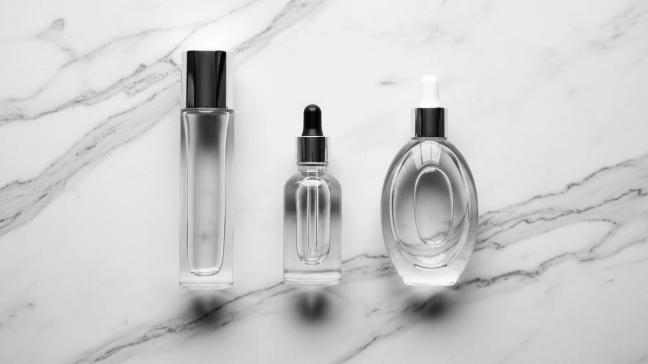
The skincare aisle is full of grand promises and very little accountability. Keep your standards quietly high.
Look for a product that states the retinol percentage, or at least makes clear whether it is designed for beginners. If you are new to retinol, choose a low strength. Many men do well starting around 0.1 per cent to 0.3 per cent. If you are already accustomed to active ingredients, you may tolerate something higher, but there is no prize for starting strong.
Also consider the base formula. If you have dry or sensitive skin, a cream or lotion texture is often kinder than a thin gel. If your skin is oily, a lighter texture can feel more civilised, but do not confuse light with gentle. Packaging matters as well. Retinol can degrade when exposed to light and air, so an opaque pump or tube tends to be a better sign than a jar that sits open like a canapé tray.
Finally, remember that retinol is not the only retinoid in town. Retinal, sometimes labelled retinaldehyde, can be effective and may work faster for some people, though it can also be more potent. If you are starting out, traditional retinol is a perfectly good place to begin.
Apply retinol at night. It fits better there for two reasons. First, retinoids can increase sun sensitivity, so evening use reduces risk. Second, many men find the adjustment period easier to tolerate overnight, when the skin can do its rebuilding without daylight, wind, shaving, sweat, and general modern life interfering.
If you work nights or keep unusual hours, the principle is the same. Use retinol before your main sleep period, whenever that happens to be. The point is that retinol belongs in the part of your day when you are not about to put your face into the world.

A retinol routine does not need to be a ritual that requires mood lighting and an oat milk latte. It should be simple enough that you actually do it.
Begin with a gentle cleanse. This is not the moment for aggressive scrubs or face washes that leave you squeaking like a window. If your cleanser makes your skin feel tight, it is likely too harsh, especially once retinol enters the picture.
After cleansing, allow your skin to dry fully. Damp skin can increase irritation because it can make the retinol penetrate more quickly. Give it a few minutes. Use the time to consider the day’s decisions, preferably with some regret.
Then apply retinol. Use a pea-sized amount for the entire face. That is not a metaphor. It genuinely is about the size of a pea. Dot it on your forehead, cheeks, and chin, then spread it thinly. Avoid the corners of your nose and mouth, and avoid the eyelids unless the product is specifically designed for that area.
Finish with moisturiser. Retinol can dry the skin and compromise the barrier while you adapt, so moisturising is not optional. Think of it as the coalition partner that keeps the government functioning.
If you are prone to irritation, use the sandwich method. Apply a light layer of moisturiser, then retinol, then another light layer of moisturiser. This can reduce sting and flaking while your skin learns to behave.
The biggest mistake men make is assuming that frequency is a sign of commitment. It is not. It is a sign of impatience.
Start with two nights a week. Do that for two to four weeks. If your skin remains calm, move to every other night. Only consider nightly use after several weeks of comfortable tolerance.
If you experience dryness, flaking, or mild sensitivity, that can be normal early on. If you experience persistent burning, swelling, cracking, or redness that looks dramatic and feels worse each day, scale back. Use retinol less often, simplify the rest of your routine, and focus on moisturiser and sunscreen until your skin is settled again.
Retinol is not something you conquer. It is something you negotiate with.

Early retinol use can come with an adjustment phase. You might notice dryness around the mouth or nose, light peeling, or some sensitivity. This is common, particularly if you start too strong or moisturise too little.
Some men also experience a temporary increase in breakouts, often called purging. The idea is that existing congestion comes to the surface more quickly as cell turnover increases. Not everyone gets this, and it should not last indefinitely. If your acne becomes significantly worse, or the change continues beyond several weeks with no improvement, it may be irritation rather than purging, which calls for a different approach.
The best response is boring. Reduce frequency, moisturise properly, avoid harsh exfoliation, and keep sunscreen religiously. If your skin is consistently angry, stop and reassess rather than pushing through on principle.
If you use retinol and you do not use sunscreen, you are effectively building a beautiful extension onto a house while leaving the roof off. It is a bold architectural choice. It is also a terrible one.
Use a broad-spectrum sunscreen every morning. Yes, even in winter. Yes, even when it is cloudy. Yes, even when you plan to be indoors, because you will still walk near windows, step outside, or decide at lunchtime that you might as well run errands. Daylight is not sentimental.
Apply sunscreen as the last step of your morning skincare. If you use a moisturiser in the morning, sunscreen goes on top. If your sunscreen is moisturising enough, you can often combine the two and keep life efficient.
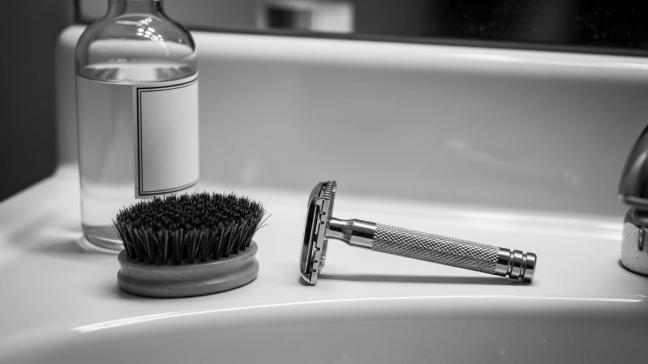
Men have a particular complication, and it is called shaving. Shaving can irritate the skin, and combining irritation with retinol can create a face that feels like it has joined an industrial dispute.
If you shave daily and your skin is easily irritated, consider using retinol on nights when you do not shave, at least during the first month. If you shave at night, wait a little while after shaving before applying retinol. If you shave in the morning, retinol at night is usually fine.
If you have a beard, you can still use retinol. Focus on the exposed skin and apply lightly along the beard line if that area is prone to bumps or breakouts. A good beard oil can help keep the hair itself in order while retinol handles the skin beneath. Retinol does many things, but it does not make hair follicles suddenly acquire good manners.
Retinol asks for a certain amount of quiet around it. Do not introduce it into a routine that already resembles a chemical symposium.
In the beginning, avoid using retinol on the same nights as strong exfoliating acids like glycolic acid or salicylic acid. Also, be cautious with benzoyl peroxide and other potentially drying acne treatments. Combining too many actives can lead to irritation that looks like your skin is being punished for your ambition.
Once your skin is comfortable with retinol, you can consider alternating nights if you still want exfoliation. For many men, retinol plus a gentle cleanser, a good moisturiser, and daily sunscreen is already enough to cover most concerns.
Vitamin C is often best used in the morning, while retinol sits comfortably at night. This division keeps things simple and reduces the chance of irritation.

Dryness is common early on. Your response should be measured rather than melodramatic.
Use a richer moisturiser at night, and consider adding a simple hydrating product underneath, such as a fragrance-free serum designed for hydration and barrier support. Keep your cleanser gentle. Avoid hot water. Avoid scrubs. Avoid the temptation to exfoliate away flakes aggressively, which is the skincare equivalent of shouting at a minor administrative error.
If you are flaking around the mouth or nose, apply a little moisturiser or a thin layer of balm to those areas before retinol to protect them. If irritation persists, reduce your frequency. Two nights a week is perfectly respectable.
If you have a significant reaction, stop retinol for several nights, focus on moisturiser and sunscreen, and restart more slowly. If reactions are severe or persistent, a dermatologist is a better ally than internet bravado.
Retinol improves skin gradually. This is part of its charm, and part of the reason men give up too early. You may notice brighter skin and smoother texture within four to eight weeks. Breakouts and congestion can take eight to twelve weeks to settle. Fine lines and pigmentation can take three to six months to improve meaningfully.
This is not a failing. It is simply how biology works. Your skin is not an app that updates overnight. The men who do best with retinol are the ones who treat it like brushing their teeth. Quietly, regularly, without expecting applause.
If your skin is oily or acne-prone, keep the supporting routine light but consistent. Cleanse gently, use retinol at night, moisturise with something that does not feel heavy, and commit to sunscreen. Avoid layering multiple acne treatments in the first month, because irritation can make breakouts look worse.
If your skin is dry, prioritise barrier support. Choose a creamy cleanser, use moisturiser generously, and consider the sandwich method from the start. You may find that every other night is a better long-term pace than nightly use, and that is perfectly fine.
If your skin is sensitive, begin with the lowest strength you can find, use it once or twice a week, and keep everything else in your routine bland and fragrance-free. Sensitivity is not weakness. It is simply your skin’s way of filing complaints early.
Men tend to be wonderfully decisive, right up until the moment decisiveness becomes self-sabotage.
Using too much product is a classic error. A pea-sized amount is enough. Applying more does not speed results, it increases irritation.
Using it too often, too soon, is another. Retinol is a marathon, not a stag do.
Skipping moisturiser because it feels unnecessary is also common. Retinol can disrupt the barrier, and a moisturiser helps keep your skin functional rather than furious.
Neglecting sunscreen is the final and most damaging mistake. Retinol can make your skin more sensitive to UV, and sunlight can undo the progress while adding new problems. Sunscreen is the boring step that separates men who get results from men who complain about retinol on the internet.
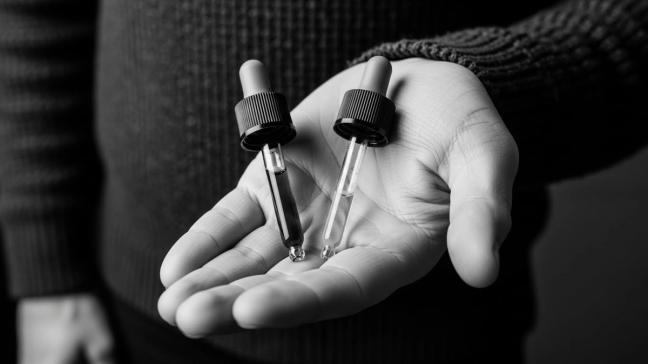
If you have used retinol consistently for several months with minimal irritation and you want more improvement, you can consider increasing the strength. Do so slowly. Increase either the percentage or the frequency, not both at once.
However, there is a quieter truth that is worth saying out loud. Many men do not need stronger retinol. They need consistent retinol. A moderate strength used reliably often beats a powerful one used sporadically, especially if stronger formulas trigger irritation that forces you to stop and restart.
If your concern is significant acne or pronounced sun damage, prescription retinoids may be appropriate. That is a conversation for a professional, and there is no shame in outsourcing the decision to someone with a medical degree and a calm manner.
Retinol will not compensate for everything. It will not cancel out poor sleep, relentless stress, smoking, or a diet comprised largely of regret and convenience. It can improve how your skin behaves, but it is not a moral absolution.
That said, retinol pairs beautifully with a few habits that make it work better. Sleep helps the skin repair itself. Hydration supports the barrier. Sun avoidance and sunscreen protect the skin. A simple routine done consistently beats a complicated one done intermittently, much like government.
If fine lines are only part of your concern and hair loss has entered the conversation, you are not alone. Retinol is excellent at what it does, but it is not a complete answer to every sign of ageing.
Retinol is not a miracle, and that is precisely why it works. It is an ingredient that expects you to behave like an adult. Start low. Go slow. Moisturise as though you mean it. Wear sunscreen every morning. Give it time.
If you do all that, you will wake up one day and notice that your skin looks calmer, smoother, and somehow more deliberate. Nobody will be able to pinpoint what changed. They will merely conclude that you have been getting enough sleep, drinking enough water, and making generally sound life choices.
You do not need to correct them. That would be very un-British.
To receive the latest in style, watches, cars and luxury news, plus receive great offers from the world’s greatest brands every Friday.