Watches -- 2 days ago

A pair stays elegant when the cleaning matches the material and the pressure stays light. Do it properly and you won’t have to keep wondering how to clean white sneakers after every wear.
White trainers are a small daily act of optimism. They suggest order. They suggest taste. They suggest you have not spent the morning wrestling a bin bag in the rain. Then real life arrives with its usual enthusiasm, and your pristine North 89s or Uniform Standard trainers start to look like they have been taking notes in a coal cellar.
Cleaning white sneakers is not difficult. It is, however, easy to do badly. Scrub too hard and you scuff the finish. Use the wrong product, and you yellow the rubber. Put them in the washing machine like a man who enjoys chaos, and you can warp the shape, loosen the glue, and age them by a decade in one spin cycle. The goal is not only to make them white again. The goal is to make them white again without making them look cleaned.
If you have spent any reasonable sum on a good pair of running shoes, it seems only polite to keep them from looking like they have been dragged through a festival car park.
Good sneaker care is really about respecting materials. Leather wants gentleness and patience. Canvas wants thoroughness. Suede wants you to keep your hands off it unless you know what you are doing. Knit wants low drama and no heat. Once you treat each properly, the process becomes almost soothing, which is the closest any of us get to domestic serenity.
Consider this your sensible routine. Not a ritual. Not a sermon. Just a way to keep your white sneakers looking intentional rather than accidental.
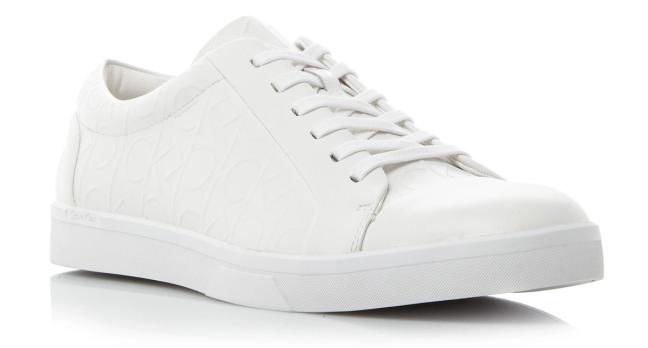
A Thom Sweeney in leather behaves differently from a pair of Converse in canvas, and both behave differently from an engineered knit runner from On or Nike. Check the upper and the lining.
If it is leather, avoid soaking it. If it is canvas, you can use more water, but you still want control. If it is suede or nubuck, step away from water and reach for a proper suede brush and cleaner, ideally from a maker like Saphir, who treats footwear as an adult subject.
Also, look at the sole. Most of the visible dirt lives on the midsole edge, which is the part everyone sees when you are standing still and pretending to listen. That is where careful work pays off fastest.
The method depends on what the shoe is made of, and if you are unsure, it is worth understanding how running shoes are constructed before introducing them to anything abrasive.
The same principles that apply to washing winter boots hold here: different materials have different opinions about how they wish to be treated.
Start by removing the laces and insoles. This is not fussiness. It is the difference between cleaning and smearing dirt around with confidence. Tap the shoes together outside to knock loose grit, then use a soft brush or an old toothbrush to dry-brush the upper and the sole edge. Dry first. Wet later.
Mix a small bowl of warm water with a tiny amount of gentle soap. A mild washing-up liquid works. A dedicated sneaker cleaner like Jason Markk or Crep Protect also works well if you like a single-purpose product that behaves predictably. Avoid aggressive household cleaners on uppers, particularly on coated leather, because they can strip the finish and leave a dull, thirsty look.
Work in small sections. Dip the brush, shake off excess, then clean with light pressure and repeated passes. Let the brush do the work. Wipe frequently with a clean microfibre cloth to lift the dirt rather than pushing it deeper. If the cloth starts looking tragic, swap it. You are not proving anything by cleaning with a filthy rag.

Leather is the easiest to refresh and the easiest to damage through overconfidence. Use minimal water. Clean gently. Wipe away soap residue thoroughly, because leftover product can dry into streaks that look like you have tried to bleach your shoes in a panic.
Once clean, let them air-dry away from radiators and direct sun. Heat can dry out leather and weaken adhesives. When dry, apply a light leather conditioner if the leather looks a little dull or tight. Keep it subtle. The aim is supple, not glossy. If you want to restore the bright white finish on scuffed leather panels, a specialist white leather cream can help, used sparingly and buffed properly.
If the leather is textured or pebbled, take extra care not to grind dirt into the grain. Slow beats hard every time.
Canvas can take more water, but it still does not want to soak. Clean with your soap solution and a brush, then blot with a cloth. For stubborn marks, a paste of bicarbonate of soda and water can help on white canvas, applied lightly and worked in with a soft brush. Do not treat it like grout. Rinse it off with a damp cloth, then repeat if needed.
Canvas is also where people reach for bleach. Resist. Bleach can weaken fibres and cause yellowing over time, which is a particularly cruel outcome after all that effort. If your white canvas needs brightening, oxygen-based whiteners are generally the safer route, used carefully and thoroughly rinsed.
Dry canvas with the shoe stuffed lightly with paper to help it hold shape. Use plain paper, not something that will transfer ink. Leave it somewhere airy. Patience is cheaper than new shoes.
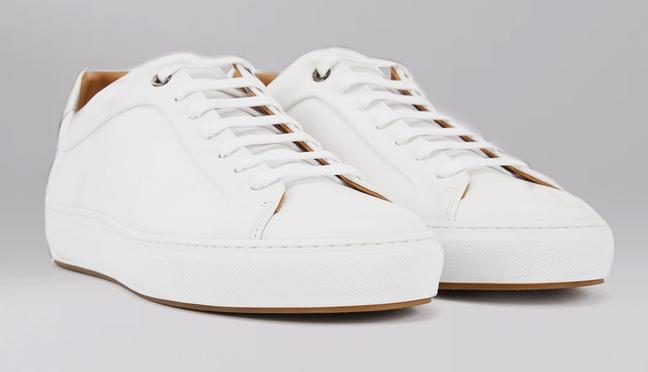
The midsole edge is where white trainers go to die in public. The good news is that rubber and foam tolerate a little more assertiveness than uppers. Use a stiffer brush and a slightly stronger mix of soap and water. Work along the edge in small strokes, then wipe clean.
For marks that refuse to budge, a melamine sponge, often sold as a magic eraser, can be very effective. Use it lightly. It is mildly abrasive, which is why it works. It is also why you should not rub it enthusiastically across delicate uppers or glossy finishes.
If you have deep grooves in the outsole, use a brush to clear trapped stones and dirt. It makes the whole shoe look cleaner, even if nobody sees it. You will know. That is enough.
Laces are easy. Soak them in warm water with a little detergent, rub them gently between your fingers, rinse well, then air-dry flat. If they are beyond saving, replace them. Fresh laces can make a tired pair look newly intentional.
Insoles are about odour as much as appearance. Wipe them with a damp cloth and mild soap, then let them dry fully before putting them back. If they smell stubborn, a light dusting of bicarbonate of soda left overnight can help, then tap it out the next day. Also accept the obvious. Some insoles are sacrificial. Replacing them is not a defeat. It is hygiene.
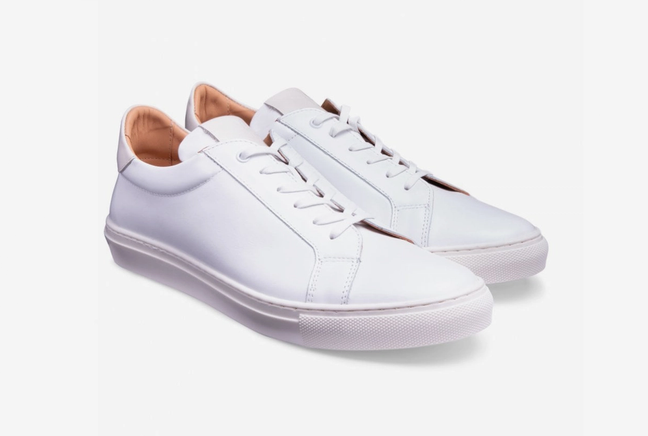
Never dry white sneakers on a radiator. Never dry them in direct sun if you can avoid it. Heat and UV can yellow rubber and age materials. Air-dry in a ventilated room and keep the shape by stuffing the toe box lightly with paper.
If you are tempted by the tumble dryer, lie down until the feeling passes. The dryer is where good shoes go to become oddly sized museum pieces.
The washing machine is not automatically evil. It is simply indiscriminate. Some canvas and some knit sneakers can survive a gentle cold wash inside a laundry bag, with laces removed and minimal spin. Many leather shoes should never go near it. Anything with glued construction and delicate trims is at risk.
If you do use a machine, keep it cold, keep it gentle, and never use heat drying. Then accept you have gambled a little. Sometimes it pays off. Sometimes you learn an expensive lesson about shortcuts.
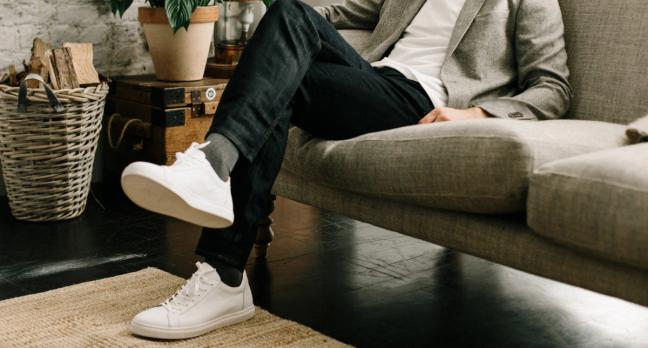
Prevention is not glamorous, but it is deeply chic. Spray a protective barrier on suitable materials and reapply as needed. Store white sneakers away from direct sunlight. Wipe the midsoles quickly after muddy days rather than letting dirt bake in. Keep a soft brush and a microfibre cloth to hand so the maintenance becomes small and frequent, not a full evening of penance.
White trainers will never stay perfect. That is part of their charm. The goal is not museum condition. The goal is clean, crisp, and convincingly cared for, which is how good style tends to work in every category.
To receive the latest in style, watches, cars and luxury news, plus receive great offers from the world’s greatest brands every Friday.