
Property -- 2 hours ago

Noise, speed, retention, and adjustment matter more than lifestyle branding, especially at 7am. Once those are weighed against your brew method, you’ll recognise how to choose coffee grinder with a cooler head.
Choosing the best coffee grinder is less like buying a gaming laptop and more like appointing a permanent secretary. It is not glamorous, but it is decisive. The grinder determines whether your coffee tastes composed and clear or whether it tastes like a policy drafted in haste and defended with confidence. Beans matter, water matters, technique matters, yet the grinder is the part that quietly decides how much of any of that you will actually taste.
Start by being honest about what you drink most days, not what you imagine drinking once you have reorganised your kitchen and your personality. Espresso is a precise little theatre. It wants fine grinding, narrow tolerances, and the ability to make tiny changes without drama. Pour-over and other filter methods want consistency and clarity, and they can be wonderfully expressive when the grind is even. French press and cold brew sit at the coarser end, where unevenness can still cause trouble because fines make bitterness linger like an ill-advised anecdote.
Your brew method shapes everything that follows. It affects how fine the grinder must go, how stable it must be under pressure, and how much adjustment you will need day to day. A grinder that excels for espresso may feel like over-governance if you only make filter coffee. A grinder built for filter can be left floundering when asked to handle espresso, which is rather like sending a competent local councillor to negotiate a treaty.
If you use more than one method, decide which is your non-negotiable. Many grinders can cover a broad range, but excellence is usually concentrated. The trick is not to find perfection. The trick is to find the right compromises for your routine, and then live with them in a civilised manner.
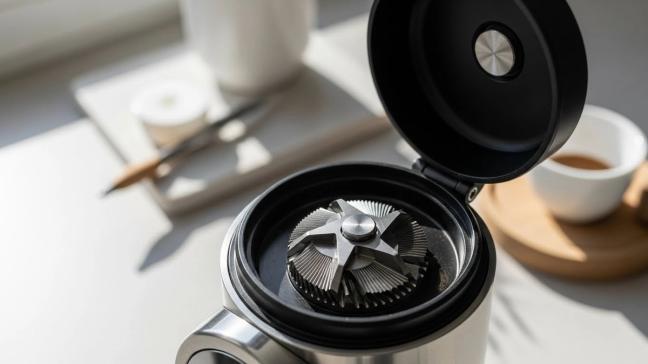
There are two broad ways to grind coffee at home. One is to slice it up with spinning blades. The other is to crush it between burrs. These are not equivalent options. A blade grinder is essentially controlled chaos. It produces a mixture of dust and boulders, which then extract at different speeds, which then gives you a cup that can taste both sharp and bitter at once. It is impressive in the way that an all-hands meeting can be impressive, in that everyone was present and nothing improved.
A burr grinder uses two burrs to shear and crush beans into particles of a more consistent size. Consistency is the point. When the grounds are broadly similar, water moves through them in a more predictable way, and the coffee tastes sweeter, clearer, and more balanced. You get flavour rather than noise. You also get repeatability, which is what turns a pleasant cup into a reliable daily habit.
Once you accept burrs as the baseline, you can think about the type. Conical burrs are common and often forgiving. They tend to be happy across a wide range of brew methods, and they can produce a cup with a satisfying sense of body. Flat burrs are often associated with higher precision and a particular kind of clarity, especially in filter and modern espresso styles, but they can be more demanding in setup and alignment. Both can be excellent. The difference is less about quality in the abstract and more about how they express flavour and how much they ask of you.
If you want the simplest rule that remains true under scrutiny, it is this. Choose burrs. Then choose the grinder whose burrs and design suit your main brew method, and whose daily operation will not make you mutter at breakfast.
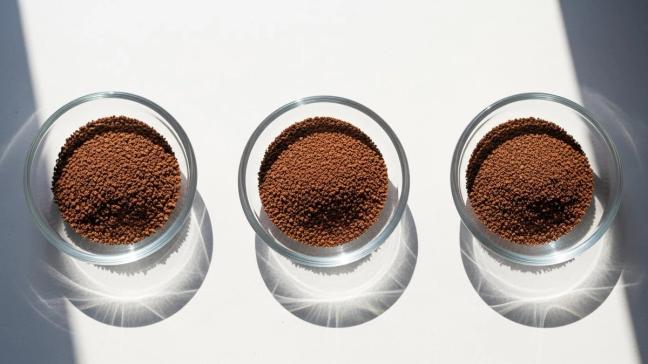
Grind size sounds like a simple dial. It is not. It is the core variable that decides how quickly coffee extracts, and extraction is where taste is made or lost. Grind finer, and you increase surface area, which usually increases extraction and slows flow. Grind coarser, and you reduce surface area, which usually decreases extraction and speeds flow. That is the tidy explanation. Real life is untidier, and real grinders produce a distribution of particle sizes, not a single uniform shape, so the quality of that distribution matters as much as the setting itself.
For espresso, the grinder must grind very fine and remain stable there. Espresso is a pressurised extraction. Water is forced through a compact puck, and small changes in grind can cause large changes in flow. This is why espresso grinders need adjustment that feels precise, repeatable, and resistant to accidental movement. If the grinder’s fine settings are inconsistent, your shots will swing from choking to gushing with the emotional volatility of a junior minister in a leadership contest.
For filter brewing, the grinder still needs consistency, but the tolerances are wider. You want a grind that produces clarity without a blizzard of fines. Too many fines can lead to bitterness and dryness, especially in pour-over methods where water contact time is longer. You also want the ability to make meaningful changes between recipes, since a V60, a flat-bed dripper, and an Aeropress can all respond differently to the same coffee.
The practical point is that you should choose a grinder with a grind range that comfortably covers your needs. If you only brew a filter, you do not need an obsessive espresso mechanism. If you brew espresso daily, you cannot treat fine adjustment as an optional extra. It is the job. Everything else is theatre.
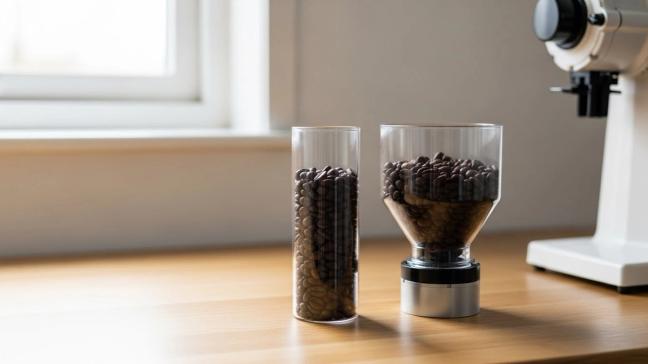
The next decision is less technical and more psychological. It is about how you want to interact with the grinder. Some grinders are designed for hopper use, where beans live in a reservoir, and you grind on demand. Others are designed for single dosing, where you weigh each dose of beans, grind them through, and aim to leave as little behind as possible.
Hopper use is straightforward and often delightful. You wake up, you press the button, and you move on with your life. It suits households where coffee is made frequently, and it suits anyone who values calm routine over ritual. If you go this route, the key is to use beans at a pace that keeps them fresh and to keep the hopper reasonably clean. You are not running a laboratory, but you are running a daily system.
Single dosing is about control and flexibility. It lets you switch coffees without mixing them, and it reduces the amount of ground coffee sitting inside the grinder. This matters because ground coffee stales quickly, and it matters even more if your grinder holds onto grounds between doses. That issue is called retention, and it is the hidden committee that shows up uninvited and insists on having a say. High retention means old grounds can mingle with new ones, which can make the flavour duller and the results less predictable.
Single dosing can also change the feel of coffee making. It becomes a set of small, deliberate steps. Weigh the beans, grind, tap, brew. Some people find this soothing. Some people find it a faintly absurd way to begin a workday. Neither reaction is negative. The only wrong move is choosing a workflow you will resent. Coffee should not feel like compliance training.
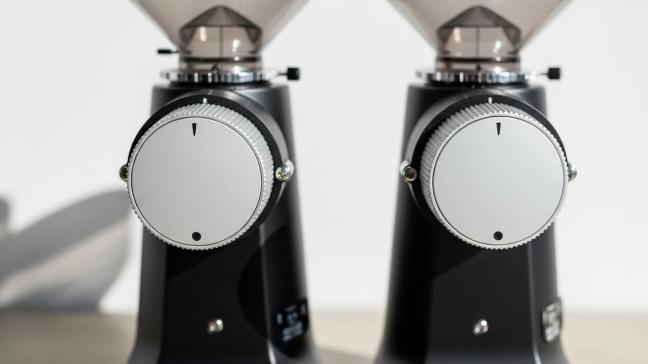
Adjustment is where many grinders reveal their true character. You can have excellent burrs and still be undermined by an adjustment system that feels vague, drifts over time, or makes it hard to return to a previous setting. In daily use, you want a grinder that allows you to change grind size with confidence, and then stay there.
For espresso, small changes matter, so the adjustment should allow fine steps or stepless movement that still feels controlled. You should be able to make a minor adjustment and see a minor change in the cup. If every adjustment feels like a gamble, you will spend your mornings chasing your tail, and the coffee will always feel slightly out of reach.
For filter coffee, you can tolerate larger steps, but you still want the steps to be consistent and the dial to be readable. There is nothing glamorous about returning to the same setting. There is something deeply satisfying about it. Predictability is an underrated form of luxury, and it is also the thing that lets you actually learn what you are doing.
Workflow also includes how the grinder delivers grounds. Some grinders do neatly into a cup or portafilter. Others spray grounds as if they have been instructed to redecorate the kitchen. Static plays a role here, and it can be managed with sensible technique, but good design helps. A well-shaped chute, thoughtful dosing geometry, and a stable base can turn a daily task into something smooth rather than messy.
A grinder should not require constant negotiation. It should not feel temperamental. It should do its job with the calm confidence of someone who has read the brief and does not need to prove it.
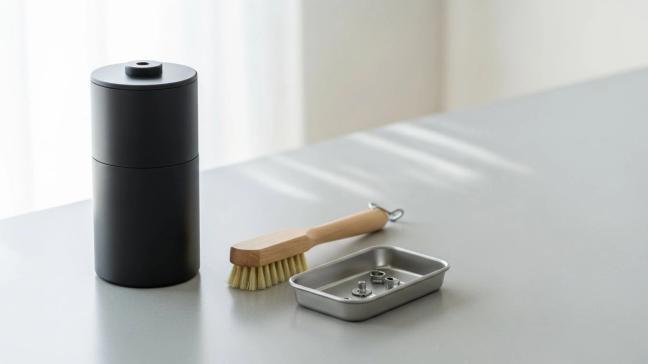
People love to discuss burr geometry and motor power, then they buy a grinder that shrieks at dawn and scatters coffee like confetti, and then they wonder why the romance fades. Noise matters because you will live with it. A grinder that sounds purposeful is one thing. A grinder that sounds panicked is another, and your household will have opinions.
Size matters too. Grinders have a habit of becoming permanent residents on the counter, and you should choose one that fits your space and your habits. Consider height if it sits under cabinets. Consider the footprint if you also need room to actually make coffee. Consider weight and stability because a grinder that vibrates across the counter will eventually feel like an argument you did not start.
Cleaning is the final piece of the adult conversation. Coffee oils build up on burrs and in chutes, and grounds accumulate in corners that were not designed to be reached by human hands. A grinder that is easy to open and brush will be cleaned regularly. A grinder that requires an elaborate disassembly will be cleaned rarely, and the flavour will slowly dull. This is not a dramatic decline. It is a gentle slide into mediocrity, which is how most things go wrong.
Look for practical access to the burrs and clear guidance for maintenance. You do not need to treat the grinder like an heirloom clock. You do need to give it a sensible routine. A little care keeps the grinder consistent, and consistency is the whole point.
By the time you have considered brew method, burrs, grind range, dosing style, adjustment quality, and the realities of noise and cleaning, the right grinder tends to present itself. It will not shout. It will simply make sense. The goal is a grinder that fits your life and supports your coffee, rather than a grinder that becomes a hobby you did not ask for.
If you are building an espresso routine, prioritise fine adjustment, stability, and repeatability. Espresso will expose weakness immediately, and no amount of enthusiasm will compensate for a grinder that cannot hold a setting or produce an even grind. If you live in the filter world, prioritise consistency across medium grinds, low fines, and an easy workflow. Filter coffee rewards clarity and cleanliness, and it will thank you for a grinder that behaves.
Then ask yourself the question that cuts through marketing more effectively than any technical specification. Will you enjoy using it on a Tuesday morning when you are half-awake and mildly betrayed by your inbox? If the answer is yes, you have likely chosen well. If the answer is no, then the grinder may be excellent in theory, but it will not serve you in practice.
A good grinder is not a trophy. It is an enabler. It makes good coffee easier to achieve and easier to repeat, and it does so without demanding applause. In the end, that is the most GQ and most Whitehall outcome of all. Competence, delivered quietly, with no fuss.
To receive the latest in style, watches, cars and luxury news, plus receive great offers from the world’s greatest brands every Friday.