Style -- 19 days ago

Cloth should hang cleanly, the waist should hold without strain, and nothing should pinch when you sit. Ask a tailor with a straight face how should a suit fit, and he’ll look at your shoulders before he says a word.
A suit, properly understood, is not an outfit so much as an argument. It argues that you know where you are going, that you arrived on purpose, and that you have not been waylaid by a careless rail timetable or an overexcited trend report. A suit that fits makes this case quietly, almost lazily, as though it has nothing to prove and everything to assume. A suit that does not fit makes a different speech altogether, louder, longer, and painfully sincere.
Fit is not an abstract concept reserved for tailors with tape measures and the faint air of priesthood. It is a series of visible decisions that translate instantly. Your posture improves. Your proportions settle. Your movements look deliberate rather than improvised. You do not look dressed up. You look finished. This is the whole point. The suit should frame you, not fight you, not flatter you in a cartoonish way, and certainly not announce itself like an over briefed spokesperson.
The best place to begin is with a principle that saves time and embarrassment. A suit should look right when you are standing naturally, without posing, without sucking anything in, without the strange, puffed chest stance that men adopt when confronted with mirrors and possibility. If you have to hold your breath to make it work, you are not wearing a suit. You are conducting a short experiment in optimism.
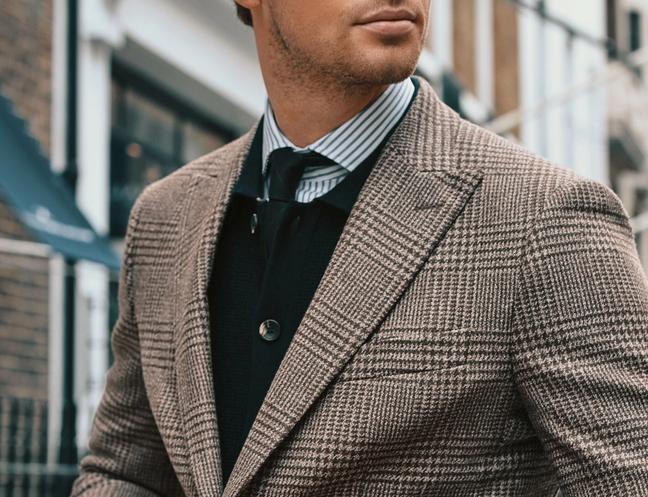
Shoulders are the foundation of the jacket. Everything else can be negotiated. Shoulders cannot. If the shoulder line is wrong, you may still walk out of the shop, but the suit will spend the rest of its life contradicting you.
The seam should sit exactly at the end of your shoulder. Not beyond it, not shy of it. If the seam hangs over, the jacket looks borrowed, as though you have been promoted into someone else’s life. If the seam sits too far in, the jacket will pull and pucker, and you will look faintly trapped. You are aiming for a clean line that follows the shoulder bone and then falls straight.
Look also for dimples or dents at the top of the sleeve head. Those little divots are not charming quirks. They are structural complaints. They usually mean the shoulders are too wide, or the cut does not suit your posture, or the jacket is simply not a friend to you. A good shoulder looks calm. It does not rumple, it does not droop, it does not bulge like it has been given a secret job and is not coping.
This is the standard that Savile Row tailors have followed for generations, and the Savile Row Bespoke Association still considers the shoulder line the single most important measurement in a fitting.
If you remember one thing, remember this. Buy the suit that fits your shoulders, then tailor the rest. If you do it the other way round, you will be spending your life apologising to your own reflection.
The chest is where the jacket either looks composed or starts lobbying for sympathy. Button the jacket, stand normally, and observe what happens. If you see an X-shaped strain across the front, the jacket is too tight. If you see excess cloth that balloons or collapses, it may be too big, or cut for a different shape, or simply uninterested in the laws of physics.
The lapels should lie flat against your chest. They should not gape, curl, or lift away like a badly behaved page in a paperback. When lapels sit properly, the jacket looks sharp without looking fussy. When they do not, the whole suit can look oddly cheap even if it is not. The lapel roll should look natural, as though it were designed to do that and has been doing it for years.
Houses like Anderson & Sheppard have built entire reputations on the way their lapels roll, which tells you how much this single detail matters.
Pay attention to the button stance. When you fasten a single-breasted jacket, the button should close without pulling. You should be able to slide a flat hand inside the front comfortably. If you can fit a small novel in there, it is too roomy. If you can barely manage a fingertip, it is too tight, and you will spend your day negotiating with your ribcage.
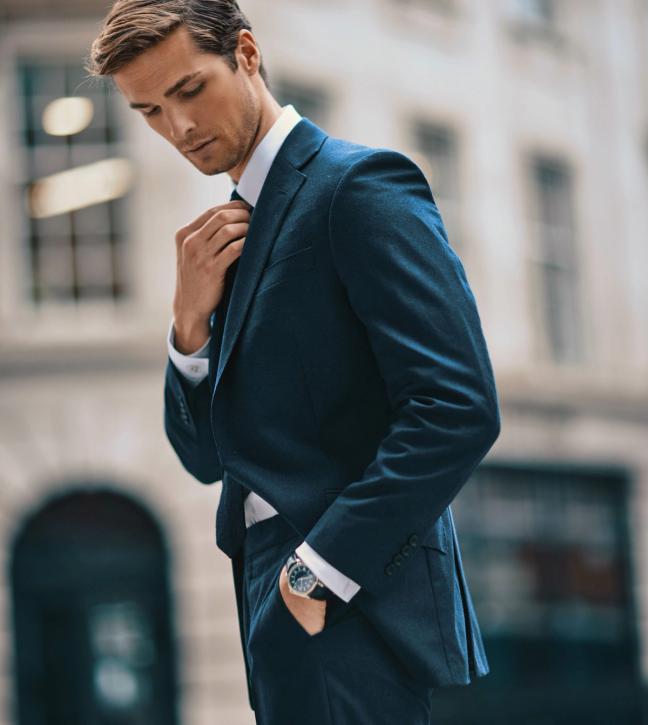
The waist is where many men either lose nerve or gain too much of it. The modern fear is looking old-fashioned, which leads to jackets cut too short and too tight, as though maturity were a contagious illness. The older fear is looking vain, which leads to shapeless jackets that hang without intention, like a towel that has given up.
What you want is gentle shaping. The jacket should taper slightly from chest to waist. It should suggest your form rather than recreate it. If the jacket hugs, clings, or creases at the buttons, it is too small. If it hangs straight down without any contour, it is probably too large, or the cut is wrong for you.
Think of the jacket as a polite companion. It should keep you company. It should not grip your arm in public. It should not drift away in the middle of a conversation. When the waist is right, you look athletic even if you do not spend your evenings lifting heavy things for entertainment.
Jacket length is a surprisingly political subject, largely because fashion has tried to treat it like a mood. In reality, length is about proportion. A jacket that is too short makes your legs look longer, yes, but it also makes you look top-heavy and slightly juvenile. A jacket that is too long can make you look as though you are hiding something, possibly a clipboard.
A useful guide is that the jacket should cover your seat. That is not prudishness; it is balance. Another guide is the hand test. Stand naturally with your arms by your sides. The hem should sit somewhere around the middle of your palm. These are not immutable rules, but they tend to keep you in the territory of good sense.
When the length is correct, the suit looks stable. You look grounded. The whole silhouette reads as confident rather than frantic. That is the goal.
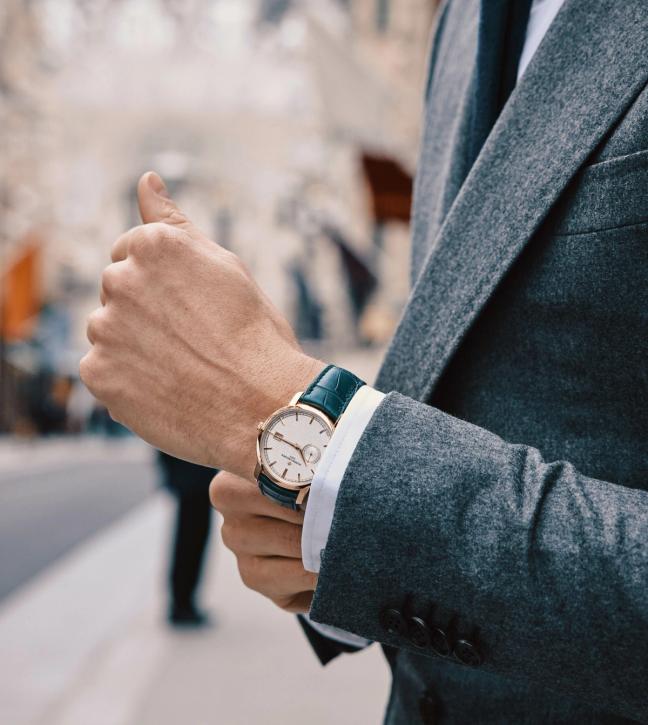
Sleeve length is small, visible, and unforgiving, which is to say it is exactly the sort of detail people notice when they say they do not notice details. The jacket sleeve should end around the wrist bone. You should show a little shirt cuff, usually about a quarter to half an inch. This is not vanity. It is punctuation. It tells the eye where one garment ends and the next begins.
The same logic applies to other finishing details. A well-chosen signet ring, for example, draws the eye to the hand in the same deliberate way.
If you show no cuff, the jacket looks too long, and you will appear slightly swallowed. If you show too much cuff, you risk looking like you have raided your older brother’s wardrobe and are hoping nobody asks questions.
Also, watch what happens when you move. Raise your arms as though you are reaching for a book on a shelf. The jacket will rise, as it must, but it should not climb halfway up your forearm like a startled curtain. If it does, the armholes may be too low, or the jacket may be too tight across the back, or both.
The collar matters too. The jacket collar should sit cleanly against your shirt collar. There should not be a gap at the back of the neck. That gap is the suit’s way of saying it does not believe in you. A good collar stays put. It does not ride up when you walk, it does not shift when you turn your head, and it does not suggest you have been wrestled into it.
A visible shirt cuff also gives a proper watch room to breathe, which matters more than most men realise when they finally invest in something worth collecting.
The back of the jacket is where fit reveals itself, because you cannot distract from it with a tie knot or a pocket square. A good back looks smooth when you stand naturally. Not rigid, not sprayed on, just clean.
Horizontal lines across the upper back usually mean the jacket is too tight, often across the shoulders or chest. Vertical folds can indicate excess cloth, sometimes from a back that is too wide. If the vents flare open when you stand still, the jacket is too tight around the hips or seat. If the vents hang and gape, you may have too much room, or the jacket is too long for the cut.
Now sit down. A suit should allow you to sit without sounding like you are filing a formal complaint. The jacket will open, as it should, but it should not strain at the buttons. When you stand again, it should settle back into place without requiring a full minute of tugging and smoothing. If you find yourself constantly adjusting, the suit is not serving you. You are serving it.
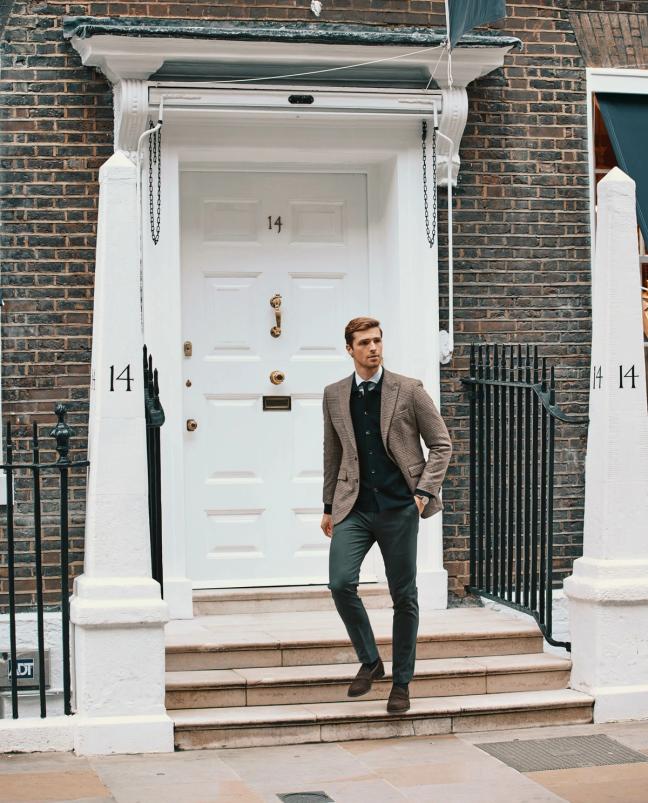
Trousers are where many suits quietly fail, largely because men accept far too much from them. A good pair of trousers should sit securely at the waist, without relying on a belt to prevent collapse. A belt can be useful, of course, but it should be a choice, not a rescue mission.
The waistband should be comfortable when you are standing and sitting. If it digs in, it is too tight. If it slides, it is too loose. Simple. The seat should lie cleanly without sagging. Excess fabric under the seat is not relaxed. It is sloppy. Tight fabric across the seat is not sleek; it is desperate.
This is also where proper undergarments quietly earn their keep. The wrong pair creates lines and bunching that no amount of tailoring can fix.
Through the thigh, you want room to move. You should be able to walk upstairs without feeling as though you are negotiating a hostage exchange. But you do not want so much fabric that the trousers look like they are carrying a second pair of trousers inside them. The leg line should fall smoothly from thigh to hem.
The break, meaning what happens where your trousers meet your shoes, is where opinions flourish. A slight break is the safest and most timeless option. The trouser hem just kisses the shoe and forms a modest crease. No break can look crisp and modern, but it requires precision, and it will punish you if your trousers are even slightly too long or too short. A full break can look classic in the right context, but too much pooling looks like neglect, not tradition.
Trousers should also be the right length at the back. If the back hem catches under the heel, you will destroy the fabric and the line. If the back sits too high, your socks will start making announcements.
You do not need a tailor’s chalk to get this mostly right. You need a mirror and a little honesty. Put the suit on properly. Shirt, shoes, and whatever you would realistically wear with it. Stand normally. Look at the shoulders first. Then button the jacket and check the chest and waist. Turn sideways and check the jacket length. Look at the sleeves and note the cuff. Then turn around and check the back.
Now move. Walk a few steps. Sit down. Stand up. Raise your arms. If the suit fights your movements, it will fight your day. A good suit should move with you. It should make you feel slightly more organised than you actually are, which is one of the great pleasures of adult clothing.
Understanding how a suit fits also sharpens your eye for everything else. Even business casual becomes easier to navigate once you know what clean shoulders and a proper waist actually look like.
Also consider how it looks unbuttoned. Many men spend most of their time with the jacket open, whether they admit it or not. The suit should still look sharp when open. If it hangs like a coat, it is too big. If it pulls awkwardly, it is too small.
Most importantly, listen to what your eyes tell you. If something looks off, it probably is. The suit will not improve by being ignored.
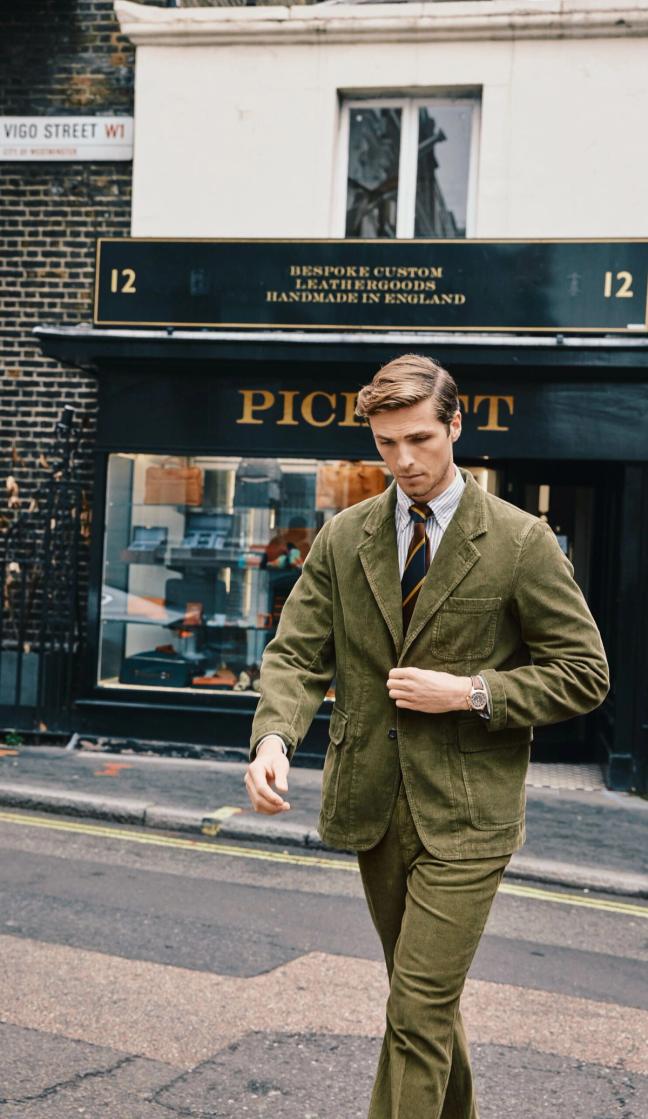
Tailoring is often spoken about as though it were an indulgence. It is not. It is simply the final stage of making a garment behave properly. Off-the-peg suits are made for a statistical average, and the average man exists mainly in spreadsheets.
The fabric matters too. Mills like Loro Piana have spent decades engineering cloths that drape properly and hold their shape, which makes tailoring adjustments far more forgiving.
A competent alterations tailor can improve sleeve length, trouser length, waist suppression, and the taper of the trouser leg. These adjustments can transform a decent suit into one that looks purpose-made. They are not about turning you into a different person. They are about allowing the suit to acknowledge the person you already are.
There are limits, of course. You can usually make a suit smaller more easily than you can make it larger. You can adjust lengths within reason. You can often refine the waist. But you cannot change everything, and you should not try. That way lies madness, and an invoice that reads like a government procurement scandal.
If you are buying a suit, choose the one that fits your shoulders and chest best, then tailor the waist and sleeves. If the trousers fit in the waist and seat, the legs can be refined. Do not fall in love with a suit that needs a complete reconstruction. That is not romance. It is a project.
There are a few errors that appear again and again, and they are worth spotting early, because they have a habit of spreading. One is the jacket that is too tight, with creases radiating from the button like stress lines on a worried forehead. Another is the jacket that is too short, which can make even a good fabric look like an attempt at a costume. Another is sleeves that cover the entire shirt cuff, which makes the suit look ill-considered.
There are also trousers that cling through the thigh and knee, which may feel modern in the fitting room and then feel like a personal vendetta on the walk to dinner. There are trousers that are too long, pooling at the shoe, which turns a sharp suit into a rumpled story. There are waistlines that sit too low, which can make the jacket and trousers look like strangers forced into a photo together.
The fix is rarely complicated. Choose the right base size. Prioritise shoulders, chest, and seat. Tailor the rest. Then stop. A suit should look like it belongs to you, not like you have spent weeks litigating its details.
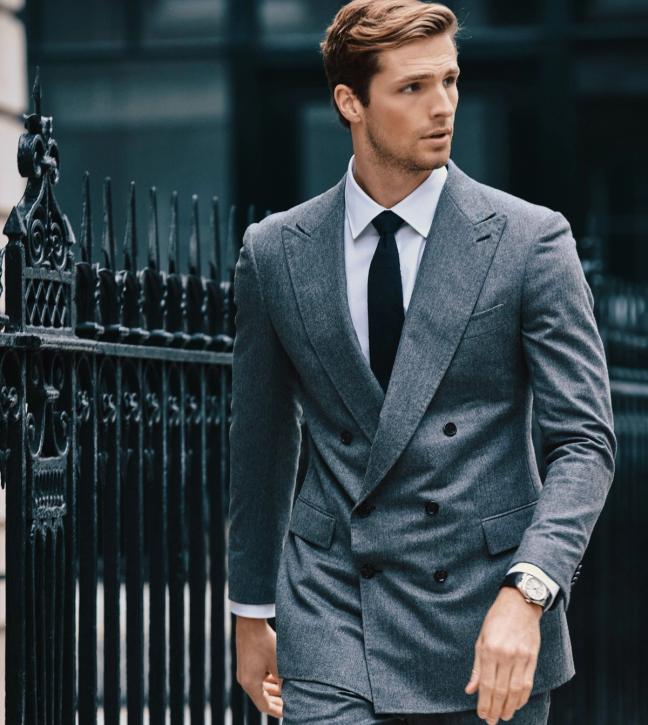
A suit should make you look like yourself on your best day. Not a different man, not a louder man, not a man auditioning for a role in his own life. When it fits, it flatters without pleading, it sharpens without shouting, and it gives you a kind of quiet authority that does not require explanation.
If you put a suit on and immediately feel steadier, you are close. If you put it on and immediately start adjusting it, you have been warned. The right suit does not demand attention. It earns it, and then it gets on with the job.
To receive the latest in style, watches, cars and luxury news, plus receive great offers from the world’s greatest brands every Friday.