Style -- 9 days ago

Spa therapy has always balanced care with culture. From Roman baths to modern sanctuaries, it reflects how each era understood health, rest and the value of slowing down.
There is a certain sort of man who insists that he does not “do” spas. He will say this while rubbing his neck, complaining about his back and sleeping like a man being interrogated by his own subconscious, yet the idea of stepping into a thermal suite still strikes him as somehow frivolous.
The joke, of course, is that spa therapy is older than almost everything else he takes seriously. Long before anyone invented Pilates, ice baths on Instagram or the phrase “self-care”, people were travelling quite extraordinary distances to sit in warm water and be told it would help. The fact that the modern setting is more Cotswolds than colonnades does not change the impulse. It merely upgrades the towels.
Let us, then, take the waters properly and see where this all began.

The basic idea is gloriously simple. Water comes out of the ground at an interesting temperature, or with a suspicious mineral smell, and someone decides it must be good for you. By the time the Greeks get involved, this hunch acquires philosophy. Springs are dedicated to Asclepius and other deities, baths are attached to gymnasia, and soaking becomes part hygiene, part ritual, part social life.
The Romans, never knowingly underbuilt, take the whole thing and turn it into infrastructure. Their thermae are the original wellness centres, complete with hot rooms, warm rooms, cold plunges, massage, exercise yards and a clear route through the lot. Bathing is not a treat but a civic duty, and it spreads with the empire. When they find hot or mineral springs in the provinces, they do the only logical thing and build.
That is how Bath acquires its first serious hardware. Underneath the Regency façades and the tasteful boutiques lies a Roman complex devoted to Sulis Minerva, where citizens once moved through a carefully scripted sequence of temperatures and depths in pursuit of comfort, cleanliness and a more obliging set of joints. You can stand there now, watching steam rise from the King’s Spring, and realise that the people who once lowered themselves into those pools were doing something recognisably similar to the man in a white robe at a spa hotel today.
Then Rome collapses, aqueducts are no longer maintained, and the West enters a period in which public bathing is viewed with deep suspicion. Large bath houses are blamed for disease and moral decline, which, in fairness, was not entirely inaccurate in some cases. Ordinary washing becomes a negotiable concept. What survives are sacred wells and local springs, places visited less on the recommendation of a physician and more at the suggestion of a priest. The water might still be healing, but now it does so through saints rather than sulphur.
The instinct to seek out special water never leaves. It simply lies low for several centuries, waiting for chemists, railways and hypochondriac aristocrats.

By the 16th century, the town of Spa in what is now Belgium had become sufficiently fashionable that its name detached from geography and drifted into the language. English visitors talk of “going to Spaw”, then of going to “a spa”, and by the 17th century, the idea of travelling specifically to “take the waters” is firmly established.
Bath, aware that it is sitting on a Roman asset, stages a comeback. New pump rooms are built. The baths are restored. Physicians extol the virtues of the mineral content. The Georgians arrive in powdered droves. In the 18th century, the city became a sort of open-air health club with architecture, where the line between cure and entertainment is exquisitely blurred.
To “take the cure” in this era is to submit to a regime that looks surprisingly like a modern retreat, only with more wigs. You wake, you walk, you drink the prescribed amount of warm, metallic water while trying not to grimace, you bathe, you rest, you eat at particular times, and you refrain from whatever vices your doctor has decided are incompatible with recovery. Around this, you promenade, you attend assemblies, you dance, you gossip, and you note who is conspicuously not following the rules.
Across the Channel, similar scenes play out in Baden-Baden, Vichy, Karlovy Vary and the rest of the European spa belt. Springs are analysed, classified and matched to conditions: one for liver complaints, one for gout, one for nerves. It is medicine, certainly, but it is also diplomacy and season and theatre. The waters claim to soothe your joints; the town soothes your ego.
It is not wildly different in principle from booking two nights at a serious spa hotel near Bath today because your back hurts and your inbox has developed an accusatory tone. The Georgian simply had to stay a month and endure sulphur. You, happily, have options involving a far better mattress.

The 19th century tried to tidy the whole thing. Balneology becomes a proper discipline. Doctors write monographs on the therapeutic uses of different waters. Spa towns grow more clinical. In German and Central European resorts, the Kurhaus and the sanatorium sit alongside the casino and the concert hall; you are now as likely to be prescribed a regime as offered a dance card.
Railways make the process democratic. Not entirely, of course, this is still Europe in frock coat mode, but enough that the middle classes can declare themselves in need of a cure and book a ticket. The spa becomes a recognisable form of health tourism, with itineraries, recommended lengths of stay and testimonials. It is, in its own buttoned-up way, the ancestor of the long weekend at a place that promises to “reset” you.
Then modern medicine intervenes. Antibiotics and industrial-scale public health measures do what a century of bathing could not. War tears up both railways and leisure time. For a while, spa therapy looks like a relic, all faded frescoes and peeling plaster, vaguely unhygienic and scientifically suspect.
What rescues it is, ironically, the thing that threatens it. As pills take over the heavy lifting of treating disease, doctors and patients alike realise that there is a whole hinterland of problems they do not solve terribly well: chronic stress, low-grade pain, insomnia, the collapse of boundaries between work and everything else. People no longer need to travel to treat syphilis. They might, however, need to travel to remember what it feels like for their shoulders to drop below their ears.
So the spa reinvents itself. The language softens. Cure becomes “wellness”. Diagnosis becomes “consultation”. The stern, white-coated hydrotherapist is quietly replaced by the very calm woman who meets you at the door of a treatment room and asks, with unnerving gentleness, how you are feeling today. Treatment lengths shrink from three weeks to ninety minutes. Medical regimens turn into packages with names involving the words “restore” and “renew”.
Underneath, though, the bones are familiar. Water, heat, rest, massage, a temporary change of scenery and the suspension of normal rules. It is the same grammar, written in a different font.

Which brings us to the present, and to those modern British spa hotels that like to pretend they somehow invented the concept. They did not, of course, but the better ones are quite aware of the history they are echoing, even if they rarely put it in the brochure.
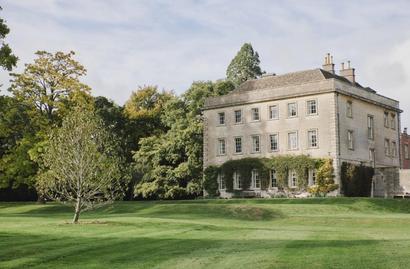
Take a Bath again. You can tour the Roman baths in the morning, admire the 18th-century pump rooms and then check in a short drive away at somewhere like Lucknam Park. The main house looks as though it would be perfectly comfortable issuing invitations to an 1805 ball. The spa at the back, all glass and steam and hydrotherapy jets, is pure 21st century. Yet what you actually do there is oddly traditional. You move between temperatures, you soak in mineral-rich water, you are massaged, wrapped, possibly scrubbed, and then encouraged to rest. A Georgian physician would recognise the skeleton of the programme, even if he would be baffled by the existence of hot stone therapy.
In London, ESPA Life at the Corinthia is basically a Roman bath complex that has traded mosaics for monochrome marble and added a very good bar upstairs. The sequence of experiences is classical: warm pool, hot room, steam, cooling, treatment. You are still, in essence, submitting your body to cycles of heat and immersion and seeing what happens to your pulse, your breathing and your grip on your own to-do list. The Romans would have approved of the engineering. They might have had notes on the playlist.
Up in the Cotswolds, Dormy House has created something that feels like a rural cousin of those 19th-century German Kurorte. There are thermal pools and saunas, yes, but there are also prescribed walks through rolling hills and the sort of food that makes a nutritionist quietly relieved. A long weekend there combines the traditional elements of fresh air, movement and water with the modern requirements of Wi-Fi and flat whites. It is not explicitly “taking the cure”, but if you were to describe it as “taking the edge off”, you would not be far wrong.
Even in places that have no Roman foundations to lean on, like Galgorm in County Antrim, you can feel the inheritance. The “thermal village” is essentially a contemporary reimagining of those old spa circuits, transplanted to the banks of a river and decorated with fire pits. You progress from one hot environment to another, plunge into something cold when you feel brave, then sit in a robe in the open air and experience the rare sensation of not being required to do anything. It may not come with a Latin inscription, but the intention is very old indeed.
What these hotels have done, in effect, is graft the long European history of spa therapy onto British country house culture and London hotel polish. The result is a hybrid that speaks as much to the 18th-century habit of withdrawing to an estate for one’s health as it does to the 21st-century habit of fleeing one’s inbox. You check in for reasons that would be perfectly intelligible to a Georgian with “nerves”; you simply express them differently.

For all the botanical oils, the low lighting and the suspiciously perfect bowls of fruit, spa therapy remains a very simple proposition. It is time set aside to manipulate water, temperature and touch in your favour. Historically, it has been used to treat everything from gout to melancholia. Today it is more likely to be applied to stress, stiff backs and the existential fatigue of being permanently reachable.
The history matters because it reminds us that none of this is trivial. The Greeks did not build baths into their cities for fun. The Romans did not spend quite so much on aqueducts purely for the aesthetic. Georgians did not trek to Bath and Harrogate to be seen in a bonnet, although that was a bonus. They did it because stepping outside their normal routine, surrendering to a structure of rest, heat and immersion, made them feel better in ways they could not achieve alone.
It still does. Only now, instead of being scolded by a physician for not drinking enough of a particular spring, you are gently encouraged by a therapist at Lucknam, or Dormy, or the Corinthia to breathe more deeply and stop clenching your jaw. The robes are softer. The science is clearer. The need is, if anything, more acute.
You can, if you wish, continue to insist that spas are not for you, that you are above such things, that your idea of relaxation is a punishing run and a very cold shower. History would suggest otherwise. For several thousand years, the civilised response to a life that grinds too hard has been to find a pool, a spring or a carefully engineered steam room and climb in.
For the modern gentleman, particularly the one who cannot remember the last time he truly did nothing, spa therapy is not an indulgence. It is simply an old solution in new tiles.
To receive the latest in style, watches, cars and luxury news, plus receive great offers from the world’s greatest brands every Friday.