Watches -- 2 days ago

Construction decides comfort, repairability, and how long the romance lasts. In practice the difference shows up when weighing Goodyear Welt vs Blake Stitch after a season of hard walking.
There are a few topics that can turn sensible adults into zealous partisans quite so quickly as shoe construction. Mention Goodyear welting, and someone will begin speaking of cork, waist lines and resoles with the reverence normally reserved for state occasions. Mention Blake stitching, and another will reply, perfectly composed, that it is slimmer, sharper, and altogether more civilised for modern life. Both will sound certain. Both will be only partly right. And both will miss the point, which is that these constructions are not merely methods, they are philosophies expressed in leather and thread.
If you have ever looked at a pair of shoes and wondered why one seems to sit like a sturdy townhouse on your foot while another looks like it has been sketched in ink, this is the reason. Goodyear welt and Blake stitch solve the same problem in different ways. They attach the upper to the sole, yes, but they also decide how a shoe ages, how it copes with rain, how easily it can be repaired, and how it presents itself beneath a trouser. In other words, they decide whether your shoes will be loyal companions or brilliant acquaintances.
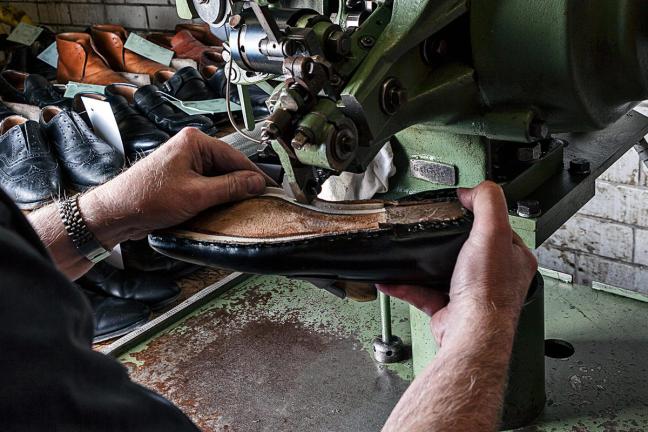
Before anyone reaches for the smelling salts, it is worth stating the obvious. A shoe has an upper, an insole, and an outsole. The construction is the method by which these parts are joined. That joining matters because the ground is relentlessly unromantic. Pavements abrade. Water intrudes. Heat and pressure deform. A shoe that is well-made does not avoid wear, it manages it with dignity and allows you to restore it when the time comes.
Goodyear welt construction introduces an extra component, the welt, and a layered build that separates the upper from the outsole in a clever, repair-friendly manner. Blake stitching takes a more direct route and stitches the upper to the outsole in one clean operation that favours sleekness and flexibility. Both approaches can be excellent. Both can be done badly. And both deserve a little more attention than the average shopping page gives them.
Goodyear welting is often described with the kind of seriousness that implies the shoes might be sworn in at Buckingham Palace. The essence is straightforward. The upper is attached to the insole, then a strip called the welt is stitched around the perimeter, and then the outsole is stitched to that welt. This creates a structure where the outsole can be replaced without tearing into the upper, which is the part you actually care about once the shoe has moulded to your life.
In many Goodyear-welted shoes, there is a cavity between the insole and outsole. That space is usually filled with cork. Over time, the cork compresses and settles into the shape of your foot. The result, when the fit is right, is a shoe that becomes more comfortable as it is worn. There is a reason seasoned wearers speak about a good pair as though it were a favourite chair. It is not sentimentality. It is engineering plus time.
Another advantage is resilience. The welt and the layered structure tend to offer better resistance to water ingress compared with more direct constructions, particularly when paired with a sensibly finished sole and proper edge sealing. This does not make the shoe a submarine. It simply gives you a margin of protection that is invaluable in a climate where a bright morning can become a damp afternoon without so much as an apology.
The trade-off is that Goodyear-welted shoes usually have more structure. They can feel firmer at first. They may weigh a little more. They also often show a visible welt line, which can read as robust rather than razor-sleek. If you like your shoes to have presence, this is part of the charm. If you want something that looks almost weightless beneath a sharply tapered pair of trousers, you may find it a touch hearty.
Blake construction is the elegant minimalist in the room. Instead of adding a welt and building layers, the shoe is stitched directly. The stitch runs from inside the shoe down through the insole and outsole. The result is a cleaner profile and often a slimmer waist. This is why so many sleek dress shoes and refined loafers are Blake-stitched. It allows the maker to keep the lines close and the silhouette crisp.
Blake stitched shoes also tend to feel more flexible from the outset. There is less between your foot and the ground, and the sole can move with you more readily. That can translate to comfort, particularly for those who dislike the initial firmness of structured shoes. It can also translate to a certain immediacy in how the shoe walks. The sensation is closer to a well-made glove than a piece of armour.
The compromise is protection. Because the stitch is closer to the ground, it is more exposed. In persistent wet, water can find its way in more easily than it would with a welted build, especially if the shoe is worn hard in poor conditions. This does not mean Blake stitched shoes cannot be worn in Britain. People do it daily. It means you should be honest about your habits and your weather, and perhaps avoid turning a sleek loafer into an unwilling winter boot.
Repair is also possible, despite what the loudest voices claim. A competent cobbler can resole Blake-stitched shoes and restore them neatly. The difference is that repeated resoles can be more limited, depending on how the shoe was built, how much material remains, and how well the stitching area has held up. Goodyear welting is designed to make resoling routine. Blake construction can still be serviced, but it asks for more care and, occasionally, more compromise.
In practice, the question is not which construction is best, but which is best for you. That depends on where you walk, what you wear, and what you expect from your shoes.
If you spend a lot of time on rough pavement, if you walk long distances, if your days include commutes and unpredictable weather, Goodyear welt will usually make sense. The sturdier structure and the ease of resoling suit a life where shoes are tools as well as ornaments. A well-made welted shoe can be maintained like a good watch. It may not be the lightest thing on your foot, but it will not flinch when your calendar misbehaves.
If your shoes are primarily for indoor work, smart dinners, events, and the sort of days where you step from taxi to lobby with minimal exposure to puddles, Blake stitch can be glorious. The sleekness is real. The flexibility is pleasing. The shape can look especially refined with tailored trousers. It is the choice for those who value clean lines and a sense of ease.
There is also a third reality, which is that many wardrobes are better served by having both. One pair that can shoulder the daily grind. Another that looks effortlessly sharp when the occasion calls for polish rather than toughness. The sensible conclusion is rarely as exciting as the argument, but it tends to work.

The most persistent myth in shoe culture is that pain is a sign of quality. It is not. Discomfort can be a sign of poor fit, the wrong last shape, or a shoe that does not suit your foot. A good shoe may feel firm at first, especially a structured Goodyear welted pair, but it should not feel punishing. If you cannot imagine walking normally in the first week, it is unlikely to become a blissful companion later.
Goodyear-welted shoes can take longer to soften and settle. There is more material, and the insole and cork need time to adapt. When they do, they can become exceptionally comfortable and supportive. Blake stitched shoes often feel easier straight away because of their flexibility. That can be a blessing if you are sensitive to stiffness. It can also be misleading if you choose a shape that is too narrow and rely on softness to forgive it. Leather gives. It does not rewrite the laws of anatomy.
The real key is fit. The right size, the right width, and the right last are more important than any construction method. A beautifully made shoe in the wrong shape is merely an expensive lesson in stubbornness.
Goodyear welt is often praised for longevity, and in many cases, that praise is deserved. The build is robust, the outsole can be replaced repeatedly, and the upper can last for years if the leather is good and the shoe is cared for. It is a construction that assumes you will return, again and again, for maintenance, and it rewards you for doing so.
Blake stitched shoes can also last a long time, but longevity depends more heavily on usage. Worn mainly in fair conditions and rotated with other pairs, they can endure beautifully. Worn daily through wet winters, they may show their limits sooner. This is not a moral failing on Blake’s part. It is simply the consequence of being slim and direct.
If you are the sort of person who wants one pair to do almost everything, Goodyear welt gives you a wider margin. If you are happy to match shoes to setting and season, Blake can be a superb choice.
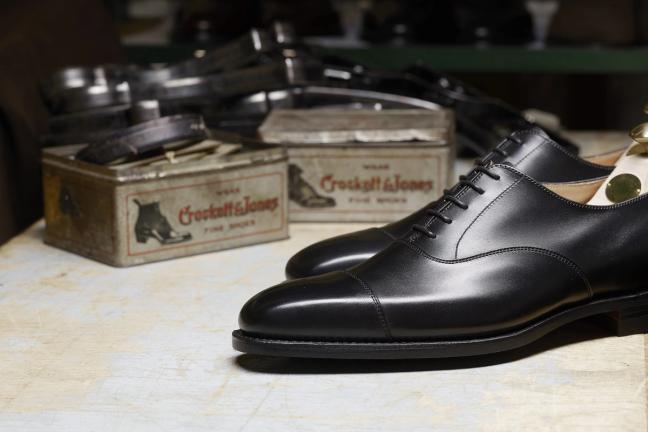
The weather in Britain has an almost constitutional commitment to unpredictability. A construction that helps keep moisture out is not a luxury, it is common sense dressed in leather.
Goodyear-welted shoes generally offer better water resistance because the stitching that holds the outsole is not the same stitch that runs directly into the interior of the shoe. There are still seams, and water can still enter, especially through the upper itself, but the design gives you a better chance of staying dry during an unexpected downpour.
Blake stitched shoes can be improved with good sole finishing, protective topy soles, and attentive care, but they are typically more vulnerable in wet conditions. If you love Blake stitched loafers, the answer is not to panic. The answer is to be strategic. Choose them for drier days. Keep a sturdier option for the weeks when the sky seems to be running a long-form campaign against your optimism.
This is where the debate becomes less technical and more personal. Goodyear-welted shoes can look more substantial. The welt line adds definition. On boots and country shoes, this can be exactly what you want. On many derbies and brogues, it reads as classic and confident. On very sleek dress shoes, it can look a touch heavy, depending on the maker and the design.
Blake stitched shoes often look slimmer and more refined. The sole can be thinner. The waist can be tighter. The whole shoe can appear more elegant, particularly in profiles where every millimetre shows. If you prefer modern tailoring with a sharp taper, Blake construction often complements that line beautifully.
Neither is automatically more stylish. Style is context. A sturdy welted derby with a flannel suit looks perfectly correct. A razor slim Blake stitched oxford with a dinner suit can look impeccable. The error is insisting that one must do the work of the other.
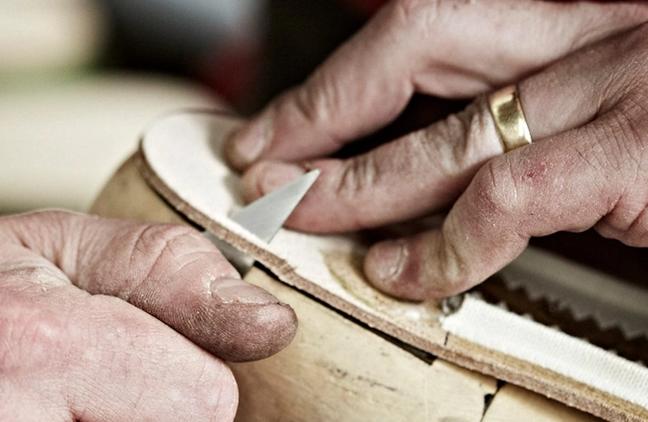
Goodyear-welted shoes are the straightforward choice if you intend to resole regularly. The construction is designed for it. A skilled cobbler can remove the worn-out outsole and replace it while leaving the upper largely intact. Over time, you may replace heels, add toe taps, refresh the edges, and keep the shoe looking sharp with minimal drama.
Blake-stitched shoes can also be resoled, but the process requires proper equipment and competence. Some cobblers specialise in it. Some do not. The quality of the resole matters because a sloppy job can ruin the sleekness that made you choose Blake in the first place. If you buy Blake stitched shoes, it is wise to know where you will service them. It is not glamorous, but it is the kind of foresight that prevents regret.
If your life involves regular walking, uncertain weather, and the need for shoes that can be maintained for years, Goodyear welt is an excellent foundation. It has a reassuring practicality. It is the shoe equivalent of a steady minister who knows where the files are kept and quietly prevents chaos.
If your priority is elegance, lightness, and a sleek line for dress occasions, the Blake stitch offers an appealing directness. It is not fragile, but it is more particular about how you treat it. It is the beautifully tailored operator who performs brilliantly in the right setting and looks faintly offended when asked to do manual labour.
If you want a simple rule, consider this. Choose Goodyear welt for daily shoes, boots, and anything you will wear in poor conditions. Choose Blake stitch for refined dress shoes and loafers that live mostly in polite environments. Then, having made your choice, treat your shoes like adults. Let them rest. Use shoe trees. Keep them clean. Condition the leather. Repair them before they become tragic.
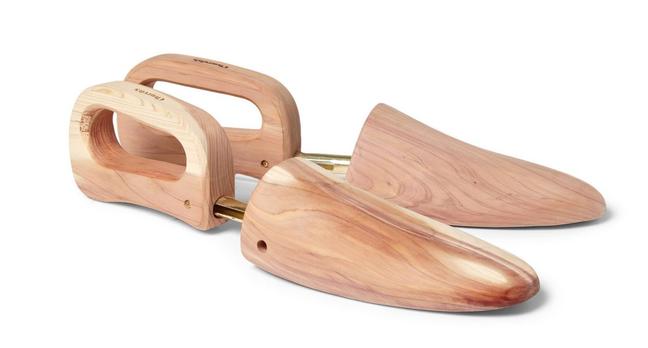
Maintenance is not fussy. It is merely attentive. Rotate your shoes so the leather can dry and recover between wears. Use shoe trees to preserve shape and reduce creasing. Brush regularly, not as punishment, but as routine. Condition occasionally, so the leather does not dry out and crack. If a shoe gets soaked, dry it slowly at room temperature and let time do its quiet work. Heat will only encourage the leather to become brittle and resentful.
When the soles wear thin, resole promptly. Walking through the insole is like ignoring a small scandal until it becomes a public inquiry. It is avoidable, and it rarely ends well.
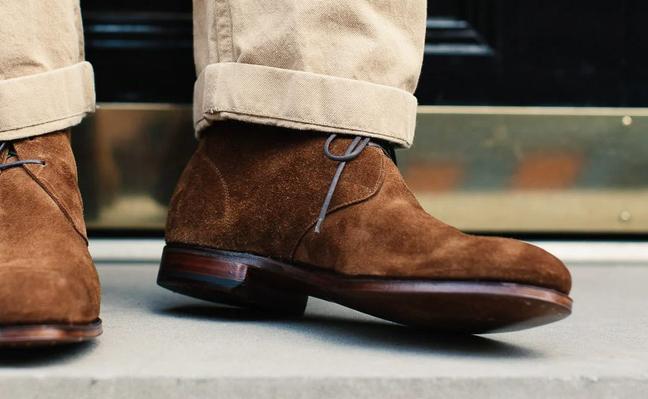
Goodyear welt and Blake stitch are not rivals so much as different answers to different questions. One is built for endurance and serviceability, a layered structure that invites repair and shrugs off indignity with stoic calm. The other is built for elegance and immediacy, a direct stitch that delivers a sleek silhouette and a supple feel underfoot.
Choose the one that matches your life rather than your ideology. The best shoes are not the ones that win online arguments. They are the ones you reach for without thinking, because they fit, they suit your wardrobe, and they carry you through your days with the quiet competence of something made properly. That, in the end, is the whole point.
To receive the latest in style, watches, cars and luxury news, plus receive great offers from the world’s greatest brands every Friday.