Property -- 3 days ago

Fibre talks about origin and quality, while weave decides feel and temperature. Once you separate the two, Egyptian cotton vs percale vs sateen turns from sales patter into a sensible choice.
There are few moments more revealing than watching a grown adult attempt to buy bedsheets. You start with admirable intentions and a clean browser history, then within minutes, you are trapped between a thousand conflicting claims and a photograph of a duvet arranged with unsettling confidence. At that point, most people do what we have always done when faced with complexity. They pretend it is all terribly simple, then make a decision based on vibes.
Unfortunately, sheets are not vibes. They are policy. They are the domestic equivalent of a civil service memo. The wording matters. The structure matters. The small print matters most of all.
So let us restore order. Egyptian cotton is a type of cotton fibre. Percale and sateen are weaving methods. One is the raw ingredient. The others are how it is put together. People blur the terms because it sounds glamorous, and it helps things sell. That is business. Your business is to sleep well and remain faintly smug about it.

Egyptian cotton, in its proper sense, refers to cotton grown in Egypt. More importantly, the best examples tend to be long-staple. Long-staple fibres can be spun into finer and stronger yarns. Finer yarns can produce fabric that feels smoother and wears better. In other words, it can deliver that calm sense of quality that does not need to announce itself.
Now for the slightly awkward part. The phrase Egyptian cotton gets used with the enthusiasm of a press secretary on a good day. Some products use cotton grown in Egypt, but not necessarily the most desirable varieties. Some are blended. Some are described in a way that would make a barrister reach for a notepad.
The practical takeaway is this. Egyptian cotton can be excellent, but the label alone is not a guarantee. What you want is clarity from the maker, consistent finishing, and a general sense that they are not relying on mystique to do the heavy lifting.
The same applies to the bed itself. Quality compounds when each layer is considered, rather than hoping one expensive component will carry the rest.
Also, remember that Egyptian cotton does not dictate how the sheets will feel. The weave matters. A long-staple cotton can feel crisp in one construction and silky in another. It is the same ingredient wearing different tailoring.
Percale is a plain weave. It is typically one thread over and one thread under, repeated with disciplined simplicity. The result is a matte finish and a crisp feel that many people associate with good hotels and sensible life decisions.
Percale breathes well. It tends to feel cool to the touch. If you sleep warm, or if your bedroom has the temperament of a greenhouse, percale is a very strong candidate. It does not cling. It does not drape theatrically. It behaves.
It also wrinkles more readily than sateen. This is often presented as a flaw. It is not a flaw. It is honest evidence that the fabric has structure. Percale creases in a way that can look relaxed rather than scruffy, especially if the cloth is well-made. Think of it as the bedding equivalent of a well-worn Oxford shirt. It looks better when it has lived a little.
There is another point that does not get enough attention. Percale often improves with washing. The first few nights can feel slightly firm, particularly with higher-quality yarns. Give it a little time. It tends to soften without losing its crisp character. It is the sort of comfort that does not flirt. It simply turns up every evening and does the job.
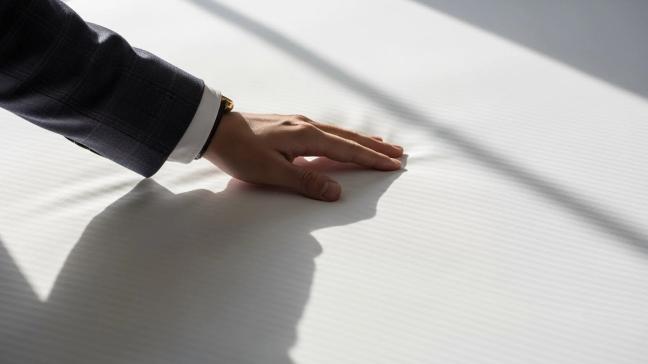
Sateen is a weave that places more yarn on the surface. This creates a smoother feel and a gentle sheen. If percale is the disciplined civil servant, sateen is the special adviser who wears a beautifully cut suit and claims not to care about optics.
Sateen usually feels soft immediately. It drapes more than percale. It can feel warmer and more enveloping, which is precisely why it is popular in cooler months or in rooms with enthusiastic air conditioning. If you like the sensation of sliding into bed, sateen will oblige.
There are trade-offs. Because the surface is smoother and the weave is less open, sateen can be less breathable than percale. Hot sleepers sometimes find it holds warmth. It can also show wear differently over time. Lower-quality sateen can develop a tired-looking shine in high-contact areas. Higher-quality sateen tends to handle this better, especially when the fibre and finishing are good.
None of this makes sateen a bad choice. It simply makes it a choice with a personality. If percale is fresh and brisk, sateen is warm and persuasive. One is not morally superior. They simply belong to different temperaments.
Here is the part that saves you from a great deal of nonsense. Egyptian cotton is the fibre. Percale and sateen are the weaves. That means you can have Egyptian cotton percale and Egyptian cotton sateen.
If someone is treating these terms as competing teams, they are either confused or marketing something. It is entirely possible to buy long-staple Egyptian cotton woven into crisp percale. It is also possible to buy long-staple Egyptian cotton woven into smooth sateen. In both cases, the fibre quality can elevate the result.
So your decision has two layers. First, you choose the fibre quality and the maker's credibility. Then you choose the weave that suits your sleep and your taste.

It is easy to judge sheets in a showroom or on the first night. It is harder to judge them after a month, when novelty has died, and only performance remains.
Percale tends to feel consistently fresh. It is often the better choice for people who wake at 3 am and consider opening a window as a political statement. It also suits those who like their bed to feel clean and crisp rather than plush.
Hotels understand this instinctively. We looked at what mattresses luxury hotels actually use, and the thread is consistency. They choose what works reliably, not what sounds impressive in marketing.
Sateen tends to feel cosier and more enveloping. It suits people who want a smoother hand feel and a little warmth. It also suits those who find crisp sheets faintly judgmental.
If you are sharing a bed, you are also sharing a microclimate and a set of opinions. In that case, texture can matter as much as temperature. You can add warmth with the duvet. You cannot easily change the feel of the sheet once it is on. Choose the feel you both can live with. This is diplomacy. It is also a marriage.
If you tend to run hot, percale is usually the safer option. Its plain weave allows more airflow. It feels cooler at first touch and stays less clingy through the night.
If you tend to run cool, sateen can be a better match. It holds warmth more readily and feels smoother against the skin. In winter, it can feel like an excellent idea that you should have had sooner.
If your temperature varies, consider the season. Some people keep percale for summer and sateen for winter. That sounds indulgent. It is also simply sensible, in the same way you do not wear the same coat all year and pretend you are fine.
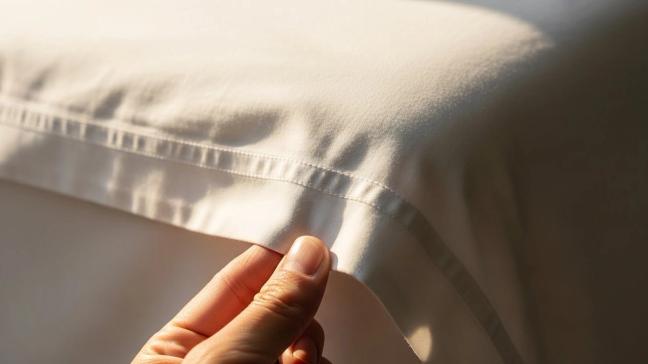
Well-made sheets should age like good leather. They should soften without collapsing. They should look calm rather than tired.
Percale is generally robust. Its plain weave is stable and tends to hold up well. It can take laundering with less drama. It also tends to retain that clean look, which is part of its appeal.
Sateen can be durable too, but it is more dependent on quality. A good sateen weave with strong yarns can last beautifully. A weaker one can show wear sooner, especially where it rubs. If you like sateen, look for careful finishing and a maker with a reputation for consistency. This is not a place for wishful thinking.
Thread count is the statistic everybody quotes, and almost nobody understands. It is also the statistic most frequently used to make ordinary fabric sound heroic.
A higher number does not automatically mean better sheets. It can be inflated by using multi-ply yarns or by counting in ways that are technically defensible and spiritually ridiculous. What matters more is fibre quality, yarn quality, and weaving quality.
In practice, a well-made percale or sateen in a sensible range can feel far better than a fabric that shouts about its numbers. Your hand will usually tell you more than the label. The cloth should feel balanced. It should not feel papery. It should not feel oddly heavy. It should feel like it was made by people who have opinions about finishing and are prepared to defend them.
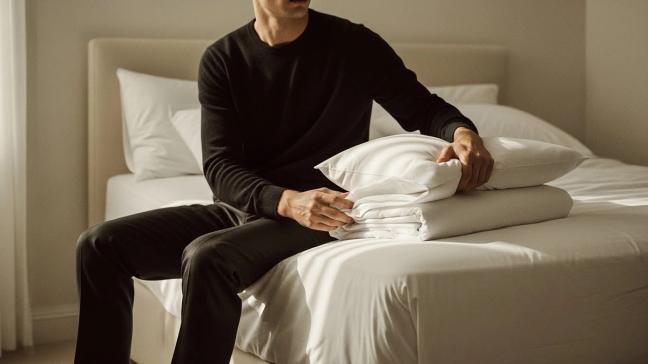
If you want crisp and cool, choose percale.
If you want smooth and cosy, choose sateen.
If you want the best version of either, look for excellent fibre and a reputable maker. Egyptian cotton can be a strong indicator when it is properly specified and honestly used. It should not be the only indicator.
If you are still torn, think about what you notice most when you get into bed. If your first thought is heat, choose percale. If your first thought is texture, choose sateen. If your first thought is that you should have gone to bed earlier, choose whichever one makes you happiest to return to tomorrow.
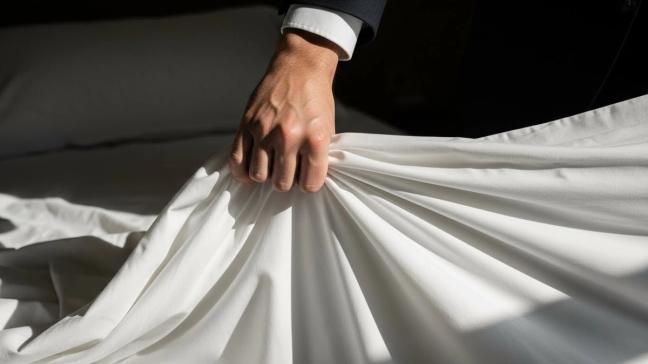
Egyptian cotton is the ingredient. Percale is crisp restraint. Sateen is smooth persuasion. The best choice is the one that suits your sleep, your climate, and your preference for how luxury should behave. Some people want their comfort to feel freshly laundered and efficient. Others want it to feel like a polite indulgence.
Both are valid. The only unacceptable outcome is waking up irritated by your own bedding. That is not character building. That is just an administrative failure.
The same logic applies when choosing the bed itself. We wrote about this in our guide to luxury beds, where the principle is identical. Get the foundation right, then build from there.
To receive the latest in style, watches, cars and luxury news, plus receive great offers from the world’s greatest brands every Friday.