Food & Drink -- 4 days ago

Protein powder is often blamed for weight gain it does not cause on its own. Context matters, particularly overall diet, activity level and intent.
At some point in every man's flirtation with self-improvement, there is a moment in the kitchen with a tub, a scoop and a twinge of anxiety. You have bought the protein powder, perhaps on the stern recommendation of a trainer, perhaps in a moment of late-night optimism, and now you are staring at the label, wondering whether this is nutrition or the first step to becoming the sort of person who outgrows his shirts for all the wrong reasons.
The fear is simple enough. You were trying to get leaner, not accidentally cultivate a soft shake-induced spare tyre. The word protein sounds virtuous. The serving size, however, looks suspiciously like calories, and you are only just on speaking terms with your belt. Hence, the question that appears in search bars with quiet urgency. Does protein powder make you fat?
As with most things in nutrition, the honest answer is both more boring and more liberating than the panic suggests.

When people ask whether protein powder makes you fat, what they really mean is whether they are about to sabotage their efforts by doing what everyone tells them is sensible. It is the same unease that accompanies the first time you drizzle oil on vegetables on purpose, or eat more at breakfast because some weary professional has explained that living on coffee until one o'clock is not a personality trait.
There is also a faint suspicion that anything sold in large tubs with muscular silhouettes on the front must contain hidden powers, most of them malign. Nobody asks whether chicken breast makes you fat with quite the same intensity, despite the fact that, nutritionally speaking, a scoop of decent whey is simply chicken that never bothered with the feathers.
To unwind the anxiety, you have to return to the most old-fashioned principle of all. Not macros. Not timing. Not mysterious metabolic hacks. Simply energy.
For completeness, no, protein powder does not normally make you itchy, although a small minority of people may react to ingredients such as dairy, soy, sweeteners or flavourings, in which case switching brand or protein type usually solves the problem.
Body fat is accumulated energy. It is, biologically speaking, your body’s enthusiastic habit of saving for a rainy day. You gain it when you spend a sustained period taking in more energy than you use, and lose it when you engineer the opposite. It is irritatingly straightforward, which is why so much effort has been expended trying to make it sound more complicated.
Protein powder is not exempt from this arithmetic. It is not enchanted. It does not arrive with a special dispensation from the laws of thermodynamics. A scoop contains calories, usually somewhere between one hundred and two hundred, depending on how generous the serving is and how keen the manufacturer has been with carbohydrates and fats. If those calories push you into a surplus, and keep you there over time, you will gain weight, and a portion of that weight will be fat.
If, on the other hand, you adjust the rest of your intake to accommodate them, or you were previously under-eating, and the powder merely brings you up to what your body actually needs, then nothing terrible happens. In many cases, quite the opposite.
Protein powder does not make you fat. Surpluses make you fat. The scoop is guilty only if it is an accomplice.
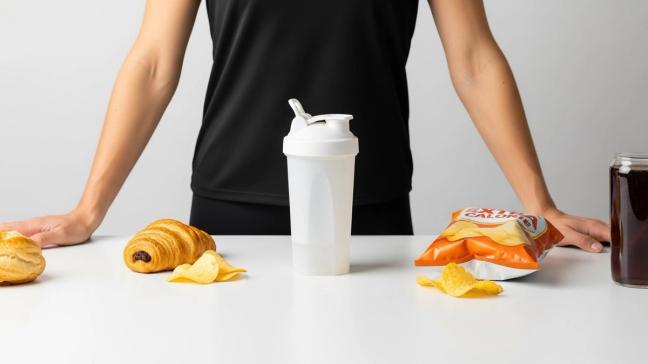
If you had to choose which macronutrient to overindulge in, protein would be the least mischievous.
Gram for gram, protein contains roughly the same energy as carbohydrate, and slightly less than fat, yet it behaves rather differently once you have swallowed it. It is more satiating, which is a polite way of saying that a high-protein meal leaves you less inclined to raid the biscuit drawer half an hour later. It also costs the body more to process. The so-called thermic effect of food, the calories burned simply digesting and assimilating what you eat, is higher for protein than for carbs or fat.
More importantly, when combined with resistance training, dietary protein is what allows your body to add or maintain muscle rather than plundering it for energy whenever you decide you would like to see your jawline again. Studies that bump up protein intake while people lift weights tend to find the same pattern: more lean mass, similar or lower fat mass, often with little change in overall weight. In other words, the scale does not move much, but the mirror becomes kinder.
Even when researchers deliberately overfeed people, giving one group more protein and another something more festive, the high-protein contingent often gains less fat and more lean tissue, despite the extra energy. It is not permission to behave recklessly, but it does suggest that if some part of your diet is going to be excessive, allowing protein to fill that role is less disastrous than letting syrup or crisps audition.
Viewed like this, protein powder is not a lurking threat. It is a particularly convenient way of delivering the one macronutrient least inclined to pad your waistline when used sensibly.
That said, people absolutely do gain fat while using protein powder, and then blame the tub with touching sincerity. The powder’s only crime in these scenarios is being very easy to consume.
Liquid calories are frictionless. They require no chewing, minimal time and even less thought. A large shake can glide past your defences in under a minute and leave you feeling virtuous rather than full, particularly if you have convinced yourself that anything containing the word protein must be inherently corrective.
If your baseline diet already supplies enough protein and energy, and you then add one or two substantial shakes each day without adjusting anything else, you have simply increased your intake. If those shakes are mixed with full-fat milk, embellished with nut butter, oats and other heroic additions, you have perhaps increased it more enthusiastically than you realise. Do this consistently, and the mathematics of energy balance will do what it always does. Your body will store the surplus, and you will blame the most visible new arrival in your routine.
Weight gain powders make this even easier. Many contain five to twelve hundred calories per serving, a figure that would make most restaurant menus blush. They are designed for underweight teenagers and hard gainers who struggle to consume enough food, not for men in office jobs whose primary challenge is resisting the lure of pastries at meetings.
None of this is the powder’s fault. It is a tool behaving as designed. It is simply being used in a context that does not require it.
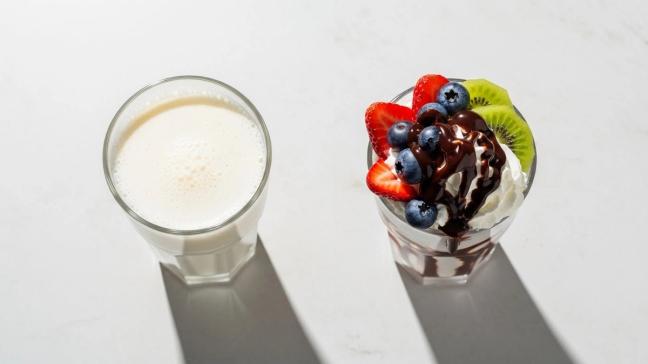
The distinction that matters is whether you are treating protein powder as part of your daily fuel or as a decorative extra.
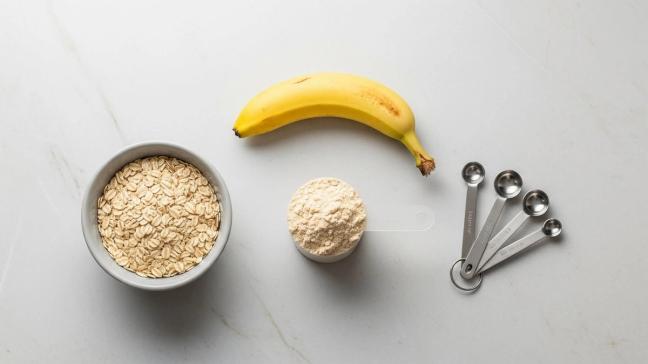
Used sensibly, it replaces or supports existing meals. A scoop in your breakfast oats turns them into a genuinely high-protein meal instead of beige comfort. A shake after training, taken in place of mindless snacking, becomes a tidy way of nudging your totals upward without much culinary effort. A scoop in the afternoon instead of a raid on the biscuit tin is an act of restraint disguised as indulgence.
Used badly, it simply sits on top of everything else you already consume. The pattern usually looks something like this, unchanged meals and habits, plus one or two large shakes “for recovery”, plus a faint feeling of virtue because the new calories arrived in a shaker rather than on a plate. The scale creeps upward, the belt protests and the tub is muttered about as if it had a will of its own.
The solution is embarrassingly practical. If you add a shake, you subtract something else. If you decide breakfast will now include twenty-five grams of protein in liquid form, you have a smaller portion of carbs or fat alongside it. If you are dieting and wish to use a shake as a bridge between meals, you count it in the same way you would count a sandwich or a bar of chocolate. Protein powder is not exempt from accounting simply because it is worn in gym clothes.
There is also the small issue of what you do apart from drinking the stuff.
In people who train, especially with weights, extra protein tends to be partitioned in ways that make aesthetic and health sense. It is used to repair and build muscle, to shore up the lean tissue that keeps your metabolism where you want it and your frame looking purposeful rather than decorative. This is why athletes and lifters can often tolerate surprisingly high protein intakes without any obvious increase in fat, even when the numbers on paper look alarming to the uninitiated.
In people who do not move very much, the picture is less forgiving. If your main form of exertion is animated conversation and your daily steps resemble those of a potted plant, then a large influx of extra calories from any source, including protein, has an extremely limited range of productive destinations. Some will go to support the day’s minimal activity. The rest will be saved for later in a place you cannot help but notice.
Protein powder does not require that you train to be legal. It does, however, deliver its best results when paired with something more dynamic than changing channels. If you want the scoop to help you look and feel better rather than simply tipping you into surplus, you must give your body a reason to allocate those amino acids to muscle instead of storage. That reason is resistance.
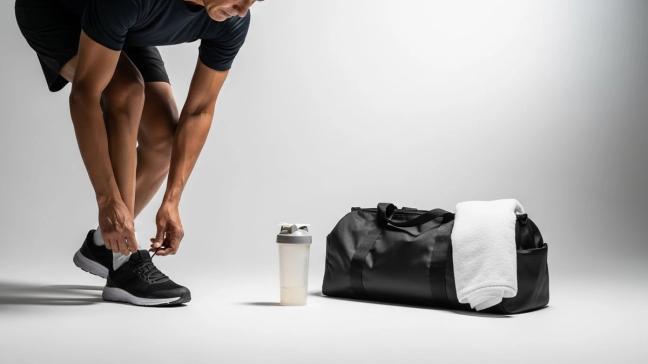
If the aim is to enjoy the benefits of higher protein without drifting unintentionally into fluffier territory, a few unglamorous principles go a long way.
First, know roughly how much protein you actually need. For most active men, somewhere between 1.6 and 2 grams per kilogram of bodyweight per day is a reasonable target. More is not automatically harmful, but once you are consistently above that range, adding still more will not transform you; it will simply crowd out other nutrients or add calories you may not need.
Second, decide what role you want protein powder to play. Is it a convenient way to complete breakfast, a post-training bridge to your next meal, a portable option for travel days when decent food is an abstraction? Or is it an excuse to consume something that tastes improbably like a milkshake and reassure yourself it is “for your gains”? Be honest. One of these approaches will make planning your intake easier. The other will make your tailor richer.
Third, fit the scoop into your existing intake rather than pretending it hovers above it in a moral category of its own. If you have a shake at lunch, you might have a little less rice. If you use a shake as an afternoon snack, you might skip the biscuits that normally accompany your tea. Your daily energy budget does not care whether calories arrived with a bar code that says “supplement. It counts them all the same.
Finally, do what the people in stringer vests actually do when they are not posturing. Train. Lift something heavier than your laptop. Give your body a reason to use the extra protein constructively.
In the end, protein powder is neither hero nor villain. It is dried dairy in a large tub, occasionally flavoured to taste like dessert, occasionally flavoured to taste like punishment. It will not make you fat unless you use it to smuggle extra calories into a life that is already generously supplied. It will not make you lean unless you treat it as part of an overall pattern that favours sensible food, adequate protein and deliberate movement.
Used intelligently, it is one of the simplest tools available for protecting muscle, improving body composition and making a high-protein diet tolerable in the real world. Used carelessly, it is simply an extra drink. Like many things in the modern kitchen, its effect depends less on what it is and more on how you behave around it.
So, does protein powder make you fat?. No. You do. The tub is merely a very efficient way of finding out whether you have been paying attention.
To receive the latest in style, watches, cars and luxury news, plus receive great offers from the world’s greatest brands every Friday.