
Watches -- 3 days ago

Numbers matter, yet context matters more once the testing conditions change. Clarity arrives quickly when comparing COSC vs METAS watch certification, because each standard proves something slightly different.
There is a particular kind of person who will tell you, with the serenity of a man reciting his own blood type, that his watch is “certified”. He may not say what certified means, of course. He may not even know. But he will say it in the same tone one reserves for a good school, a dependable tailor, or a restaurant that still understands the virtue of silence.
Watch certification, in truth, is not romance. It is governance. It is the small, serious machinery behind the small, serious machinery, conducted by people who wear lab coats and have never once been seduced by a polished bevel. They are not here for your feelings. They are here for your seconds.
Two acronyms dominate this administrative landscape. COSC and METAS. They are often spoken about as if one is simply the “better” one, like upgrading your airline seat. But the more accurate comparison is political. One is a venerable examination board. The other is a federal inspection with a clipboard and a slightly raised eyebrow.
If you have ever wondered what you are actually being promised when you see these letters, and why one set tends to inspire more chest puffing than the other, let us get the paperwork in order.

A mechanical watch is a charming anachronism that insists on accuracy while being powered by a spring, influenced by temperature, offended by gravity, and occasionally unsettled by the way you gesticulate during an argument. It is an object that wants to drift, in the same way people do, given enough opportunity.
Of course, if your primary concern is accuracy rather than tradition, a modern smartwatch will outperform any mechanical movement without breaking a sweat or requiring a certificate. But then, nobody has ever called a smartwatch charming.
Modern manufacturing has improved enormously, yet the basic truth remains. If you want a mechanical watch to tell time well, you must regulate it, test it, and confirm that the result is not an accident. Certification is simply an external way of saying that somebody did the tedious part properly, then wrote it down.
This matters for two reasons. First, consistency is hard. Second, marketing departments are creative. A certificate is meant to act as a referee, or at least as a civil servant with a stamp who can make the room go quiet.
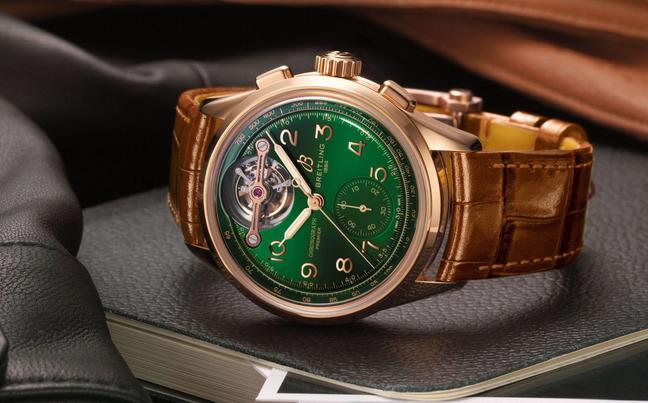
COSC is short for Contrôle Officiel Suisse des Chronomètres. It is the best-known chronometer certification in Switzerland and, in practice, the one most people mean when they speak about a watch being a chronometer.
The important point is that COSC tests the movement, not the fully assembled watch. The movement is sent in without its case, without its dial and hands, and without the everyday indignities of actual wear. COSC then measures how that movement behaves across a structured set of conditions that mimic the challenges of life, at least the tidier parts of life.
Testing runs over multiple days. The movement is checked in different positions because gravity affects the balance and escapement. It is also tested across different temperatures because metals expand and lubricants behave differently when they are cold, warm, or doing that unpleasant middle thing where they cannot decide.
COSC uses defined criteria for rate performance, which is the polite way of saying how many seconds a day the movement gains or loses. For most mechanical movements that qualify as chronometers, the average daily rate must fall between minus four and plus six seconds per day. That range is often quoted because it is simple, but it is not the whole story. COSC also looks at variation between positions, variation over time, and the overall stability of the movement’s behaviour. A movement that is occasionally brilliant and frequently chaotic is not the aim. The aim is disciplined mediocrity that never surprises you. Which, in its own way, is a very Swiss promise.
When a movement passes, it earns the chronometer designation and can be paired with a certificate. Brands may then use that chronometer language in their descriptions, and many do, sometimes with restraint, sometimes as if they have personally negotiated the Treaty of Versailles.

COSC certification is a legitimate indication that the movement was built and regulated to a high standard. It is not a gimmick, and it is not easy to achieve at scale, particularly when brands submit large numbers of movements. Consistency across thousands of units is a form of craftsmanship that does not photograph well, which is precisely why it deserves a degree of respect.
Rolex, for instance, submits every single movement it produces for COSC certification, a commitment that goes some way toward explaining why their watches command the prices they do.
It also offers a useful baseline when comparing watches across different brands. If two movements are COSC certified, you can reasonably assume that both have cleared the same fundamental hurdles. This does not make them identical, but it does mean the conversation is grounded in something other than enthusiasm.
There is also a quiet psychological benefit. Owning a chronometer can make one feel fractionally more composed, as if one’s life has been gently supervised by an institution that believes in standards. This is nothing. It is also not, strictly speaking, timekeeping.
If COSC has a flaw, it is the same flaw as any examination conducted under controlled conditions. People behave well in interviews. So do movements.
Because COSC tests an uncased movement, it does not directly account for what happens once the movement is installed into a watch, sealed up, and subjected to the real world. Assembly tolerances, hand alignment, friction from additional components, and case-related influences can all affect performance. A movement that is exemplary in isolation may be slightly less exemplary once dressed.
COSC also does not, by default, certify broader claims such as water resistance or magnetism. That is not because COSC does not believe in these things. It is because COSC has a job description, and it sticks to it.
This is the part where METAS enters the room with a thicker file.
METAS is the Swiss Federal Institute of Metrology. Its Master Chronometer certification has become one of the most discussed modern standards in watchmaking, partly because it is stringent, partly because it is comprehensive, and partly because it sounds like something that should come with a small brass plaque.
METAS is concerned with the performance of the complete watch. That means the movement inside its case, with its dial and hands, and with the sort of practical vulnerabilities that daily life introduces. It is also structured to address modern irritants, particularly magnetism, which is the invisible menace of contemporary living.
One useful way to think about METAS is that it is not merely asking whether the movement can keep time. It is asking whether the watch you actually wear can be trusted to keep time while being a watch in the 21st century.
Master Chronometer certification involves multiple tests, designed to examine both accuracy and resilience. The watch is tested for rate performance in different positions, but also under exposure to strong magnetic fields. It is expected not only to survive such exposure, but to continue meeting its accuracy requirements afterwards. This addresses a genuine issue since magnetism can cause mechanical components to stick, misbehave, or lose their composure entirely.
METAS also includes attention to functional claims such as water resistance and power reserve. It is not enough, in this framework, for a brand to declare a number. The expectation is that the watch’s stated capability is meaningfully supported by testing. In other words, the rhetoric must be accompanied by evidence. A sobering concept, and therefore not always popular.
The most quoted METAS requirement is accuracy. Master Chronometer certification typically requires the average daily rate of the watch to fall within zero to plus five seconds per day. Note the absence of negative numbers. A METAS-certified watch is not allowed to run slow on average within the permitted range. It may be a few seconds fast. It may not be too late. This is, frankly, the sort of philosophy one wishes more meetings adopted.
METAS certification also tends to come with greater transparency for the owner, depending on the brand, with test results often accessible in some form. This shifts certification away from vague reassurance and closer to documented performance. It is very hard to argue with a document, which is why documents are so beloved by people who enjoy arguing.

The most important relationship between these two standards is that they are not always rivals. In many implementations, COSC is a prerequisite step. The movement meets chronometer criteria according to established standards, and then the complete watch is subjected to the METAS regime.
This is why it is misleading to treat COSC as obsolete. COSC may be the first gate, and METAS may be the second. A brand pursuing METAS is, in many cases, also signalling that it believes its movements can first clear the conventional chronometer bar. Then it invites the federal inspectors in for an additional round.
If COSC is the civil service exam, METAS is the performance review conducted after you have been given the keys and told not to embarrass anyone.
COSC is widely used, long-established, and comparatively straightforward to interpret. It is a recognised benchmark across a broad portion of the industry. That matters because not every brand participates in METAS, and not every watch is designed with Master Chronometer certification as its north star.
COSC also keeps the focus on the movement as a technical object, which appeals to a certain kind of enthusiast. There is a romance, if you insist on it, in the idea of a movement being judged on its own merits, like a musician playing without amplification. You are seeing what the calibre can do when it is not leaning on a broader system.
Finally, COSC has a kind of cultural resonance. The chronometer label has a history behind it. It speaks to marine chronometers, observatory trials, and a time when precision was a national obsession rather than a background expectation. Wearing a COSC chronometer is, in a small way, wearing a tradition of seriousness. It is not loud. It is simply there.
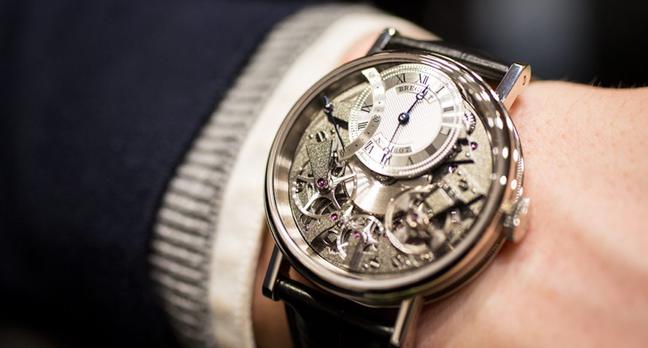
METAS offers a more holistic view. It takes the watch as a finished product and interrogates it accordingly. For an owner, this aligns more closely with lived experience. You do not wear a movement. You wear a watch.
METAS also places magnetism firmly in the centre of modern performance. A watch that can keep time around strong magnetic fields is a watch built for contemporary life, not merely for a display tray. If you work around electronics, travel frequently, or simply live in a world full of devices that hum quietly and radiate unseen influence, this is not theoretical.
The accuracy requirement is also tighter in a way that is easy to appreciate, even if one is not inclined to get emotional about seconds. A watch that is consistently a touch fast is easier to live with than a watch that sometimes runs slow. It is a difference that shows up in daily use, and it reduces the low-grade irritation of arriving “almost on time”, which is not on time at all.
The first misconception is that certification guarantees perfection. It does not. A mechanical watch can be knocked out of regulation by shocks, changes in lubrication, mishandling during servicing, or simply the passage of time. Certification is proof of performance at a certain moment, under a certain set of tests. It is not an oath taken before a judge.
The second misconception is that a non-certified watch must be inferior. Also untrue. Some brands use internal testing standards that match or exceed external ones, and they may choose not to engage with third-party certification for reasons of logistics, philosophy, or control. A beautifully regulated watch can exist without a certificate. A certificate is evidence, not morality.
The third misconception is that METAS is automatically “better” in every sense. It is more comprehensive and often more demanding, yes. But it is also a different proposition. A person may value the movement-focused tradition of COSC, or may simply be comparing watches where METAS is not relevant. The intelligent approach is not hierarchy for its own sake. It is fit for purpose, and a calm understanding of what is being promised.
This is the part where one expects an answer that satisfies everybody. That is not how grown-up choices work, and it is certainly not how watches work.
If you value a widely recognised independent benchmark for movement performance, COSC is meaningful. It tells you that the movement has been tested and found steady under a defined set of conditions. It also tells you the brand has committed to a certain level of discipline in production, because it is one thing to make one good movement, and another to make a great many.
If you value real-world resilience alongside strong timekeeping, METAS is compelling. It speaks to the complete watch, to modern hazards such as magnetism, and to accuracy that is both strict and practically convenient. It is also reassuring in its refusal to be vague.
Many buyers, of course, value both. They like the idea of the movement being proven, then the watch being proven again once assembled. This is not irrational. It is simply the collector’s instinct for redundancy, which is also why there are three umbrellas in the hallway.
Certification is not static because the industry is not static. Brands compete, standards evolve, and institutions respond, sometimes with admirable agility, sometimes with the cautious pace of a committee that has scheduled a discussion about whether to schedule a discussion.
COSC itself has signalled interest in tightening and expanding its standards in the coming years, reflecting the broader trend towards more comprehensive and owner-relevant testing. This is likely to make the landscape more nuanced rather than less. It may also make conversations at dinner parties more intolerable, which is the hidden cost of progress.
For the consumer, this evolution is broadly positive. Better standards encourage better manufacturing. They also encourage more honest claims, which is the sort of thing that keeps civilisation functioning, even if it occasionally ruins a perfectly good brochure.

COSC and METAS are not merely stickers on the case back. They represent different philosophies of proof.
COSC is the enduring chronometer benchmark, focused on the movement, structured, rigorous, and widely understood. It tells you that the heart of the watch has been trained to behave.
METAS is the modern inspection, focused on the complete watch, broader in scope, sterner in its demands, and more aligned with contemporary life. It tells you that the watch as worn has been asked difficult questions and has answered them calmly.
Neither certification will make you more punctual if you remain determined to leave the house five minutes late. Neither will prevent you from checking the time on your phone while wearing a mechanical marvel. But both can provide a particular sort of satisfaction. Not the loud, desperate satisfaction of showing off. The quieter, better kind. The satisfaction of knowing that when your watch ticks, it does so with evidence behind it, and with a faint suggestion that somewhere, in a spotless room, someone with a clipboard approved of it.
To receive the latest in style, watches, cars and luxury news, plus receive great offers from the world’s greatest brands every Friday.