In association with

How the Bowers & Wilkins 800 Series shaped modern sound
As the British audio brand turns 60, we trace the evolution of the speaker that brought studio-grade precision into homes around the world…
- Words by: Gentleman's Journal
Turn it up! Because this year, Bowers & Wilkins is celebrating six decades of sonic clarity and tonal accuracy — and that achievement deserves to be heard properly. The British brand first found its frequency in the years following the Second World War, when Army signallers John Bowers and Roy Wilkins bonded over a shared interest in radio. By 1966, Peter Hayward had joined the workshop, and a small side project designing and building audio equipment evolved into something far more ambitious: B&W Loudspeakers Ltd.
Even in those early years — set against the backdrop of blues-rock, Mods and Merseybeat — the wider world of music production began to take notice. By the end of the decade, Bowers & Wilkins had even appointed a former EMI Records technical manager to its board. But it wasn’t until 1979, with the launch of the flagship 801 loudspeaker, that the speakers were adopted by the legendary Abbey Road Studios — a landmark moment in the brand’s history, with John Bowers personally delivering the first pair.
The 800 Series has become the benchmark for Bowers & Wilkins. With its ability to bring studio-grade sound into the home, it has earned widespread acclaim from engineers and musicians alike. Its exceptional clarity and accuracy have also made the 800 Series the monitor of choice at Abbey Road Studios, where it has helped shape some of the most celebrated music and film soundtracks of the past 40 years. From Raiders of the Lost Ark, Star Wars, Jurassic Park, Spider-Man and Barbie, to recordings by Queen, Oasis, Little Simz, Raye and Ezra Collective, the 800 Series has played a role in bringing some of the world's most iconic recordings to life.

Utilising ground-breaking advancement in the reproduction of True Sound, the company has been able to cascade its technologies, creating a wider product portfolio, from its award-winning reference headphones to in-car audio systems for Aston Martin, McLaren, BMW and Volvo to a custom installation business that sees Bowers & Wilkins as the preferred sound partner for home cinema, outdoor, marine, commercial and hospitality projects.
This cascade of technology and expertise also extends beyond adjacent categories. At the heart of Bowers & Wilkins' loudspeaker business, innovations developed for the flagship 800 Series Signature have been refined and introduced across the 700 Series and 600 Series ranges, making the brand’s renowned performance and engineering accessible to a wider audience. It’s more than a model of speaker — it’s what drives the brand’s pursuit of precision and detail.
Decades on, and that pursuit is more finely tuned than ever, with the excellence of the 800 Series evolving from model to model. In 2025, the team even launched a limited ‘Abbey Road Edition’ of its flagship, the 801 D4, celebrating a special partnership spanning more than 45 years.
But let us not get ahead of ourselves. Because, to fully understand and appreciate the story of one of the world’s most influential and enduring speaker lines, we must rewind back to the beginning — and listen to this high-fidelity history in full…
In 1979, the 801 redefined what a loudspeaker could be


The brief had been clear: create a world-class speaker without the constraints of conventional commercial thinking. And, boy, did the Bowers & Wilkins team deliver. Engineered with scientific precision, the 800 Series began with a bang, with meticulous driver engineering and a highly neutral tonal balance.
Its most radical, revolutionary touch was structural: separating the midrange and tweeter assemblies from the bass cabinet, dramatically reducing unwanted resonance and colouration. When Bowers delivered and demoed that first pair to Abbey Road, it was quickly adopted as a reference monitor in the control room. And, from there, its reputation spread. For home audio aficionados, it offered something rare: the same level of monitoring accuracy used in the studios that shaped records for artists from Pink Floyd to Paul McCartney. And who wouldn’t want a pair of those?
In 1998, the ‘Nautilus’ era reshaped loudspeaker design


Two decades of high-fidelity listening later, and Bowers & Wilkins had proved itself one of the most accomplished names in audio. But just before the Millennium turned, so too did the brand — introducing a new generation of the 800 Series influenced by its experimental Nautilus project, and turning it into more than a speaker. Now, it was a luxury must-have; an objet d’art.
Think dramatically curved cabinets, tapered tube loading and a distinctive tear-drop head design. But it wasn’t styling for styling’s sake. Each curve, every protrusion had an acoustic purpose. Whether it was reducing diffraction, suppressing cabinet resonance or allowing sound waves to disperse more naturally, this was a cleaner, more spatially precise speaker than the market had ever seen. And that design? So iconic, it endures to this day.
2005 saw the introduction of the groundbreaking ‘Diamond Dome’ tweeter


If the 1998 update redefined loudspeaker design, then the 2005 generation revolutionised driver technology. The Diamond Dome tweeter, a major engineering breakthrough, is exceptionally stiff and extraordinarily light, allowing the tweeter diaphragm to remain steady at far higher frequencies than traditional aluminium domes. In layman’s terms, that means drastically less distortion and crisper high frequencies. In short, it sounds good.
Suddenly, records felt more real. Strings more textured, drums tighter, vocals clearer. The 800 Series Diamond was breathing new life into old music, those tweeters teasing out quirks and musical idiosyncrasies that had long since been hidden, lost to lesser speakers. Once again, Bowers & Wilkins had one-upped itself, evolving the range and cementing it as one of the most technically advanced speaker lines in the world.
In 2015, a ground-up redesign introduced a new head and cones
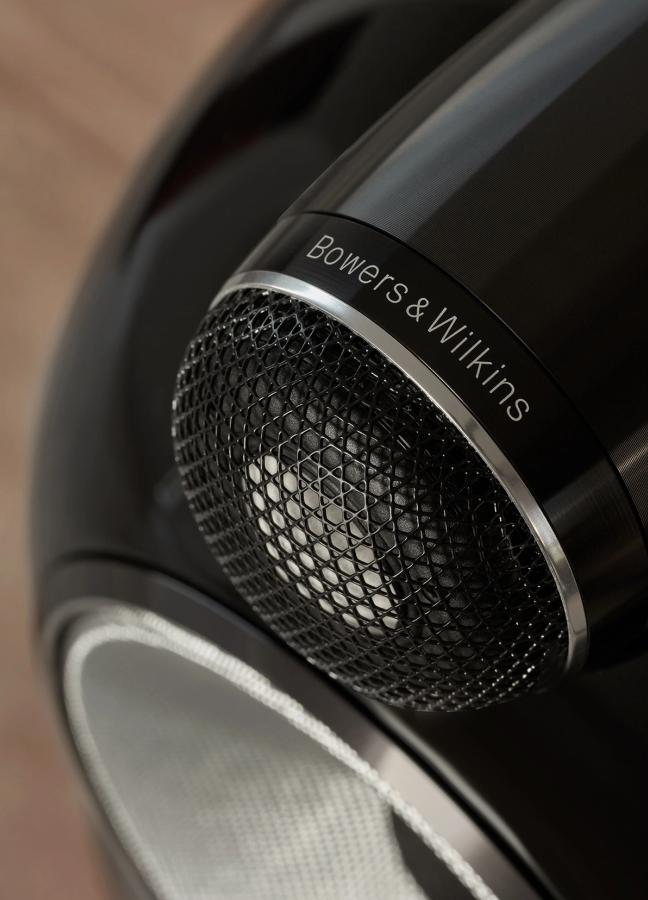
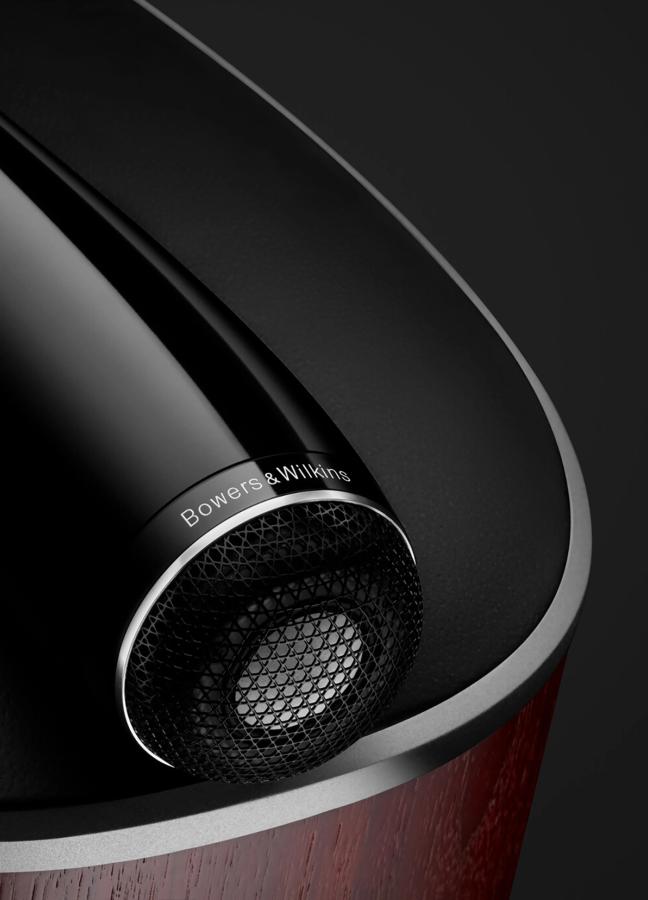
After a decade of development — during which Bowers & Wilkins rebuilt almost every major component of its flagship speaker — the 800 Series Diamond (D3) was unveiled. Its striking cabinet had become more rigid thanks to the brand’s new ‘Reverse Wrap’ construction, while the distinctive tear-drop head was, for the first time, milled from solid aluminium to deliver vastly improved resonance control.
But perhaps the most significant change was the introduction of the ‘Continuum Cone’, which replaced the iconic yellow Kevlar driver that had visually defined the brand for decades. This cone delivered unrivalled midrange performance and startling realism, arriving alongside ‘Aerofoil’ bass cones that, once again, increased stiffness while reducing weight. It was a complete acoustic rethink — one that not only met the demands and expectations of elite recording studios, but exceeded them.
In 2021, virtually every element of the previous speakers evolved
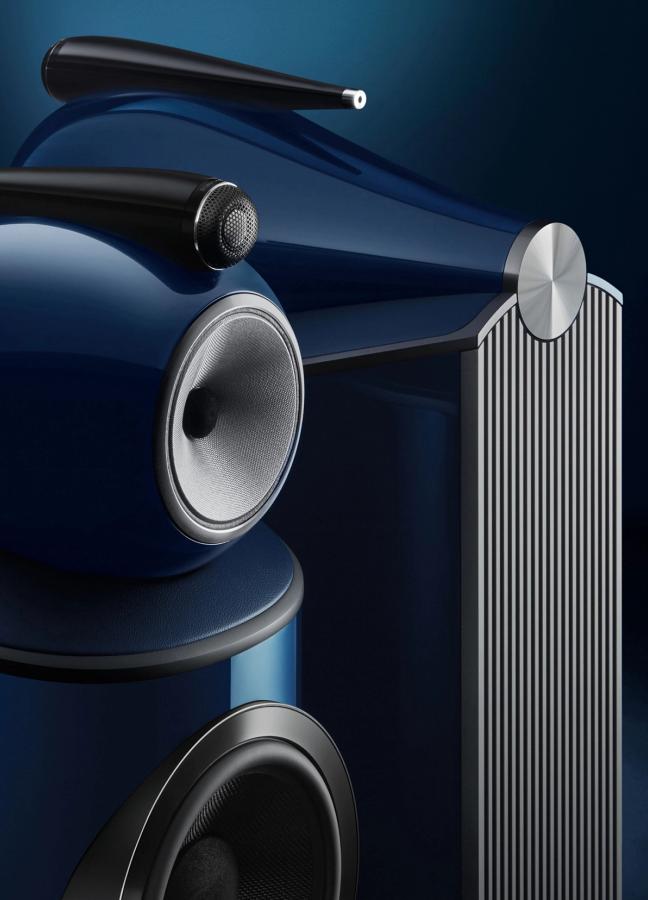
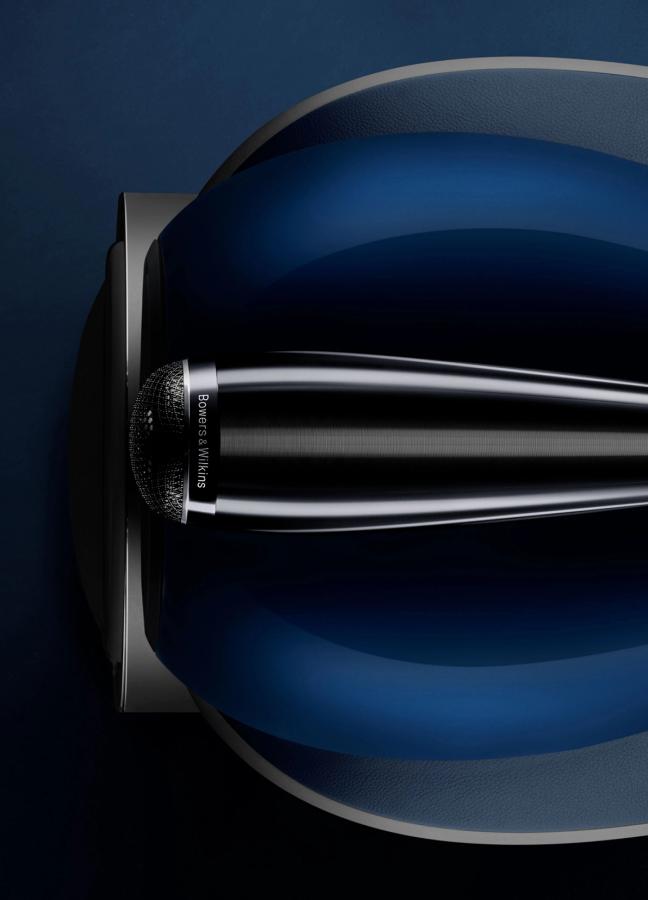
Is anything ever perfect? Not in the eyes — or ears — of Bowers & Wilkins. After more than 40 years of refinement, the brand was still finding ways to enhance and elevate. For the D4 generation, the Diamond tweeter assembly was elongated to reduce resonance even further, while upgraded cabinet bracing and aluminium top plates improved rigidity and minimised vibration. Perhaps subtler improvements than in previous years, but touches and tweaks that combined to keep the 800 Series firmly at the loudspeaker vanguard.
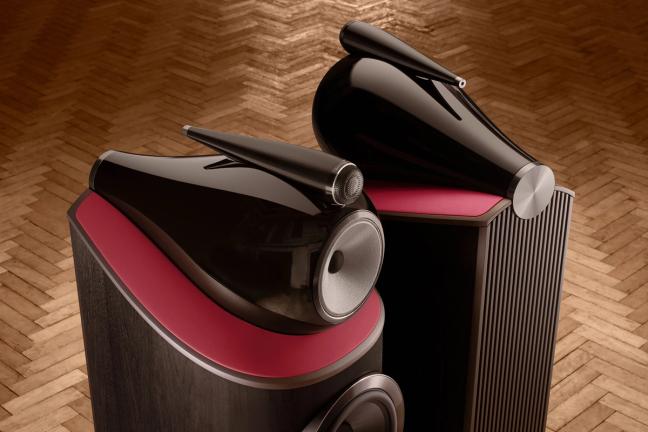
And, over the past five years, the 800 Series has doubled down on its dual identity: as both the pinnacle of professional studio monitoring and the apex of audiophiles’ home set-ups. Decades after the original 801 appeared at Abbey Road, Bowers & Wilkins released a special Abbey Road Edition in 2024, featuring refined cabinet damping, enhanced internal bracing, and acoustic tuning by Abbey Road’s own engineers. A vintage walnut finish and Connolly leather trim paid subtle homage to the iconic recording studio.
In 2026, 60 years of innovation culminate in D5
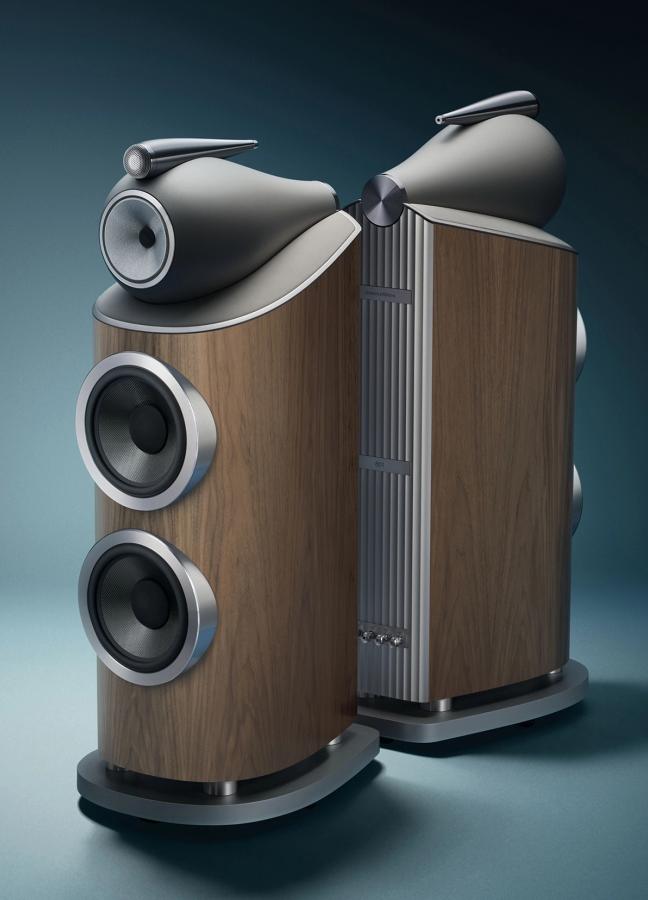
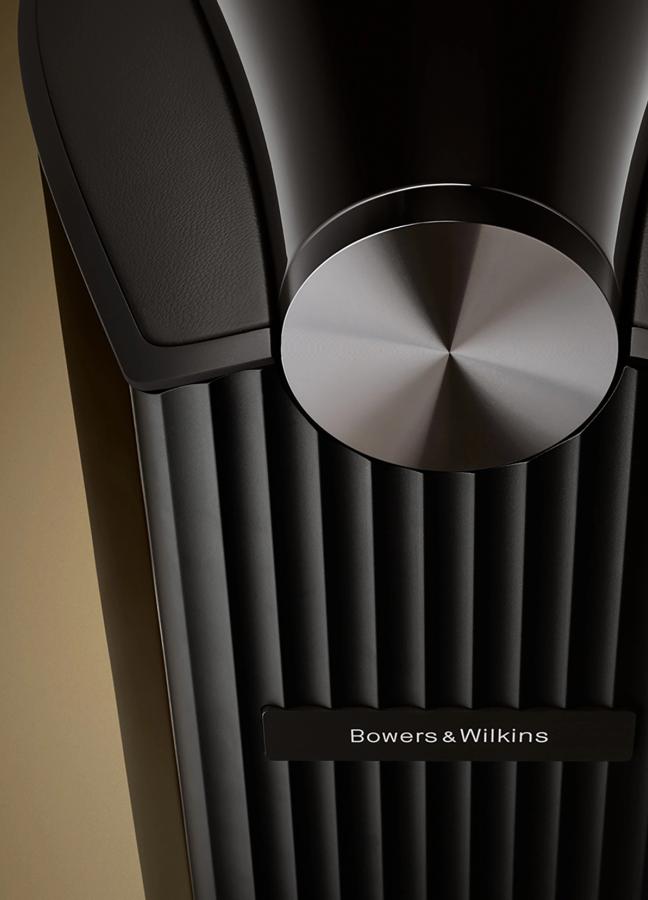
The story of the 800 Series continues in 2026 with the unveiling of the new 800 Series Diamond D5 — the fifth generation of the range to feature Bowers & Wilkins’ acclaimed Diamond Dome tweeter.
Revealed at High End Vienna during the company’s 60th anniversary year, D5 introduces a host of acoustic, mechanical and aesthetic refinements, from new Space Frame Bracing and enhanced Matrix construction to upgraded crossover components and a suite of richly executed finishes. Designed to deliver even lower distortion, greater resolution and a more immersive soundstage, the latest range stands as the most advanced expression yet of founder John Bowers’ enduring ‘True Sound’ philosophy.
Whether shaping records in the studio or filling living rooms with detail and depth, the 800 Series has never stopped evolving — or listening. And after all these years, one thing hasn’t changed: when the music matters, it deserves to be turned up.
The 800 Series is available in 5 main models:
- 801 D5 which currently starts from £43,000 / pair
- 802 D5 which currently starts from £32,500 / pair
- 803 D5 which currently starts from £25,500 / pair
- 804 D5 which currently starts from £16,000 / pair
- 805 D5 which currently starts from £10,000 / pair

Become a Gentleman’s Journal member. Find out more here.