Style -- 9 days ago

Spa treatments work best when they are taken seriously rather than occasionally indulged. Their value lies in restoration, not extravagance, and in the discipline of returning to balance.
At some point in a man’s life, usually around the time he starts taking his lower back seriously, he will be presented with a white robe and a clipboard and asked what sort of massage he prefers. This is a trick question. He will not know. His instinct will be to say that he does not really “do” spas, as though this were a point of principle rather than a lack of experience.
Spas, after all, have been cleverly marketed as the natural habitat of other people. Couples in matching luxury slippers. Hen parties. Mysterious women who appear in breakfast rooms with wet hair and a healthy glow that suggests they have slept properly since 2012. The man in the suit is there to use the gym, order a martini and leave.
Which is a shame, because the evidence now suggests that the man in the suit is precisely the person who should be heading downstairs to the treatment rooms. Spa treatments are no longer the sole preserve of the pampered. They are quietly useful interventions for bodies that sit too much, sleep too little and spend most of the week operating at a gentle simmer of stress.
You do not have to take my word for it. Spend ten minutes in the spa at the Corinthia in London, where ESPA Life has effectively built a Ministry for Relaxation in the basement, and watch the clientele. Lawyers on borrowed time, executives who look as though they have come straight from a board meeting, men who have finally discovered that the only way to make their phone stop is to leave it in a locker and walk toward the pool. They are not indulging a whim. They are, in the driest possible sense, running maintenance.

Modern life, according to any stress researcher you care to consult, is a low-level emergency that never quite switches off. Cortisol ticks along at a raised level, muscles sit half contracted, thoughts race pleasantly enough until three in the morning when they stage a coup. The body is designed for short, sharp bursts of pressure followed by real rest. It has accidentally been given long, dull pressure followed by scrolling.
Spa treatments work, fundamentally, because they interrupt that pattern. Massage, which remains the backbone of most spa menus, is not just someone poking you while whale music plays. Done properly, it lowers cortisol, nudges up serotonin and dopamine, and tells your nervous system in fairly direct terms that it may stand down from red alert. Trials that look at regular massage find reductions in reported anxiety and stress and improvements in mood and quality of life that are surprisingly robust for something that involves lying still under a towel.
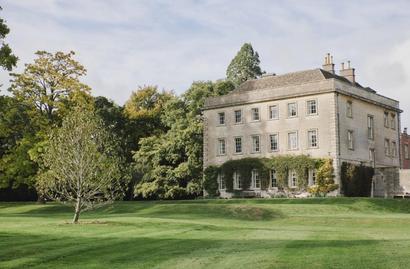
Book a long treatment at Lucknam Park in Wiltshire, for instance, where the ESPA therapists operate with the quiet competence of senior civil servants, and you start to understand why. There is the setting, of course, all avenues and horses and old stone. But there is also the simple, technical business of having knots in your shoulders taken apart by someone who knows what they are doing. Most men do not realise quite how tense they are until an experienced pair of hands locates the precise point where their right trapezius has become a permanent clenched fist. The sensation of that slowly letting go is as close as some will ever get to a religious awakening.
Sleep has become the modern passport stamp of virtue. Everyone claims to want more of it. Very few are prepared to rearrange their lives to secure it. They stay up late with laptops, wake early with phones, then wonder why they feel slightly unhinged by Wednesday.
Here, again, spa treatments have a quietly practical role. There is a reason hotel spa menus are increasingly littered with words such as “restorative”, “sleep” and “deep calm”. Massage before bed improves sleep quality in all sorts of unglamorous studies, from stressed office workers to post-operative patients. It reduces the arousal that keeps the nervous system on a hair trigger and makes it easier to fall asleep and stay there.
At Dormy House in the Cotswolds, where the spa feels like a Scandinavian embassy devoted entirely to your central nervous system, evening treatments are practically designed for this purpose. You emerge from a dark treatment room, move through the thermal suite in a sort of warm, contented haze, and find that by the time you return to your room, you are not thinking about emails. You are thinking about pillows. The result is not a miracle. It is one decent night’s sleep. Repeat that occasionally, and your body thanks you more than it would for yet another heroic workout done half-exhausted.

It is a curious feature of male pride that many will endure chronic, gnawing discomfort rather than voluntarily book a treatment labelled “relaxing”. Knees ache, backs complain, necks crack like old floorboards every time they turn to look at something, and yet the idea of seeing a therapist at a spa still feels, for some, like a bridge too far.
Science does not share this prejudice. Hydrotherapy, hot and cold water, jets and thermal pools, is a straightforward way to reduce muscle spasm and joint pain. Warmth improves circulation, buoyancy reduces the load on joints so they can move through greater ranges of motion, and the combination makes arthritic knees and post-exercise muscles behave less like mutinous staff and more like colleagues.
Places like Galgorm in County Antrim have built entire “thermal villages” around this idea. You wander from hot pool to sauna to steam room to cold plunge with a kind of ceremonial aimlessness and, while you are busy admiring the river or the sky, your body quietly recalibrates. Movement becomes easier, stiffness fades and aches that had started to feel permanent recede. It is not magic, it is heat, buoyancy and time, three things most men rarely apply deliberately to their own skeleton.
Massage plays a complementary role. Deep tissue work, done by someone who understands the difference between “firm” and “sadism”, improves range of motion, eases muscular knots, and genuinely helps with the sort of chronic desk-induced tightness that yoga apps promise to fix and rarely do. Combine the two, and a weekend at a decent spa hotel starts to look less like self-indulgence and more like a physiotherapy programme that happens to be served with herbal tea and views.
Cardiologists are generally not in the habit of prescribing weekends at Carden Park in Cheshire or sessions in the salt saunas at the newly refurbished Cairndale Hotel in Dumfries. That does not mean they would object.
Regular use of heat, in the form of saunas and steam rooms, has been associated in multiple studies with lower blood pressure, improved vascular function and reduced cardiovascular risk. The mechanisms are surprisingly prosaic. Heat causes blood vessels to dilate, improves endothelial function, and triggers mild, beneficial stress responses in the body that, over time, appear to make the cardiovascular system more resilient.
This does not mean you can replace your medication with a series of spa days. It does mean that time spent in a well-designed thermal suite is not purely aesthetic. The sauna at the Corinthia, the herb-scented steam at Lucknam, the infrared cabins at Cairndale, all exist because the hospitality industry has realised that guests will happily spend hours in spaces that make their circulation behave better while also making them feel cosseted. The gentleman may talk of detox. His arteries may instead appreciate the gentle interval training.
Hydrotherapy pools and contrast showers do similar work in a more tactile way, alternately constricting and dilating blood vessels and giving the circulatory system a wake-up call that most office days fail to provide. If you spend the majority of your time sitting down, occasionally standing up to walk to another chair, this kind of deliberate provocation is not the worst idea.

Beyond the biology, there is the almost bureaucratic benefit of spa hotels: they remove you from your own calendar. A treatment forces you to commit, in advance, to an hour during which you are not allowed to answer emails, field calls, or make decisions. It is astonishing how rare that has become.
Check into a place like Dormy House or the spa wing of Galgorm, and you are gently coerced into a different kind of timetable. Breakfast, swim, treatment, nap, dinner. The most strenuous choice you will make all day is whether to sit by the pool or in a hanging chair. It sounds trivial until you realise how much of your usual stress comes from the constant, low-level pressure to decide and respond.
Wellness tourism types talk about “digital detox” and “resetting the nervous system”, which is irritating but broadly accurate. Taking forty-eight hours out of your normal environment, allowing someone else to decide what music plays, what scent is in the room and which sequence of heat and cold your body will experience, is not indulgence. It is a temporary abdication of control, which for most men is harder and more therapeutic than they would like to admit.
Corinthia’s ESPA Life is particularly good at this in the centre of London. You enter from a city that feels as if it is running on caffeine and impatience and descend into a space where everything is suddenly quiet, dark and slow. It is difficult to take your Slack notifications seriously when you are floating in a vitality pool looking at marble.

None of this is to suggest that spa treatments are curative in the medical sense. They will not reverse arterial plaque, cure depression or rebuild cartilage in a weekend. They are not alternatives to medicine, and any venue that suggests otherwise should be treated with the suspicion usually reserved for emails from distant relatives with inheritance opportunities.
What they are, when done properly at serious spa hotels, is a practical intervention in the parts of life that medicine is notoriously bad at managing: chronic stress, poor sleep, low-grade pain, stiffness, and the gradual erosion of calm. They buy you time out of the noise, lower the physiological markers of strain, ease the body's complaints and make it more likely that you will return to your daily life as someone capable of dealing with it rather than someone being slowly ground down by it.
A weekend at Lucknam, with its long drives and competent therapists, or a midweek escape to the thermal village at Galgorm, or a strategic afternoon off in the subterranean calm of ESPA Life, will not transform you. It will, if you allow it, tilt the balance back in your favour for a while. You will breathe more deeply. You will sleep more heavily. Your shoulders will sit lower. Your back will complain less each time you stand.
For a certain kind of man, admitting that he benefits from being wrapped in hot towels and ushered between pools is almost as hard as admitting he needs reading glasses. He will insist that he does not need pampering, that he is “fine”. The sensible response is to nod, book him into a decent spa hotel and let his body deliver the verdict after the fact.
In a world that treats exhaustion as a status symbol and tension as a default, choosing deliberately to be rubbed, steamed, floated and put to bed early is not frivolous. It is policy. And the modern gentleman, if he has any sense at all, will be in favour.
To receive the latest in style, watches, cars and luxury news, plus receive great offers from the world’s greatest brands every Friday.