
Style -- 9 days ago

One is light, quick and quietly corrective, the other richer and more deliberate. Understanding the difference helps you treat your beard according to its mood rather than habit.
At some stage in a man’s beard career, usually once the novelty has worn off and the itch has arrived, he finds himself standing in a grooming aisle trying to decipher the difference between beard oil and beard butter. One promises hydration, the other promises nourishment, both smell vaguely of cedar and confidence, and neither is interested in explaining itself with any clarity.
The result is paralysis. You buy both, apply them at random, and then wonder why your face alternates between feeling parched and feeling like a croissant. This, like so many crises of modern life, is entirely avoidable. Oil and butter do very different jobs. Used properly, they make even a moderately competent beard look considered, deliberate and faintly expensive. Used badly, they simply demonstrate that you own too many products.
Consider this a short briefing from the Department for Facial Hair, explaining who does what, when, and in what order.
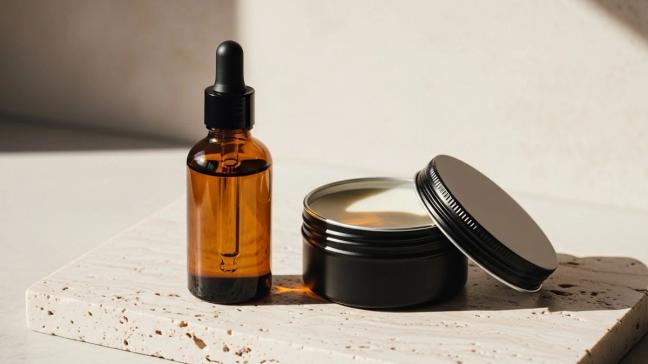
Beard oil is the diplomat of the operation. It is light, quick, and primarily concerned with what is going on beneath the surface rather than on top of it. At a formula level, it is simply a blend of carrier oils chosen for their ability to impersonate your skin’s own sebum, jojoba, argan, grapeseed, sweet almond, sometimes castor or more exotic entrants like abyssinian or babassu.
It is also not remotely new. Men have been anointing their beards for as long as they have had the vanity to grow them. The Egyptians used scented oils and unguents on facial hair as cheerfully as they did on scalps. Greeks and Romans favoured olive and perfumed concoctions to signal status as much as hygiene. In the nineteenth century, Victorian gentlemen relied on macassar like oils to keep whiskers in order, until the safety razor and a brief cultural flirtation with clean chins pushed the habit to the margins. The modern beard revival merely dragged an old idea into better packaging, with barbershops and niche brands rediscovering what ancient barbers already knew, that hair and the skin beneath it behave far better when regularly bribed with oil.
You see the pattern at the plush end of the market. Tom Ford’s Conditioning Beard Oil, for example, uses almond, jojoba and grapeseed as its backbone, then borrows scent from the Private Blend wardrobe, so your chin ends up gently radiating Oud Wood or Tobacco Vanille. Le Labo’s Beard Oil layers sunflower, grapeseed and jojoba under that quietly smug barbershop accord it does so well. Beardbrand’s oils take a more modernist tack with abyssinian, babassu and friends, all aimed at sinking in immediately rather than sitting on your collar.
What these blends actually do is deceptively simple. First, they hydrate the skin under the beard, which is usually dry, slightly resentful and unable to do anything about it. A few drops worked into the roots keep that skin from flaking, itching or staging a coup in the form of beardruff. Second, they soften the hair just enough that it feels like something you could brush against without losing blood. Third, they add a faint sheen and an equally faint scent, suggesting grooming rather than perfume counter incident.
What they do not do is hold anything in place. Beard oil offers approximately as much structural support as a strongly worded email. It prepares, conditions and reassures. It does not style.
Beard butter, by contrast, is domestic policy. It concerns itself less with the state of the skin and more with the behaviour of the beard itself. Where oil is liquid and almost weightless, butter is thick, creamy and inclined to sit on the hair for a while before sinking in.
The base is usually some combination of shea butter and cocoa butter, softened with those familiar carrier oils and sometimes a modest amount of beeswax. Live Bearded’s butters, for instance, lean on shea and cocoa, backed by jojoba and argan. The Beard Baron’s Premium Beard Butter uses coconut oil, shea butter and jojoba, with just enough wax to introduce the concept of discipline without descending into moustache wax territory. Kingsmen and Maestro’s Classic follow similar patterns, butters and oils for richness, minimal wax for soft hold.
The effect is entirely different to oil. Butter gives the hair shaft a deep drink, smoothing over roughness and frizz and making each strand feel thicker and less wiry. It offers just enough control that your beard looks like it has been persuaded into shape rather than allowed to grow in whichever direction it fancied. The finish is low shine, more cashmere than lacquer.
It is, in short, less interested in the skin’s feelings and more in getting the hair to behave itself, particularly once it has reached a length where gravity alone is no longer sufficient.
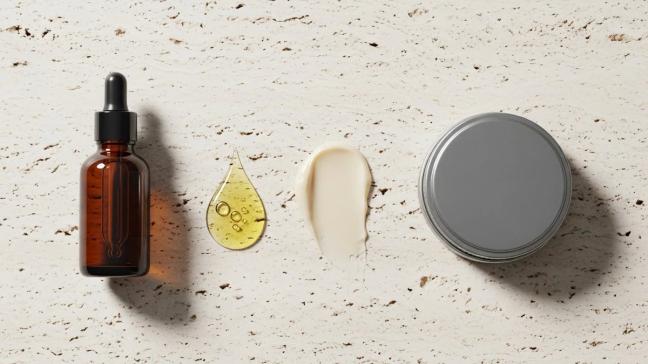
The cleanest way to distinguish the two is to ask a single question, are you trying to fix the skin, or the hair?
If your main complaints are itch, tightness, dryness and flaking, the relevant ministry is the skin. It is not producing enough oil of its own or is being stripped by hard water, soap, winter and poor life choices. Beard oil is the appropriate response. A light blend like Acqua di Parma’s Barbiere serum or a carefully made natural oil from Honest Amish or Beardbrand will sink into the epidermis, calm the irritation and convince your face that growing a beard is not, in fact, a terrible idea.
If, on the other hand, your skin feels fine, but the beard itself resembles a small, angry shrub, the problem is in the hair shaft. Coarse, dry, flyaway whiskers respond better to the heavier emollients in beard butter. A nightly application of something like Live Bearded’s or The Beard Baron’s butter will, over a few days, turn scratchy wire into something approaching human hair.
Most men, being complicated ecosystems, benefit from both. The trick is to assign each to its proper constituency rather than smearing them about with equal enthusiasm and hoping for the best.
If you are the sort of person who dislikes feeling product on the face, this is where your preferences come into play.
Beard oil, when well formulated, feels almost insubstantial. A few drops disappear into skin and hair, leaving only a gentle slip and a hint of scent. Le Labo’s offering, for example, behaves more like a light serum than a traditional oil, and even the richer natural blends from Honest Amish or Live Bearded are designed to vanish within a minute or two if you have not emptied half the bottle into your palm.
Beard butter makes its presence known. Scoop a fingernail’s worth out of a tin of Kingsmen or Suavecito butter, and you will feel the difference immediately, solid at first touch, melting into a creamy film as you warm it between your hands. Once applied, the beard feels coated in a good way, cushioned, less prickly, more substantial. There is a slight sense of hold, of the hairs agreeing to lie in roughly the same direction for the rest of the day, which can be a welcome development if you have been waking up looking like you slept in a hedge.
Think of oil as a tonic and butter as a leave in conditioner. One is a quick diplomatic cable, the other is a full dossier.
Neither oil nor butter is really a styling product in the strict sense, but they occupy different ends of the influence spectrum.
Oil offers virtually no hold. Comb your beard after applying Beardbrand’s Tree Ranger or Tom Ford’s Oud Wood oil, and you will get a softer version of your beard’s natural shape. As soon as a breeze, a pillow or a toddler intervenes, the hair will resume whatever arrangement it prefers. That is not a failure, it is simply not the brief.
Butter has a little more clout. A good butter from Live Bearded, The Beard Baron or Maestro’s Classic will give you enough gentle control to smooth the silhouette, tame strays and persuade waves to behave more like curves than spirals. It will not give you crisp lines or architectural volume. For that you would need a proper balm with beeswax, which is a different conversation entirely.
The sensible framing is simple, use butter to make your beard look naturally well behaved, as if it had simply grown that way because you are a lucky man. Use balm only if you intend to sculpt it like hedging.
Assuming you are not attempting to keep life as simple as possible, the ideal routine is almost boringly straightforward.
Morning is usually the time for oil. After a shower, when the pores are obliging and the beard is clean and only slightly damp, apply a few drops of something civilised, Tom Ford if you like your grooming to double as fragrance, Le Labo if you want to smell like an extremely successful barbershop, or a well made natural oil like Honest Amish if you prefer your products to look as though they might have been made in a respectable shed. Work it into the skin first, then the hair, then comb.
Evening is when butter shines. If your beard is medium to long, or if you live in a climate that seems to be actively trying to desiccate you, take a modest scoop of Live Bearded or Beard Baron butter, warm it thoroughly, then massage it through the lengths before bed. You will wake up with a beard that feels noticeably softer and more compliant, at which point the morning oil has less remedial work to do.
Short beards and stubble can usually get by on oil alone. Once your facial hair starts to qualify as an entity in its own right, butter becomes less of a luxury and more of a peacekeeping force.
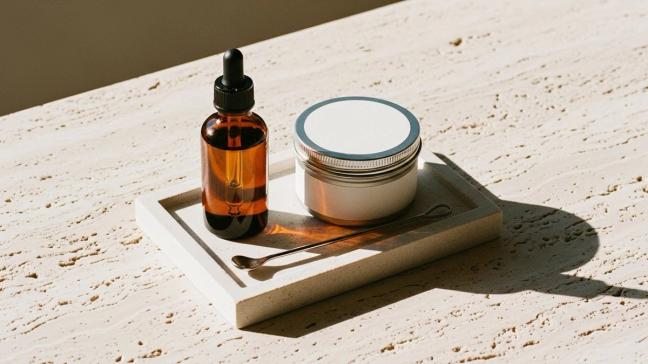
Yes, and if your beard is anything beyond modest, you probably should. The key is order and restraint.
Oil goes first. It is the lighter product, designed to reach the skin. Apply it sparingly, massage it in until the shine dies down, then wait a minute for absorption. Only then introduce butter, focusing on the mid length and ends of the beard rather than the roots. Think of it as layering, moisture and nutrients to the skin from oil, then a richer coat on the hair from butter.
What you must not do is treat both as if they are free. A face slicked with an inch of Live Bearded butter over a puddle of oil will not thank you. Neither will your pillowcases. Start small with each and increase only if your beard genuinely seems to absorb everything almost immediately.
Used intelligently together, the effect is subtle but satisfying, a beard that feels soft at the roots, dense and pliant through the lengths, with just enough shape to look curated rather than accidental.
In practice, most modern beard kits reflect this division of labour. Take a high end set built around, say, Beardbrand or Live Bearded. The oil exists to be used daily, often twice, to keep your skin and shorter growth comfortable. The butter sits beside it, intended for evenings, longer beards and days when you want the whole thing looking fractionally more presentable than usual.
Luxury houses join in from their own angles. A man might reasonably keep an Acqua di Parma Barbiere serum and a Le Labo beard oil for hedonic weekdays, then pair them with a more straightforward butter from Kingsmen or Maestro’s Classic when the weather or his beard demands heavier reinforcement. The names change. The principles do not.
Even mid tier offerings, Suavecito’s beard butter, Every Man Jack’s shea heavy creams, operate on the same logic. Oils are bottled elegance, butters are tinned pragmatism. It is entirely possible to mix and match across brands, as long as you pay more attention to texture and function than to label design.
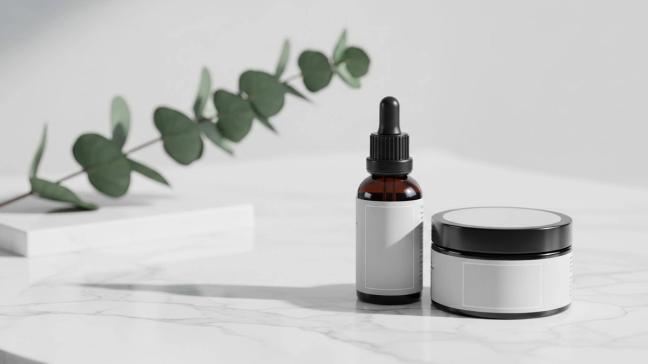
So, beard oil vs beard butter.
Beard oil is the light, charming emissary that keeps your skin and shorter growth civilised. It hydrates, softens and adds just enough scent and sheen that your beard looks like a choice rather than a side effect.
Beard butter is the slightly heavier handed administrator that makes the hair itself behave. It feeds, smooths and gently steers medium and long beards into a more flattering shape, without turning them into waxed sculptures.
You can live perfectly well with either in isolation if your beard is modest and your expectations are realistic. Once you are dealing with something more substantial, using both in their proper roles ceases to be indulgence and becomes simple competence.
The modern gentleman does not need a bathroom that resembles a small branch of a grooming retailer. He needs one good oil to keep the peace beneath the beard, one good butter to keep order within it, and the discipline to use them with more regularity than drama. The rest, as in so many matters, is just packaging.
To receive the latest in style, watches, cars and luxury news, plus receive great offers from the world’s greatest brands every Friday.