Why Peugeot’s limited-edition 205 Lacoste was the ultimate serve
Lançado por ocasião do Open de França de 1984, este citadino desportivo tinha alcatifa verde, pintura em branco-ténis e muito espaço para as suas raquetes
- Texto de: Jonathan Wells
- Fotografia: Peter Singhof
Em 2021, a Peugeot patrocinou o Open de França pela última vez. A marca automóvel tinha sido a principal parceira do torneio durante mais de três décadas – uma relação iniciada em 1984 – antes de finalmente pôr fim à parceria. Durante esse período, o fabricante francês lançou dezenas de modelos associados ao ténis. Em 2011, foi o 308 CC Roland Garros. Em 1995, o 306 Roland Garros Cabriolet, em Grand Slam Green. E, numa fase anterior da parceria, o elegante mas simples 205 Open, de 1988.
Mas o primeiro foi o melhor. Isto porque a Peugeot, para assinalar o início do acordo de patrocínio em 1984, juntou outro dos parceiros de Roland-Garros à equação automóvel, dando origem ao Peugeot 205 Lacoste.
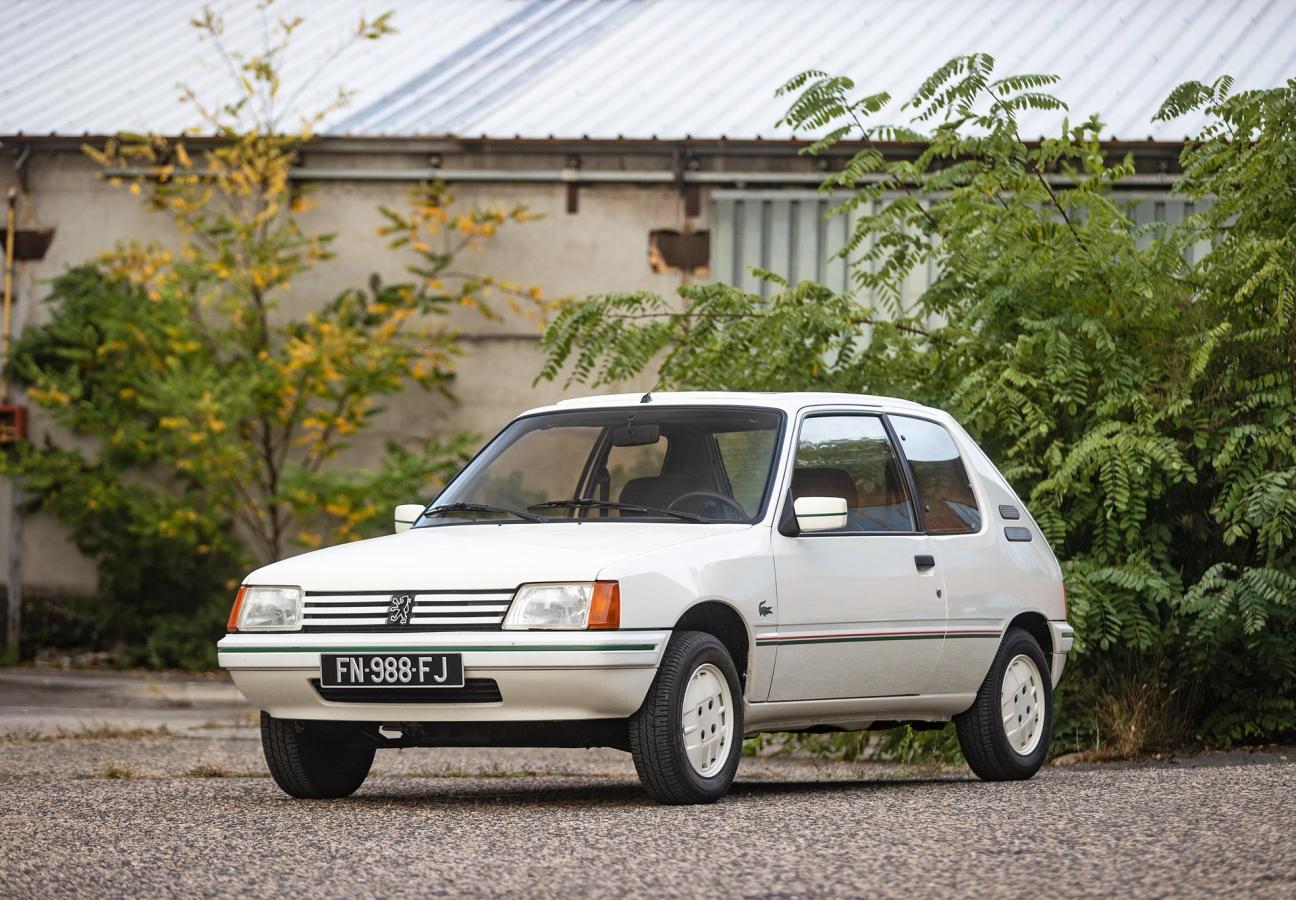
Era uma parceria natural: uma casa de moda francesa a ajudar um fabricante automóvel francês a celebrar uma instituição desportiva francesa. E o 205 era o carro perfeito para a ocasião. Quando a Peugeot lançou o seu duradouro utilitário, em 1983, a empresa estava à beira da falência — mas o pequeno 205 conseguiu conduzir a marca de volta aos lucros. Ainda assim, a Peugeot receava investir demasiado dinheiro numa dispendiosa edição limitada, pelo que planeou produzir apenas 1.000 modelos com a marca Lacoste.
O que fez o 205 Lacoste de diferente?
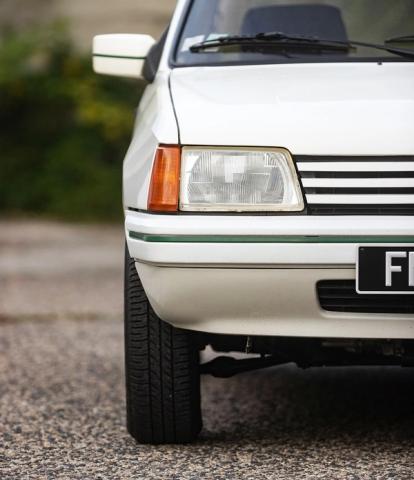
Ainda assim, o fabricante não poupou esforços. Com uma pintura tão imaculada como o mais impecável equipamento branco de ténis da época, o 205 Lacoste trocou as jantes de alumínio por tampões da cor da carroçaria e pintou até o painel canelado traseiro no mesmo tom de Branco Meije, digno de entrar em campo. As molduras laterais de série foram substituídas por filetes decorativos vermelhos e verdes, enquanto faixas totalmente verdes e ligeiramente mais espessas adornavam os para-choques e os espelhos retrovisores exteriores.
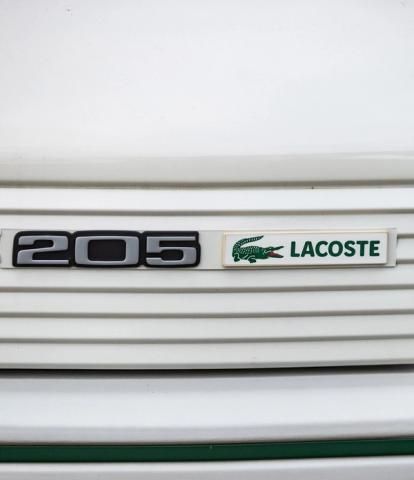
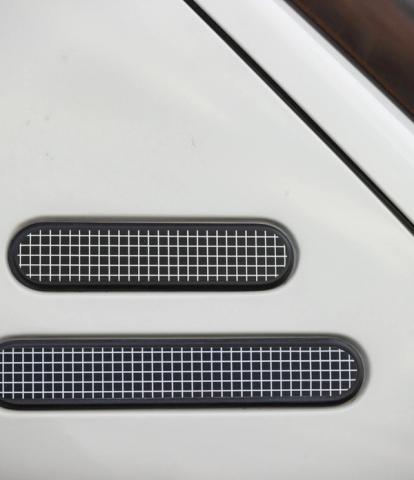
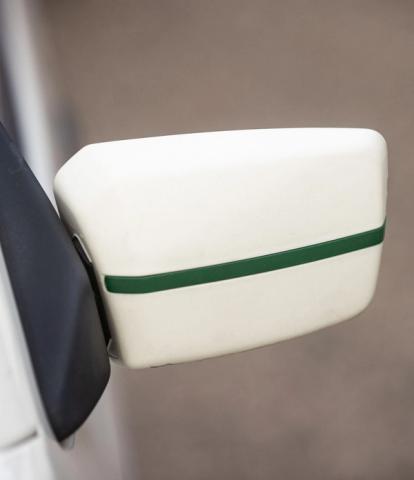
The front wings and back badging also featured the famous Lacoste crocodile, a logo that was first drawn in 1927, but had been given a major redesign – to more closely resemble the icon we know today – just months before the 1984 tennis tournament took place. Meanwhile, the sunroof overhauled the car’s existing design by almost doubling its dimensions (to 0.3 m²) and creating what the marque called “a new category between the traditional car and the convertible”.
«É o carro dos vencedores», acrescentou a Peugeot aquando do lançamento do 205 Lacoste. «O carro que dá nas vistas sem dar nas vistas; o que continua a ser a verdadeira definição de elegância e desportivismo.»
What did Lacoste bring to this limited-edition 205?
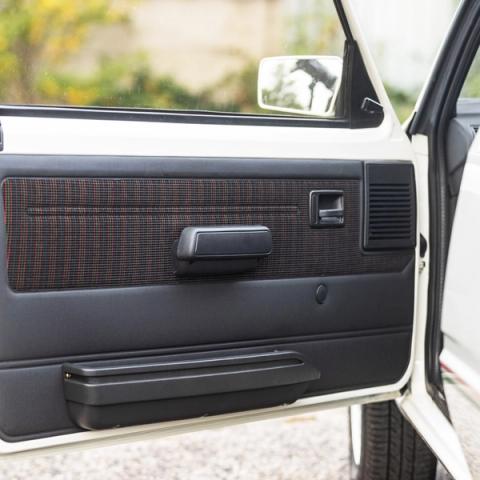
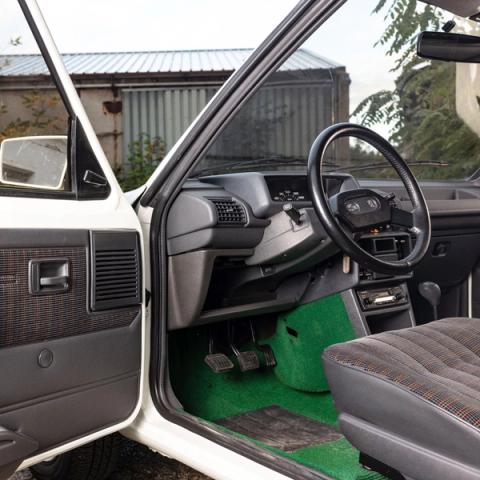
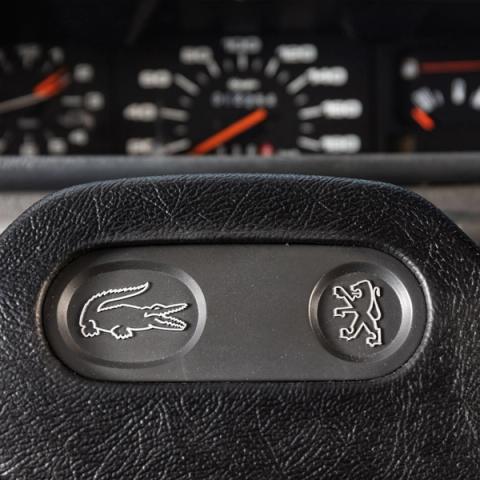
The Lacoste-trimmed interior stands testament to this claim. The seats and door cards were lined with velvet and bore patterns that resembled tennis nets (a similar-but-monochromatic motif could be found on the C-pillar details). The floor was carpeted in a grassy green textile, and the two-spoke steering wheel – covered in leather and borrowed from the 205 GTI – saw Peugeot’s lion and Lacoste’s crocodile sit side by side. Even the gear knob markings were inlaid with a vivid, sport-appropriate green.
The car also featured state-of-the-art electrics, including power windows and central locking (although there was no rev counter in the instrumentation, there was, instead, an analogue clock). The engine itself generated 60hp and, mated to a five-speed synchronised gearbox, delivered a top speed of 155 km/h and could do 100 km/h in 14.8 seconds from a standing start.
How many 205 Lacoste models were built?
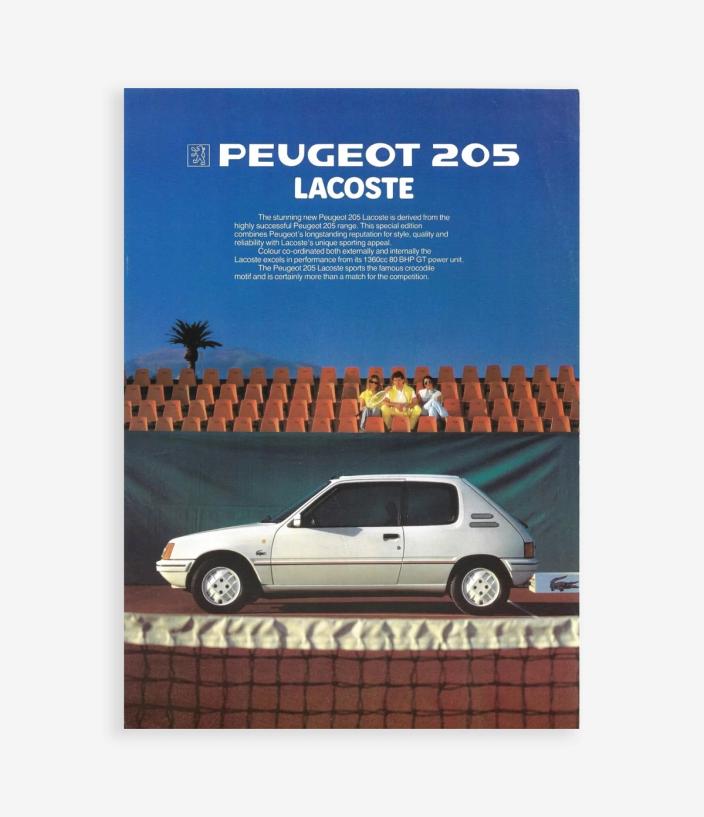
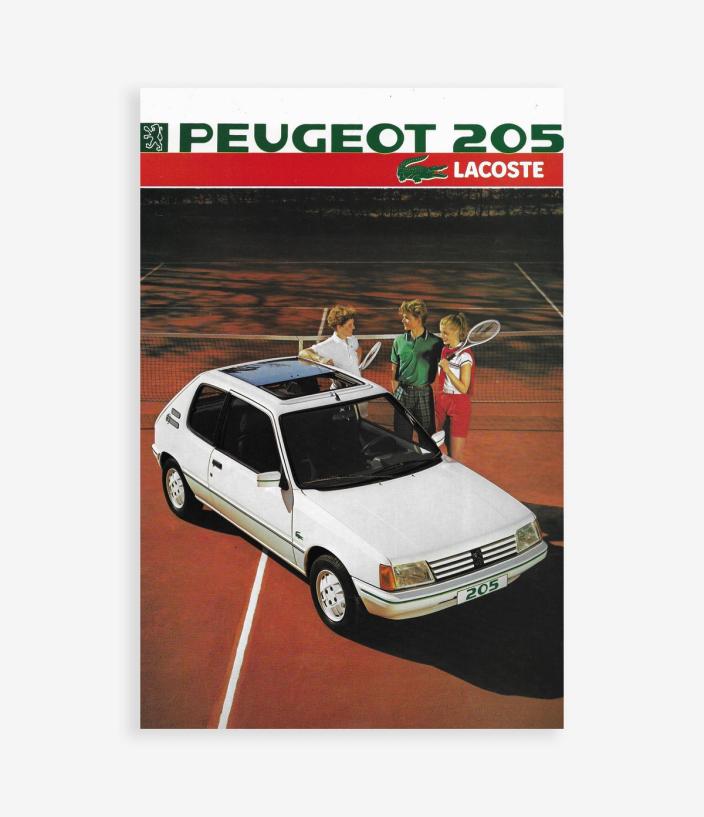
In 1984, the 205 Lacoste was only available as a five-door. But, as its popularity grew, Peugeot introduced a three-door version in 1985, also upping production to 8,000 cars. By 1986 – the final year the 205 Lacoste was offered – 15,000 models were rolled off the production line. In total, 24,000 of the cars were built – a large run for a limited-edition, but still under 0.5 per cent of the total 205 model run (5.2 million).
Today, few examples of the 205 Lacoste remain. In fact, there are estimated to be fewer than ten still road-worthy in the UK – one of which, fittingly, resides in Wimbledon. These days, Roland-Garros is sponsored by another French manufacturer, Renault, which itself unveiled a limited-edition 5 E-Tech Roland-Garros earlier this year. But nothing beats the original tennis team-up: a smash-hit from Peugeot and Lacoste on the very first attempt.
- Imagery courtesy of Artcurial Motorcars
Want more stylish motoring collaborations? Here’s why the Cadillac Seville ‘Gucci Edition’ is the most stylish car in history…
Outras leituras

As novas regras para se vestir no outono, segundo a New & Lingwood
Carro da semana: dê as boas-vindas ao Jaguar Type 01, o carro que fez cair a Internet