Gear -- 3 days ago
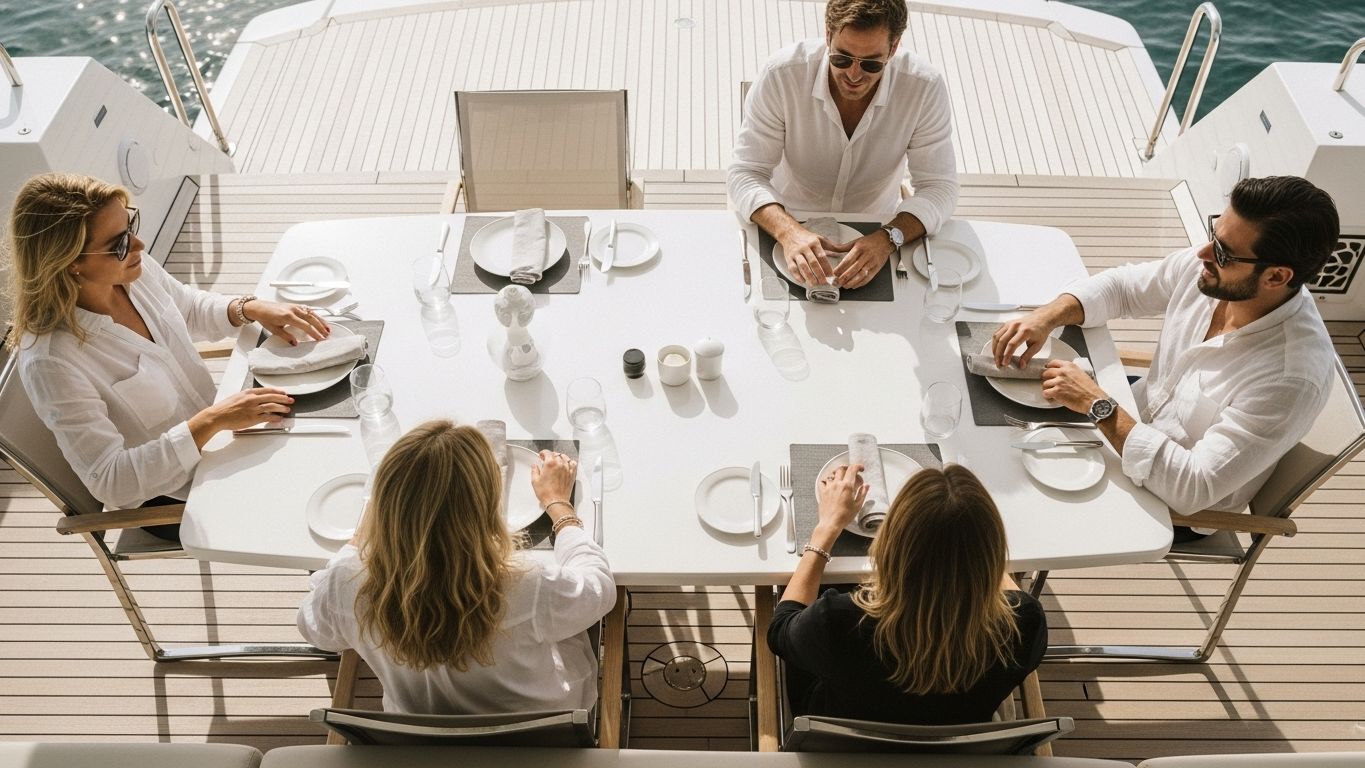
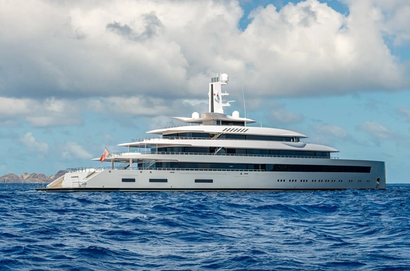
A yacht is not a floating hotel, it’s a working vessel with a rhythm you ignore at your peril. Follow that rhythm and yacht etiquette rules become less about formality and more about not being the guest everyone remembers.
A yacht has the same social physics as a country house. The spaces are beautiful, the details are deliberate, and the people who run it are professionals who have seen every form of human behaviour, including yours, on a more humid day. Step aboard with the wrong energy, and you can make the whole thing feel cramped, even on a vessel the size of a small hotel. Step aboard with the right one and the week becomes effortless. Your drink appears. Your towel is always dry. You look calm in photographs. You also avoid becoming a story the crew tells later.
Yacht etiquette is not about pretending you were raised at sea. It is about understanding that a boat is both a home and a machine. It has rhythms, rules, and limits that land does not. Water gets everywhere. Wind humiliates hairstyles. Glass travels. Doors slam. Privacy becomes a shared resource. The clever guest behaves as though they belong without behaving as though they own the place, which is a distinction our culture has been trying to teach people for several centuries with mixed results.
Whether you are joining friends for a day cruise, boarding for a charter, or visiting a serious owner who has quietly made the Mediterranean their second sitting room, the principles remain the same. Be safe. Be considerate. Be neat. Be grateful. Everything else is garnish.
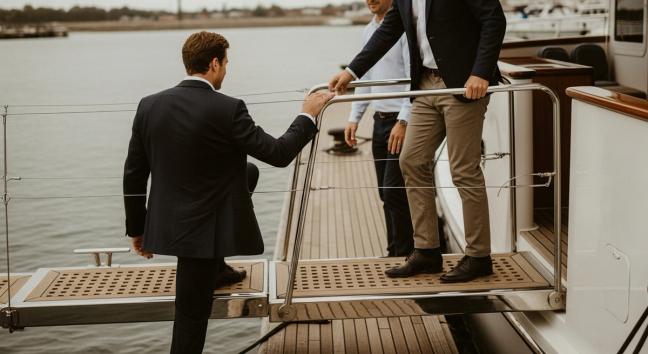
Arrive on time. A yacht runs to weather, tides, marina rules, and a schedule that is often tighter than it looks. If you are late, the entire day can shift. It will not feel dramatic. It will feel annoying.
Keep your luggage civilised. Soft bags are the move because hard cases scrape, thump, and take up space. A small duffel or holdall works. Something from Tumi or Globe-Trotter feels appropriate. Rimowa looks beautiful and behaves like a battering ram in tight corridors, so save it for airports.
When you step aboard, greet the crew properly. A simple hello and a name go a long way. Crew are not background furniture. They are the reason the week works. Treat them as professionals, and you will be treated like a grown-up.
Listen to the briefing. Safety instructions are not optional, and they are not a personal insult. The sea does not care about your confidence.
The fastest way to look inexperienced is to bring the wrong shoes. Many yachts operate with a shoes-off policy on deck, or they ask for soft soles that will not mark. Dark rubber soles are notorious. High heels are rarely welcome, and not only because they can damage teak. They are also a superb way to discover how quickly dignity can leave the body when the deck moves.
If you want to get it right, pack clean deck shoes, espadrilles, or soft loafers with light soles. Leave anything heavy and rigid onshore. For evenings ashore, a neat loafer from Crockett and Jones or Church’s can work. On board, keep it light and quiet. Nobody is impressed by footwear that sounds like it is arriving at a board meeting.
Also accept the unromantic truth. Boats are lived in. Sand is the enemy. Salt is a permanent guest. Rinse when asked. Dry when told. The deck crew are not being fussy. They are saving you from a week of gritty surfaces and sulky maintenance.

Yacht style is about ease. Not sloppiness. You want clothes that breathe, fold, and forgive. Linen is charming and creases in a way that suggests you understand life. Cotton and light knitwear behave well, too.
For swimwear, keep it tailored and not juvenile. Orlebar Brown is a classic for a reason. Vilebrequin is more playful, but still adult when chosen carefully. Avoid slogans. Avoid novelty prints that look like a dare.
Daywear can be simple. A crisp polo. A relaxed shirt. A light overshirt. Sunspel does the sort of pieces that look good without demanding attention. Loro Piana and Brunello Cucinelli deliver the quietly luxurious version, but you do not need to dress like an Italian catalogue. You need to dress like someone who knows when to stop.
Evenings on board tend to be business casual unless the host says otherwise. A clean shirt and good trousers are usually enough. If you want a jacket, choose something unstructured that moves with you. Keep fragrance discreet. Salt air amplifies everything, including your taste in perfume.
Cabins are private spaces and also surprisingly compact. Unpack neatly. Keep your things contained. If you treat the cabin like a hotel room, you can destroy without consequence, the boat will punish you with clutter and lost items, usually when you need them most.
Ask before adjusting the air conditioning or changing settings. Many yachts have systems that balance the whole vessel. Your personal comfort is important. It is not the only comfort on board.
Do not wander into crew areas unless invited. Those spaces are workplaces. Privacy runs both ways. If you need something, ask. The crew will handle it faster and better than you will.
Also, remember that water is finite. Long showers can be possible. They can also be inconsiderate, depending on the yacht and itinerary. If the crew mention water use, take the hint with grace.

The best guests are clear and polite. They are not timid. They are not bossy. They do not treat the crew like servants. They do not treat crew like new friends who must be auditioned for charm.
If you want something, ask once and ask properly. If you have preferences, share them early and calmly. Dietary needs. Coffee habits. Seasickness tendencies. The crew can plan around information. They cannot plan around a surprise.
Respect service flow. If the steward is setting a table, do not rearrange it like you are styling a photoshoot. If the chef is plating, do not hover. If the deck crew are working with lines and fenders, stay out of the way. Boats have moving parts, and they do not negotiate.
Privacy matters too. They are friendly because it is part of the job and because most are genuinely good at it. It does not mean they are available for late-night emotional debriefs. Keep it professional. Keep it kind.
Food on a yacht can be glorious. It can also be delayed by weather, tender schedules, and the fact that a galley is not a restaurant kitchen. Be appreciative. Be patient. If you want something complex, give notice.
Alcohol is where etiquette collapses for many people. Sun, sea, and Champagne create confidence. Confidence creates volume. Volume creates regret. Pace yourself. Drink water. Eat properly. Nobody wants a guest who turns a yacht into a stag weekend.
Glassware is a small detail with big consequences. Use what the crew provide. They choose it for safety and stability. Do not carry drinks while moving around at speed. Do not take glasses near the waterline unless invited. A broken glass on deck becomes everyone’s problem, and barefoot guests will discover this lesson quickly.
If you smoke, ask. Many yachts have strict rules. Cigars are often confined to specific areas because ash and wind are a dreadful combination. If you bring cigars, choose something elegant rather than aggressive. A Davidoff can feel like good manners. Keep lighters under control. Salt air and upholstery are not sentimental.

Always know where you can and cannot go when the yacht is moving. Keep hands clear of doors and hatches. Hold rails when using stairs. This is not a theme park. It is a vessel.
If the crew ask you to sit during manoeuvres, sit. If they ask you to wear a life jacket for water sports, wear it. If they tell you not to swim because of currents, do not swim. People argue with the sea once. The sea always wins.
Children need special attention. A yacht can be wonderful for them. It can also be full of edges, ladders, and tempting dangers. Keep supervision active. Do not assume the crew are babysitters. They will help, but the responsibility remains yours.
Seasickness is not shameful. It is chemistry. If you are prone, bring medication and tell the crew early. They can adjust routes and advise on the best spots to sit. The worst etiquette is insisting you are fine, then becoming an emergency.
Water toys look carefree. They are managed equipment with rules and risks. Wait for the crew’s instructions. Follow them. Do not improvise. Do not take things without asking. Do not leave the kit scattered like you have been living on the deck for years.
Tender trips require patience. Step carefully. Sit where told. Keep weight balanced. Hand luggage should be minimal and soft. If you are carrying something fragile, tell the crew. They will secure it properly.
Onshore, remember you represent the boat and the host. Marina staff notice behaviour. Restaurant staff notice behaviour. Other yachts notice behaviour. Be charming. Tip sensibly. Do not argue about bills in public. If you have concerns, raise them quietly with the host or the broker, depending on the setup.

Tipping expectations vary by context. Charter culture differs by region and by arrangement. The cleanest move is to ask whoever arranged the trip what is customary. Then follow that guidance without drama.
If you are not the charterer, do not announce tipping like you are distributing medals. Gratitude is best delivered quietly. A personal thank you to the captain and heads of department is always appreciated. A short note is unexpectedly powerful because it is rare and it feels human.
If you want to go a step further, small, thoughtful gestures can work. Favourite snacks. A good coffee. A box of something from Fortnum and Mason if you are UK-based. Keep it tasteful. Keep it simple. The crew have seen every attempt at generosity. The best ones look like consideration, not performance.

Yacht etiquette rules exist for the same reason good tailoring exists. They create ease. They stop small things from becoming big things. They allow everyone to relax into the experience rather than fighting it.
Arrive on time. Pack like you understand space. Dress like you respect the setting. Treat crew as professionals. Keep the boat tidy. Take safety seriously. Drink like an adult. Do these things, and you will not just be a good guest. You will be the guest who gets invited back.
Which, in the end, is the only review that matters.
To receive the latest in style, watches, cars and luxury news, plus receive great offers from the world’s greatest brands every Friday.