Skip to content
21.08.2026
Issue No 27
By Gentleman's Journal

Los cinco mejores descapotables de todos los tiempos

  1. Mazda MX-5
  2. Saab 900 convertible
  3. Alfa Romeo Spider
  4. Jaguar E-Type Roadster
  5. Mercedes SL ‘Pagoda’
Joseph Bullmore
Words By Joseph Bullmore

Last month, a report from the Society of Motor Manufacturers and Traders announced that sales of convertible cars in the UK have plummeted over 90% in the past twenty years. Cue Richard Hammond popping up on Times Radio to decry the decline and the replacement of the convertible with the “autonomous, Tupperware boxes that you order from your smartphone, and they take you where you want to go.” Equally to blame as sentient luncheon-ware, however, seems to be the tend for SUV style cars as the final status symbol, instead — the likes of the hulkish Lamborghini Urus becoming the apex appendage as opposed to the sleeker, chicer roadsters of the past century. This seems to me a shame. The wind in one’s hair is one of the true feelings of modern freedom, even if, as is often the case with convertible owners, one happens to have no hair at all. To celebrate this dying breed, then, here are the five greatest convertibles of all time.

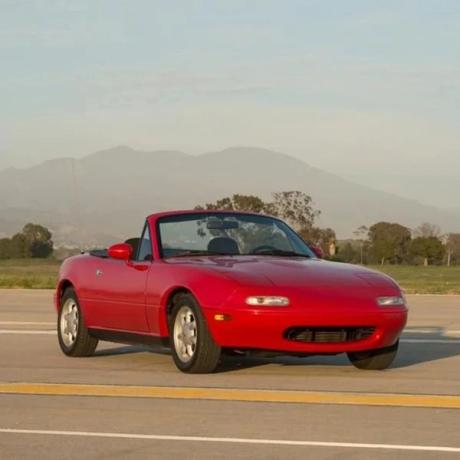
1. Mazda MX-5

The MX-5 is the best-selling two-seater convertible of all time, with over a million units sold. The cars have become an international symbol of affordable, approachable escapism, with a tank-like reliability that defies their slim, slight, low-cut form. The model first came about after motoring journalist Bob Hall was asked by Mazda’s head of research in 1976 what sort of car the company should make next. “I babbled about how the simple, bugs-in-the-teeth, wind-in-the-hair, classically-British sports car doesn't exist any more,” he said, years later. “I told Mr. Yamamoto that somebody should build one inexpensive roadster.” And so they did. The final car, first released in 1989, was created under the Japanese design credo Jinba ittai, meaning "unity of horse and rider”, and MX-5s do indeed command a rightful loyalty, an almost telepathic connection, from their owners. In America, the car is known as the ‘Miata’, which derives from the Old German for ‘reward’. It is a pleasing quirk of globalism that the great prize of the late American century should be made in Japan.

Mazda MX-5

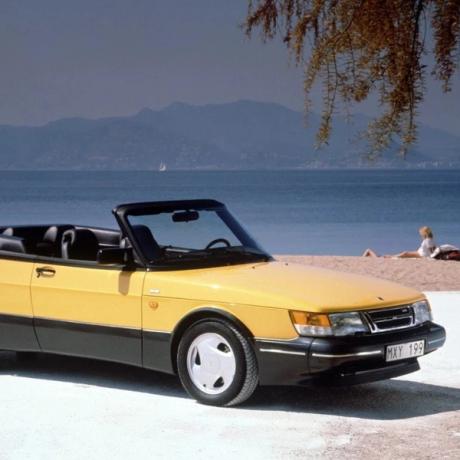
2. Saab 900 convertible

I am biased here, because I myself have a (creaking) Saab 900 cabriolet in black over tan. Its first owner was one Sir Christopher Foxley Norris, a former WW2 fighter ace, who bought it in 1989 near Henley-upon-Thames in his retirement. Saab, of course, began its life as a maker of jet planes, and the Saab 900 had the most curved windscreen of any production car at its time of launch in a nod to the aerodynamic cockpits of yesteryear. So it's pleasing to imagine Sir Christopher in his dotage returning to the sky-high thrills of his youth in this humble, lovely, beautiful car. For a time in the 1990s the 900 Cabriolet was known as the favoured purchase of architects after they’d got a big commission — objects of distinctive bold design and a certain Scandi chic that appealed to spectacled aesthetes. Our motoring editor Rory FH Smith wrote a great homage to the 900 Cabriolet in 2021, beginning: “for a nation engulfed in darkness for half the year and founded on strict Scandinavian sensibilities, a Swedish-made convertible sounds like the punchline of a bad joke.” But one does find oneself smiling often in the handsome cockpits of these singular cars.

Saab 900 convertible

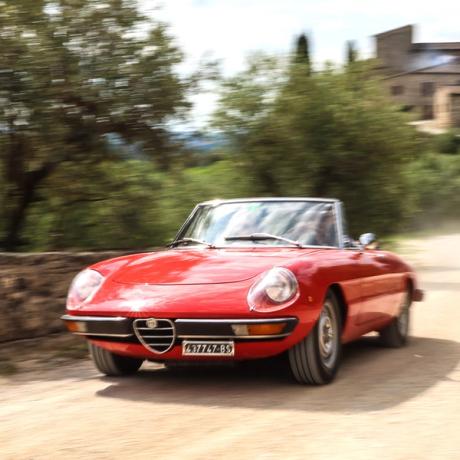
3. Alfa Romeo Spider

La entrada de Philip Seymour Hoffman como Freddie Miles en El talento de Mr. Ripley es uno de los grandes momentos del cine moderno: el chirrido de los neumáticos al pie de la escalinata de la plaza de España, las palomas que alzan el vuelo, el traje claro, el jazz estridente. Entonces se incorpora de un salto, se sube a la puerta de su descapotable escarlata y baja al adoquinado para acudir al almuerzo con el contoneo más ridículo, maravilloso e inconfundible, repartiendo besos en las mejillas, mirando con descaro a los transeúntes y bebiéndose de un trago una copa fría de franciacorta. Y el coche en el que llega está indisolublemente ligado a la hermosa insolencia de esa personalidad: el desesperantemente poco fiable, absolutamente precioso, ligeramente alocado y perfectamente italiano Alfa Romeo Spider; en el caso de Freddie, concretamente el modelo Giulietta. No podría haber hecho esa misma entrada en un Rolls-Royce ni en un Mustang. «¡Ciao bello!», grita el hombre desde el otro lado de la plaza. «Come stai?» Muy bien, Freddie. Muy bien.

Alfa Romeo Spider

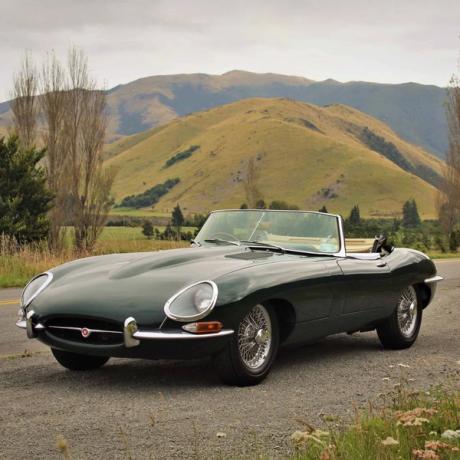
4. Jaguar E-Type Roadster

Enzo Ferrari called the E-Type “the most beautiful car ever made” when it was unveiled at the Geneva motorshow in 1961, and pretty much overnight the convertible ‘Roadster’ version became an almost sexual icon of the swinging sixties, of Cool Britannia, and of the new jet-set. Frank Sinatra demanded to buy one instantly, followed in short order by Brigitte Bardot, Peter Sellers, George Harrison, Princess Grace of Monaco, Elton John (in a ‘hot red’ colourway), and Steve McQueen, who used it for his personal transport in the US while filming Le Mans. Aesthetically, there is something both elegant and aggressive about the E-Type Roadster, like a gorgeous, sleek shark — that outrageously long hood, a low and louche stance, and the flowing, sensuous rear lines.

Jaguar E-Type Roadster

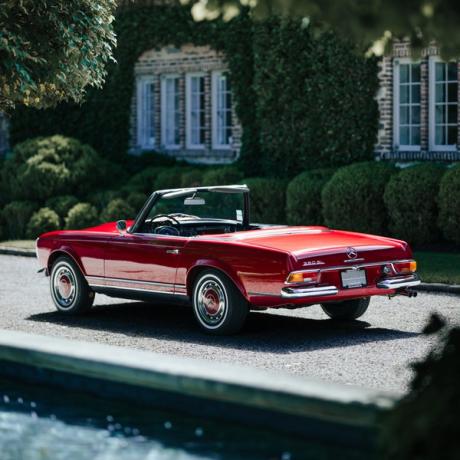
5. Mercedes SL ‘Pagoda’

El curioso apodo «Pagoda» de la emblemática versión de los años sesenta de la gama Mercedes SL surgió del techo ligeramente cóncavo del coche, diseñado por el legendario Paul Bracq, cuya forma recordaba a la inclinación de las pagodas asiáticas tradicionales. Pero era al retirar por completo el techo rígido cuando el coche cobraba verdadera vida: una atractiva combinación de líneas suavemente curvadas, preciosos faros oblongos tipo «pecera» y una parrilla delantera de hermosa sencillez, presidida por una estrella de Mercedes de gran tamaño. Según el importador Max Hoffman, quien propuso por primera vez el modelo a la marca, era un coche diseñado específicamente para «despertar el deseo», y conquistó a todo el mundo desde el primer momento: tuvieron uno John Lennon, Nico Rosberg, Stirling Moss, Julio Iglesias, Gene Kelly, Kate Moss y Walt Disney. Considerado hoy un icono no solo del diseño automovilístico, sino también de la estética del siglo XX en general, es un coche que combina libertad y diversión quizá mejor que ningún otro.

Mercedes SL ‘Pagoda’