«¿Me estás hablando a mí?»: estas son las 5 mejores películas de Martin Scorsese
Ante los rumores de que The Life of Jesus ha quedado en suspenso, saciamos nuestras ganas de Scorsese haciendo balance de las mejores obras que el autor nos ha brindado a lo largo de casi seis décadas de éxitos en la gran pantalla
- Texto de: Tom Ward
Last year, Martin Scorsese returned to the big screen in a big way with his 26th feature film, Killers of the Flower Moon. Adapted from New Yorker journalist David Grann’s superb non-fiction book of the same name, Killers details the murder of the Osage Nation, a Native American tribe who, after finding oil on their land, are systematically and horrifically murdered by white men looking to cash in.
With Scorsese regulars Robert De Niro and Leonardo DiCaprio appearing in their tenth and sixth film for the director, respectively, Killers is seen as a late-career masterpiece for Scorsese, who is now 81. But, with an adaptation of another David Grann book – The Wager, a true story of an 18th-century shipwreck – and The Life of Jesus – the Andrew-Garfield-starring film that was meant to start shooting this October – allegedly in the pipeline, there’s still a lot to look forward to. In the meantime, let’s have a look back at Scorsese’s best work to date.

Image: Getty
En una filmografía de 26 películas (y eso contando solo los largometrajes), muchas obras excelentes han tenido que quedarse fuera. Aunque son buenas, sus películas religiosas (Kundun; La última tentación de Cristo; Silencio) y sus obras independientes ambientadas en Nueva York (El color del dinero; Al límite; ¡Jo, qué noche!) no llegan a estar entre sus mejores trabajos.
We’ve also neglected most of his collaborations with DiCaprio. Sure, The Departed finally won him an Academy Award for Best Picture, but it’s difficult to justify a position among the very best of his oeuvre. Likewise, The Wolf of Wall Street, while a masterpiece, and thematically keeping with the greed on display in Scorsese’s latest, doesn’t depict the bloody violence of American life the way the director’s best five films do. And, should this be a top ten, Raging Bull and The King of Comedy would be assured.
En resumen, no nos mencionéis.
Malas calles, 1973
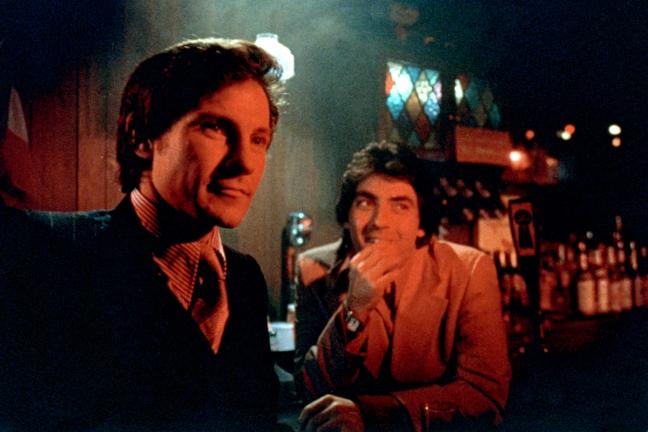
La tercera película de Scorsese, una historia inspirada en los delincuentes callejeros con los que creció, es donde realmente encontró su voz. También supone su primera colaboración con Robert De Niro, quien, en el papel del bromista y autodestructivo Johnny Boy, interpreta un personaje sin parangón en el resto de su carrera.
Los personajes de De Niro suelen tener un sentido del humor seco en las películas de Scorsese, pero aquí Johnny Boy rebosa una alegría atormentada y abocada a la perdición. Sin embargo, Harvey Keitel es el alma de la película en el papel de un gánster de poca monta que trata de conciliar su posición en una sociedad criminal con sus obligaciones hacia Johnny Boy y sus convicciones religiosas. El propio Scorsese había estudiado para ser sacerdote en su juventud y aquí combina a la perfección sus dos grandes temas —la religión y el crimen— en una película que se precipita rápidamente hacia el caos.
El irlandés, 2019
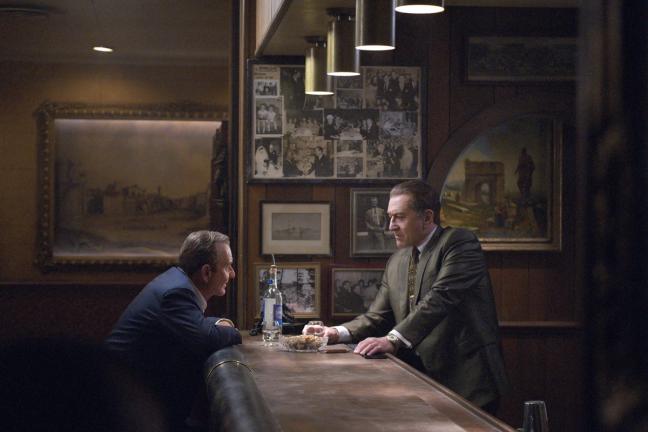
In The Irishman, Scorsese gives us a little bit more, asking us to go along with De Niro’s mobster (Irish, this time) as he looks back on a life of crime, including the murder of his best friend, teamster leader and associate Jimmy Hoffa (Al Pacino), in 1975. Whereas Casino, Mean Streets and even The Godfather end the story with the closing credits, here, Scorsese keeps the cameras running for a full three hours and 29 minutes to show us not just the highs but also the lows of the criminal life, including once-powerful men suffering strokes and prostate cancer, and the lone survivor left with his ghosts as he picks out his own casket.
Si El irlandés no te convenció cuando se estrenó, dale otra oportunidad. Es la menos glamurosa de todas las películas de gánsteres de Scorsese, pero, al apoyarse en todo lo anterior, posiblemente sea la más importante.
Los asesinos de la luna, 2023
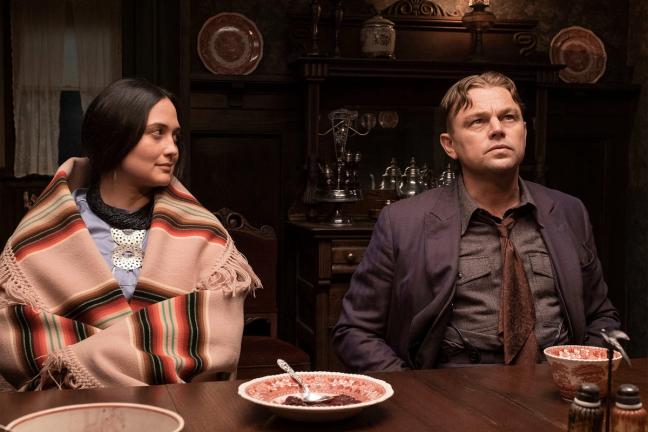
Algunas de las mejores interpretaciones de Leonardo DiCaprio han sido bajo la dirección de Scorsese, especialmente en «El aviador» y «El lobo de Wall Street». En «Los asesinos de la luna», opta por una interpretación más contenida del no muy inteligente (pero imperdonablemente malvado) Ernest Burkhart, que conspira con su tío, William Hale (un De Niro en plena forma), para asesinar a miembros de la tribu osage.
Killers is a film that broods with quiet menace; rarely are Hale’s plans stated explicitly – it’s all inference and what isn’t said that sets things in murderous motion. As Burkhart’s wife, Mollie, Lily Gladstone helps centre the film in the plight of the Osage, even if she’s given little to do for the final third of its extensive runtime. Waves of essays have been written on this film, but, without giving too much away, it is beautifully shot, costumed and set-designed, and serves as a tragic – if, at times, unexpectedly funny – accounting of the horror that white men bestow on native people the world over. For a lesser filmmaker, this would be their finest work. For Scorsese, it remains a thunderous achievement.
Taxi Driver, 1976
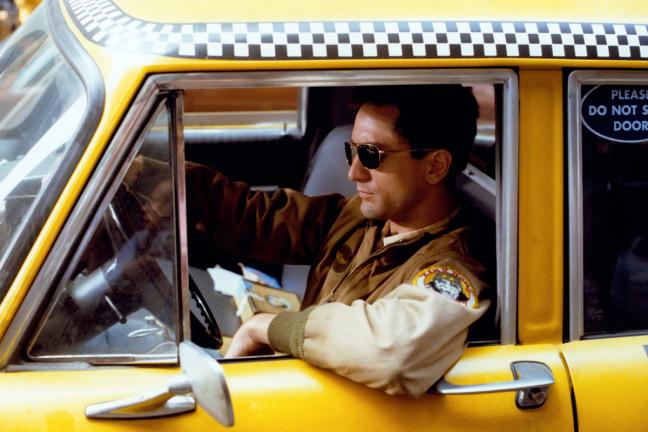
Following Mean Streets, the studio wanted more from Scorsese and De Niro. Along with Raging Bull, Taxi Driver is arguably their most iconic pairing. With Travis Bickle, a lonely, sleepless cab driver with an urge to assert his value by cleaning up what he sees as a cesspool New York, Scorsese and De Niro created the prototype angry young man.
Bickle domina cada plano en el que aparece, destilando una sórdida energía de «derechos de los hombres» e «incel» décadas antes de que se acuñaran esos términos. El enfrentamiento final, en el que rescata a una Jodie Foster de 12 años de una vida como trabajadora sexual, prácticamente predijo la conspiración del Pizzagate al presentar al chiflado de derechas como un héroe desquiciado. Sigue siendo objeto de debate si el final no es más que el último sueño de gloria de un moribundo. Pese a toda su brutalidad y fealdad, Taxi Driver es una película de una belleza increíble, especialmente por cómo retrata la Nueva York nocturna (su principal paleta visual), y su montaje, fotografía y ritmo siguen funcionando casi 50 años después. Al igual que El lobo de Wall Street, esta película debe tomarse como una advertencia.
Goodfellas, 1990
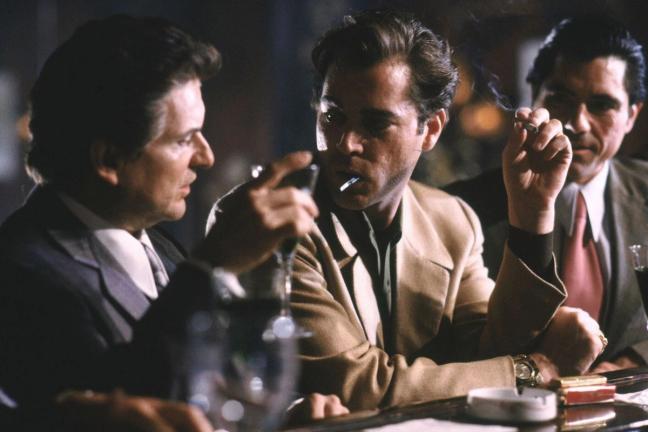
The Sopranos, The Godfather and Goodfellas – when it comes to the mob on screen, this is arguably the holy trinity. While the three share a lot of New York actors, Goodfellas belongs to De Niro who, as a middle-aged, mid-tier mobster, has the job of keeping everything together, even as the ambitious Henry Hill (Ray Liotta), the neighbourhood kid turned drug pusher, threatens to f—k it all up.
Desde la voz en off hasta el plano secuencia del Copacabana, pasando por el «¿Gracioso cómo?» de Joe Pesci, el cameo de la madre de Scorsese durante el desayuno, la escena del ajo en prisión y el largo y paranoico día de Hill entre albóndigas, pistolas y helicópteros, Uno de los nuestros es sencillamente insuperable. Derrocha estilo, ofrece asesinatos truculentos pero cargados de humor negro y desprende una energía que no decae ni un instante. Los colores, el reparto, la fotografía, la banda sonora: es Scorsese a pleno rendimiento tras casi dos décadas y media de carrera. 34 años después, aún no la ha superado… de momento.
Want more big-screen content? We look back at Sir Michael Caine’s best roles…