Previous Issue
Issue 24
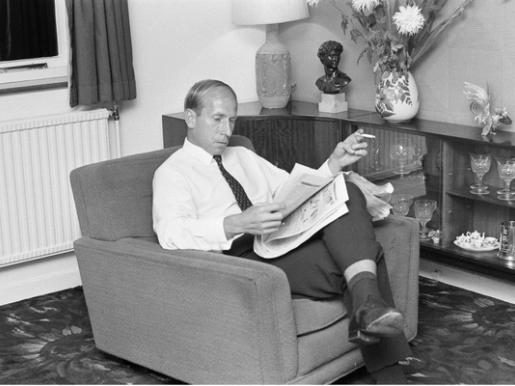
Five World Cup-Winning Smokers
Some of football’s greatest World Cup icons shared one unlikely habit: smoking.
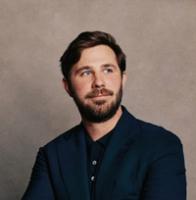
Anthony Bourdain, who has just been immortalised all over again in sizzly A24 film ‘Tony’, had a tattoo on his forearm quoting the writer Michel de Montaigne: “I Suspend Judgement.” The cook-turned-writer meant judgement about other people, of course, wherever he happened to encounter them. “In the breaking of bread, he found a way to close the distance between himself and strangers the world over,” Patrick Radden Keefe once wrote. But when it came to food, his judgement was entirely unsuspended, thrillingly present — spicy, salty, laced with a strange combination of gallows humour and high philosophy. He made you yearn again for the lost prawn brains you’d never had; crave even the purple Czech blood sausage with its “touch of nutmeg; its notes of sweetness, longing and death.” And that was just a Tuesday. When Bourdain discussed his most beloved dishes on the planet, things got positively rapturous. Here are five of those.
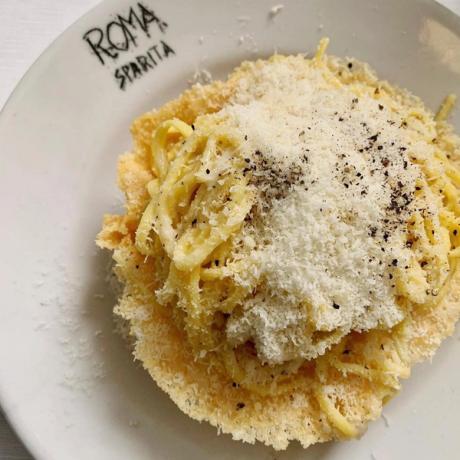
During an episode in season six of ‘No Reservations’, Bourdain visited Roma Sparita in the Trastevere neighbourhood of Rome and ordered their signature cacio e pepe, one of the four traditional Roman pastas. After one bite, he said: “I’m sure this is illegal somewhere.” After two: “this could be the greatest thing in the history of the world.” Realising what he had encountered, he tried to conceal the identity of the trattoria, branding it ‘Restaurant X’. But pretty much straight away the word got out, and queues now form daily in the little square by Roma Sparita — an example of the tension Bourdain felt in the work he did, that act of “killing what you love.”
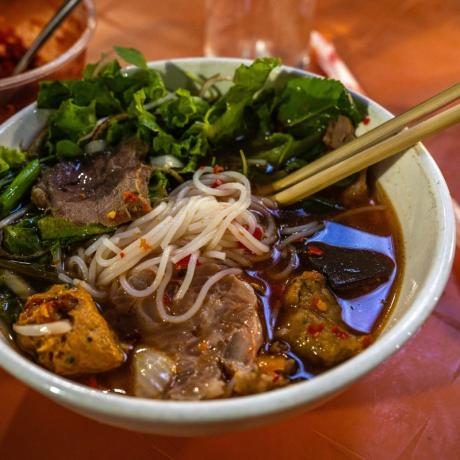
Bourdain’s recipe for happiness was simple. “Low plastic stool, check. Tiny little plastic table, check. Something delicious in a bowl, check.” He might also have added ‘a former President’, after being memorably joined at a shaky plastic dining spot by Barack Obama in Hanoi for some pork belly noodle soup. (“This is killer!” Obama said.) But it was a spot in Dong Ba Market in Hue, Vietnam, that he placed on his own Mount Rushmore of dishes. “In the hierarchy of delicious, slurpy stuff in a bowl, bún bò Huế is at the very top,” he said. “An elaborate broth of mixed bones scented with lemongrass, spice, and fermented shrimp paste, with rice noodles heaped with tender, slow-cooked beef shank, crabmeat dumplings, pig’s foot, and huyet-blood cake. It’s the greatest soup in the world — as sophisticated and complex a bowl of food as any French restaurant. It really is just the top of the mountain.”
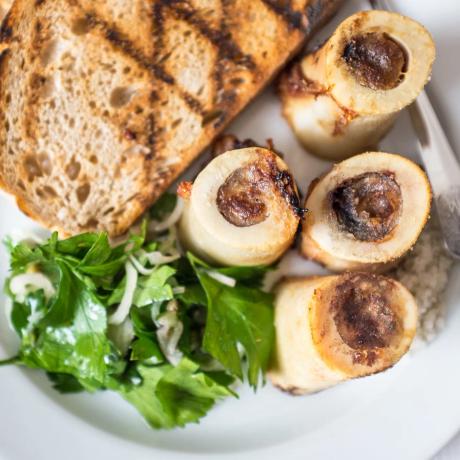
Das St. John war vielleicht Bourdains „Lieblingsrestaurant auf der ganzen Welt“. Nachdem er dort seine erste Mahlzeit beendet hatte, fiel er auf die Knie und verbeugte sich vor der Küche. Besonders Fergus Hendersons Knochenmark auf Toast, das Bourdain 1999 zum ersten Mal probierte, blieb ihm im Gedächtnis. „Engel singen, himmlische Trompeten erklingen, sechs Generationen der eigenen Vorfahren lächeln aus dem Himmel herab“, schrieb er. „Es ist Butter von Gott.“ Jahre später bezeichnete er das Gericht – „schlicht, karg und luxuriös“ – als seine bevorzugte letzte Mahlzeit auf Erden: „dieses geröstete Knochenmark mit Petersilien-Kapern-Salat, dazu ein paar geröstete Baguettescheiben und etwas gutes Meersalz“, serviert „nach Feierabend im Speisesaal des St. John in London, mit einem kalten Pint Guinness“.
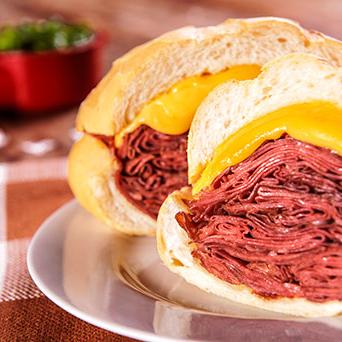
Bourdain bezeichnete das Mortadella-Sandwich in der fast 100 Jahre alten Bar do Mané als São Paulos „heimliches Laster“ – ein schlichtes portugiesisches Brötchen, belegt mit einer geradezu sündhaften Menge gebratener, ziegelrosa Mortadella und auf Wunsch mit geschmolzenem Käse überbacken. Es sei ein „Initiationsritus – ein heiß geliebter, vor Köstlichkeit triefender Haufen, ein Spiegelbild (oder eine Mutation?) der stolzen und einflussreichen italienischen Prägung Brasiliens“. Später ließ sich Bourdain davon zu seiner eigenen Version in „Appetites“ (2016) inspirieren – diesmal mit einem Kaiserbrötchen, etwas Senf und Mayonnaise sowie einer dicken Scheibe Provolone, die auf der gebratenen Mortadella geschmolzen wird.
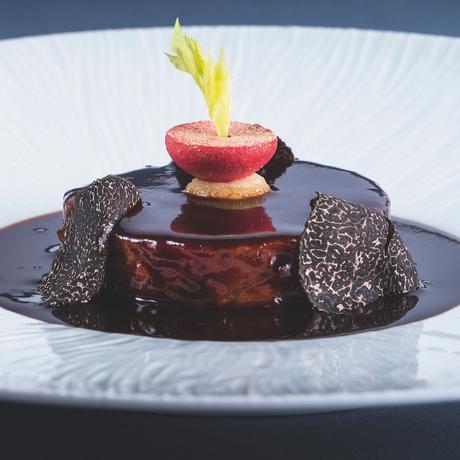
Bourdain war fasziniert von der Pracht, der Tradition und der Lyoner Eigenwilligkeit des Restaurant Paul Bocuse – einer Wiege der französischen Haute Cuisine, geleitet von seinem namensgebenden Küchenchef, der eine weiße Mütze trug, so hoch wie ein Verkehrskegel. Unter all den herrlich gichtträchtigen Gerichten wie einer Suppe mit schwarzen Trüffeln und einem mit Trüffeln gefüllten, in einer Schweinsblase pochierten Huhn verliebte sich Bourdain in „den legendären lièvre à la royale,“ – ein Gericht aus wildem Hasen, den Bocuse und seine Kumpel selbst gejagt hatten und der „mit einer Sauce aus seinem eigenen gehackten Herzen, seiner Leber und seiner Lunge überzogen wurde, angedickt mit seinem eigenen Blut … vollendet mit Trüffeln und Chartreuse zu einer üppigen, herrlichen Sauce“. Das Gericht, dessen Kadaver mit comichaften Augen verziert war und wie ein Schokoladenbrunnen glänzte, sei, so sagte er, „die absolute verschollene Bundeslade der cuisine ancienne“.
Previous Issue
Issue 24
Some of football’s greatest World Cup icons shared one unlikely habit: smoking.
Don't miss next week
Get The Friday Five and the week's best stories straight to your inbox.
Anthony Bourdain, who has just been immortalised all over again in sizzly A24 film ‘Tony’, had a tattoo on his forearm quoting the writer Michel de Montaigne: “I Suspend Judgement.” The cook-turned-writer meant judgement about other people, of course, wherever he happened to encounter them. “In the breaking of bread, he found a way to close the distance between himself and strangers the world over,” Patrick Radden Keefe once wrote. But when it came to food, his judgement was entirely unsuspended, thrillingly present — spicy, salty, laced with a strange combination of gallows humour and high philosophy. He made you yearn again for the lost prawn brains you’d never had; crave even the purple Czech blood sausage with its “touch of nutmeg; its notes of sweetness, longing and death.” And that was just a Tuesday. When Bourdain discussed his most beloved dishes on the planet, things got positively rapturous. Here are five of those.
During an episode in season six of ‘No Reservations’, Bourdain visited Roma Sparita in the Trastevere neighbourhood of Rome and ordered their signature cacio e pepe, one of the four traditional Roman pastas. After one bite, he said: “I’m sure this is illegal somewhere.” After two: “this could be the greatest thing in the history of the world.” Realising what he had encountered, he tried to conceal the identity of the trattoria, branding it ‘Restaurant X’. But pretty much straight away the word got out, and queues now form daily in the little square by Roma Sparita — an example of the tension Bourdain felt in the work he did, that act of “killing what you love.”
Bourdain’s recipe for happiness was simple. “Low plastic stool, check. Tiny little plastic table, check. Something delicious in a bowl, check.” He might also have added ‘a former President’, after being memorably joined at a shaky plastic dining spot by Barack Obama in Hanoi for some pork belly noodle soup. (“This is killer!” Obama said.) But it was a spot in Dong Ba Market in Hue, Vietnam, that he placed on his own Mount Rushmore of dishes. “In the hierarchy of delicious, slurpy stuff in a bowl, bún bò Huế is at the very top,” he said. “An elaborate broth of mixed bones scented with lemongrass, spice, and fermented shrimp paste, with rice noodles heaped with tender, slow-cooked beef shank, crabmeat dumplings, pig’s foot, and huyet-blood cake. It’s the greatest soup in the world — as sophisticated and complex a bowl of food as any French restaurant. It really is just the top of the mountain.”
Das St. John war vielleicht Bourdains „Lieblingsrestaurant auf der ganzen Welt“. Nachdem er dort seine erste Mahlzeit beendet hatte, fiel er auf die Knie und verbeugte sich vor der Küche. Besonders Fergus Hendersons Knochenmark auf Toast, das Bourdain 1999 zum ersten Mal probierte, blieb ihm im Gedächtnis. „Engel singen, himmlische Trompeten erklingen, sechs Generationen der eigenen Vorfahren lächeln aus dem Himmel herab“, schrieb er. „Es ist Butter von Gott.“ Jahre später bezeichnete er das Gericht – „schlicht, karg und luxuriös“ – als seine bevorzugte letzte Mahlzeit auf Erden: „dieses geröstete Knochenmark mit Petersilien-Kapern-Salat, dazu ein paar geröstete Baguettescheiben und etwas gutes Meersalz“, serviert „nach Feierabend im Speisesaal des St. John in London, mit einem kalten Pint Guinness“.
Bourdain bezeichnete das Mortadella-Sandwich in der fast 100 Jahre alten Bar do Mané als São Paulos „heimliches Laster“ – ein schlichtes portugiesisches Brötchen, belegt mit einer geradezu sündhaften Menge gebratener, ziegelrosa Mortadella und auf Wunsch mit geschmolzenem Käse überbacken. Es sei ein „Initiationsritus – ein heiß geliebter, vor Köstlichkeit triefender Haufen, ein Spiegelbild (oder eine Mutation?) der stolzen und einflussreichen italienischen Prägung Brasiliens“. Später ließ sich Bourdain davon zu seiner eigenen Version in „Appetites“ (2016) inspirieren – diesmal mit einem Kaiserbrötchen, etwas Senf und Mayonnaise sowie einer dicken Scheibe Provolone, die auf der gebratenen Mortadella geschmolzen wird.
Bourdain war fasziniert von der Pracht, der Tradition und der Lyoner Eigenwilligkeit des Restaurant Paul Bocuse – einer Wiege der französischen Haute Cuisine, geleitet von seinem namensgebenden Küchenchef, der eine weiße Mütze trug, so hoch wie ein Verkehrskegel. Unter all den herrlich gichtträchtigen Gerichten wie einer Suppe mit schwarzen Trüffeln und einem mit Trüffeln gefüllten, in einer Schweinsblase pochierten Huhn verliebte sich Bourdain in „den legendären lièvre à la royale,“ – ein Gericht aus wildem Hasen, den Bocuse und seine Kumpel selbst gejagt hatten und der „mit einer Sauce aus seinem eigenen gehackten Herzen, seiner Leber und seiner Lunge überzogen wurde, angedickt mit seinem eigenen Blut … vollendet mit Trüffeln und Chartreuse zu einer üppigen, herrlichen Sauce“. Das Gericht, dessen Kadaver mit comichaften Augen verziert war und wie ein Schokoladenbrunnen glänzte, sei, so sagte er, „die absolute verschollene Bundeslade der cuisine ancienne“.
Previous Issue
Issue 24
Some of football’s greatest World Cup icons shared one unlikely habit: smoking.
Don't miss next week
Get The Friday Five and the week's best stories straight to your inbox.