

How Merz b. Schwanen built a modern brand the traditional way
At a time when fashion is moving faster than ever, this recently revived brand is using vintage machinery and traditional craftsmanship to stand apart from the pack...
There’s an old German proverb — “was lange währt, wird endlich gut” — which roughly translates as “if it takes long enough, it’ll be all right in the end.” Or, put more simply: good things come to those who wait. It’s a cry for calm, a plea for patience and a reminder that due diligence is, almost always, the true key to success.
Few people in the fashion world understand this better than husband-and-wife team Gitta and Peter Plotnicki. Back in April 2010, the couple stumbled across a Henley at a Berlin flea market. It looked ordinary enough — the sort of garment we all wear for a year or two before replacing. But this one hadn’t given up. Upon closer inspection, it also didn’t have side seams, a characteristic that piqued the couple’s interest. They looked even closer; the button-front undershirt was sturdier and more substantial than modern Henleys. Impeccably preserved, it turned out to be an authentic worker’s Henley from 1911: one hundred years old, and still holding together rather nicely.
Intrigued, the Plotnickis traced its origins to Germany’s Swabian Alps, once a hub of textile manufacturing. A local underwear producer filled them in on the region’s rich history — and invited them into an abandoned factory in Albstadt, where they discovered towering relics of the past: authentic, analogue loopwheel machines (a rare type of circular knitting machine), some of which dated back to the late 19th century.
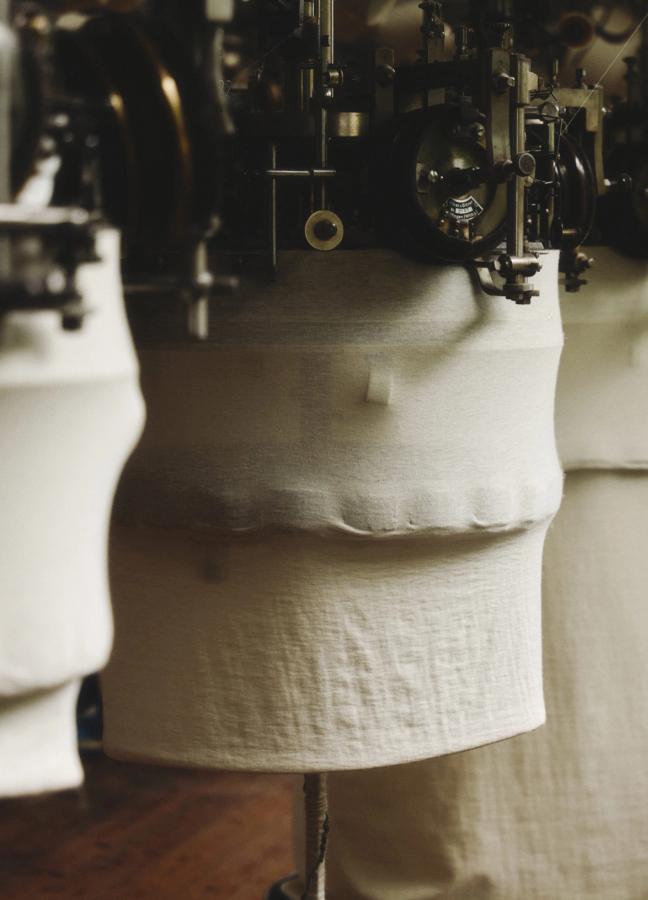
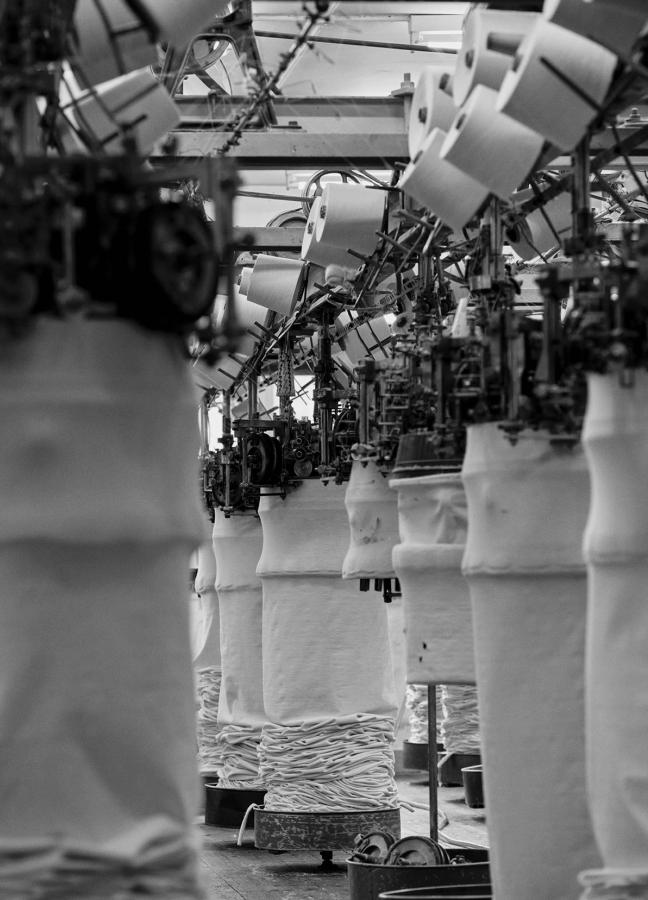
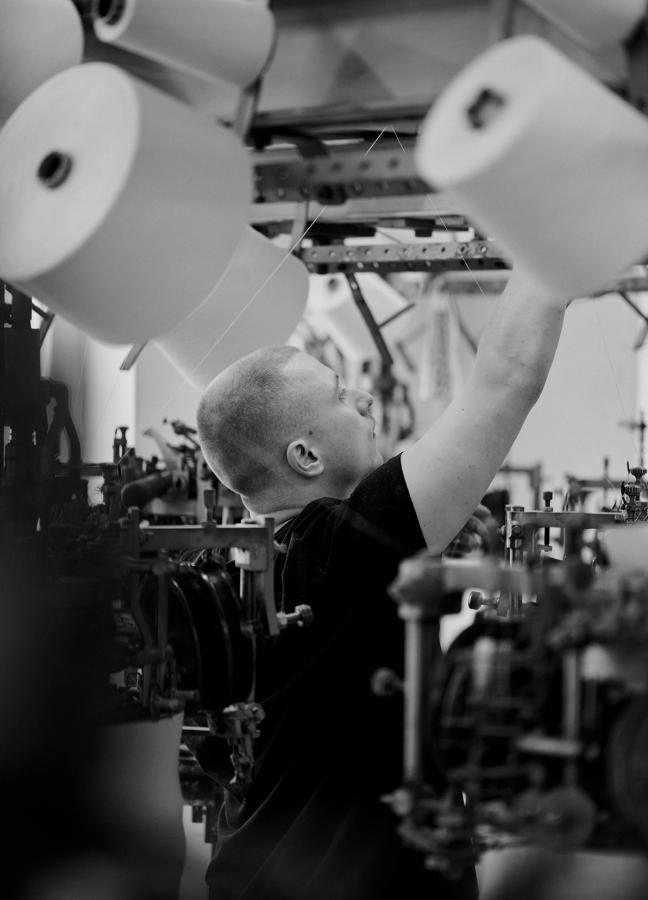
With 1,000 tiny needles continuously rotating around a cylinder, loopwheel machines function much like modern circular knitting machines — but with a vertical thread run that leaves no side seams in fabric. The couple were captivated. They resolved to learn everything they could about these 32 original, century-old machines — and the brand that had once owned them.
That brand’s name, once famous throughout Germany, was Merz b. Schwanen — a clothesmaker founded by Balthasar Merz in 1911, the same year that flea market Henley itself dated back to. Merz’s company had created loopwheeled Henleys and underwear for decades, using the slow-moving machines (they knit around one metre of material per hour) to create this high-quality, durable and distinctly textured jersey fabric.
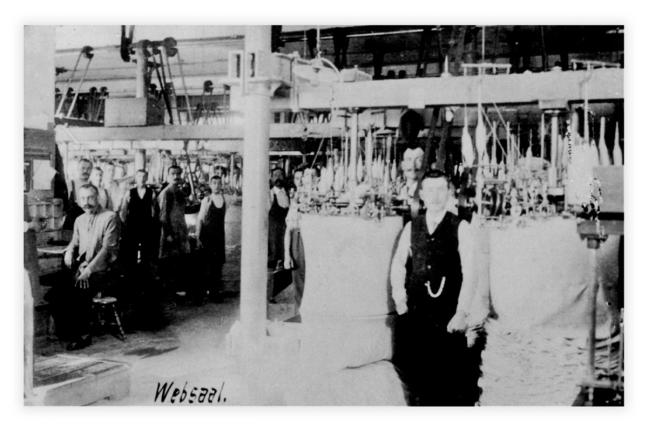
But Merz b. Schwanen, though slow, steady and of superior quality, was hit hard by an industry driven by faster and faster fashions. Faltering under the weight of globalisation and rival brands’ increasing reliance on outsourcing, it became impossible to carry on. In 2005, the business — which was still owned by Merz’s family — folded. That proverb, of perseverance and attention to detail, sadly wouldn’t cut it any more.
But the Plotnickis had a plan. They still saw the value in taking things slowly — and the Merz family gave the pair both a stamp of approval and the historic Merz b. Schwanen name. If someone could keep their finely stitched family legacy alive, it was worth trying. And, while it took a whole year to restore the machines to full working order, those good things — and even better clothes — eventually came to the couple who waited.
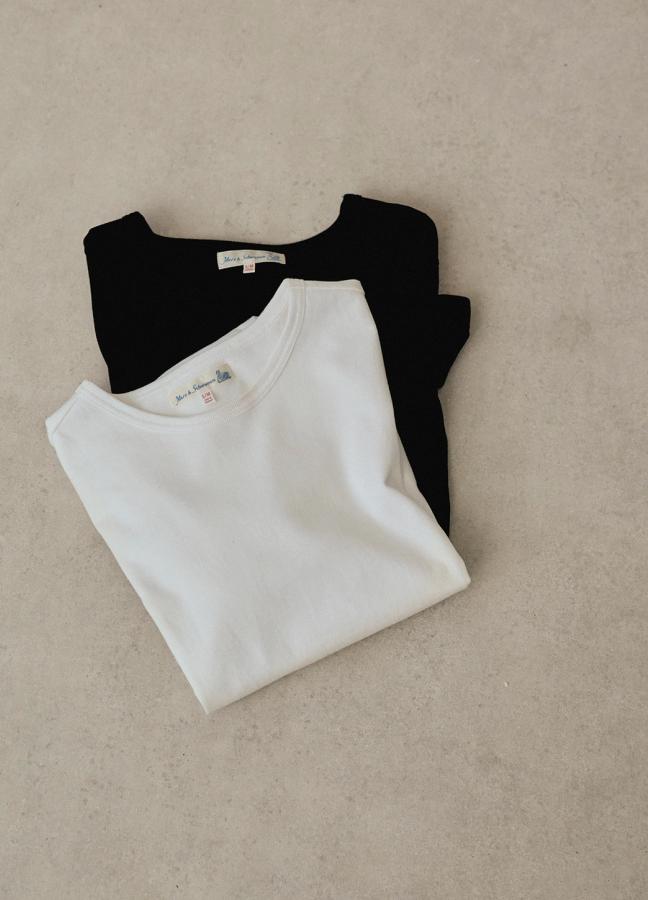

By 2011, the brand relaunched at a trade show in Berlin — back where that vintage Henley had started the Plotnickis’ journey. Designed in Berlin and loopwheeled in Albstadt, the debut collection, named ‘THE ORIGINALS’, celebrated the timeless styles of pre-war worker clothing, authentically made and carefully refined for modern tastes.
Merz b. Schwanen has since expanded, and today every piece crafted in Germany is part of THE ORIGINALS range, where it still owns and operates the original production facility. But the brand also works with family-owned, quality-first businesses in Portugal to craft new collections, and has launched collaborative pieces with designers including Junya Watanabe, and brands from Monocle to Four Seasons Hotels and Resorts.
Over a decade into its second act, the brand’s new hero pieces — which it dubs the ‘ALL-TIME FAVORITES’ — have also emerged. There’s a simple ribbed cotton tank top, a lightweight long-sleeved T-shirt, and the ‘215’ — Merz b. Schwanen’s centrepiece tee, and the short-sleeved garment favoured by Jeremy Allen White’s chef Carmy Berzatto in The Bear.
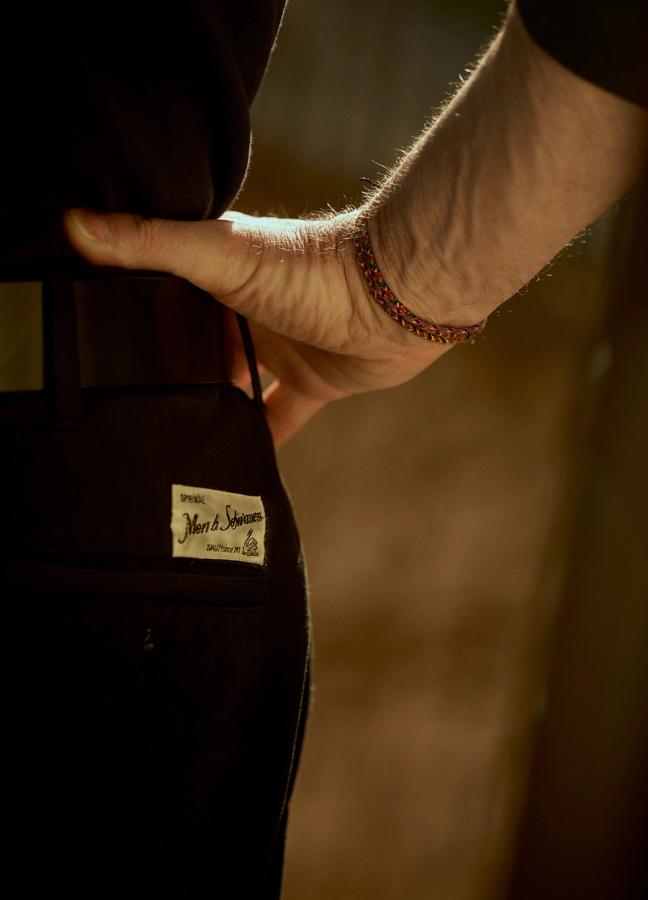
A final traditional touch can be found on every garment: the woven labels. Each is made with a handmade punch card on a historical loom from the 19th century — another nod of appreciation to the past, and the final steady, stylish stitching-through of that “was lange währt, wird endlich gut” approach.
There is, of course, more to Merz b. Schwanen than these elevated basics — but the thread that runs through every one of the brand’s offerings is quality. Each collection is rooted in high-quality, all-natural materials, carefully sourced with sustainability and animal welfare in mind. The jumpers are crafted from pure merino wool, while select cardigan styles come in refined merino-cashmere blends, and the chore jackets and chinos are cut from authentically hard-wearing, long-lasting twill. The colours are understated, the fits timeless.
And, perhaps most importantly, you can imagine every piece lasting a century — just like that flea market find. With flagship stores in Berlin and New York, and selected retail partners worldwide — from London to Paris and beyond — these new pieces are never far from reach.

Become a Gentleman’s Journal member. Learn more here…